Video Marketing for Design-Build Firms: Filming the Invisible Half
Design-build firms win work on the design phase and then film nothing but framing. Here is how to put the half that actually sells on camera.
7 min read · July 6, 2026 · Florida Construction Media
Scroll through the video content of ten Florida design-build firms and you will see the same reel ten times: drone orbit of a finished house, slow pan across a kitchen, time-lapse of a slab pour. Every clip is construction. Which is strange, because construction is not what a design-build firm sells.
The pitch that closes design-build work goes something like this: one contract, one team, one point of accountability. The people who design your home also build it, so the drawings are buildable, the budget is honest from month one, and nobody stands in your kitchen next year blaming the architect. That pitch lives almost entirely in the design phase — the meetings, the sketches, the moment a plan changes because the builder in the room said it should.
And almost no firm films any of it. The result is a marketing paradox: the differentiator is invisible, and the content that does exist makes a design-build firm look like every general contractor in the county. If your video library could belong to a GC, you are advertising as a commodity.
The fix is not more drone footage. It is filming the invisible half.
The discovery meeting is content
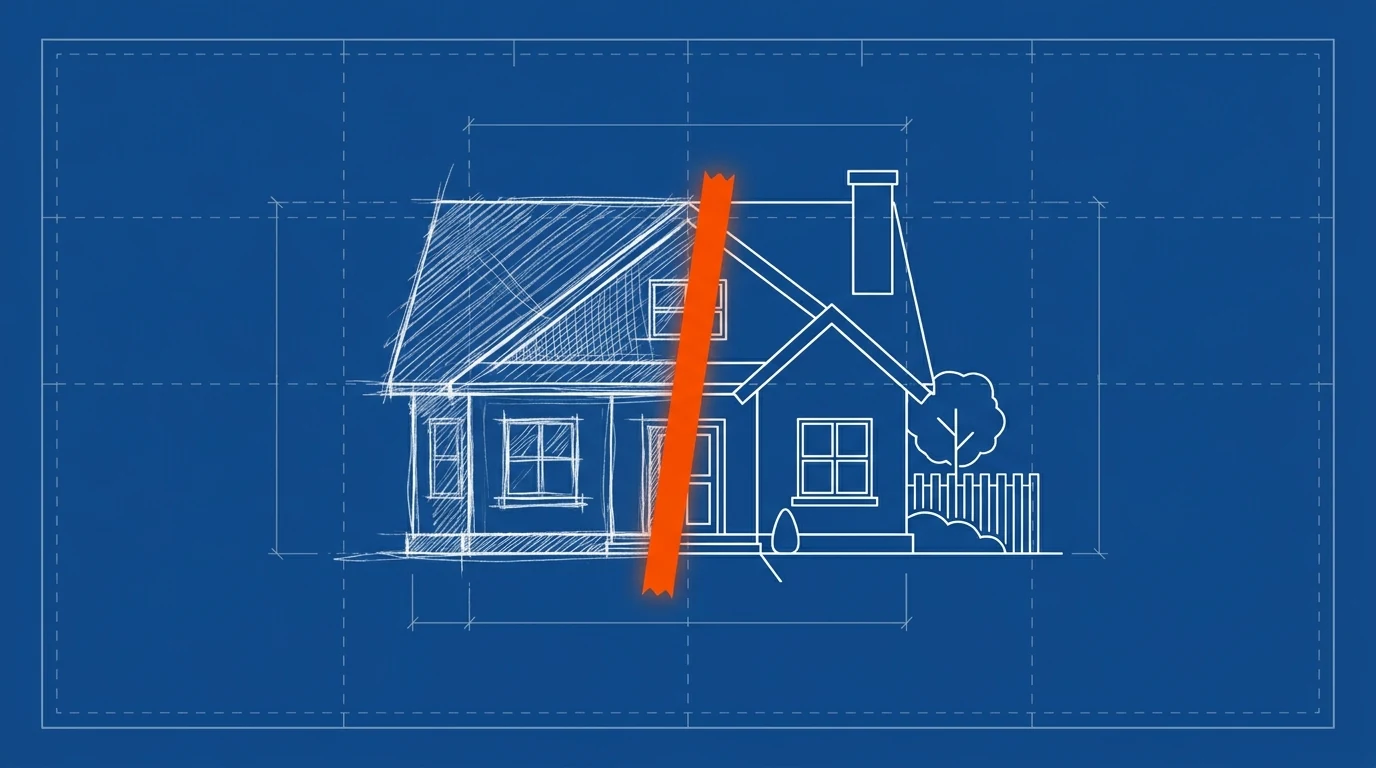
The half the camera usually misses · Illustration: Florida Construction Media
The first meeting with a design-build client is where the model proves itself. A good discovery meeting sounds nothing like a bid meeting. Nobody is asking for plans to price. Someone is asking how the family uses the back of the house, where the dogs sleep, what the last renovation got wrong. Thirty seconds of that answers the question prospects cannot articulate: what is it like to work with you before anything gets built?
Two ethical ways to capture it. The first is the real thing: ask a client, in writing, whether a camera can sit in the corner of their kickoff meeting, with approval over anything you publish. Some will say no; enough will say yes, particularly clients who found you through your content. The second is a reenactment with your own team — your designer and project manager running the actual questions you actually ask, clearly framed as "here's what our first meeting covers." What you cannot do is hire actors to play a fake couple and pass them off as clients. In a referral-driven market, one person recognizing the fake costs more than the clip earned.
Either way, the content is the questions. A firm that asks better questions in the discovery meeting is presumed to build a better house. That presumption is worth more than any drone shot.
The design-evolution reel
The single most shareable arc available to a design-build firm is the one only a design-build firm can film: the same corner of the same house, four times.
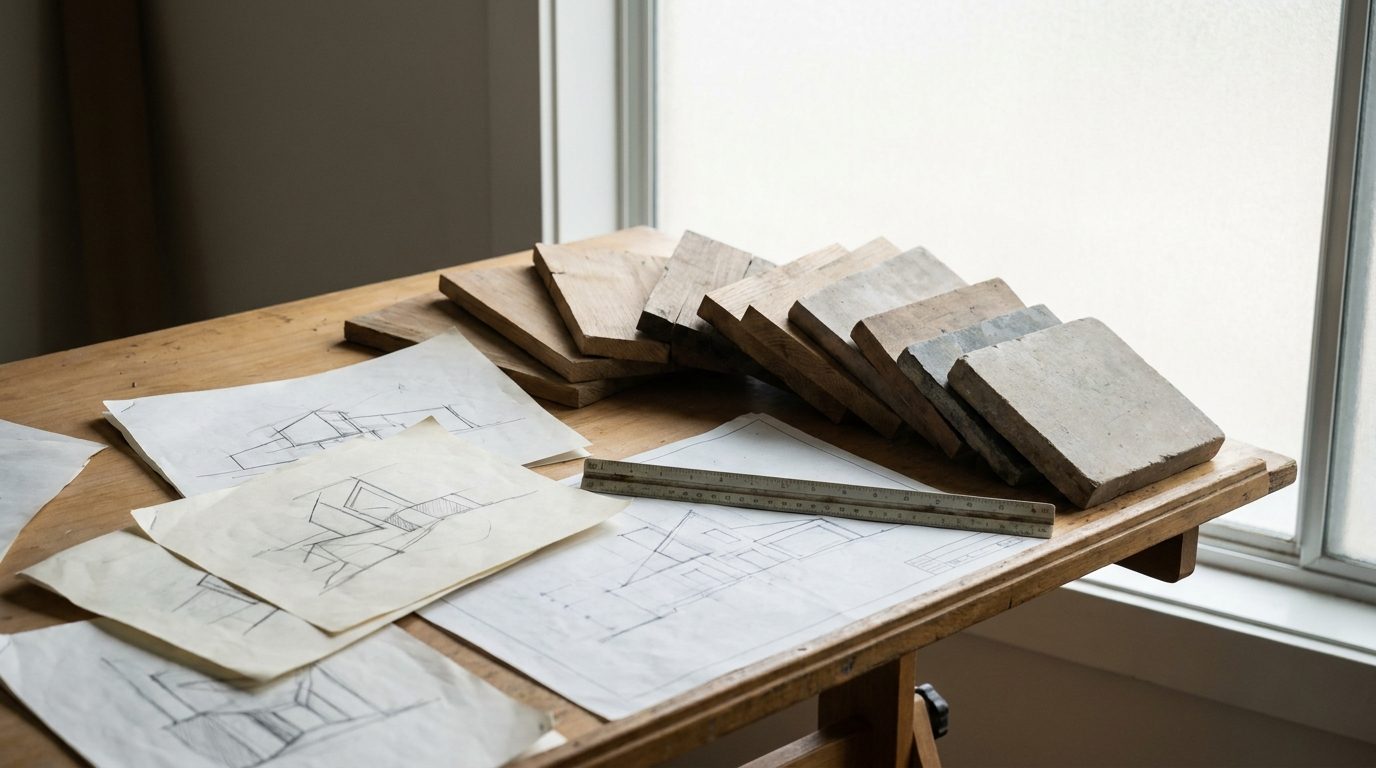
Frame one, the napkin-grade concept sketch. Frame two, the 3D model with the client's actual finishes roughed in. Frame three, the material board — the tile, the stone, the cabinet pull, physically fanned out on a table. Frame four, the built corner, real light, real grout lines, shot from the same angle the render used.
That sequence compresses the firm's entire value proposition into fifteen seconds without narration. It shows a promise being made and then kept. GCs cannot make this content, because they inherit the drawings. Architects cannot make it alone, because they leave before the punch list. Only the firm that held the pencil and the hammer can show both ends of the line — which is the whole argument for design-build, told visually instead of claimed verbally.
The catch: you can only cut this reel if someone captured frame one back when it was a sketch nobody thought to photograph. Which is why the capture habit matters more than the edit.
Spec box: The design-phase capture list — record these in the first month of every project: the concept sketch or first plan iteration, photographed flat in good light; 60 seconds of the discovery or kickoff meeting (with written consent); the 3D model or render, screen-recorded as someone orbits it; the material board being assembled, hands in frame; one clip of the designer explaining a decision to camera in one take; the "before" condition of the site or existing structure; any plan revision, with a sentence on why it changed. Ten minutes of capture per project, month one. Everything downstream is editing.
The honesty clip: why we changed the plan
Most builder content is adjective content — quality, craftsmanship, attention to detail. Prospects have heard every adjective and believe none of them. Decision content is different. A ninety-second clip where your designer stands at the plans and says "the original layout put this wall here; our field super flagged the beam it would require; we moved it fourteen inches and took real money out of the structural package without losing the sightline" does what adjectives cannot: it shows the design-build feedback loop actually operating.
These clips feel risky because they admit the first plan was not perfect. That is precisely why they work. Homeowners know plans change; what they fear is finding out mid-build, via change order. A firm willing to narrate its own revisions on camera presumably narrates them to clients too. One honest "here's what we changed and what it saved" clip per project will outperform a year of finished-house montages.
The one-contract explainer
Every design-build firm eventually has to explain design-build itself, because most homeowners still assume the default: hire an architect, take the drawings out to bid, pick a builder, and hope the two never end up pointing at each other. You need this explanation on video, it needs to run about ninety seconds, and it needs to do the job without trashing architects — plenty of your referrals come from them, and prospects distrust a pitch built on tearing down the alternative.
The clean structure: here is the traditional path and where the handoffs are; here is where budgets typically drift in that model, because the designer prices nothing and the builder designed nothing; here is our model, where the estimator sits in the design meetings and the plans are priced as they are drawn; here is what that means for you — one contract, one number that means something, one team to call. Delivered by a principal, to camera, plainly. This video does quiet work for years: on the website, in the email that goes out before a first meeting, in the proposal itself.
The named process and the hero
Two principles from elsewhere in this series apply with extra force here. First, a named process is half the sale: design-build is a process pitch by definition, so a firm whose phases have names — and whose videos are organized by those names — reads as more established than a firm with a folder of pretty clips. Every video above should visibly belong to a phase of your named process.
Second, the client stays the hero. The discovery meeting clip is about their questions being heard. The evolution reel is their corner of their house. The honesty clip is their money being protected. The moment this content becomes a showcase for your designer's brilliance, it stops converting.
Render to reality, and the proposal table
Design-build proposals already carry renders — that is the format's native advantage. A video walking through the render, narrated by the designer who built the model, turns a static page into a preview of the working relationship, and it is close to lethal at the proposal stage; the mechanics of deploying it are covered in the proposal video playbook.
Then close the loop publicly. The render-to-reality gallery — the render on the left, the finished photograph shot from the matching angle on the right — is the recurring proof format this category has been missing. Post one pairing per completed project, every project, forever. It is unglamorous, repetitive, and devastating, because it is checkable. Anyone can promise; the firm with forty side-by-sides has receipts.
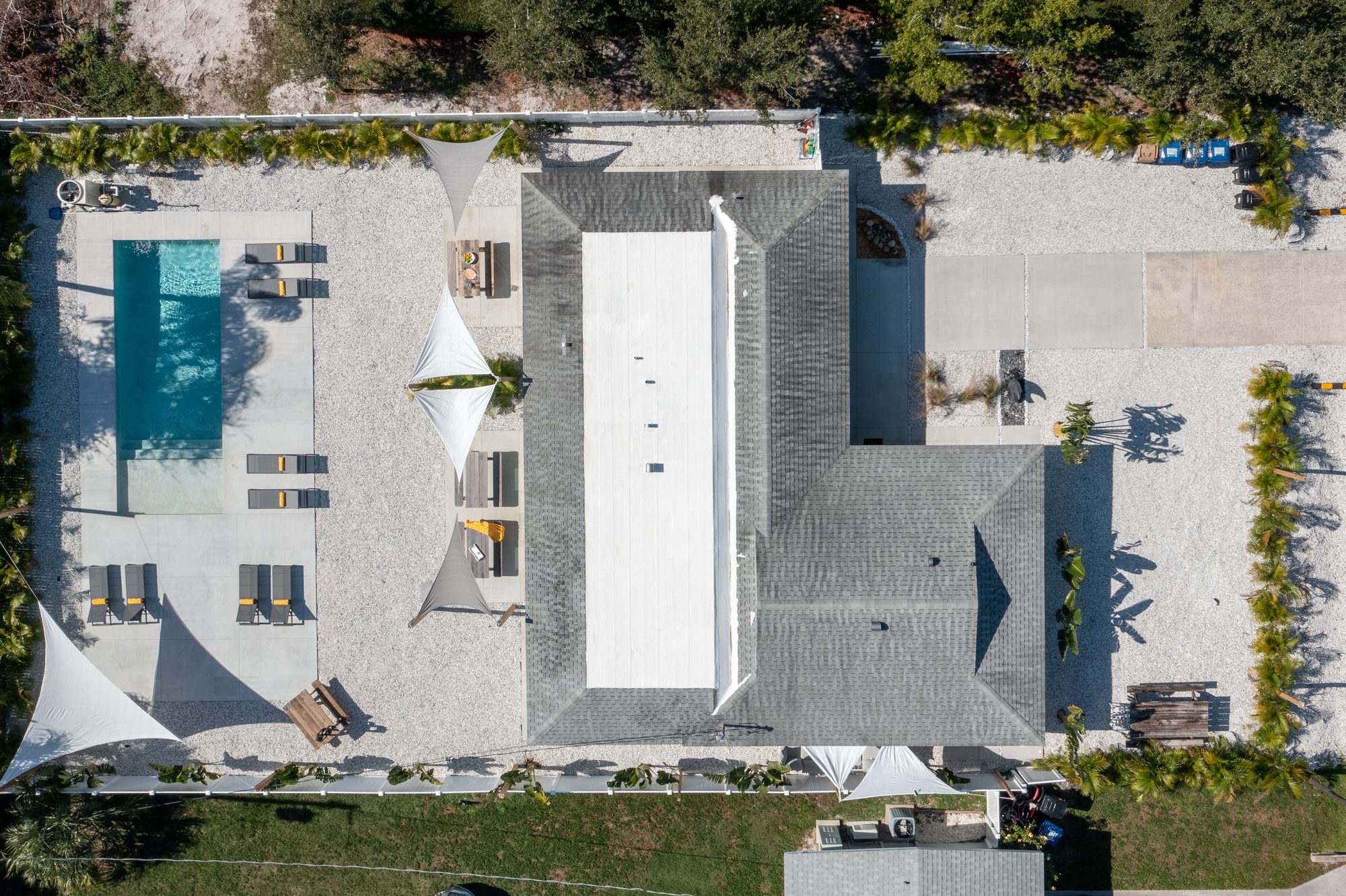
The plan before the pour · Sarasota · Photo: Stellar Media Collective
Questions builders actually ask
Will clients really let us film their design meetings? Some will not, and you should never push. But firms that mention filming in the onboarding paperwork — as an opt-in, with approval rights — find acceptance higher than expected. One consenting client per quarter is enough to feed this whole system.
We're mid-project on everything right now and captured none of the early phase. Start where? Start with the one-contract explainer and the honesty clip, since both can be filmed this week with your own team and a set of plans. Add the capture list to every new project's kickoff checklist so the evolution reels and render-to-reality pairs start accumulating. In a year you will have inventory nobody in your market can match.
Doesn't showing plan changes make us look indecisive? The opposite, provided the clip is about the decision and the outcome, not an apology. "We caught this in design review, here is what it saved" is a competence story. What makes a firm look bad is the change order the client never saw coming — which is exactly what this content demonstrates you prevent.
Published July 6, 2026. Florida Construction Media is produced by Stellar Media Collective, a video production studio in Sarasota that works with builders and premium trades across the Gulf Coast.