September Housing Starts, Read for Gulf Coast Builders: The South Gained on Apartments While Single-Family Permits Slipped
The Census Bureau's September report put national starts at their second-lowest pace in 25 months, and the South was the only region to post a gain. Under that headline, Southern single-family starts and permits both fell from August. What the split means for a spec builder's next phase, a framing crew's winter, and the finish trades waiting on completions.
5 min read · October 21, 2026 · Florida Construction Media
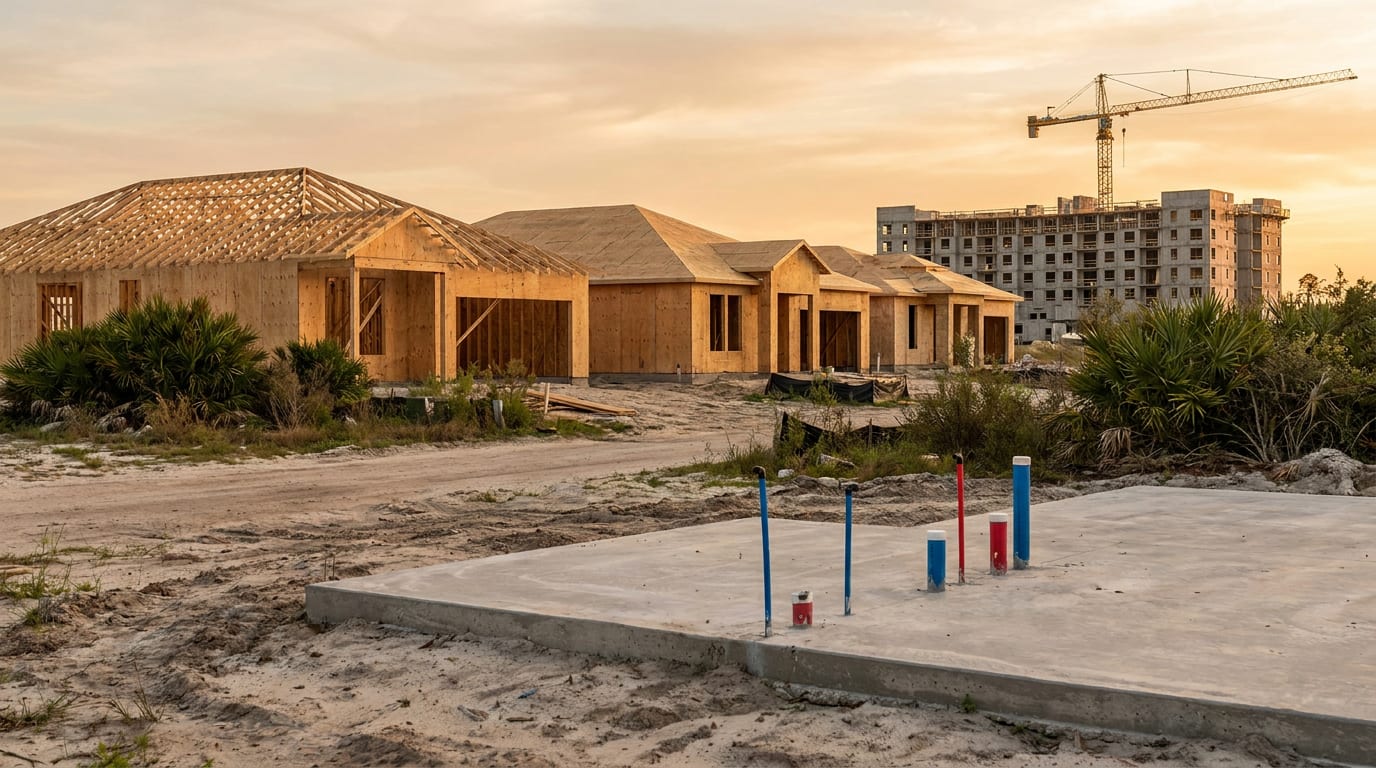
Yesterday's housing starts number reached the news as one line: builders started fewer homes in September. For a Gulf Coast builder or trade, the useful part sits two tables down, where the region we work in went the other way on the total and the same way on the houses. This is the first of a monthly read on the Census Bureau's New Residential Construction report, written for the people who frame, finish and supply what it counts. It covers September 2026 data, released October 20.
The story
The Census Bureau's September release, published jointly with HUD, put privately owned housing starts at a seasonally adjusted annual rate of 1,221,000. That is 5.2 percent below the revised August pace of 1,288,000 and 7.4 percent below September 2025. Single-family starts came in at 859,000, down 4.6 percent from August. Building permits, the number that points furthest ahead, were close to flat at 1,400,000, but single-family permits fell 4.0 percent to 845,000. Completions rose 2.2 percent on the month to 1,192,000 and were still 14.0 percent below a year earlier. The October report is due November 18.
RISMedia's write-up carries the builder side. NAHB's forecasting lead, Danushka Nanayakkara-Skillington, said the numbers fit the association's call for lower production this year and further declines in 2027, with rates elevated and material costs rising. Realtor.com's Joel Berner read the steady permitting as a sign builders see the slowdown as temporary.
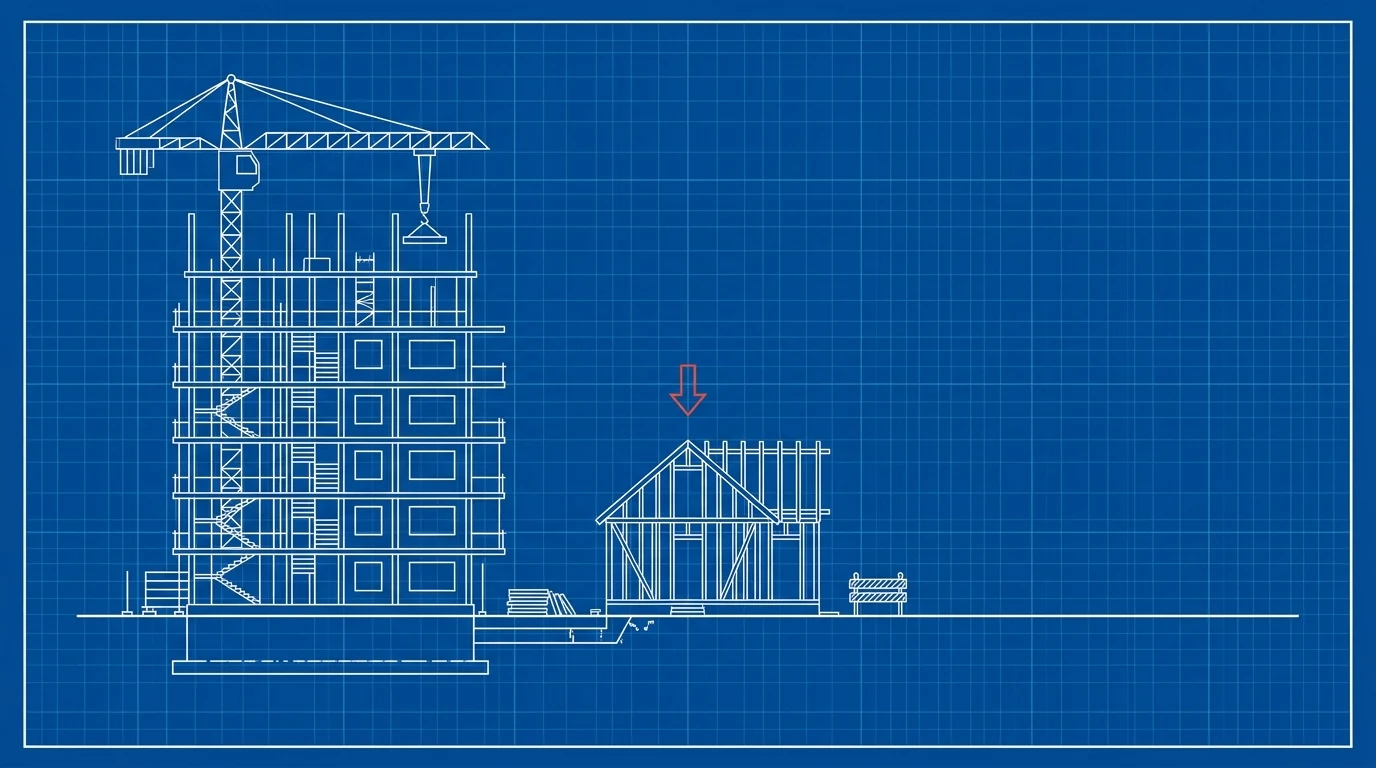
One region, two directions: the apartments carried the gain · Illustration: Florida Construction Media
What it means for you
The regional tables are in the release PDF. The South, which includes Florida, was the only region where total starts rose: up 6.1 percent from August, to 714,000, and 11.0 percent above September 2025. The Midwest fell 19.0 percent and the West 23.2 percent.
Now split the South, using the same regional tables. Single-family starts there fell 3.3 percent on the month, to 506,000, though they were still 8.8 percent above a year earlier. Southern single-family permits fell 4.4 percent, to 505,000, and sit 2.3 percent below September 2025. For the year to date, Southern single-family starts are down 0.9 percent. So the regional gain came from buildings with more than one unit, not from houses. The South still carries most of the country's house building: 506,000 of the 859,000 single-family starts, close to six in ten.
Census prints one caution with every release, and it matters here. Its confidence ranges are wide: the South's monthly single-family change carries a range of plus or minus 12.4 percent, so the August-to-September move is not statistically conclusive. Census says it can take three months to see a trend in permits and six in starts. Read the month as a direction to check, not a verdict.
Three reads for the trades.
Single-family permits are the leading edge, and they turned down. A permit pulled in September is a slab in the next few months and a drywall order after that. National single-family permits are 4.8 percent below a year ago and the South's are 2.3 percent below. If your crew lives on production phases in Manatee, Pasco or Charlotte, the slowdown shows up in your schedule a season before it shows up in the news.
The apartment pipeline is still feeding Southern starts. That fits what we saw locally in the Sarasota-Bradenton apartment wave: multifamily is selling to developers and construction managers, and it buys on schedule risk, not on a homeowner's taste. A trade that can win a CM's bid list has work in a month when spec houses slow.
Fewer completions means fewer new houses competing with resale. Completions 14 percent below last year is a slower finish line for flooring, paint, cabinets and final-clean crews. It also explains part of what the September Florida Realtors numbers showed in Sarasota-Manatee, where supply fell under four months. Fewer new houses arriving is one reason the local market feels tighter than the state headline.
The play
- Ask your builders about permits, not starts. One question to each production builder you rely on: how many permits did you pull this quarter against last? It tells you about February in October.
- Get on a multifamily bid list now. A three-minute capability video built for a construction manager does a different job from your homeowner portfolio, and it pays off in exactly the months the spec market slows. The rate picture behind this report has not changed, and the Rays ballpark is pulling Tampa Bay crews toward big jobs.
- Finish trades: fill the gap with remodel work. Fewer completions on the new side is a slower quarter unless the remodel pipeline is warm. The clients deciding this winter are watching who explains the work plainly. Stellar's resources library has the filming plans for that.
- Use the region's number on camera, with its caveat. A client who hears that starts fell nationally needs ninety seconds from you on what the South did and why one month proves little. Being the builder who reads the footnote is the point.
- Mark November 18. That is when Census publishes October, and we will read it the same way. Metro permit counts for Sarasota and Tampa come later in Census's separate Building Permits Survey.
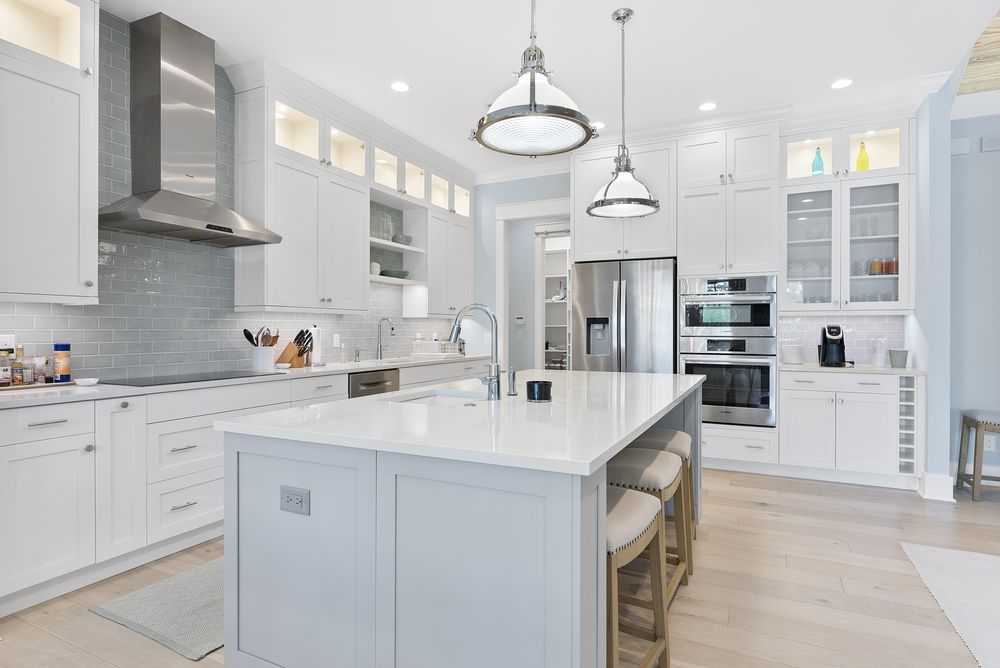
A kitchen build-out in Venice, the kind of finish work that follows the completions line · Photo: Stellar Media Collective
Checked October 21, 2026, against the Census Bureau and HUD's New Residential Construction report for September 2026, released October 20; the originals are linked above, the figures are preliminary and will be revised, and the next release is November 18. Disclosure: this publication is owned by Stellar Media Collective, a Sarasota studio that builds the on-camera explainer and capability-video systems described here. The read holds whoever you hire to film it.