Mortgage Rates Hit 7.28%, the Highest Since 2023. What October's Survey Means for the Buyers Your Builders Are Waiting On
Freddie Mac's first October reading put the 30-year at its highest since November 2023, three weeks after the Fed raised rates. For a Gulf Coast builder or trade: the payment math on a $450,000 loan, why two-thirds of production builders are paying for incentives, and the one conversation that does not need a rate forecast.
5 min read · October 8, 2026 · Florida Construction Media
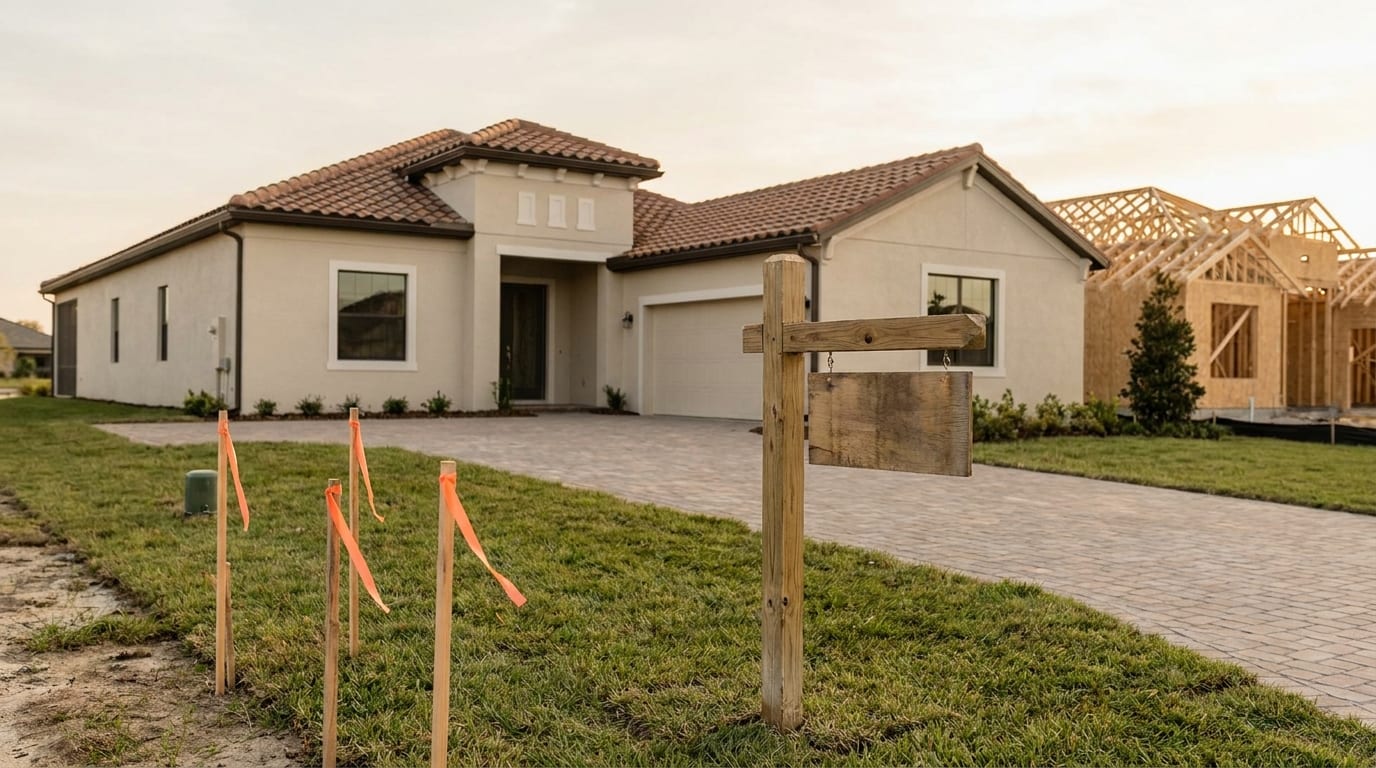
The buyer who was going to sign on a Lakewood Ranch spec this month just lost the kitchen upgrade to the payment. This is the first of a monthly read on Freddie Mac's Primary Mortgage Market Survey, written for the Gulf Coast builder and for the trades who wait on that builder's closings. There is no forecast in it. The survey prints every Thursday at noon; we read the month so far, and the next number lands this afternoon.
The story
Freddie Mac's October 1 survey put the 30-year fixed at 7.28 percent, up from 7.03 percent the week before, with the 15-year at 6.60 percent. A year earlier the 30-year averaged 6.34 percent. Fox Business notes that is the highest weekly reading since November 22, 2023, when the survey printed 7.29 percent. Freddie Mac's chief economist, Sam Khater, read the economy as still supporting the housing market. Realtor.com's Hannah Jones put it more plainly: nearly a full point in a year, and buyer budgets feel it.
The move has a date behind it. On September 16 the Federal Reserve raised its target range a quarter point, to 3.75 to 4 percent, on a unanimous vote and with a statement that inflation remains elevated. The Fed does not set mortgage rates; the 10-year Treasury does most of that work, and The Mortgage Reports had the 10-year at 5.29 percent on October 1, with a bond selloff doing the pushing.
Builders felt it before the survey printed. The NAHB/Wells Fargo Housing Market Index fell three points to 32 in September. In that survey 38 percent of builders cut prices, the average cut held at 6 percent for a sixth straight month, and 66 percent offered sales incentives, the most since December. Mortgage News Daily's write-up has the South region at 31 and buyer traffic at 23, and NAHB chairman Bill Owens tying the weak traffic to rising rates. HousingWire found the cost of that in one builder's books: Smith Douglas Homes leaned on buydowns and closing help to hold sales and watched its gross margin go from 23.2 percent to 17.6 percent.
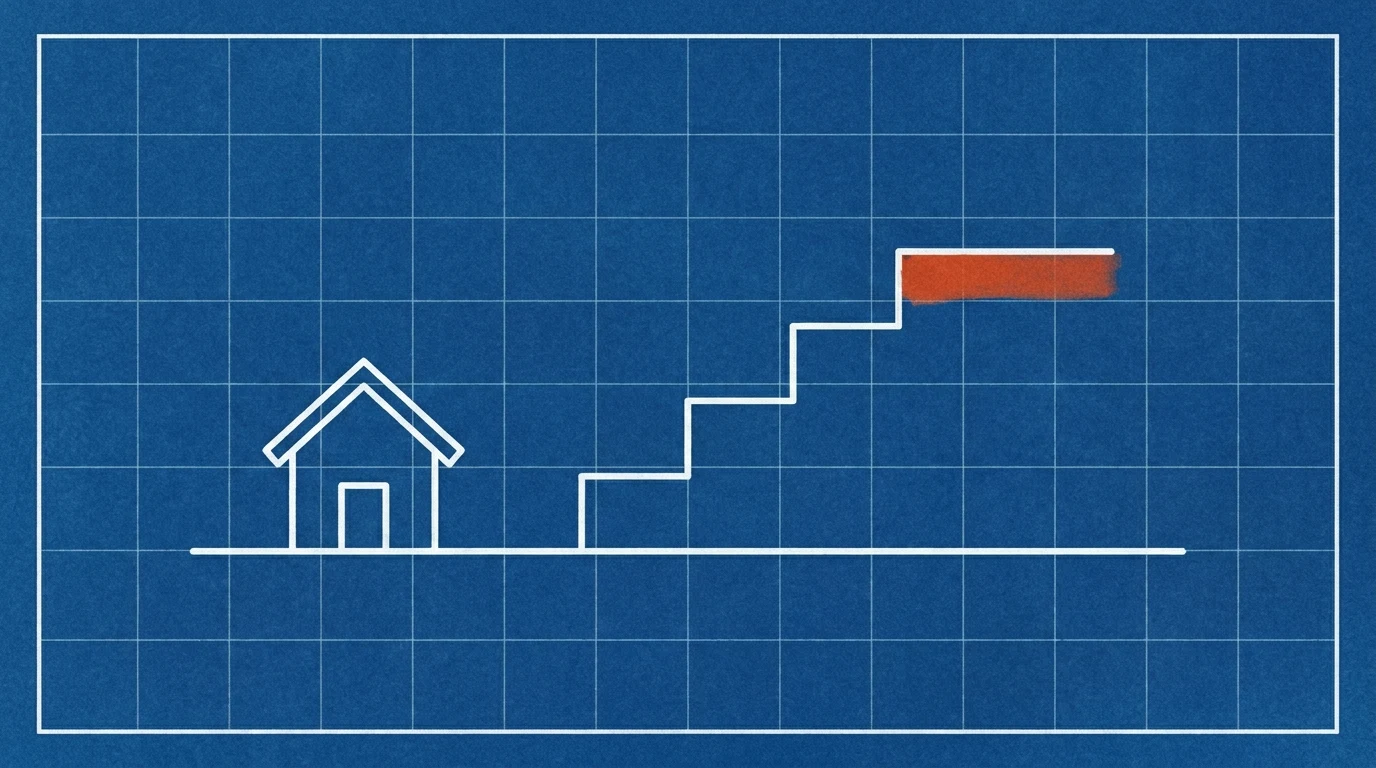
Four steps up in a year, and the top one landed in October · Illustration: Florida Construction Media
What it means for you
The math
Assume a $450,000 loan on a 30-year fixed, principal and interest only, with no taxes, insurance or HOA dues, which on the Gulf Coast is a generous assumption.
- At last October's 6.34 percent, the payment is about $2,797 a month.
- At the September 24 reading of 7.03 percent, about $3,003.
- At 7.28 percent, about $3,079.
So the year cost that buyer roughly $282 a month, about $3,400 a year, and the last week alone cost $76 a month. Run it the other way: the buyer who qualified for that $450,000 loan a year ago qualifies for about $409,000 at today's rate on the same payment. A 2-1 buydown on the same loan (5.28 percent the first year, 6.28 the second, the full 7.28 after that) costs whoever funds it about $10,600, the sum of two years of payment gaps. That is the number inside the two-thirds of builders offering incentives, and it is the margin HousingWire watched disappear.
Three things follow.
The spec buyer is being qualified at today's rate, not last year's. The gap between the loan they expected and the loan they get shows up as a smaller lot, a dropped upgrade, or a buydown the builder funds out of margin. If you are a trade on production work, expect allowance pressure on specs already under contract and a push on close dates. The 6 percent average price cut comes out of somebody's line, and it is rarely the lender's.
Custom and remodel clients are mostly not borrowing at this rate. The 55-plus remodel client is paying from equity, the custom client is on a construction-to-permanent loan where the appraisal matters more than the week's rate, and the second-home buyer arriving this month is often cash. For them a seven-handle headline works the way a storm forecast does: it changes the mood, not the math. The October arrivals are deciding right now whose name they will call in February, and a builder who sounds rattled about rates is not the name.
Production builders will advertise the buydown louder. With two-thirds of them paying for incentives, every feather flag between Wesley Chapel and North Port is teaching your buyer to open with "what's the deal." We wrote the counter-position in July, in Incentive-Era Selling. September made it more relevant, not less.
The play
- Teach the rate math straight, on camera, this month. Ninety seconds: the $450,000 loan, the three payments above, what a 2-1 buydown costs and the month it ends. No prediction, no lender pitch. The builder who reads the fine print out loud is the one the buyer remembers, the same way a homeowner remembers the GC who explained the suspiciously low bid.
- Separate your buyer from the spec buyer in your own copy. If you sell custom or remodel work, say how your clients usually pay: equity, cash, construction-to-permanent. A client whose project does not touch a 30-year rate should not be scared off by one.
- Trades on production work: ask about the incentive budget before you quote the next phase. A purchasing manager funding buydowns is looking for the money somewhere, and the quiet place to find it is allowances and scope.
- Keep the watchers warm. A buyer who steps back at 7.28 does not leave the market; they go back to watching. The content that holds them is process and proof, not a rate opinion. Stellar's resources library has the filming plans for that.
- Watch the ballot, too. Amendment 3's homestead change is on the same November calendar as these rates, and we read what it does to remodel budgets earlier this week.
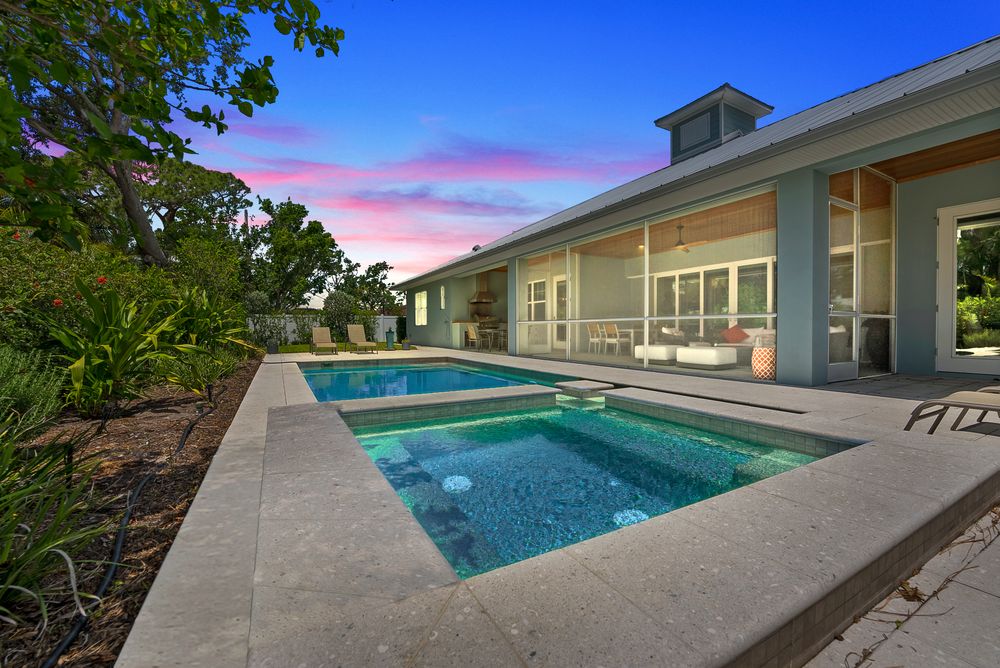
The client whose project a seven-handle headline does not touch · Venice · Photo: Stellar Media Collective
Checked October 8, 2026, against Freddie Mac's October 1 survey, before that day's noon release; the figures will move weekly and the originals are linked above. The payment math is our own model with its assumptions printed, not a quote from any lender. Disclosure: this publication is owned by Stellar Media Collective, a Sarasota studio that builds the on-camera explainer and process-content systems described here. The read holds whoever you hire to film it.