The 55+ Renovation Market: Selling to Homeowners Who Check Everything
Florida's biggest remodeling client is over sixty, has equity, is staying put, and will spend four months verifying you before the first call. Most contractor marketing is built for someone else entirely.
8 min read · August 21, 2026 · Florida Construction Media
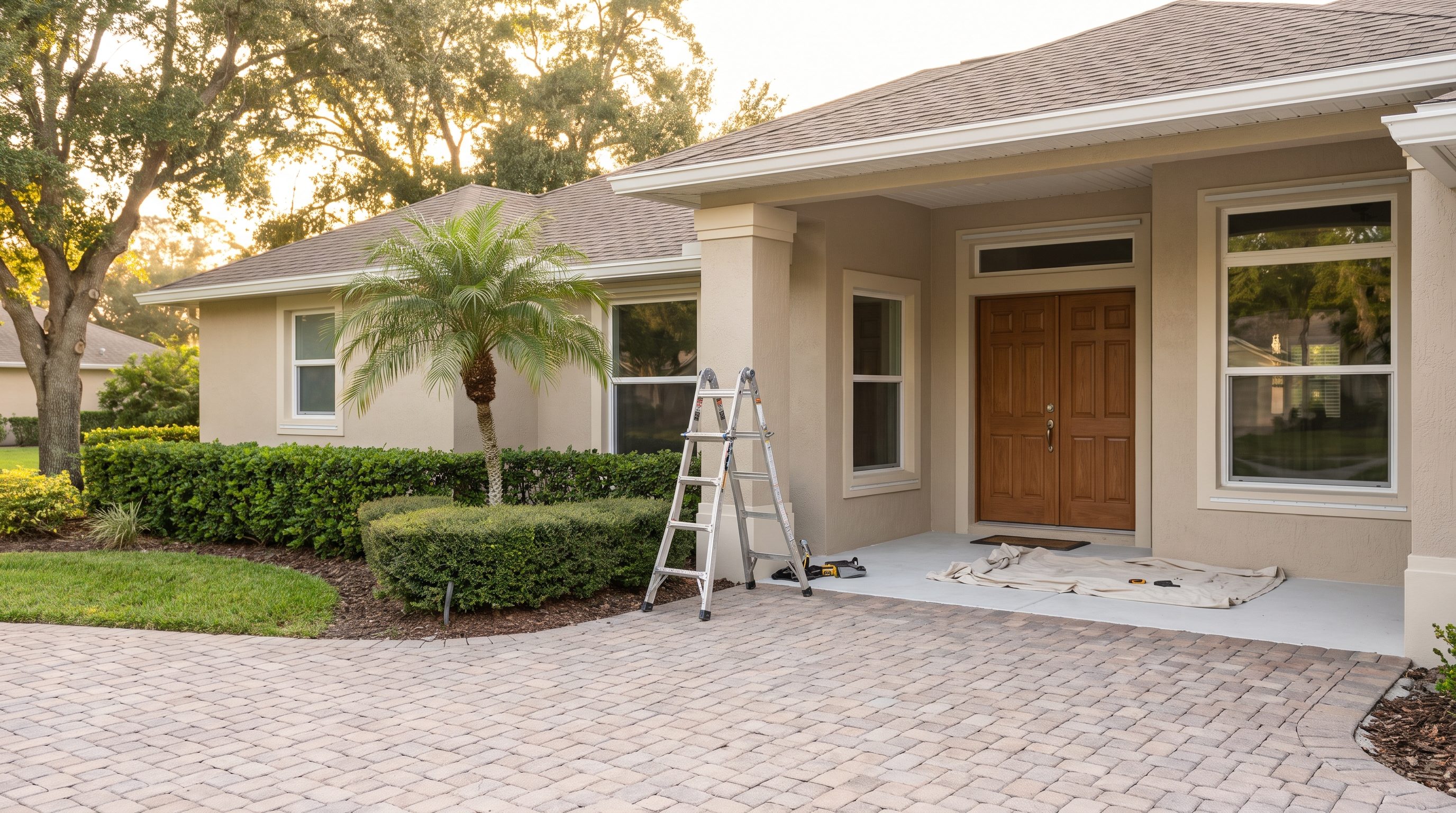
The couple who called about the master bath had a folder. Not a metaphorical folder. An actual one, with printed pages: three contractor websites, a page of questions, a note about what the neighbor two doors down paid, and a printout of a license lookup from the state portal. They had been thinking about the project since roughly Christmas. It was now August.
Nobody in the trade is surprised by that client. What surprises people is how much contractor marketing is still built for the opposite one: the fast, scroll-and-tap buyer who barely exists in the households actually writing the checks on this coast.
The market is older than the marketing
Start with who is here. Census estimates compiled by USAFacts put about 180,900 Sarasota County residents at age 65 or older in 2024, roughly 38 percent of a county of about 480,000. Florida overall sits at 21.8 percent; the country at 18 percent. This county is not a slightly older version of America. It is a different chart.
Second, the growth story has changed shape. Analysis of Census data by the University of Florida's Shimberg Center, reported in July 2026, found Florida netted 201,191 residents through migration in 2025 (about 551 a day, down from the 2022 peak of 598,737, or roughly 1,640 a day), with natural population change nearly flat. Fewer arrivals, almost no growth from births. A rising share of the work is therefore not in houses that do not exist yet. It is in the houses already standing, owned by people who intend to stay in them.
The national remodeling data says the same thing from the other direction. In February 2026 the NAHB forecast roughly 3 percent inflation-adjusted growth in residential remodeling for 2026 and another 2 percent in 2027, citing an aging housing stock (median home age up from 31 years in 2006 to 41 in 2023) plus accumulated equity and the rate lock-in that makes staying cheaper than moving. In the same release, 56 percent of remodelers reported doing aging-in-place work, and 73 percent said requests for those features had increased over the past five years.
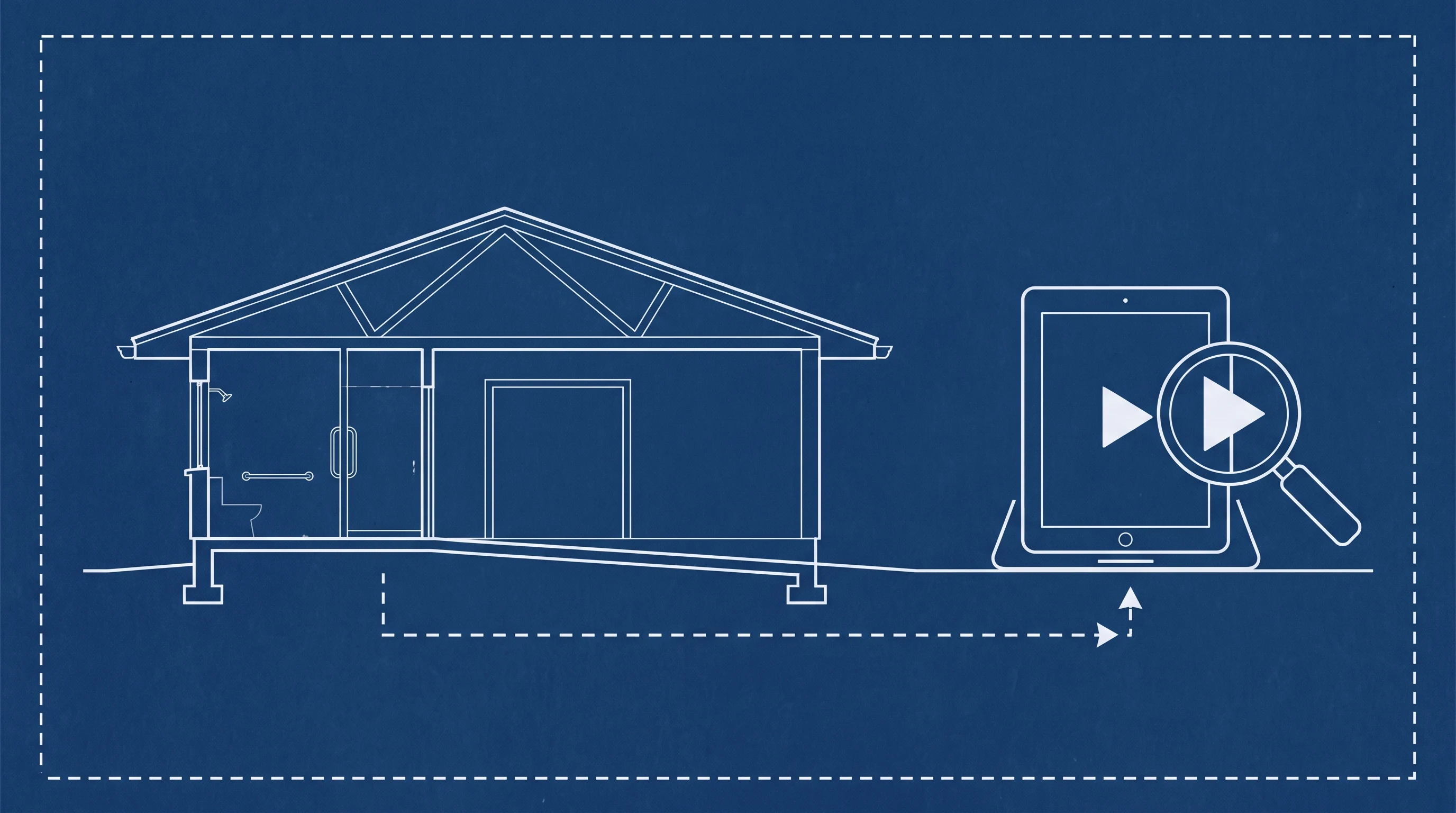
The work on the left; the four months of verification on the right · Illustration: Florida Construction Media
"Aging in place" is a scope, not a sales pitch
The NAHB/Westlake Royal survey published in October 2025 put numbers on what this work actually is. Among remodelers doing it: 87 percent had installed grab bars, 78 percent curbless showers, 71 percent comfort-height toilets, 52 percent widened doorways. Ninety-one percent said the primary motivation was homeowners planning ahead for future needs, not responding to a crisis. Forty-three percent cited an acute age-related disability; 48 percent had clients with an older parent moving in.
The marketing implication is plain. The dominant buyer is not in an emergency; they are anticipating one, calmly, years out, and the anticipating is what takes months. That same survey found 65 percent of the work was client-requested rather than contractor-suggested, and 98 percent of customers were receptive once the modifications were raised. Demand is not the constraint. Being findable and credible during the anticipation window is.
One caution on language, because it costs jobs: almost nobody who is 62, healthy, and planning a bathroom identifies with "senior," "elderly," or "accessible." They are renovating a bathroom they intend to love for twenty years. The scope is aging-in-place; the pitch is a better bathroom that will still work later. Sell the room, spec the future.
What "researches everything" actually means
It does not mean star-rating shopping. This is where a lot of contractor marketing misreads the buyer.
A June 2026 survey by the UK's Federation of Master Builders and HomeOwners Alliance, reported by Build News, found roughly one in three homeowners under 35 relying primarily on online reviews to choose a builder, against 16 percent of those over 55, while the over-55s were likelier to verify credentials directly: 21 percent checked trade-association membership versus 8 percent of the under-35s, 27 percent checked professional qualifications versus 15 percent. It is British data and the institutions differ, so treat it as directional. But it matches what Gulf Coast contractors describe: the older client trusts a neighbor's recommendation, verifies it, then keeps reading.
And they are online while they do it. Pew Research reported that 90 percent of adults 65 and older used the internet as of June 2025 and 78 percent owned a smartphone. Where they are is the useful part: Pew's 2025 social media survey found YouTube and Facebook are the only platforms a majority of every age group uses, while just 19 percent of the 65-plus group use Instagram and 5 percent use TikTok daily. A Reels-first strategy aimed at this buyer is fishing where they are not.
So the research trail runs: a name from a neighbor or a club, a search on the company name, the website, the license lookup, Google reviews read as prose rather than scored, and, increasingly, YouTube, where a long explanation is a feature rather than a failure to be concise.
The content that survives four months of checking
Short, punchy, and vague loses here. The pieces that work are the ones a careful person can sit with.
The process film, at length. Ten to fifteen minutes on how a bathroom actually goes: the sequence, the inspections, the days without a shower, the decisions and when each is due. Nobody under 40 watches it. This buyer watches all of it, twice, and shows their spouse.
The living-through-it film. The largest unspoken fear is not cost. It is dust, strangers in the house, and disruption to a routine that is the point of retirement. Film the containment: zip walls, floor protection, daily cleanup, where the crew parks, what hours they keep. The dust-to-done story system is built for exactly this anxiety.
The money film. Ranges, what moves them, what is an allowance and what is not. This buyer has time to compare and will punish a vague number harder than a high one. The argument for publishing prices is strongest here.
The credentials film. Two minutes: license number on screen, how to look it up themselves, the insurance certificates, who is a W-2 employee and who is a sub. Handing someone the tools to verify you is the fastest trust move available, and it lands hardest on the buyer who was going to check anyway. Stellar's guide to trust signals for premium trades covers the rest of the stack.
The question library. One question, one answer, filmed plainly, the FAQ library approach, because a four-month research window is made of questions, and every one answered in public is one you do not answer at 8pm on a Tuesday.
Spec box: the 55+ rotation. One filmed half-day covers a quarter. One long-form process film per core scope (bath, kitchen, whole-home) published to YouTube and embedded on its own page. One containment film showing dust control and daily site etiquette. One money film with real ranges and dated on screen. One credentials film under two minutes. Six to ten question answers cut from the same day, each 60–90 seconds. Publish the long pieces where they can rank and be found months later; use Facebook for local reach rather than as the archive.
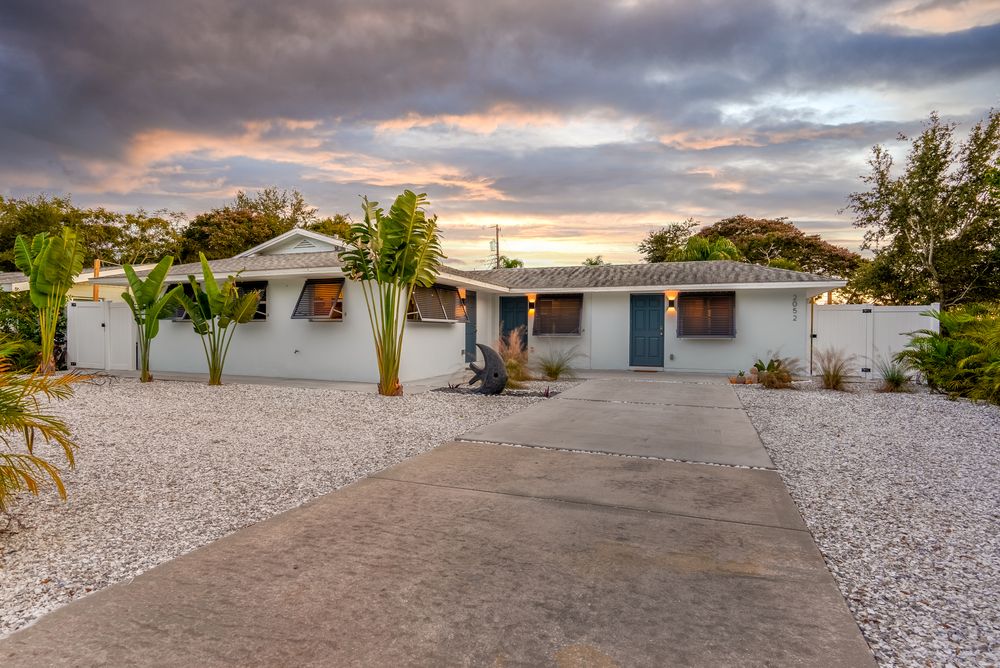
The scope this buyer is actually shopping for · Jo-An Dr, Sarasota · Photo: Stellar Media Collective
Patience is the strategy
A client who starts thinking in December and calls in August is not converted by pressure. They are converted by your still being there: same name, same places, with more useful material than the last time they looked.
That is a follow-up problem more than a lead problem. The 97 percent who are not buying yet are, in this market, mostly people who will buy eventually and are not done thinking. A quarterly email with one genuinely useful film in it (the video letter discipline, applied before the contract rather than after) holds a name for a year at nearly no cost. So does the seasonal rhythm: the October arrival who signs in February is the same buyer on a different clock.
Most competitors will not do any of it. Long films are unglamorous, containment footage is boring to shoot, and publishing a license number feels like nothing. It is not nothing to somebody with a folder.
Questions builders actually ask
Should we say "aging in place" in our marketing at all? On the page where somebody is searching for it, yes. It is the term people type. In the film itself, describe what it does: a shower you can walk straight into, a door wide enough for anything, lighting that works at 3am. Nobody wants to be the target of the phrase, and plenty of people want the result.
Our clients' adult children do a lot of the searching. Who are we talking to? Both, and they want different things. The homeowner wants reassurance about disruption and control over decisions; the son or daughter, frequently out of state, wants proof you are licensed, insured, and real. Keep the credentials film and the process film side by side: you are answering two people at once, and the out-of-state child usually clicks first.
Is YouTube really worth it for a remodeler? For this buyer it is the strongest single channel, because it is the one place where a fifteen-minute answer is normal. That case is made at length in our piece on owning the local cost searches; with a 55+ client base it is stronger still.
We work in a 55+ community with strict rules about advertising. What can we do? Almost everything that matters, because none of it is advertising inside the community. Word of mouth is the channel there (clubs, neighbors, the board), and your job is to make sure the name that gets passed along survives the search that follows. Publish publicly, run a clean site, and let the community pass you around on its own terms. Working inside a governed community is covered in our Lakewood Ranch piece; Stellar's Sarasota page, kitchen-and-bath page, and resource library cover the mechanics.
Figures checked against published sources as of August 21, 2026: USAFacts' compilation of Census population estimates for Sarasota County, University of Florida Shimberg Center analysis reported July 2026, NAHB's February 2026 remodeling forecast, the NAHB/Westlake Royal aging-in-place survey reported October 2025, and Pew Research Center's internet-use and social-media findings. The Federation of Master Builders and HomeOwners Alliance survey is UK data, cited as directional evidence about older homeowners' verification habits, not as a Florida statistic. Demographic estimates are revised regularly; confirm current figures before repeating them in your own marketing. Florida Construction Media is published by Stellar Media Collective, a video and marketing studio serving Gulf Coast contractors.