YouTube for Builders: Owning the 'Cost to Build in Sarasota' Searches
Reels make homeowners notice you; YouTube is where they do their homework once the project gets real. The builder who answers the cost and timeline questions on camera is usually the only local voice in the results.
8 min read · July 6, 2026 · Florida Construction Media
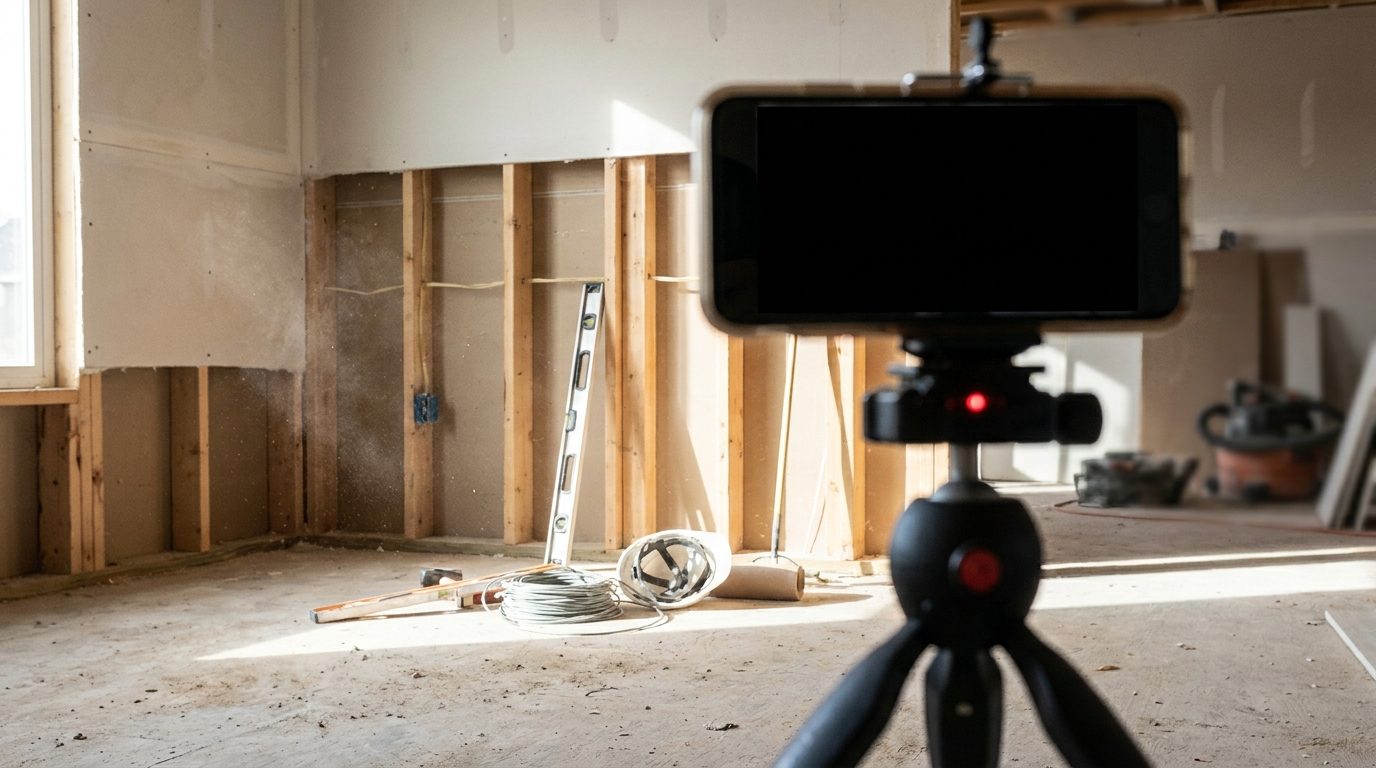
Somewhere on the Gulf Coast tonight, a couple who just closed on a teardown lot is typing "cost to build custom home Sarasota" into YouTube. They'll find a national channel talking averages, a Texas builder pricing a different climate and code, and a 2019 video whose numbers were optimistic when they were new. What they mostly won't find is a Sarasota builder answering the question. That's the opportunity, and it costs a tripod and a few honest afternoons to take.
Reels and YouTube get filed together as "video," and they do opposite jobs. A reel is discovery: it interrupts somebody who wasn't looking for you, earns a few seconds of attention, and plants your name — useful, and we've modeled what a quarter of them plausibly does. YouTube is research. It's where a homeowner goes on purpose, questions in hand, once the project acquires a budget and a timeline — "impact windows worth it," "how long does a kitchen remodel take." Discovery is how you get noticed. Research is where you get chosen, because nobody watches nine minutes on construction pricing to kill time. That viewer is shopping.
The unsexy answer beats the brand film
When builders think YouTube, they think brand film: drone pass at golden hour, swelling music, a montage of reveals. Those have a place — on your website, in a proposal, at a sales meeting. As search content they're nearly worthless, because nobody types a question a brand film answers. The video that wins here looks like homework: a builder at a job site or a desk, answering one specific question a buyer actually typed, with real numbers and the caveats attached.
The competition makes this better than it sounds. For a query like "cost to build custom home Sarasota," the results are mostly national channels and out-of-market builders talking about somewhere else. Construction costs are stubbornly local — wind loads, flood zones, soil, permitting queues, labor — so a plain local answer beats a bigger channel's generic one for the person who typed "Sarasota."
Most people running these searches are months from hiring anyone, which is fine. The builder whose video walks them through the budget while it's still forming becomes the yardstick every later bid is measured against. By the time they're ready, you're not one of the bidders. You're the baseline.

The searches are already happening — with or without your answer · Illustration: Florida Construction Media
Twelve videos a Gulf Coast builder should make
Titles matter more here than anywhere else you publish, because the title's job is to match a typed question. Phrase them the way buyers phrase them:
- "What does it cost to build a custom home in Sarasota in 2026?" The anchor video. Ranges by tier, and what moves them.
- "How long does a custom home take to build in Florida?" Permitting through punch list, including the waits nobody warns them about.
- "Are impact windows worth it, or are hurricane shutters enough?" A genuine either-or buyers argue about at dinner.
- "What does a kitchen remodel cost in Sarasota?" Ranges by scope — refresh, full gut, wall-moving.
- "How long does a kitchen remodel take, week by week?" Including the stretch where nothing visible happens and clients panic.
- "What is the FEMA 50% rule, and will it kill my remodel?" Coastal remodelers answer this weekly; almost none have it on camera.
- "Can I build on a flood-zone lot in Sarasota County?" What AE and VE zones actually mean for design and cost.
- "Should I remodel my Florida home or tear down and rebuild?" The decision framework, and where the answer flips.
- "What does price-per-square-foot leave out?" Why the number buyers cling to misleads them, and what to ask instead.
- "Why do custom builds go over budget?" The five places it happens, and which ones are preventable.
- "What should I ask a builder before signing a contract?" Ten questions, offered from the other side of the table.
- "When is the best time to start construction in Florida?" Rain, hurricane season, permitting backlogs — what matters and what doesn't.
Notice what's not on the list: anything about you. Every title is a buyer's question in a buyer's words. Your company shows up as the one answering it.
The format: answer in the first thirty seconds
These are not productions. Talking head plus b-roll from your own jobs, four to ten minutes, shot three or four at a time in a batched afternoon. The structural rule that separates a search answer from a ramble: give the answer inside the first thirty seconds, then spend the rest earning it. Open with "a custom home in Sarasota runs X to Y, and three things decide where you land" — then unpack the three things. Viewers who only wanted the number got it, and remember that you didn't make them dig. Viewers with a real project stay for the depth, and those are the ones who call.
Use honest ranges, with the same discipline as our cost breakdown: wide enough to be true, narrow enough to be useful, variables named. Put the owner or a senior PM on camera working from notes, not a script — a person who visibly knows the trade reads better at eighty percent polish than a spokesperson at a hundred.
Spec box: the search-answer video, in one pass — title is the buyer's question, word for word; the answer, numbers included, inside the first 30 seconds; 4–10 minutes total; talking head plus b-roll from your own job sites; ranges stated honestly with the "it depends" variables named; a spoken date stamp ("as of mid-2026"); chapters at each sub-question; the same answer written out in the description; end screen pointing to the next question they'll ask.
"My competitors will see my numbers"
This is the objection that stops most builders, so take it head on. Your competitors already know your numbers to within a rounding error — they buy from the same suppliers, bid against you, and hire your former leads. The only person your silence keeps in the dark is the buyer, and silence doesn't read as discretion. It reads as "more than we can afford," or "they'll decide the price after they've seen my car."
Buyers assume ranges whether you state them or not, assembled from national videos, a neighbor's 2021 project, and a guess. Say the range out loud and you replace all of that: you anchor the conversation to reality, you own the follow-up questions, and you filter. Calls that come in after a pricing video already know what neighborhood they're shopping in — which spares your estimator the afternoons currently spent discovering a $400K budget under a $900K wishlist.
The mechanics, as of mid-2026
Platform details drift, so treat these as principles rather than settings. The title mirrors the question as typed — matching the query is the job, and cleverness works against it. Chapters go at every sub-question, because chapter titles are one more place the answer exists in text. The description carries the same answer written out: the platform reads it, general search engines read it, and so do the AI assistants homeowners increasingly put these questions to — an answer that exists in clean text is an answer that can be found and cited. End screens point to the adjacent question — cost leads to timeline, timeline leads to what-to-ask — so one search becomes three answers watched. Thumbnails stay plain: the question or the number, legible on a phone.
The part that compounds
A reel's distribution is front-loaded: the platform circulates it, interest decays, and within days it has mostly done what it will do. Search demand runs the opposite direction — a steady drip of new lot buyers, new transplants, and new storm-repair projects typing the same questions every month, indefinitely. A good answer keeps getting found for years without another minute of work, which means the library behaves like an asset instead of a feed you have to keep feeding.
The repurposing math helps too. Every long answer yields a handful of Shorts — the thirty-second version, cut vertical — and a written FAQ page for your website, built from the cleaned-up transcript. One filming afternoon, three surfaces, each reinforcing the others when a serious buyer checks all of them. They do.
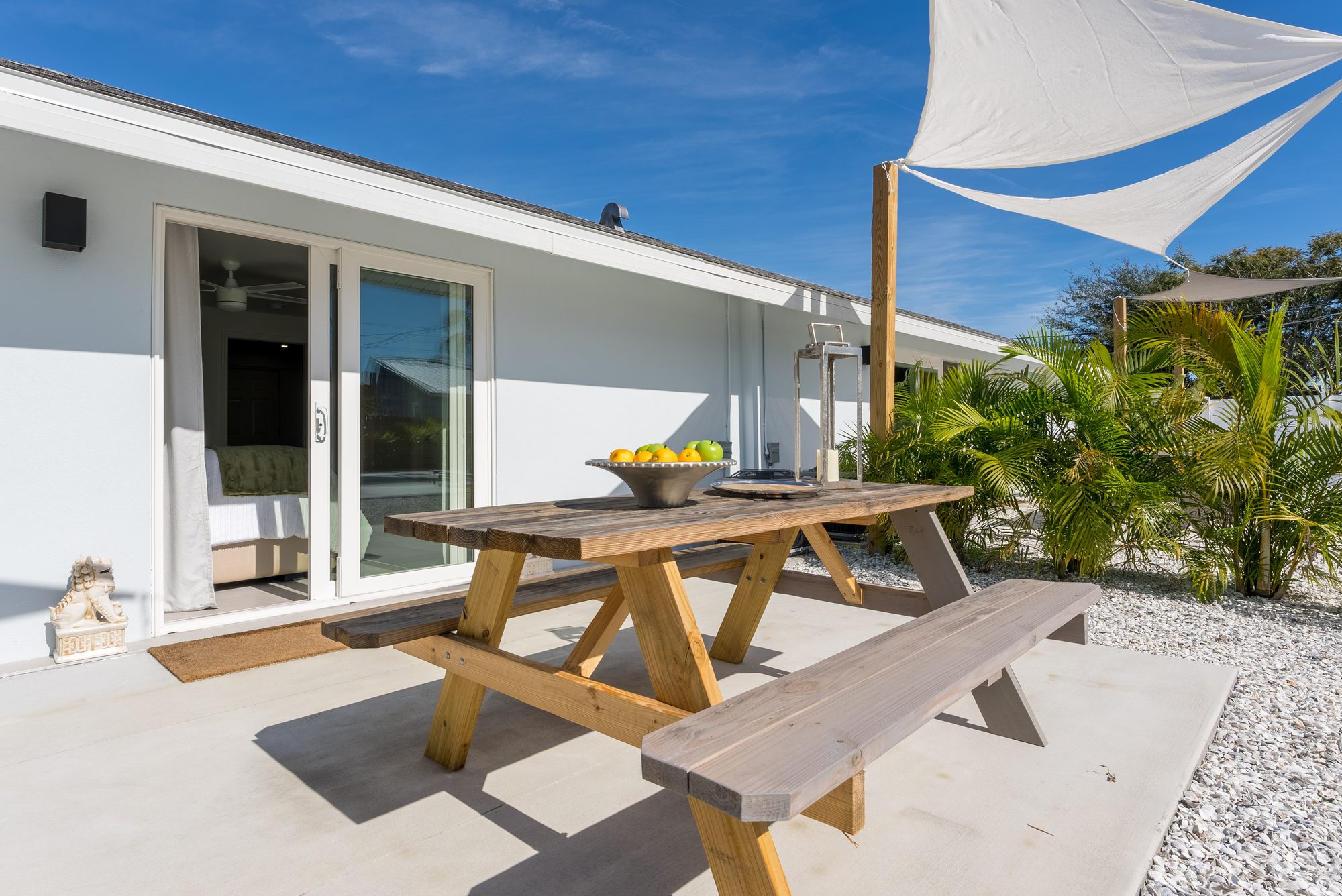
Where the answers get filmed · Sarasota · Photo: Stellar Media Collective
Questions builders actually ask
Do I need subscribers for this to work? No, and that's the point of search content. Feed content lives or dies on an audience; a search answer is judged against the query each time someone types it. A channel with fifteen answers and two hundred subscribers still gets found by the person asking. Subscribers are a byproduct here, not the mechanism.
How long before a video like this produces a lead? Months, usually — a video earns its search position over time, and buyers research for weeks before contacting anyone. That lag is the argument for building the library before you need it, not the argument against starting. We'd rather tell you that plainly than sell you a spike.
What happens when my prices change after I've said them on camera? Date the answer out loud — "as of mid-2026" — and re-record when reality moves; the searches renew every year anyway, and "in 2027" becomes its own title. A dated honest range ages far better than silence. The builder embarrassed by an old number is still ahead of the builder nobody found.
Published July 6, 2026. Platform mechanics are stated generally as of mid-2026 and will drift; we'll update this article when they do. Disclosure: this publication is owned by Stellar Media Collective, a Sarasota studio that builds exactly these search-answer libraries for builders — the playbook above works whether you hire us, a competitor, or nobody at all.