How Much Does Professional Video Actually Cost for a Florida Builder in 2026?
Line-item pricing for the four ways contractors buy video — with the cost drivers nobody itemizes, and the one place paying less reliably costs more.
5 min read · July 6, 2026 · Florida Construction Media
Ask three production companies what a video costs and you'll get a shrug, an "it depends," and a proposal for four times what you had in mind. That's not because anyone is hiding the ball. It's because "a video" describes the deliverable, not the work — and the work is where the money is.
So here is the actual math, organized the way you'd organize an estimate: by scope, with the cost drivers itemized. Prices reflect what we see in the Florida market in 2026 — Sarasota, Tampa Bay, and the Gulf Coast corridor — and they're ranges for a reason. Your job is to know which range you're shopping in before you compare bids, because comparing a $1,500 video to a $15,000 video is comparing a service call to a kitchen remodel.
The four ways builders buy video
1. The one-off shooter — $500 to $1,500 per day. A freelancer with a camera and a drone comes to your job site for a day, hands you footage or a simple cut. You get what one person can carry and shoot. This is the right buy when you need coverage: a milestone pour, a topping-out, a quick walkthrough for a client out of state. It's the wrong buy when the video has to sell, because selling is a writing and strategy problem before it's a camera problem.
2. The single produced video — $3,000 to $12,000. One planned piece: a project story, a company anthem, a customer testimonial done properly. The spread depends on planning days, crew size, locations, and editing rounds — more on those drivers below. Most Florida builders' flagship "who we are" videos live in the $5,000–$9,000 band.
3. The content system — $3,500 to $10,000+ per month. Recurring filming, a publishing calendar, cuts for every platform, and someone accountable for results. This is the category that has actually changed contractor marketing in the last five years, because pipelines respond to consistency, not to one great video. (We modeled what 90 days of weekly output does in a separate article — assumptions printed.)
4. The in-house hire — $55,000 to $85,000 a year, plus gear. A salaried videographer/editor. Right for high-volume builders with real content appetite; wrong for almost everyone under that threshold. The full cost math — including the gear, software, and the six months of ramp nobody budgets — gets its own article.
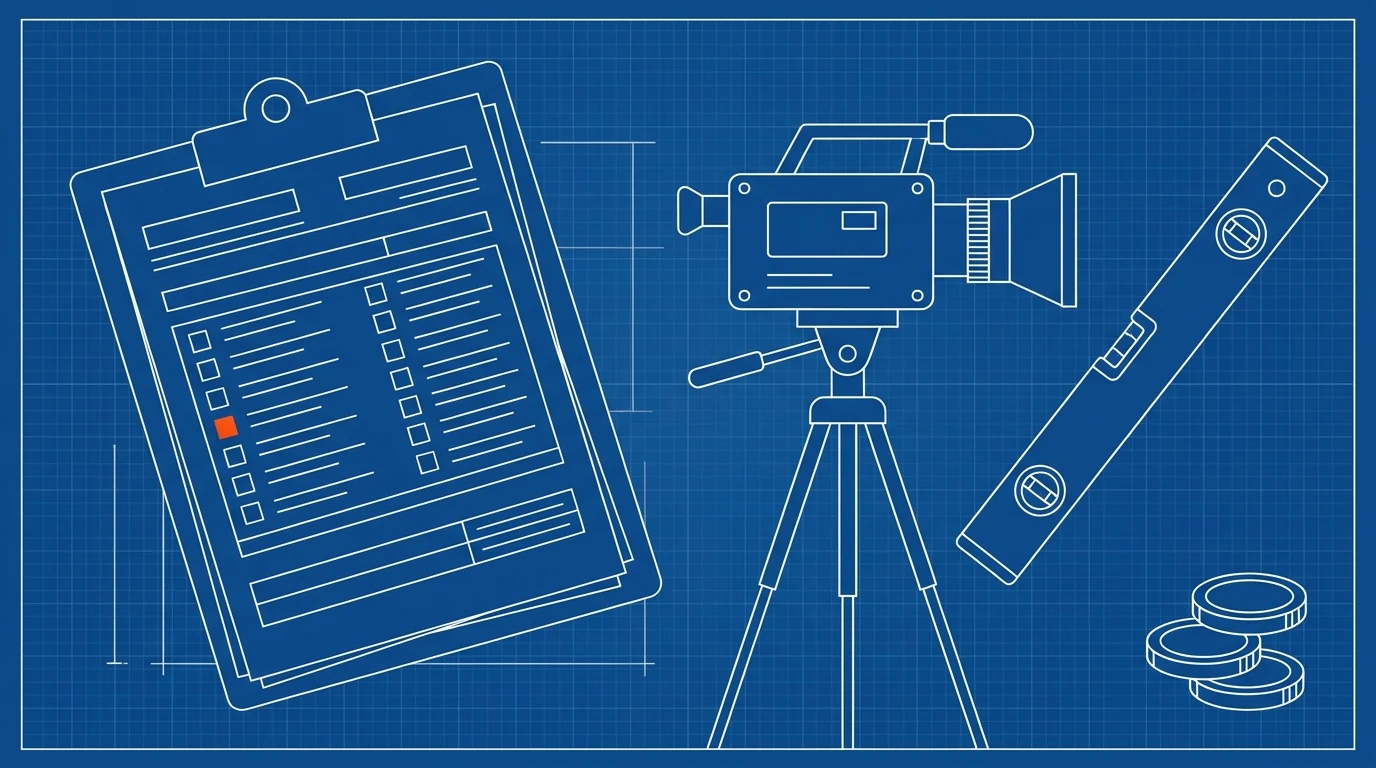
The estimate, itemized — planning, crew, days, and cuts · Illustration: Florida Construction Media
What actually moves the price
Every line on a video estimate traces back to one of these six drivers. If a bid seems high or low, this is where to look.
- Pre-production days. Script, shot list, interview questions, location plan. This is the estimating-and-permitting phase of video: invisible in the deliverable, decisive for the outcome. Cheap videos skip it. It shows.
- Crew size. One person can shoot a walkthrough. A crew of three shoots your best project the way it deserves — one on camera, one on light and sound, one directing the day so your super isn't doing it.
- Days on site. Construction is the one industry where the subject takes months. Catching demo day, rough-in, and reveal means multiple short visits, not one long one — that's mobilization cost, same as your trades.
- Licensed drone work. In Florida, legitimate aerial work means an FAA Part 107 certificated pilot and aviation-aware insurance. It adds a few hundred to over a thousand per day, and the rules around active job sites are stricter than most people think.
- Editing and revision rounds. Figure roughly an hour of editing per finished minute for standard work — far more for heavy graphics. Two revision rounds is industry-normal; unlimited revisions is a fiction that gets priced in somewhere.
- Usage and cutdowns. A master video that also arrives as six verticals, three 30-second cuts, and stills for the website is more work — and worth asking for explicitly, because the derivative cuts are usually where the reach is.
Rule of thumb: if a proposal can't tell you the pre-production plan, the crew size, and the revision policy, you're not looking at a lower price. You're looking at an incomplete scope — the video equivalent of a bid with no allowances listed.
Where paying less reliably costs more
There's one place we'll flat-out tell you not to economize: the piece a prospective client watches before deciding whether to call you about a six-figure job. A $200,000 remodel client is doing the same risk calculation you'd do vetting a sub — and the production quality of your flagship video is, fairly or not, read as a proxy for the quality of your work. Shaky footage and clipping audio on the video that carries your reputation is a bargain that isn't one.
Plenty of other video should be cheap. Progress updates shot on a phone by your PM, quick site stories, a super explaining why the slab cures for a week — rough is fine there. Rough is even an asset; it reads as real. The skill is knowing which bucket each piece belongs in, and the honest answer is that a working system uses both.
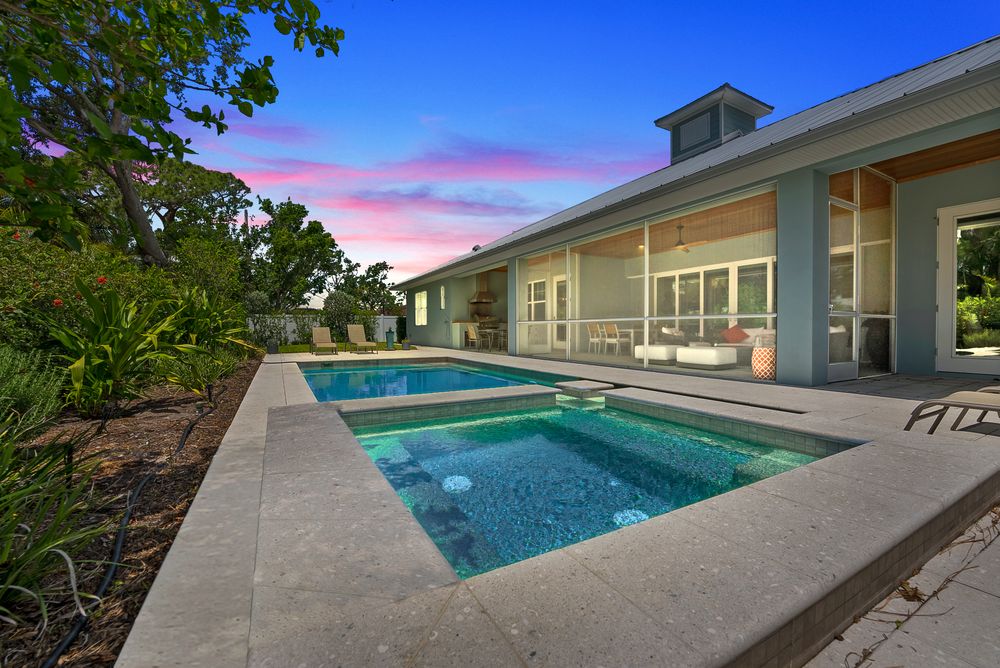
The kind of work the budget buys · Venice · Photo: Stellar Media Collective
Questions builders actually ask
Why does the same video cost $4,000 from one company and $9,000 from another? Usually pre-production and crew. Ask both bidders to itemize planning days, people on site, and revision rounds, and the gap generally explains itself. If it still doesn't, one of them is buying the work.
Is drone footage worth the add? For exteriors, roofing, land, and scale — yes, and in Florida a licensed operator is non-negotiable on active sites. For interiors and craftsmanship stories, budget goes further on lighting and audio.
Can I just do reels on a phone and skip all this? You can do a lot on a phone with a system behind it. What a phone can't replace is strategy — knowing what to say to your buyer — and the flagship pieces where polish is the point.
What should a $2M–$5M revenue builder budget annually? The companies we see treating video as infrastructure — not a splurge — tend to land between $15,000 and $60,000 a year all-in, depending on whether they're buying a library of flagship pieces or an always-on system. Below that, buy fewer, better pieces rather than spreading thin money everywhere.
Pricing reflects the Florida Gulf Coast market as of July 2026 and will drift; we'll update this article when it does. Disclosure: this publication is owned by Stellar Media Collective, which sells the category-3 systems described above — the ranges here include competitors, and the guidance stands regardless of who you hire.