In-House vs. Freelancer vs. Studio: The Real Cost Math of Contractor Video
The videographer hire, the freelancer roster, and the studio retainer, priced the way you'd price a bid — loaded labor, the hidden lines, and the volume math that decides which one pencils.
8 min read · July 6, 2026 · Florida Construction Media
No one has to teach a builder the make-or-buy decision. You run it every time excavation shows up in an estimate: self-perform and you own the operator, the iron, the maintenance, and the idle weeks between jobs; sub it out and you pay a markup so all of that stays someone else's problem. Neither answer is right in the abstract. Self-performing pencils when you have the volume to keep the machine busy, and it bleeds money when you don't.
Video is the same decision. There are three ways to buy it: hire a videographer onto payroll (self-perform), run a roster of freelancers (day labor), or retain a studio (specialty sub). Contractors who get the choice wrong almost always get it wrong the same way — they price the hire at the salary and the freelancer at the day rate, the way a bad estimator prices a carpenter at the hourly wage. You would never let an unloaded labor number into a bid. Keep it out of this decision too.
The in-house hire, fully loaded
Start with the option that looks cheapest per hour and usually isn't. A videographer/editor in Florida runs $55,000 to $85,000 in salary depending on market and seniority — Tampa, Orlando, and the Gulf Coast sit below Miami, and a shooter-editor with a few years of client work behind them sits near the top of the band. Then load it the way you already load field labor.
| Line item | Annual cost | Notes |
|---|---|---|
| Base salary | $55,000–$85,000 | Shooter-editor, junior to mid-level, market-dependent |
| Employer burden (1.25–1.4×) | adds $14,000–$34,000 | Payroll taxes, workers' comp, benefits, PTO — the same loading you apply to a field hire |
| Gear, amortized | $3,000–$7,000 | $8,000–$20,000 up front — camera, glass, audio, lighting, drone, edit machine — spread over roughly three years, plus refresh and repairs |
| Software | $1,500–$4,000 | Edit suite, music licensing, stock assets, cloud storage and backup |
| Ramp and management | never zero | Months to full speed, and a solo creative needs a creative director — that's you |
Add it up honestly and a working in-house video operation runs roughly $73,500 to $130,000 a year all-in. The low end assumes a junior hire and a lot of your patience; the high end is a good one, properly equipped.
The last table line is the one that sinks people. A solo creative without direction produces footage, not marketing. Someone has to decide what gets made, for which buyer, on what calendar, and whether it worked — and with an in-house hire, that someone is you. Put any honest rate on your own hours and the management line stops being zero. Several months of ramp before full output is normal, not a bad hire.
None of this makes hiring wrong. It makes it a volume play. At multiple finished pieces every week — a multi-community builder feeding sales, recruiting, and three offices at once — per-piece cost drops below anything you can buy outside, and a camera on payroll that can be on any site within the hour is worth real money. Below that volume, you own a fixed cost that works part-time.

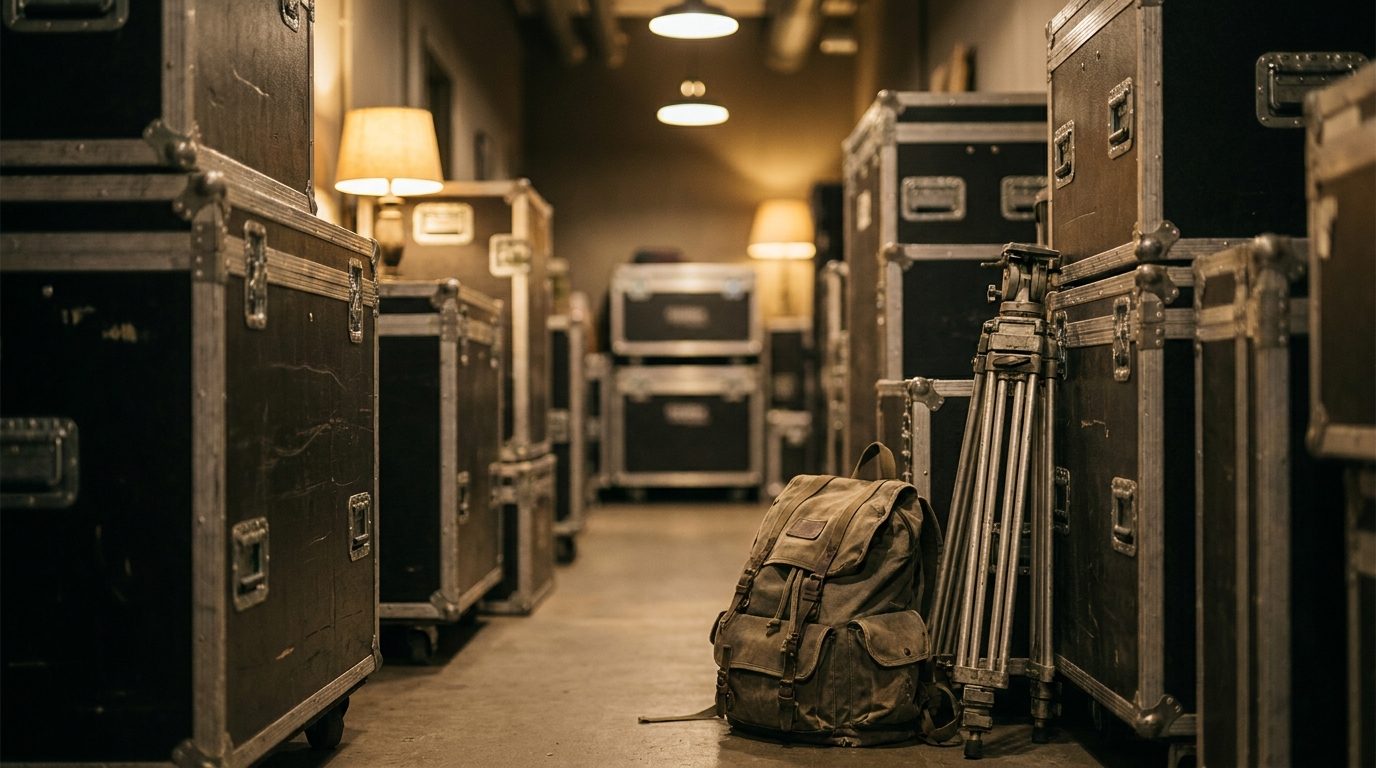
One hire versus a bench — weigh the loaded cost · Illustration: Florida Construction Media
The freelancer roster
Day rates for a competent one-person shooter in Florida run $500 to $1,500 a day, depending on gear, drone certification, and how much editing is bundled.
Model a steady cadence honestly: two shoot days a month is $1,000 to $3,000 before anyone edits a frame. A well-planned shoot day yields three to six short finished pieces plus a longer cut; with editing billed per piece or hourly, the month typically lands at $2,000 to $5,000 invoiced. Call it $24,000 to $60,000 a year for a steady cadence — a wide spread, because freelance talent is the least standardized product in this market.
The invoices aren't the whole cost. Four lines never appear on them:
- Sourcing and vetting. Finding a good freelancer is a hiring process you run without HR — portfolios, a test shoot, references. You will run it more than once.
- Availability. Your topping-out doesn't reschedule, and neither does the wedding they booked eight months ago. Florida freelance calendars fill with weddings and corporate work first, because that's who pays the rate reliably.
- No strategy included. A freelancer executes shoot days. Deciding what to make, for which buyer, on what calendar is still a job — yours, unpaid.
- Quality variance. Three freelancers means three color grades, three pacing instincts, and three definitions of done. Your feed shows the seams even when each piece is individually fine.
So the realistic total is $24,000–$60,000 a year on invoices, plus a producer's workload you're absorbing personally.
The studio retainer
The system retainer runs $3,500 to $10,000 a month in this market — $42,000 to $120,000 a year. Inside, when it's built right: strategy and a publishing calendar, a consistent crew, editing, derivative cuts for each platform, and one party accountable for output. You're buying a system, not shoot days.
The honest cons: you have less control than you'd have over an employee — you're a client on a roster, not the boss — and quality varies across studios just as it varies across freelancers. A weak retainer is the most dangerous buy on this page, because it's the easiest to keep paying on autopilot. The vetting questions from our pricing breakdown apply double here: pre-production plan, crew size, revision policy, and who answers for whether any of it moves pipeline.
Side by side
| In-house hire | Freelancer roster | Studio retainer | |
|---|---|---|---|
| Annual cost, steady cadence | $73.5K–$130K all-in | $24K–$60K invoiced, plus your producer hours | $42K–$120K |
| Per finished piece, at typical volume | $370–$1,300; falls fast with volume | $300–$1,250 | $300–$800 |
| Strategy included | No — you direct | No — you produce | Usually — verify it |
| Management burden on owner | Highest: creative director | High: producer and scheduler | Lowest: review and approve |
| Flexibility to pause | Low — it's a payroll position | High — next month | Medium — contract terms |
| Quality consistency | One person's ceiling, sick days included | Varies per hire | Consistent within a studio; varies between studios |
Read the table with volume in mind, because volume is the whole decision. At two to four pieces a month, the freelancer or a small retainer wins on straight math and the hire isn't close. At daily output across sales, recruiting, and multiple communities, the hire wins and the retainer becomes the expensive option. The middle band — roughly weekly output — is where the management rows decide it, and it's where most $3M–$10M builders actually live.
The hybrid that actually works
For builders in that $3M–$10M band, the buy that keeps penciling isn't any single column. It's a split:
- A system partner owns strategy, the flagship pieces, and the weekly cadence — the output model we printed the assumptions for separately.
- Progress content stays in-house, on a phone. Your PM or super shooting thirty seconds of a slab pour is near-free and reads as real — buyers trust it because it's rough.
- Freelancers cover surge. The parade entry, the groundbreaking, the second crew on a day when two things happen at once. Rent peak capacity instead of owning it.
That split buys strategy once, keeps the near-free content near-free, and handles peaks the way you already handle equipment: rent the machine you can't keep busy.
The break-even arithmetic
If you want the decision as one division problem, here is the pattern: take the honest annual all-in for the hire and divide it by what a studio charges you per finished piece. The result is the piece count above which the hire defends itself.
A worked example — an example, not data: say the hire pencils at $100,000 all-in, and the retainer you're comparing works out to $500 per finished piece. $100,000 ÷ $500 = 200 pieces a year — call it four finished pieces every working week — before the payroll option is cheaper per piece. A cheaper hire or a pricier studio moves the line down; a junior hire who ships two pieces a week moves it out of reach. Run it with your own numbers. The arithmetic takes five minutes, and it's the same five minutes you'd spend checking whether a second excavator pays.
Rule of thumb: publishing daily, hire. Publishing weekly or less, buy the work. In between, do the division.
Sarasota's Bayfront Park · Photo: Stellar Media Collective
Questions builders actually ask
Can my marketing coordinator just learn video? Partially, and the partial is worth having. Capture, yes: with a current phone, a gimbal, and a lapel mic, a coordinator can shoot progress updates and site stories that buyers actually watch. Strategy and edit polish, mostly no — knowing what to make for your buyer, and cutting the flagship piece that carries your reputation, are crafts with years-long learning curves, and you'd be paying a coordinator's salary for a beginner's edit. The hybrid above is built for exactly this split: coordinator captures, partner directs and finishes.
What happens when my in-house videographer leaves? You lose the person, the momentum, and — unless you managed for it — the system: the file organization, the half-finished edits, the knowledge of what worked. Key-person risk is the unpriced line in the in-house column; a studio has a bench, and your hire is a bench of one. If you do hire, put documented process and an organized footage library in the job description from day one.
Can I start with freelancers and move up later? Yes, and at low volume you probably should — it's the cheapest way to learn what you actually need. Two conditions. Get ownership of raw footage and account access in writing from the first invoice, so the library survives the transition. And understand what you're deferring: a year of shoot days without a plan produces a hard drive, not a pipeline.
Figures reflect the Florida market as of July 2026 and will drift; we'll update this article when they do. Disclosure: this publication is owned by Stellar Media Collective, which sells the studio option described above — which is exactly why the math is printed in full, so you can check it against any bid you're holding, including theirs.