What 90 Days of Weekly Reels Does to a Custom Builder's Pipeline
Post one project reel a week for 90 days — what does it actually do for a custom builder's pipeline? We ran the numbers, and every assumption is printed so you can check the math yourself.
9 min read · July 6, 2026 · Florida Construction Media

Somewhere in your DMs right now is a marketer with a screenshot: a view counter with a lot of digits, someone else's account, and an offer to do the same for you. The screenshot might even be real. You still can't audit it: you don't know the market, the ad spend behind it, or whether the views came from homeowners or teenagers in another hemisphere. Construction runs on numbers you can check. Marketing mostly doesn't. This article is an attempt to close that gap.
So, plainly: this is a model, not a case file. We built a hypothetical — a $3M-a-year custom builder on Florida's Gulf Coast, starting from a dormant Instagram account, posting one project reel per week for 13 weeks — and ran the arithmetic on what that quarter plausibly produces. Every assumption is printed below with the reasoning beside it. No invented client, no screenshots, no fine print doing load-bearing work. And when a client lets us publish their real numbers, this article gets replaced by the real thing. That promise is part of the piece.
Why publish a model at all
Builders get pitched "results" constantly, and almost none of it survives a follow-up question: whose account, what market, what did the jobs actually close at. A case study you can't verify is a testimonial wearing a spreadsheet costume. A model is less impressive and more useful — it's an argument with its inputs showing. If you think one of our inputs is wrong — you might be right — change it and rerun the math yourself. Try doing that to a screenshot.
There's also a conflict to name early: this publication is owned by a company that sells the kind of content system being modeled. Discount our enthusiasm accordingly — printed assumptions keep us from hiding optimism inside a number you can't see.
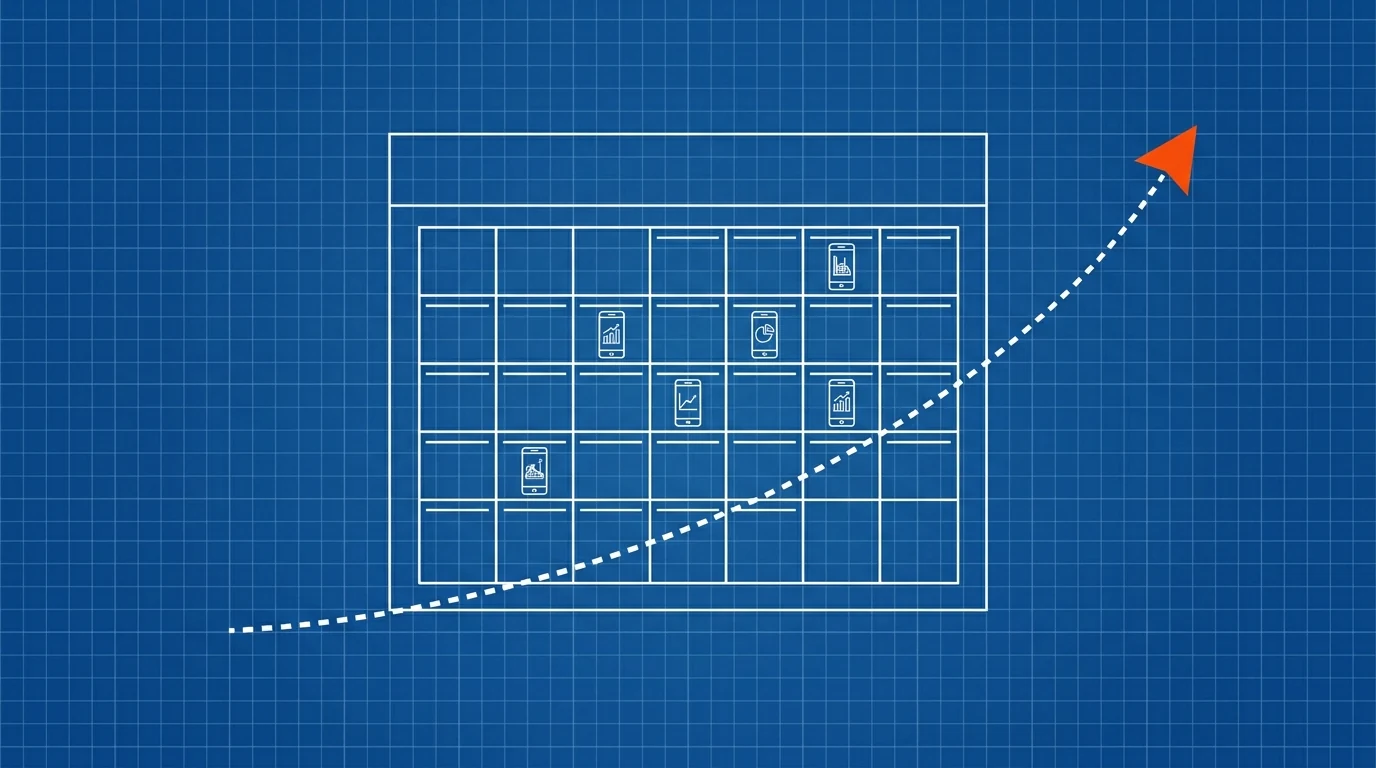
Thirteen weeks on the calendar beats one viral day · Illustration: Florida Construction Media
The assumptions, printed
The ranges below come from two places: our own production work across trades accounts, and what the platforms surface publicly in account-level analytics. They are inputs, not findings. Argue with them — that is what they are for — and substitute your own wherever you know better.
| Input | Range used | Why this range |
|---|---|---|
| Per-reel reach, small local account | 300–1,500 accounts | A dormant account has no follower base to lean on, and local niche content caps the ceiling on purpose — fewer people see each reel, but more of the right ones. Small trades accounts we produce for land in this band. |
| Profile-visit rate | 2–4% of accounts reached | In line with what Instagram surfaces in account analytics for project-focused trades content, which pulls higher-intent visits than entertainment. |
| Website-click rate | 10–20% of profile visitors | Depends mostly on whether the profile reads "active local business" — pinned project, service area, a link that works. |
| Inquiries over the full 90 days | 1.5–2.5% of profile visitors | An inquiry about a six-figure build is a rare, slow event driven by weeks of repeat exposure, so we model it per quarter, not per reel. Applied at the low end for larger reach pools, because marginal viewers are less targeted. |
| Share of inquiries that qualify | 40–60% | Custom work filters hard on budget, land, and timeline. Half is a fair planning number. |
| Average project value | $150K–$400K | Gulf Coast custom builds and major remodels for a builder this size. Substitute your own book of work. |
| Close rate on qualified inquiries | 20–40% | Builder-dependent — this is your sales process, not the platform's. Whatever you close on referrals is a reasonable starting guess. |
One input deserves its own paragraph because it's where reel math usually goes wrong: reach. A dormant local account will not reach many people per reel, and that is fine, because reach is not the goal. Instagram distributes reels by interest and location, which means a reel about a clean slab pour in Sarasota County mostly finds people who care about building in and around Sarasota County. The right 500 households there are worth more to a custom builder than 50,000 strangers ever will be. Reels about rough-ins do not go viral in Ohio, and don't need to.
The math, three ways
Read this first: every number in the table below is a stated assumption carried through arithmetic — nothing on this page is a measurement of a real account.
Thirteen reels, three scenarios. Conservative uses the low end of every input. Expected uses the middles. Optimistic uses high reach with the conversion dials deliberately tempered, because multiplying best cases together is how marketing math lies.
| Stage | Conservative | Expected | Optimistic |
|---|---|---|---|
| Reels published | 13 | 13 | 13 |
| Per-reel reach used | 300 | 800 | 1,400 |
| Cumulative local reach | ~3,900 | ~10,400 | ~18,200 |
| Profile visits | ~80 | ~310 | ~730 |
| Website clicks | ~8 | ~45 | ~130 |
| Inquiries, full 90 days | 2 | 7 | 12 |
| Qualified conversations | 1 | 3–4 | 5–6 |
| Jobs won | 0.25 | ~1 | ~2 |
Every figure is rounded — decimals in a model built on ranges are fake precision. Two notes on reading it. Cumulative reach double-counts people, and the double-counting is the mechanism — nobody calls a builder off one reel; they reach out in week nine after watching the same crew do clean work all summer. And the website-click row is there because builders ask about it, not because the funnel depends on it; a good share of high-intent contact on Instagram arrives by DM without ever touching your site.
Now the fractional jobs, which are the most honest numbers on the page. "0.25 jobs" means: picture four identical builders running this system for a quarter; roughly one of them signs a contract. You don't get to know in advance which one you are. A fraction is the model's way of saying run the system longer than a quarter — at a quarter of a job per 13 weeks, the expected first signed contract lands closer to month six than month three.
Here is why the table stays interesting at the bottom. At the 18–25 point gross margins typical of custom work, one $150K–$400K job carries $30K–$100K in gross profit. Ninety days of a professionally run content system costs roughly $10K–$30K depending on scope — the line items are itemized in our cost breakdown. The expected case pays for the quarter several times over. But read the conservative case honestly: it can mean zero contracts this quarter and a spend you carry, with the return arriving as a few thousand local homeowners who now recognize your work — compounding attention that the next quarter's math runs on. Whether that risk profile fits your balance sheet is a business decision. The model's job is to refuse to hide it.
What this model cannot tell you
A model is a clean room. Your market isn't. Five things the tables above have no opinion on:
Whether your market is saturated. If three builders in your county already post good work weekly, your reach math is different — and the model can't see them.
Whether your content is any good. The model assumes competent execution: real project stories with a setup, a problem, and a reveal, which is a craft of its own. Thirteen logo slideshows will underperform the conservative column and prove nothing about the channel.
Anything past day 90. Old reels resurface and prospects binge the back catalog before calling — the library keeps working after the quarter ends. The model stops at 13 weeks, which biases it low.
Referral amplification. When a past client shares the reveal reel of their own house, it reaches exactly the right people with a built-in endorsement. Unmodeled, because it's unpredictable — and often the largest single effect.
Whether you'll actually do it. The input most builders fail on is not quality. It's week eight. The model assumes 13 for 13; the graveyard of contractor Instagram accounts assumes otherwise.
What makes the 90 days work in practice
Weekly posting sounds like weekly filming. It isn't — the builders who survive week eight never let the two become the same thing.
Batch the filming. Two shoot days a month, planned against the construction schedule, cover a month-plus of weekly posts. Thirteen separate shoots is how the system dies; six shoot days a quarter is how it ships.
One project is the spine. A single active build, told in weekly chapters — demo, foundation, the problem nobody saw coming, rough-in, finishes, reveal — beats thirteen disconnected clips. The audience follows a story; the story is your actual job site.
Post beyond Instagram. The same 13 reels belong on your Google Business Profile — where video works harder than almost anywhere because the viewer is already searching your name — plus YouTube Shorts and Facebook, which is where a large share of Gulf Coast homeowners in their 50s and 60s spend their evenings. The model counts none of that extra distribution, which makes it conservative by construction.
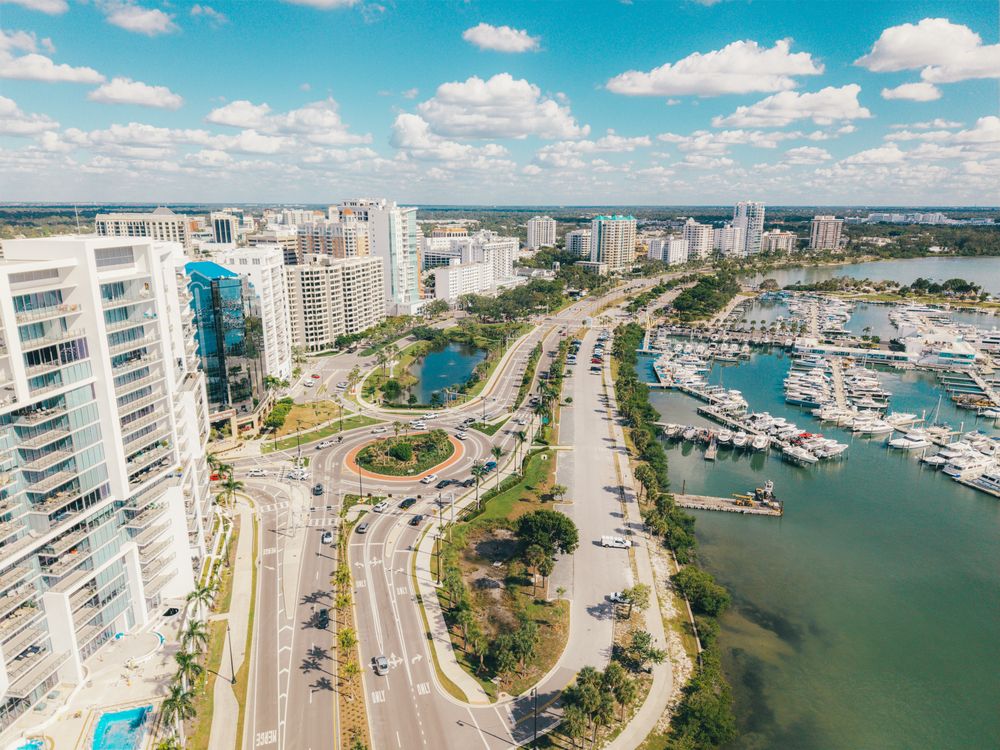
The audience is local by design · Downtown Sarasota · Photo: Stellar Media Collective
Questions builders actually ask
Why should I trust a model over a case study? You shouldn't trust either. A case study is one company's unverifiable past — different market, different price point, survivorship baked in. A model is just an argument with its inputs visible. The useful move isn't trust; it's checking assumptions, and you can only check assumptions someone was willing to print. That's the reason this article exists.
What if I run it for 90 days and get nothing? The model already says that's a live outcome — 0.25 jobs rounds to zero more quarters than not. Before declaring the channel dead, audit the two inputs the math can't see: did all 13 actually ship, and were they project stories or logo slideshows. If both held, you exit the quarter with a warm local audience and a content library — a better starting position than the dormant account you began with.
All my work comes from referrals. Why bother? Because referrals already route through this. The first thing a referred prospect does is look you up, and thirteen recent reels of clean work reads very differently than a grid last touched in 2023. The model treats Instagram as discovery; for most custom builders the larger effect is quieter — looking solid at the exact moment a referral checks you out.
Model published July 2026. Standing offer: the first client who approves publication of their real 90-day numbers — reach, inquiries, contracts, all of it — replaces this model with a real case file — and we'll let the measurement embarrass the arithmetic wherever it chooses. Disclosure: this publication is owned by Stellar Media Collective, which sells the content systems this model describes. That is precisely why the assumptions are printed.