Google Business Profile + Video: The Local-Pack Play Most Trades Ignore
When a homeowner compares three contractors in the map pack, the profile that looks alive gets the call. Thirty-second clips of real work are the cheapest way to look alive — no ranking mythology required.
7 min read · July 6, 2026 · Florida Construction Media

Watch how a $150,000 kitchen actually gets awarded. The homeowner collects three names — from a neighbor, from typing "remodeler near me," usually both, because referral names get Googled too. Then comes the step that decides which phone rings: she opens all three Google Business Profiles and reads them side by side. How many photos, and from what year. How many reviews, and whether anyone bothered to answer them. Any evidence the company has done something in the past ninety days. Two minutes of this, and she calls one of you. The other two never find out they made the shortlist.
That comparison moment is the whole game, and it happens on a screen most contractors haven't looked at since they claimed the listing. The profile — not the website — is the storefront a buyer actually walks past. Most contractor storefronts are a dusty window: twelve photos from 2022, no posts, no video, one unanswered review from a guy mad about a driveway you didn't pour.
Video is the cheapest fix. Not because Google hands out ranking points for it — nobody outside Google can prove that, and we won't pretend to. Because a profile carrying fresh 30-second clips of a crew actually working reads as alive, busy, and real at the precise moment a buyer is choosing among three companies that all claim twenty years of experience and attention to detail.
What the local pack actually rewards
Google publishes its local ranking criteria in three words: proximity, relevance, prominence. How close you are to the searcher, how well your profile matches the query, and how established you look — reviews, mentions, general weight in the world. Everything past those three words is inference, because Google keeps the local algorithm deliberately opaque and adjusts it without notice.
So here is the claim sorted into what's solid and what isn't. Solid: a complete profile — categories, services, service area, hours, photos — gives Google more to match against (the relevance lever), and Google says as much in its own guidance. Reviews and review responses feed prominence. Less certain but observable: active profiles tend to be visible profiles — completeness and engagement correlate with showing up more. Correlate is the honest verb, and anyone who tells you video specifically moves local rank is selling speculation dressed as science.
The part that isn't speculation: conversion. On most searches you don't need to outrank anybody. If you're in the pack of three the homeowner sees, you've already been ranked — what's left is winning the side-by-side. That's a merchandising problem, not an algorithm problem, and video is the highest-signal merchandise a profile can carry.
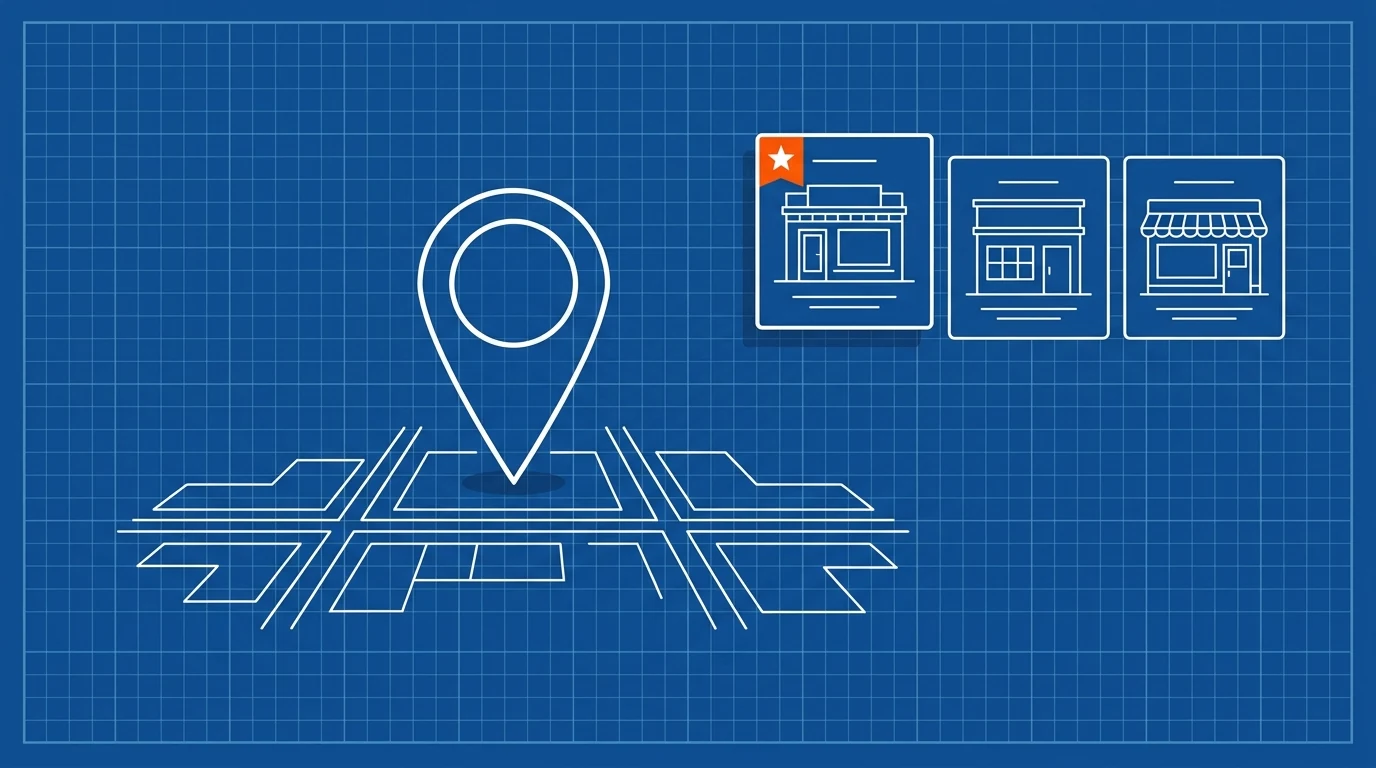
The comparison moment — three profiles, one call · Illustration: Florida Construction Media
The video mechanics, as of mid-2026
As of mid-2026, GBP video means short, owner-uploaded clips — roughly 30 seconds and file-size capped — added through the profile manager the same way you add photos. They surface in the photos and media area, which is exactly where a comparison shopper goes digging. The limits drift a little every year; trust the upload screen over this paragraph.
Three rules of the format. Shoot or crop vertical-friendly, because the buyer is holding a phone. Assume it plays silent, so anything that matters has to be visible — no talking heads that collapse without audio. And make the first two seconds unmistakably a job: a cabinet run going in, a crane pick, tile hitting mud. Each clip has one sentence to say — these people are working — and it should say it fast.
Four clip types carry the whole play:
| Clip type | Source | Refresh rhythm |
|---|---|---|
| Owner intro — "who answers when you call" | One planned 30-second piece to camera | Yearly, or when that person changes |
| Walkthrough cut-down | Best 30 seconds of a job-site walkthrough | One or two a month |
| Crew at work | PM's phone footage, trimmed and steadied | Monthly |
| Finished-project pan | Final-day footage from each completed job | Every job you'd put your name on |
The owner intro earns its slot because a remodel client isn't hiring a logo; she's deciding whose calls she'll take for eight months. Face, name, what you build, and where — that answers the question no photo can.
The rest of the alive-profile system
Video on an otherwise dead profile is one lit window in an abandoned building. The rest of the system takes less time than people fear:
Posts. Weekly-ish. One project photo, two sentences about what happened. Not essays, not promotions, no stock photography.
Q&A. Seed it yourself: write the ten questions buyers actually ask — licensed and insured, who runs the site day to day, permits, typical timeline, deposit structure, warranty, service area, subs versus employees, how you communicate, how far out you're booking — and answer them. Google designed the feature so owners can ask and answer; that's a feature, not a hack. Leave it empty and eventually a stranger fills it in for you.
Review responses. Written like a human who remembers the job. Name the project, name the crew lead if you can. "Thank you for your valuable feedback" reads like nobody's home.
Services and service area. Kept current. This is straight relevance matching — the one lever Google explicitly says counts.
The clips slot into that same weekly rhythm, and if you're already running a weekly reels system, they cost nothing new. The GBP upload is a distribution stop for footage that already exists, not another production job.
Spec box: the monthly GBP maintenance checklist.
- Upload two to four video clips — at least one walkthrough cut-down.
- Add photos from every active job. Ten a month beats a hundred every January.
- Publish four posts: photo plus two sentences.
- Answer every new review by name, referencing the job.
- Add or refresh one Q&A entry.
- Confirm hours, phone, services, and service area still match reality.
- Pull up your three nearest competitors' profiles and look at yours the way a buyer will.
Measurement without kidding yourself
The profile dashboard reports calls, direction requests, and website clicks. Read them as weather, not instrumentation — the counting methodology changes without notice, and none of it tells you which clip did what. Don't build attribution science on it.
The honest instrument costs nothing: every new inquiry gets asked "how did you find us?" and the answer gets written in the same spreadsheet every time. Expect muddy answers — "Dave gave me your name, then I looked you up and saw the kitchen video." Muddy is accurate. The profile is rarely the source of a lead; it's the checkpoint nearly every lead passes through on the way to calling. Your job is to stop losing people at the checkpoint, and two quarters of spreadsheet will tell you whether that's happening.
What this costs
Once source footage exists, this is an office-manager system: 30 to 45 minutes a week, most of it uploading clips and typing two-sentence posts. If you're filming anything at all — walkthroughs, reels, even PM phone clips — the cut-downs are a byproduct. And if you're filming nothing, the cost article lays out what source footage runs at every budget; the bottom rung is a phone, a cheap gimbal, and a superintendent willing to narrate.
The moment being contested is a homeowner deciding which of three contractors gets a six-figure phone call, and entering costs about 45 minutes of office time a week. Most trades ignore it anyway. That's the opportunity.
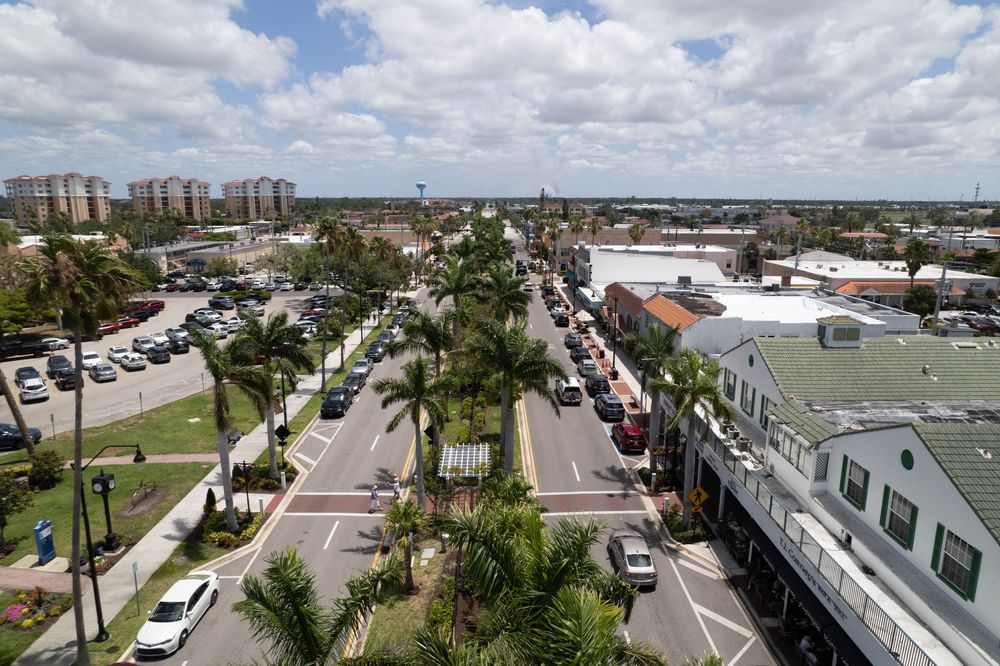
Local search is a shop window · Venice Downtown · Photo: Stellar Media Collective
Questions builders actually ask
Does posting video on GBP make me rank higher? Nobody outside Google can prove it, and be suspicious of anyone who claims otherwise. What's defensible: complete, active profiles correlate with visibility, and Google confirms that completeness feeds relevance. What's certain: when a homeowner compares three profiles side by side, the one with fresh video of real work wins calls it would otherwise lose. Buy the conversion; treat any ranking movement as a bonus you can't verify.
What should my first clip be? The owner intro. Thirty seconds, your face, your name, what you build, where you build it, and who picks up when someone calls. Everything else on the profile shows the work; this one answers the question the buyer is actually nervous about — who am I about to deal with.
Can my office manager run this without me? That's the design. You appear in the intro clip and film nothing else; walkthroughs and crew clips come from the field, and the office manager owns the upload cadence, posts, Q&A, and review responses. If the system depends on the owner remembering, it's dead by August.
We're a referral business — why does any of this matter? Because referrals get verified. The neighbor's three names become three profiles side by side on a phone, same as a cold search — the referral gets you into the comparison, not through it. A dusty profile can quietly un-sell a job your last client already sold for you.
Platform mechanics described here — clip length, file caps, where video surfaces on the profile — are current as of July 2026 and will drift; trust your dashboard over any article, including this one. Disclosure: this publication is owned by Stellar Media Collective, which sells the video systems that produce this kind of source footage. The profile maintenance itself requires no vendor — just the 45 minutes a week.