Before-and-After Isn't Enough: The 3-Act Project Story That Wins $200K Remodels
The before/after reel shows the only two moments a remodel client was never worried about. The hiring decision happens in the four months between them — and the three-act project story is how you film it.
7 min read · July 6, 2026 · Florida Construction Media
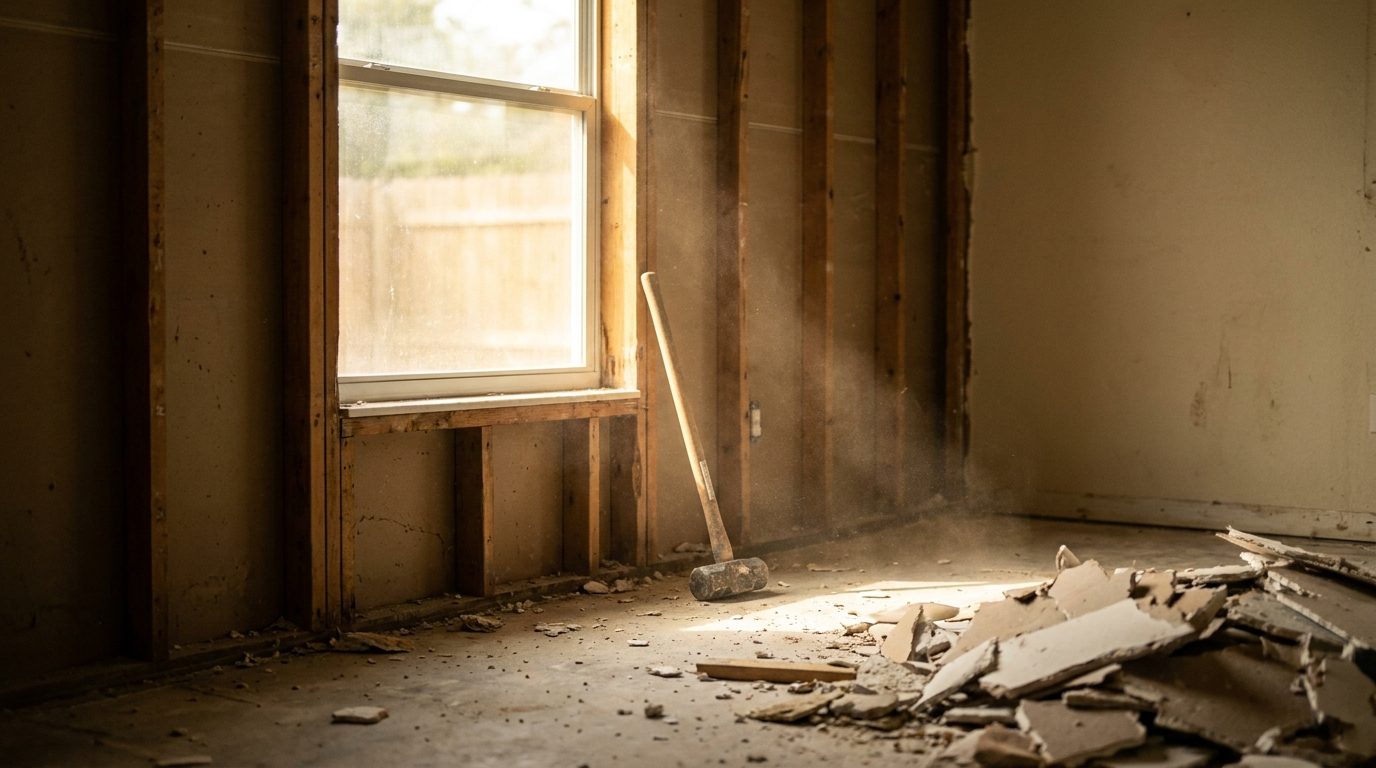
A $200,000 remodel client is not buying a kitchen. They're buying four months of strangers in their house, a wall nobody has seen behind since 1987, and a thousand decisions they have no way to evaluate — and they know it. The kitchen itself was never in doubt. Every portfolio in Florida proves somebody can produce a kitchen. What no portfolio proves is what it's like to live through the producing of one.
That's the problem with the before-and-after reel, the default marketing asset of the remodeling industry. It shows the two moments in the entire project when the client feels least anxious: the day before anything happens, and the day after everything's done. The four months in between — demolition, dust, the surprise behind the shower wall, the change-order conversation at the kitchen table — are exactly what the edit removes. Before/after proves outcomes. It does nothing about the fear, and the fear is where the hiring decision gets made.
Listen to how past clients actually refer you. They almost never describe the backsplash. They say "they showed up when they said they would," or "when they found rot under the tub, they called that afternoon with three options and prices." Word-of-mouth has always sold the middle of the project. A three-act project story is word-of-mouth, filmed.
The three acts
The structure is old — screenwriters call it setup, confrontation, resolution, and that's the only framework name you'll get out of this article. What matters is the job each act does on a remodel prospect.
Act 1: The stakes. Who this family is, what stopped working about the house, and — the part most builders skip — what they were afraid of. Not just "before" footage of dated cabinets; the homeowner saying the quiet part on camera. The line you're listening for sounds something like "we put this off for three years because of the stories you hear." That fear matters because the decision your next client is currently agonizing over is the same one this family already made — whether to hire you at all. Let them narrate it.
Act 2: The middle. This is the act that carries the trust, and the act almost nobody films. The open wall and what was behind it. The change order explained on camera, at the wall, the day it happened — which is the most persuasive thirty seconds a remodeler can publish, because it's proof of the exact behavior the client is trying to buy and cannot see in any portfolio: what you do when the plan meets the house. How decisions got made, and how fast. And the unglamorous logistics that decide whether a family survives a live-in remodel — dust barriers, floor protection, the end-of-day sweep, where they cooked for four months. None of it is cinematic. All of it is the job.
Act 3: The payoff. Shoot the reveal properly; it's the payoff everyone earned. But the freight in Act 3 is the homeowner talking about what it was like to work with you, not just what they got. "The island is quartz" is catalog copy. "They never once left us wondering what was happening next" is a hiring reason. One sells the kitchen. The other sells the four months.
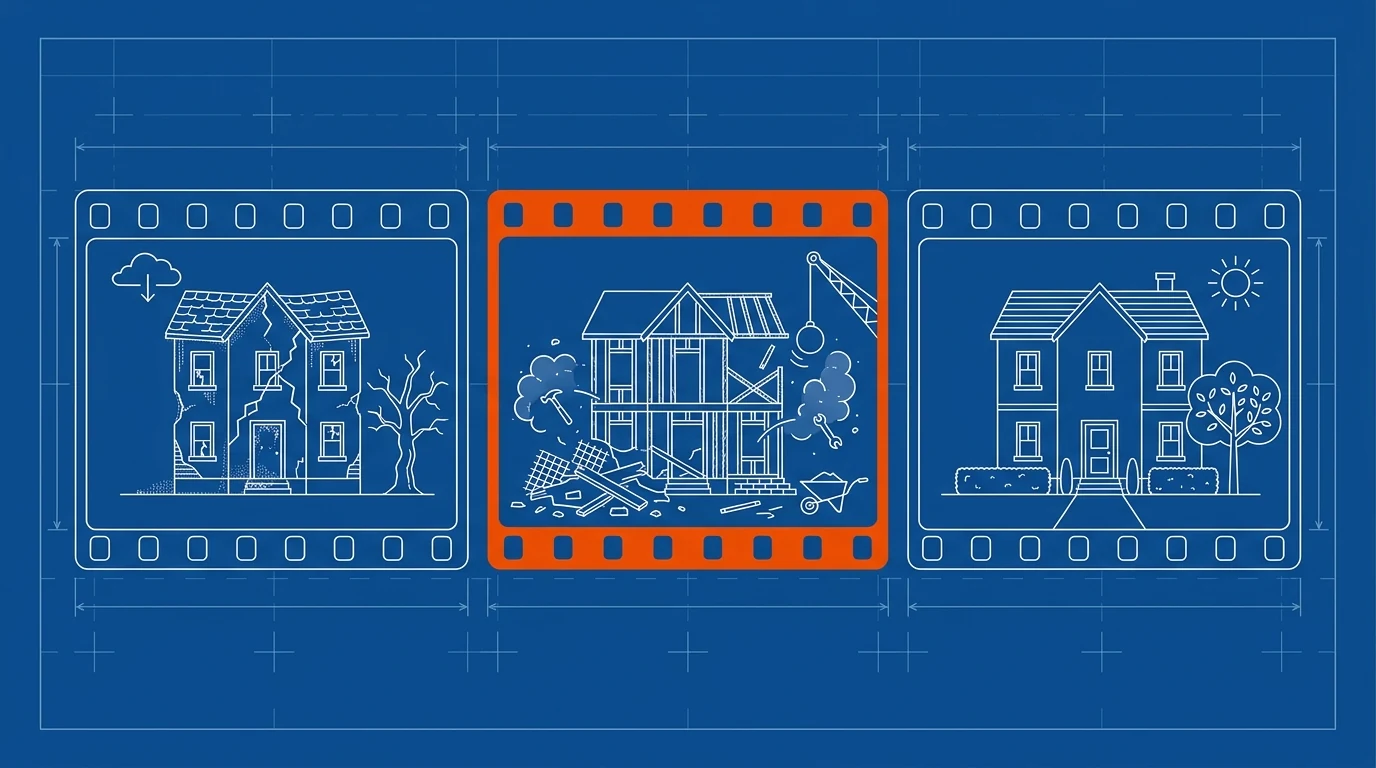
Act two is where the trust gets built · Illustration: Florida Construction Media
The interview questions that produce Act 2
Homeowners don't volunteer the middle. Ask "how was the experience" and you'll get "great" and a compliment about the tile, because they're polite and because nobody has ever asked them to narrate a construction project before. Specific memories respond to specific questions. Ask these on camera:
- "What almost stopped you from doing this project?"
- "What were you most worried about the week before demo started?"
- "Tell me about the day something went wrong."
- "What's a decision you had to make mid-project that you never saw coming?"
- "What did living here during construction actually look like — where did you cook, what were mornings like?"
- "When did you first think: okay, we hired the right people?"
- "Was there a moment you doubted the whole thing? What happened next?"
- "What did the crew do that surprised you?"
- "What would you tell a friend who wants to do this but is scared to start?"
Two rules for using them. First, ask for days and moments, not opinions — "tell me about the day" beats "were there any problems," because yes/no questions produce yes/no footage. Second, don't coach. The unpolished specifics — which garage shelf the coffee maker lived on, what week the novelty wore off — are exactly the details a prospect can't write off as marketing.
Capture the middle while it's happening
Act 2 cannot be reconstructed. A homeowner interviewed after the reveal remembers the middle the way you remember a hurricane season — vaguely, and more fondly than it felt at the time. Capture it live, in small pieces. Three or four ten-minute visits keyed to milestones beat any staged retrospective: demo day, rough-in, and whenever the surprise shows up. Give your PM or super a standing trigger — anything that changes scope, changes schedule, or gets solved in a way you're proud of is worth forty seconds of phone video before it disappears behind drywall.
The middle act doesn't need a crew. A super's phone is enough, and slightly rough footage in Act 2 reads as real rather than cheap — save the good lighting and the lav mic for the two interview days that bookend it. Those same short visits can feed the rest of your publishing schedule too; the mechanics of turning a site visit into usable footage are in the job-site walkthrough playbook.
Plan for the client who won't go on camera, because at this price point plenty of them value privacy more than you value their testimonial. The story still works with the builder narrating all three acts — "here's what this family was living with, here's what we found in week two, here's how it ended" — shot on site, no homeowner required. How to deliver that without sounding like a press release is covered in owner-on-camera scripts. Either way, raise filming at contract signing, not at the reveal, and offer approval of the final cut. The offer costs you nothing and answers the real objection.
One filmed project also solves next month's content problem. The change-order clip, each interview answer, the demo footage, the reveal — a single three-act story cuts down into somewhere between four and eight short posts, which covers most of a month on the weekly reels model. You're not adding a marketing project on top of the remodel. You're skimming one off it.
Spec box: Act 1 — one seated homeowner interview in week one (15 minutes, quiet room, decent mic), photos of the old space, five minutes of "before" B-roll. Act 2 — three or four 10-minute site visits (demo, the surprise, rough-in), super's phone clips of any change order explained where it happened, one shot of dust protection and end-of-day cleanup. Act 3 — reveal walkthrough with the homeowners in frame, a second 10-minute interview in the finished space, detail B-roll of the work you're proudest of. Total client-facing time: about an hour, spread over four months.
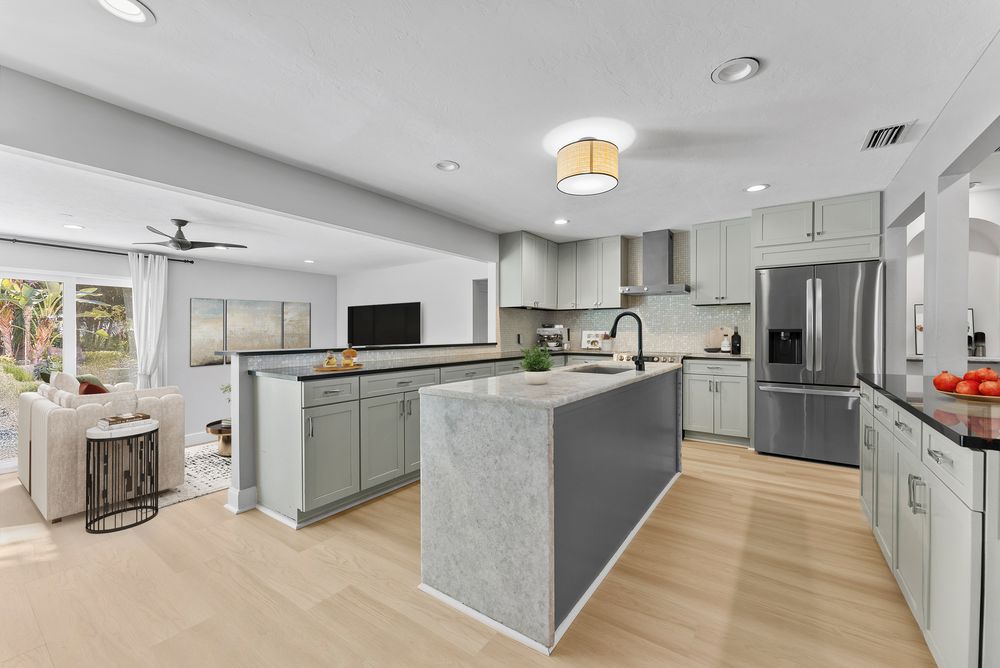
Act three, the payoff · S Orange Ave, Sarasota · Photo: Stellar Media Collective
Questions builders actually ask
Won't showing problems on camera scare clients off? They already know problems happen — the stories from neighbors are part of why they delayed the project in the first place. What they don't know is how a given builder behaves when the problem shows up. On a shortlist of three remodelers, the one who shows a change order handled cleanly is the only one who has proven it instead of promising it. The rule: show problems with the resolution attached. This is a project story, not a confessional.
What if the project went smoothly and there's no Act 2? Then the system that kept it smooth is the story — the schedule board, the weekly client email, the floors that stayed protected for four months. And run the interview questions anyway: what felt routine from your side of the job rarely felt routine from the client's side. Their anxiety failing to materialize is precisely the reassurance your next prospect is shopping for.
How long should the finished piece be? Three to five minutes for the website, proposals, and YouTube. That's longer than the usual social-video advice, and it's fine — a homeowner about to wire you six figures is not a casual scroller, and vetting you is not entertainment. Hold the proportions, though: Act 2 should carry roughly half the runtime. If your middle act runs twenty seconds, you've rebuilt a before/after with extra steps.
Do I need a production crew for the whole thing? No. The workable split is a crew — or one competent shooter — for the two interview days and the reveal, where audio and lighting decide whether the footage is usable, and your own people for the middle, where rough is fine and being there is everything. Bad audio kills interviews; bad cameras rarely do.
Disclosure: Florida Construction Media is owned by Stellar Media Collective, a Sarasota studio that films project stories like these for builders; the method above is our working practice as of July 2026, and it works whoever holds the camera.