The Owner on Camera: Scripts for Builders Who Hate Being Filmed
Six openers you can say word for word, one interview trick that fixes most takes, and the case for filming on the slab instead of behind the desk. The camera problem is a scripting problem — and the script is to stop scripting.
8 min read · July 6, 2026 · Florida Construction Media
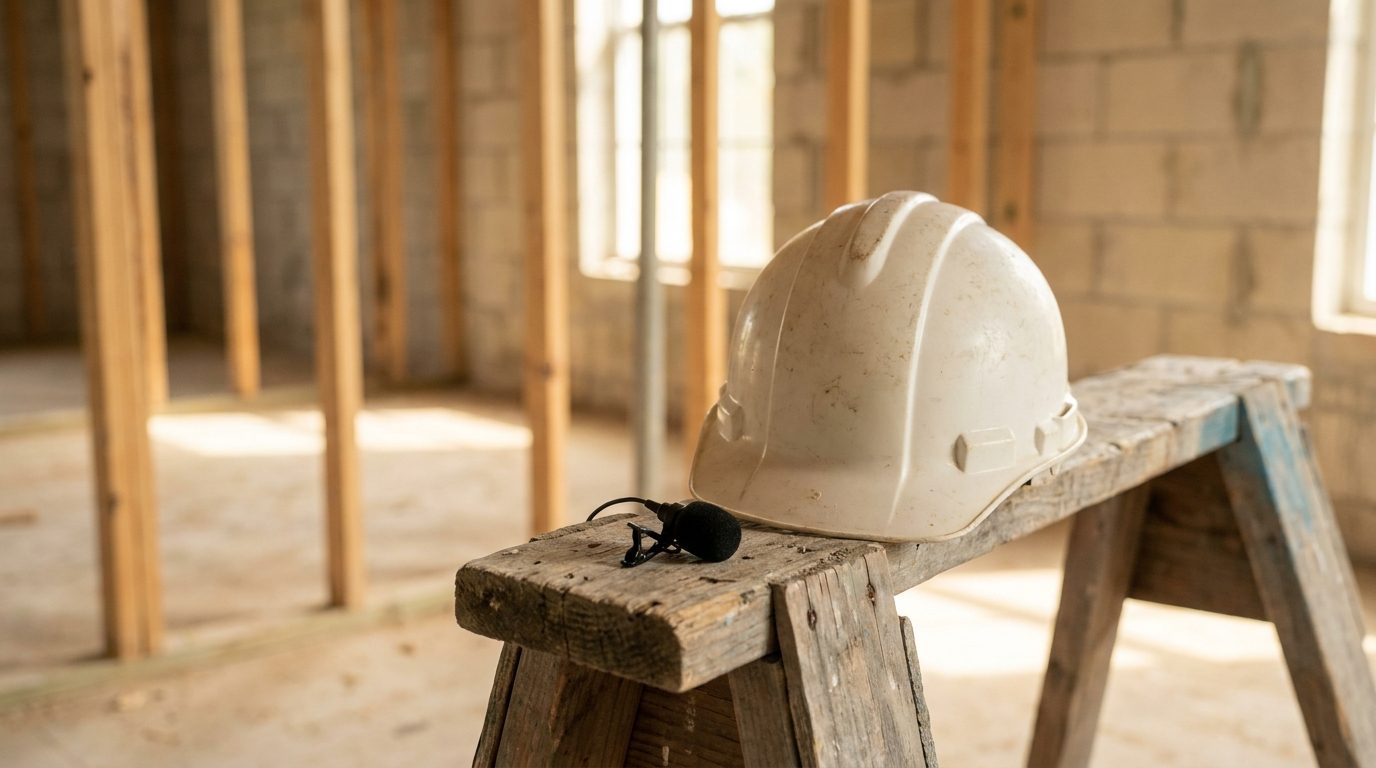
Every crew we send out has seen the scene. It's 7:40 a.m. and a builder is running his morning like he always does — redirecting two subs, fielding an inspector's question about hold-down hardware, talking an anxious homeowner back from the edge of a change order. Total command. Then someone raises a camera, asks him to say what he just said, and he goes wooden. Shoulders up, voice flat — a man who has explained moisture barriers a thousand times, suddenly unsure what his company does.
Here's what's happening, because naming it defuses most of it. Every conversation you've ever had runs on reaction — nods, frowns, the moment a listener's eyes drift and you know to land the plane. A camera gives you nothing back, so your brain reads the silence as failure and starts editing mid-sentence. That's the whole affliction. Not stage fright, not a character flaw — a missing conversation partner.
Everything that follows exploits one fact: you already talk about your work all day, to tougher audiences than a lens — inspectors, subs, homeowners armed with a forum printout. The fix isn't learning to perform; it's arranging the shoot so you're doing what you already do, with a camera standing nearby.
The teleprompter will not save you
The first instinct — write a script, memorize it in the truck or scroll it on a prompter — is the one that backfires hardest for trades. Reading registers instantly. Viewers can't always name what's off, but they clock it: the eyes tracking, the cadence flattening, the contractions disappearing. Nobody says "we will then schedule the inspection" out loud. Scripts do.
And for a business that sells trust, rehearsed reads as salesman — the exact suspicion a remodel client walked in carrying. The target isn't a news anchor; it's a knowledgeable neighbor, the guy across the fence who knows precisely what's behind your shower wall. Anchors spend years learning to read like they're not reading. You have a company to run. So stop writing scripts and start answering questions — the only words worth having verbatim are the first ones.
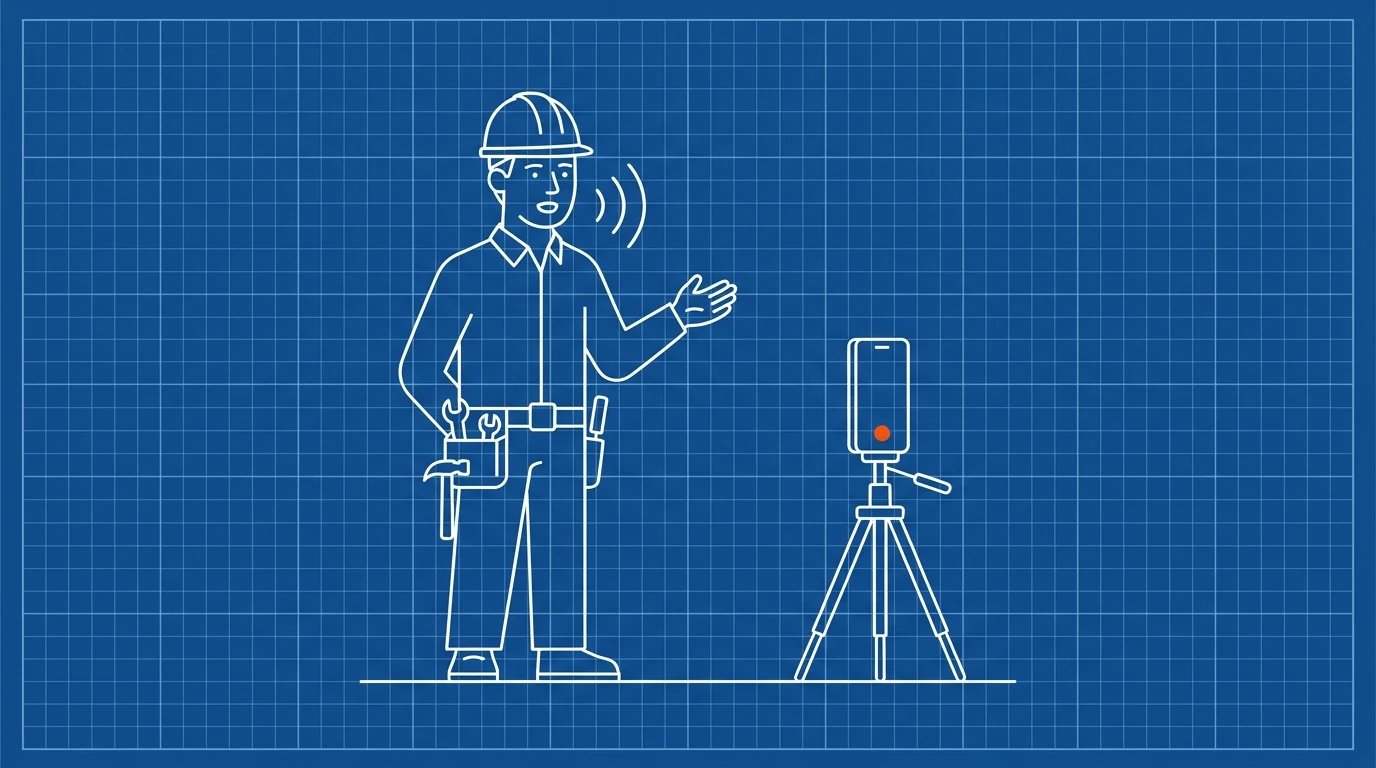
Talk to the phone like it's a neighbor · Illustration: Florida Construction Media
Six openers you can take word for word
The hardest sentence in any video is the first one; everything after it is just talking about work. Use these as written, or bend them to the job in front of you — then keep going like someone asked a follow-up.
The decision opener. "Most people would've torn this wall out. Here's why we didn't." For projects that turned on a judgment call — repair versus replace, re-route versus re-engineer. It puts the viewer inside the decision, which is where expertise is actually visible.
The mistake opener. "This is the most common thing we find behind showers in houses from the '90s." For mid-demo, when the camera can see the problem over your shoulder. Explaining someone else's shortcut builds trust fast; keep it factual, not smug, and finish with what you do instead.
The money opener. "This detail costs about $400, and it's the reason this deck will still be here in 20 years." For the invisible work — flashing, hold-downs, waterproofing — that never shows in the finished photos. A number makes hidden value legible to someone who can't read a wall section.
The question opener. "A client asked me this week why we don't just paint over it. Fair question." Then give the answer you already gave her. Best when the question is days old, because it arrives with the answer pre-loaded — you've delivered it once this week already.
The hands opener. Skip the opening line entirely: start doing the task and narrate it. "What I'm checking for here is..." Save it for your worst-nerves day: your hands know the work cold, and your mouth follows them more reliably than it follows a script.
The site-tour opener. "We're three weeks into this remodel in Venice — let me show you the two things that'll matter most when it's done." For progress updates. Naming the count keeps a tour from sprawling into nine things, and the walking does half the work, for reasons below.
None of these are magic; they're on-ramps. An opener buys three seconds of momentum, and three seconds is all it takes — by the second sentence you're talking about work, which is the skill you already have.
Answer it twice
The most reliable fix we've found in years of filming trades is also the simplest. Whoever's running the camera asks you a question. You answer it, and that take is the warm-up: you find out what you actually think, chase a dead end or two, land eventually. Then they ask the same question again, phrased differently. The second answer is the keeper almost every time — shorter, conclusion up front, detours already pruned. Don't go for a third; that's where you start performing your own second take, and the wooden thing comes back.
The other half: talk to a person, not the lens. Put whoever's filming directly beside the camera and answer them. Your eyes land close enough that viewers feel spoken to, and your brain gets its reactions back — which was the entire problem. Talking straight down a lens is a skill; talking to a person standing next to one is a habit you've had since you could talk.
Film where the work is
An office interview handicaps a builder every way it can. Behind a desk you sit like you're at a loan closing; on a slab with a tool belt on, posture changes, breathing changes, vocabulary changes — home turf is a physical fact, and the camera picks it up. The site also does half the talking: while you explain a flashing detail, the viewer is looking at the flashing detail — evidence rolling under your voice. Gesture at "the framing" in a conference room and you're pointing at a wall with your license framed on it.
Movement helps, too. Walking-and-talking hides nerves: it burns off adrenaline, gives your body a job, and builds in natural pauses — stepping over a cord is a legitimate place to think. Point at things as you go. It looks like confidence because, on your own site, it is.
You don't have to be the face
Plenty of good construction video isn't fronted by the owner at all. If your super or PM lights up explaining work — and plenty do — that's a legitimate recurring face for the company. Audiences bond with a person; they don't audit the org chart. The job-site walkthrough works the same narrated by the owner or by the person who actually runs the sites — who often has better material anyway, having been there when the surprise behind the drywall showed up.
Where the owner belongs on camera is the pieces where ownership is the message: the flagship company film, the three-act project story, the piece about why you build the way you build. Those run on the authority of the name on the trucks — a delegate can't carry them. That's a few uncomfortable hours a year, not a weekly obligation.
And one honest note: some owners never get comfortable, and pushing past a hard no produces video that costs more than it earns. A trades business does fine narrated by the person who runs the sites, while the owner stays behind the camera where he's happy. A video system needs a consistent face. It has never specifically needed yours.
Batch it: four videos, one morning
The mechanics that make this sustainable: never film one video. Film four to six short pieces in one morning — early, for light and Florida-heat reasons your crew already understands — while energy is high. The first piece of the day is stiff; that's what answer-it-twice is for. By the third, the camera has stopped existing, which is the state you're paying for. Prep is a stack of cards, one per piece, built like the spec box below — questions prepared, zero lines memorized. One morning a month feeds a month of publishing, and it prices better too: mobilization works the same in video as in your trades.
Spec box: the pre-shoot card — five things to decide before the camera comes out, one card per video. (1) The topic, written as a question a client would actually ask. (2) The one decision you'll explain. (3) The one number you'll share — a cost, a timeline, a tolerance. (4) Where you'll stand — in front of the work, never the truck. (5) Your first line, word for word. Nothing else gets scripted.
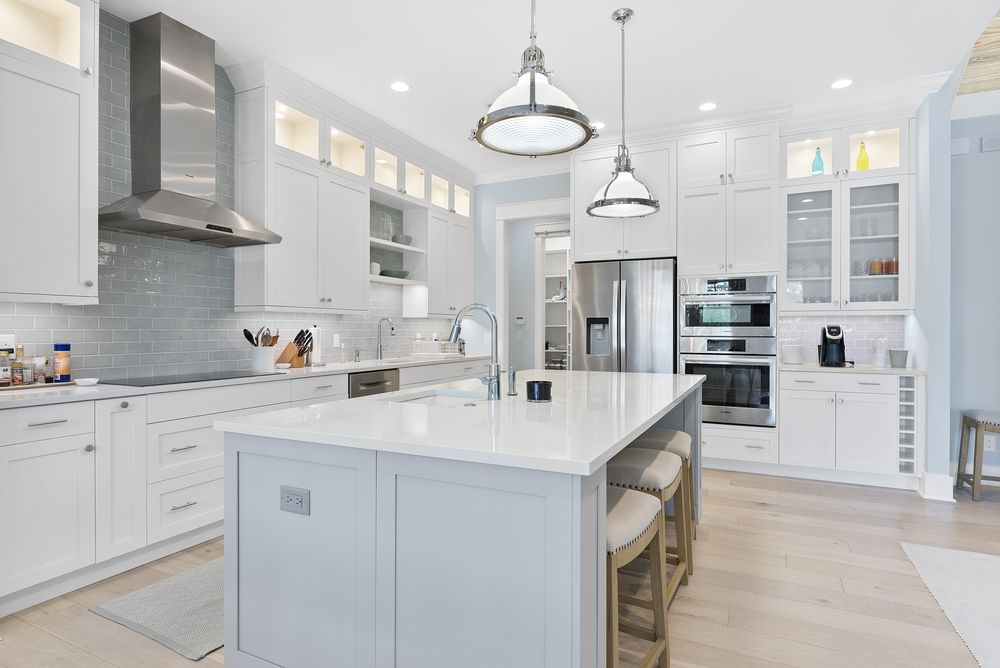
Talk about decisions like this one · Venice · Photo: Stellar Media Collective
Questions builders actually ask
What do I do with my hands? Give them the work. Hold the level, the fitting, the sample of whatever you're describing; point at the thing itself. Hands full is hands solved — half the reason the hands opener exists. Empty-handed, gesture like you're explaining the same thing at the supply-house counter, and stop monitoring them. Hands only look strange on camera when their owner is watching them.
How long should I talk? As long as the answer, no longer. A single-question piece usually lands at 60 to 90 seconds; a walkthrough runs a few minutes. When the answer's done, stop — an editor can cut, but can't invent an ending. The closing speech about commitment to excellence is the salesman creeping back in. "That's why we do it that way" is a complete final sentence.
Will I stop hating how I sound? Mostly. The voice on the recording is the one every client has always heard; you're the only person it surprises. Watch your first takes twice and the flinch fades. And viewers aren't grading charisma — they're deciding whether you know your trade and whether they'd trust you inside their house. Both read fine through a flat delivery.
Is media training worth it? For this, no. Media training teaches executives to survive hostile interviews; it produces polish, and polish is the problem — polished reads rehearsed, and rehearsed reads salesman. What improves the tenth video is the nine before it; in our experience the tenth is unrecognizable next to the first. Budget for reps, not coaching.
Method reflects our production practice as of July 2026. Disclosure: this publication is owned by Stellar Media Collective, a Sarasota studio that spends a fair number of mornings filming builders who swore they would never be on camera; the techniques above work no matter who is holding the camera.