The FAQ Library: One Question, One Video, Forty Weeks of Content
You already answered forty weeks of content this month — at the estimate table, on the phone, in the reply you typed for the third time. The FAQ library is a system for filming the answers once and letting them work while you build.
8 min read · July 10, 2026 · Florida Construction Media
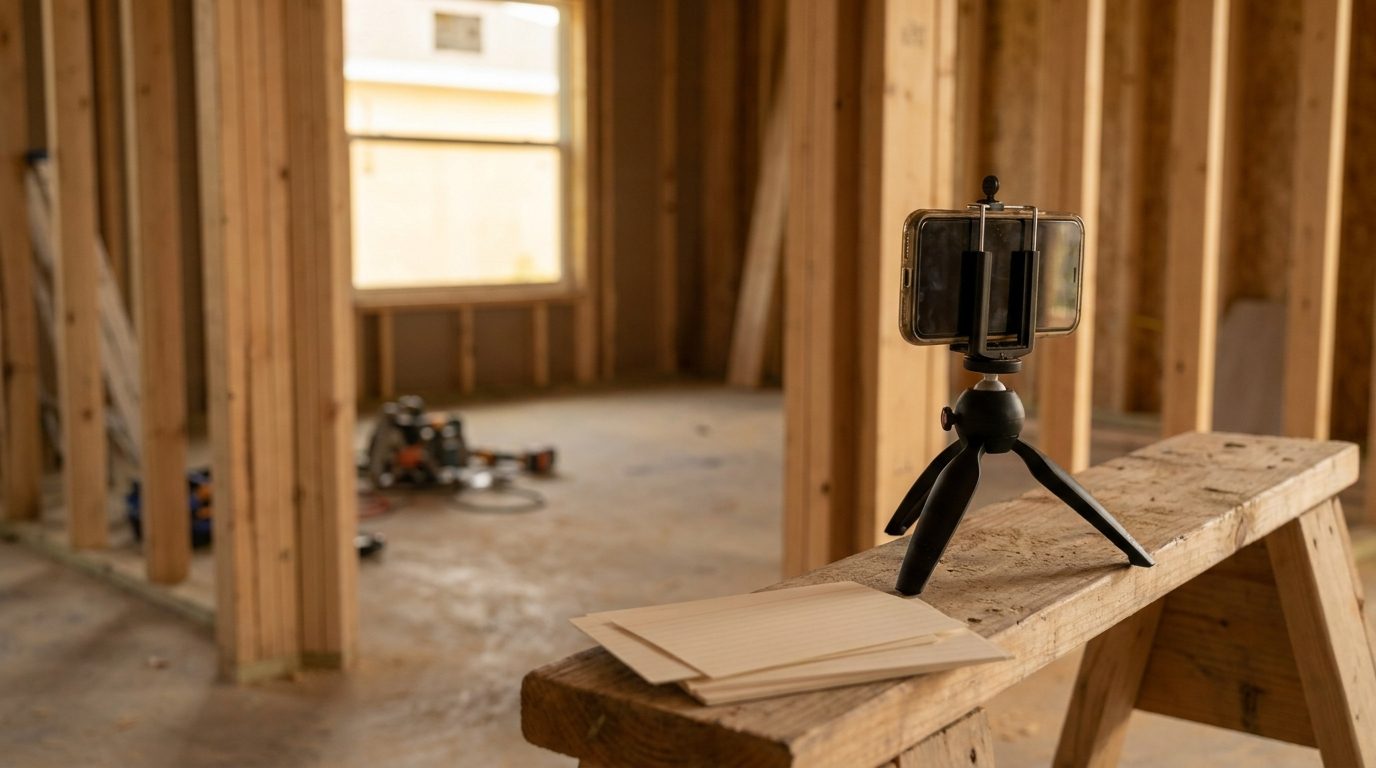
Count the questions you answered this week. Not the hard ones — the ordinary ones. Why the permit takes six weeks. Whether you can match the neighbor's tile. What "allowance" means on the estimate. Why the slab has to cure before anyone frames on it. You answered each of them out loud, probably more than once, to a client who was deciding whether to trust you with a large sum of money and a hole in their house.
Every one of those answers is a video you haven't filmed yet.
That's the whole idea behind a FAQ library, and it's the least glamorous, most durable content system a builder can run. You aren't inventing topics or chasing trends. You're taking the questions you already answer for free, one at a time, and filming the answer once — so the next client watches it before the call instead of during it. Do it at the rate of one a week and you have forty short videos by the time the year turns, each one aimed at a real question a real buyer is typing into a real search box.
Your calendar is already written
The reason most builders stall on video is the blank page. Sit someone down and ask "what should we make a video about," and you get a shrug — the same shrug you'd get asking a homeowner to design their own kitchen from nothing. But nobody has to invent anything here. The topics already exist, in five places you can raid this afternoon.
Start with the estimate table. The questions a client asks after they've seen the number — "why is yours higher," "what happens if we hit rot behind the shower," "how do change orders work" — are the highest-value FAQs you own, because they're the ones standing between a quote and a signature. Then the reply-all folder: search your sent mail for the paragraphs you've written more than twice. That repetition is the tell. Anything you've typed three times is a script you've already tested on live clients.
Add your subs and your super — they field a different set, the during-the-job questions ("how long will my driveway be blocked," "can we still use the back door"). Add your receptionist or whoever answers the phone; they hear the pre-sale questions in their rawest form, before anyone's been polished by a sales conversation. And add the search box itself: type "cost to build a home in" your county into Google and read the "People Also Ask" panel that unfolds. That box is Google showing you, for free, the exact questions your market is asking this month — a topic list assembled by the buyers themselves.
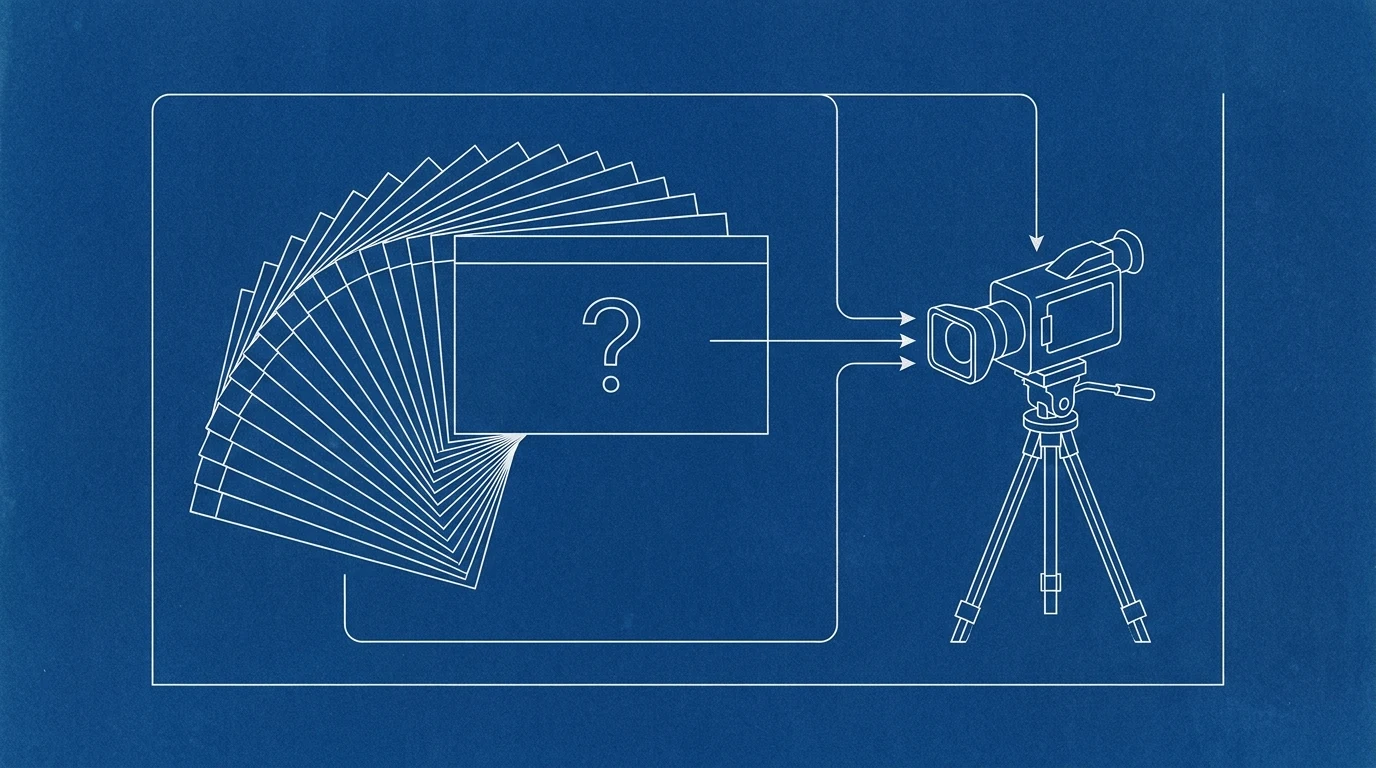
Forty questions you already answer for free · Illustration: Florida Construction Media
Mine forty, film them like a batch
Do the mining in one sitting and you'll overshoot forty without trying. Write each question on a card the way a client would actually say it — "How long does a kitchen remodel take?" not "Remodel timeline overview." The phrasing matters more than it looks, and we'll come back to why. Group the cards into buckets — before you hire us, during the build, about the money, about the house itself — and you've got a content calendar sorted by where each buyer is standing.
Then don't film them one at a time. Film them the way you'd pour footings — in a batch, on a morning set aside for it, with the cards stacked and the camera in one spot. The owner-on-camera method applies directly here: someone asks you the question from beside the camera, you answer it once to warm up and once for real, and you move to the next card. Six to eight questions is an easy morning. Two mornings a quarter, filmed like that, is a year of weekly content — and the mobilization math works the same as it does on your jobs, where the expensive part is showing up, not the hour of work once you're there.
Spec box: the one-question video, built to a fixed shape so it stays a batch job, not a production. (1) Length: 45 to 90 seconds — one question, one answer, no preamble. (2) First words: the question itself, said plainly, so the viewer knows in three seconds they're in the right place. (3) The answer front-loaded — conclusion first, the "why" after, the way you'd answer a client who's short on time. (4) One place to stand: in front of the work the question is about, never the office. (5) A title that is the question, typed the way a person would search it. Everything else is optional. The constraint is the point — it's what keeps forty of these from becoming forty projects.
The title is doing the selling
Here's the part builders skip, and it's the part that turns a pile of clips into a marketing asset. Name each video with the question, in the words a person would use. "How Much Does It Cost to Build a Custom Home in Sarasota?" — not "Custom Home Pricing." The reason is that search itself has quietly shifted. Buyers used to type fragments — "custom builder Sarasota." Now, prompted by voice assistants and AI chat, they type whole questions: who's the best builder in Venice who handles waterfront lots, how long does a kitchen remodel take in Florida. One 2026 analysis of local search found AI-generated answer boxes now appearing on the majority of local queries — surfacing most often for exactly this kind of informational, "how long / how much / what happens if" question (ALM Corp, Birdeye).
Which means a video titled as a question, sitting on a page that answers that question in plain words, is aimed precisely at where discovery is moving. It's the same premise behind the "they ask, you answer" approach that's been circulating in marketing for years — answer the real questions honestly and thoroughly, and you become the source that both people and the machines summarizing for them keep landing on. A FAQ library is that idea, built in the one medium where a builder is most convincing: on the slab, in a tool belt, pointing at the actual thing. This is the same discipline behind owning the "cost to build" searches on YouTube and behind a plain-language builder's video dictionary — meet the question in the buyer's own words.
Where forty weeks quietly pays off
The obvious payoff is search. The quieter one is the sales conversation. Most of the people watching a FAQ video aren't ready to sign — they're in the long, silent research phase that runs for months before a six-figure remodel, the 97% of your market who aren't buying yet but will be. A library of honest answers is what keeps you in the room during that phase, when you're nowhere near the actual room.
And it changes the calls you do get. When a prospect has already watched you explain allowances and change orders before they pick up the phone, the conversation starts three steps in. They're not asking whether they can trust you; they're asking when you can start. The same clips slot straight into your post-estimate follow-up — instead of a seventh "just checking in" email, you send the ninety-second video that answers the exact hesitation you heard at the table. The library isn't only a top-of-funnel magnet. It's ammunition for every stage after it, filmed once and reused until it wears out, which it mostly doesn't.
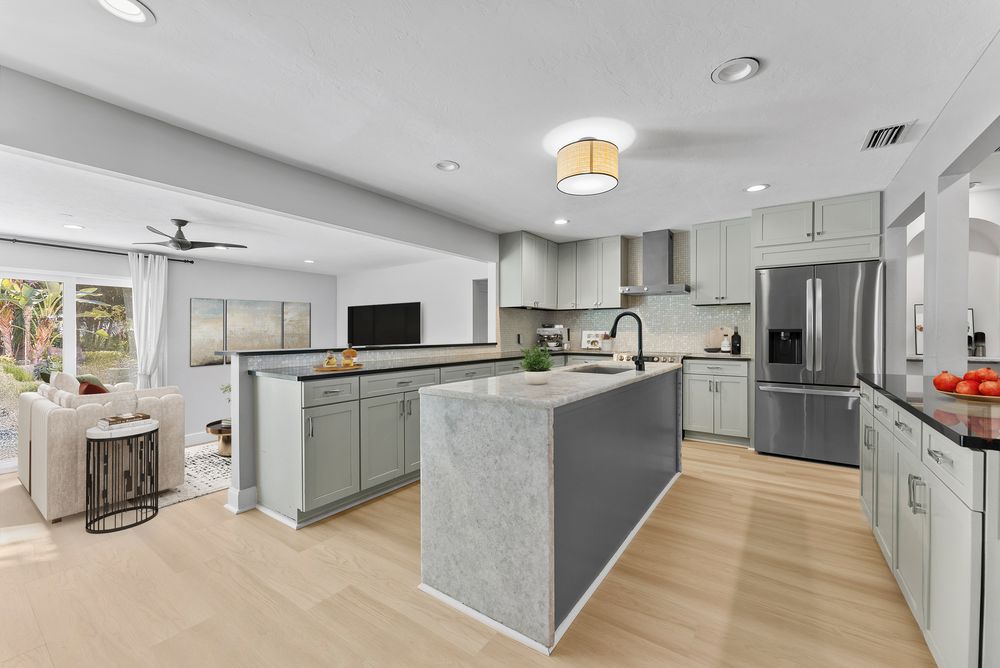
The question behind every FAQ: will it look like this when you're done · Sarasota · Photo: Stellar Media Collective
Questions builders actually ask
Forty videos sounds like forty productions. How is this sustainable? Because it isn't forty productions — it's two or three filming mornings a year, batched. The whole design of the one-question format is to strip out everything that makes video slow: no script to memorize, no location scout, no graphics, one camera position. If a single FAQ answer is taking more than a few minutes to shoot, the format's been abandoned. Rough is fine here; rough reads as real. Save the polish for the flagship pieces.
Won't I run out of questions? You'll run out of time long before you run out of questions. Every job surfaces new ones, every code cycle changes an answer, every season brings its own — impact windows in spring, "will this be done before the holidays" in fall. Keep a running note in your phone and add to it every time a client asks something you have to explain. The list grows faster than you can film it, which is exactly the position you want to be in.
Should I gate these behind an email signup? No. FAQ videos are the free, findable layer — they should be as easy to reach as possible, because their job is to get discovered and build trust before anyone knows your name. Save the gate for the bigger, more deliberate asset: the downloadable cost guide or planning checklist that turns an anonymous viewer into a lead (the cost-guide funnel covers that trade-off). Give the answers away; keep the tool.
What if a competitor copies my questions? Let them. The questions aren't the moat — the answers are, and yours are said in your voice, on your job site, about the way you build. A competitor reading your topic list still has to get their own owner comfortable on camera, which most won't. The builders who win this aren't the ones with the cleverest topics. They're the ones who actually filmed forty of them while everyone else was still deciding whether video was worth it.
Method reflects our production practice as of July 2026; the search-behavior figures cited are from third-party 2026 local-search analyses linked above and will drift. Disclosure: this publication is owned by Stellar Media Collective, a Sarasota studio that builds FAQ libraries for premium trades — more on the approach in our resources guides. The system works whether you film it yourself or hire anyone to help.