The 97% Problem: Content for the Buyers Who Aren't Buying Yet
At any moment, only a sliver of your market is ready to sign — and nearly all contractor marketing shouts at that sliver. The homeowners who will sign in one to three years are deciding right now who gets the call.
7 min read · July 6, 2026 · Florida Construction Media
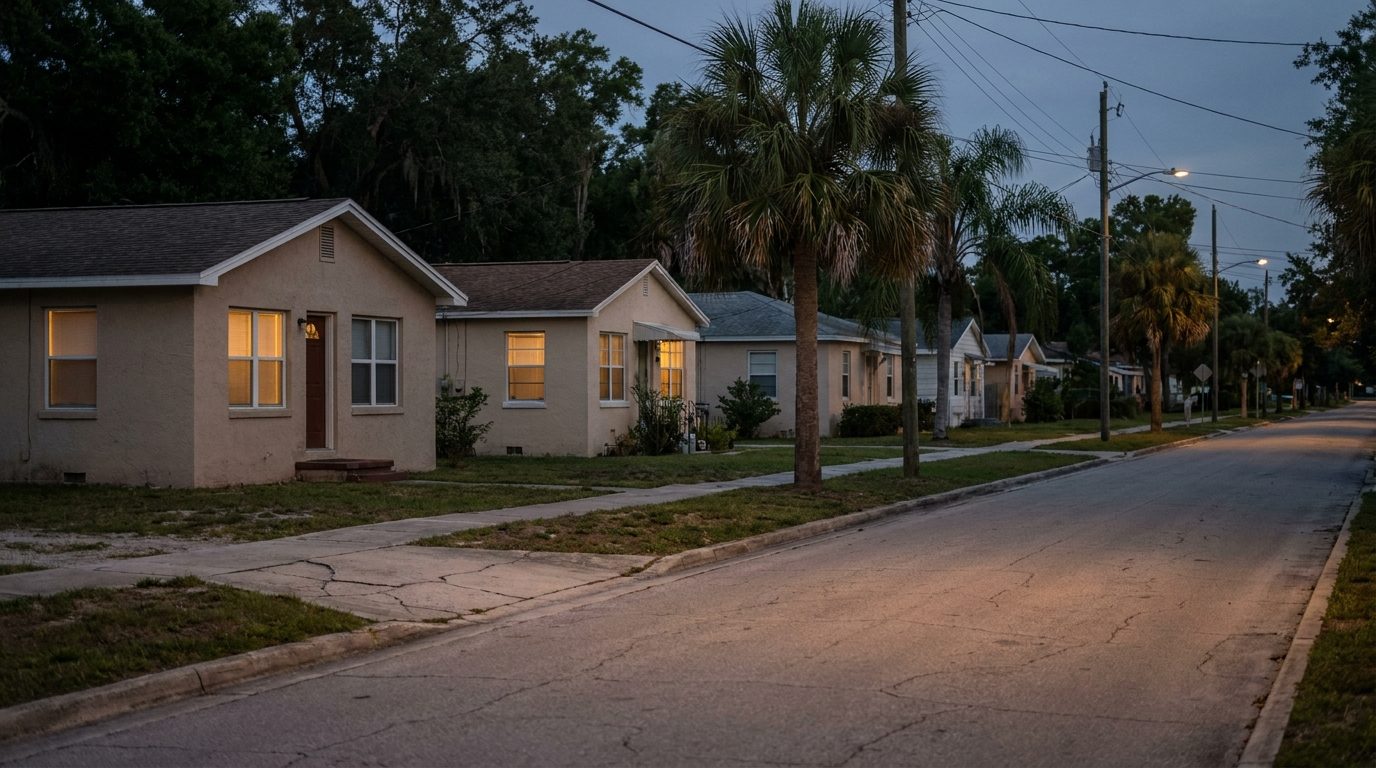
Drive any street in your service area and count the houses. Now count the ones with a permit board zip-tied to the fence. That ratio — the whole street against the two lots with dumpsters — is the shape of your market at every moment. Almost nobody is buying right now. Almost everybody will, eventually.
Most contractor marketing refuses to accept this. It's built entirely for the household that's ready today — free estimate, ten percent off if you book this month, call now. None of that is wrong; this month's revenue lives there. But every competitor is aimed at the same sliver — the noisiest, most expensive corner of the market — while the rest of the street, the future clients, hears from no one.
Marketers have a shorthand for this: at any moment about 3% of a market is actively buying, and the other 97% sits somewhere between open-to-it-someday and not-thinking-about-it. Be plain about what that is: a heuristic, not a measurement. It has circulated in education-based sales thinking for decades — Chet Holmes drew it as a buyer's pyramid — and nobody has ever produced the clipboard study behind it. It survives because it matches what any owner sees from the estimate desk: the ready-now buyers, always a sliver, always mobbed. The exact split is folklore. The lesson about sequencing buried inside it is not.
The math of patience
A six-figure remodel is not bought the way a water heater is bought. Nobody wakes up ready. The decision gestates, usually for years, and almost always set off by life rather than advertising: a parent who can't manage stairs anymore, a third kid, a retirement date that finally gets circled, a storm that takes the lanai, a neighbor's addition that makes the 1989 kitchen suddenly intolerable. Between the first "we need to do something about this house" and a signed contract sits one to three years of dinner-table negotiation, saved reels, and slow drive-bys of other people's projects.
By the time that household joins the 3%, the research is mostly finished. They don't start with a blank search bar; they act on the shortlist they've been assembling all along — the two or three names they already recognize and halfway trust. The shortlist gets written during the 97% years; the buying window just reads it out loud. Show up only when they're ready and you arrive as a stranger bidding against builders they feel they know — which is to say, you arrive as a price.
That's the real content of the heuristic. It was never a statistic about markets; it's a claim about order of operations. Trust gets built before the buying window opens, or it doesn't get built at all.

The market you can't see from the estimate desk · Illustration: Florida Construction Media
What 97% content looks like for a trade
The 97% will not click "request a free estimate" — they have nothing to estimate yet. Marketing to them means making things they'll take years early. In practice, three lanes.
Education — what things cost and how things work. The awake end of the 97% is already researching: what a kitchen remodel runs on the Gulf Coast, what impact windows cost, how long an addition realistically takes. Publishing straight answers — real ranges, drivers itemized, the same pattern this publication used on its own industry — is the move owners resist hardest and the exact thing a two-years-out homeowner is hunting for. Nobody expects a quote — they want orientation, and the builder willing to orient them before there's anything to sell is the one they believe once there is.
Project stories people follow like a series. One real build told in chapters — demo day, the surprise behind the drywall, rough-in, reveal — gets watched by people with no immediate intent, the same way the whole country watches renovation television about houses it will never own. One project as the spine, one chapter a week — we've modeled what that cadence plausibly produces, assumptions printed. A household that watches your crew do clean work for a season isn't a lead. It's a future buyer who has already done the research phase, on you.
Neighborhood familiarity. The least discussed lane and the cheapest. Content anchored to place — street names, neighborhoods, the intersection everyone waits at — makes you the builder who works where I live, which no polished brand film can do. Local specificity beats production value here, and repetition beats both. The ambition is modest: when your name eventually surfaces on a shortlist, it shouldn't read as a stranger's.
The capture layer
A homeowner two years out will not call you, and asking them to is how you lose them. The ask has to match their temperature: stay reachable, nothing more. That means owning a channel no algorithm controls — an email list with a real reason to join. The strongest reason matches what they're already doing — research: a genuinely useful guide — what things cost in your county, how to vet a builder — traded for an address. The mechanics of that funnel are an article of their own; the short version: the guide does the educating, the list does the waiting.
The ownership distinction matters. Social reach is rented — the platform decides who sees you this month. The list is yours. A monthly email that shows one project, answers one question, and names one street will be opened by people who won't be ready for two more years, and that is the entire point. When the trigger event lands, you're not a name they have to remember. You're already in the inbox.
Measuring an engine that runs on a lag
Honesty about what this is: brand-building with a delay measured in years, aimed at buyers who by definition aren't buying. It will not show up in this quarter's signed-contracts column; an agency promising otherwise is selling you the 3% lane in different words.
What you can watch are proxies. List growth. Returning visitors. Follows and watch-through from your own county rather than nowhere. And the fuzziest, most convincing: what prospects say at the first sit-down. Builders running systems like this hear some version of "we've been watching you for a year" at consults — anecdotal, unauditable, and exactly the mechanism working as designed. When the first sentence of a consultation proves the trust arrived before the meeting did, the engine is working, whatever the dashboard says.
The lag is also the discipline problem. Because feedback is slow, most owners quit around month four and conclude the channel doesn't work — usually just as the earliest watchers are warming up. Decide the horizon before you start, in writing, or don't start.
Keep a lane open for the 3%
None of this replaces ready-now capture. A tuned Google Business Profile, service pages that name your towns, reviews answered, phones picked up — the 3% lane is table stakes, and it's where the 97% engine eventually cashes out, because the homeowner your content warmed for two years still finds your number through a search.
Rule of thumb: build the 3% lane first — profile, service pages, reviews, same-day callbacks — because that's where this quarter's revenue lives. Then point the bulk of your ongoing effort, call it three hours of every four, at the people who won't call this year. The ready-now lane keeps the lights on. The 97% engine decides whose phone rings in 2028.

Everyone on this street owns a future project · Venice · Photo: Stellar Media Collective
Questions builders actually ask
How long before this pays? Longer than you want, and anyone offering a tighter answer is guessing. Leading indicators — list signups, local follows, returning visitors — move within a quarter or two. Signed contracts arrive on the same clock as the decisions you're influencing: one to three years. If you need work in the next 90 days, this is the wrong tool; fix the 3% lane and referrals first, then start this with whatever's left. Treat it as infrastructure with a known lag, not a lever for a slow month.
I'm booked out eight months — why market to people who aren't buying? Because today's backlog is the output of decisions homeowners made a year or two ago; it says nothing about the ones being made now. Booked-out is exactly when to run this: urgency costs you nothing, and it keeps you chosen rather than shopped when the backlog thins. A long waitlist has its own quiet content problem anyway; signed clients go cold in silence too.
Can't I just run ads when the pipeline gets thin? You can, and they work — as rented access to the 3%. That's also their limit: every competitor short on work is bidding on the same sliver at the same moment, so the auction peaks exactly when you need it most. Ads harvest demand; they don't build the familiarity that decides who gets the call. Run them as the fast lane — and notice that the builders who never seem to advertise are mostly the ones whose 97% engine has been running for years.
Published July 6, 2026. Disclosure: this publication is owned by Stellar Media Collective, a Sarasota studio that sells the long-horizon content systems this article recommends. The 3/97 split is a decades-old rule of thumb, not a measurement — weigh every use of it, including ours, accordingly.