The 10-Month Wait Is Where Custom Clients Get Cold Feet. Here's the Content That Keeps Them Warm
Booked out until next spring is a good problem that quietly cancels jobs. A signed luxury client who hears nothing for months doesn't feel patient — they feel forgotten. A cadence of content fixes it, and doubles as your best marketing.
7 min read · July 6, 2026 · Florida Construction Media
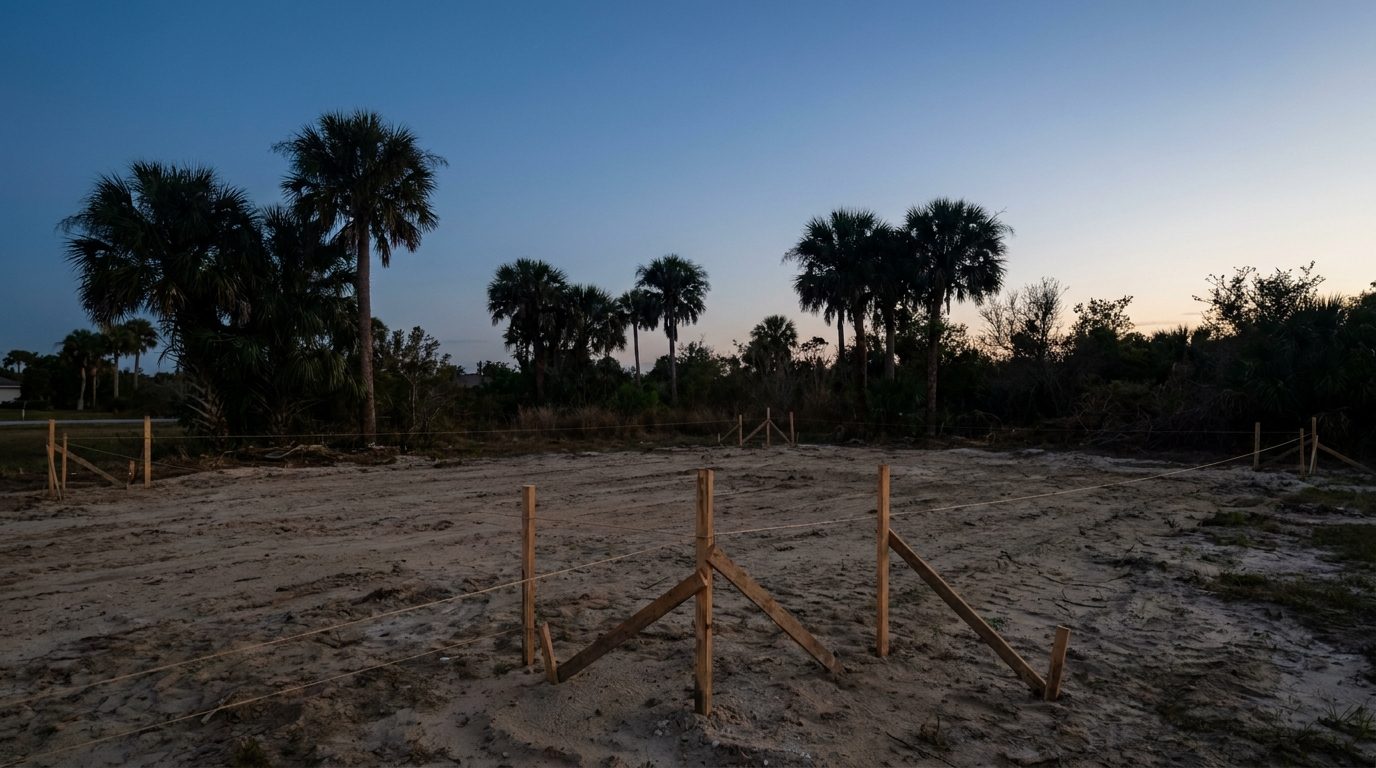
Here's a problem the busiest Gulf Coast custom builders don't like to say out loud: the gap between a signed contract and a groundbreaking is where jobs die. A client falls in love, signs, wires a deposit — and then waits eight, ten, twelve months while permitting grinds, engineering finalizes, and the backlog ahead of them clears. That wait is invisible to you, because you're heads-down building the three houses in front of theirs. It is extremely visible to them, because they're staring at a bank statement with a large number missing from it and a lot with nothing on it.
Nothing goes wrong during that wait — and that's exactly the problem. Nothing happening looks, to the client, like nothing being done. Enthusiasm cools. A spouse who was a soft yes starts asking why they haven't heard anything. A competitor's ad lands at the wrong moment. Interest rates move, a job changes, and the couple who couldn't wait to start now wonders aloud whether they should pause. You allocated a slot, turned away work to hold it, and now you're managing a wobble you never saw coming.
The fix is not a better contract or a bigger deposit. It's contact — the right kind, on a schedule, that makes the silent months feel like motion instead of abandonment.
Why the wait feels like abandonment
Think about what a client is actually buying when they sign with a custom builder. It isn't a house yet. It's a belief: that this is going to work, that it'll be worth it, and that you're the right person to trust with the largest check they'll write this decade. On signing day that belief is at its peak. Every silent week after that, it erodes a little.
There's a simple way to see it. A client's confidence runs on a rough equation: how much they want the finished home, multiplied by how sure they are it'll actually happen, divided by how long and how painful the wait feels. You can't shorten the real timeline — permitting takes what it takes. But you have direct control over two of those terms. Contact raises their certainty that it's happening, and it shrinks the perceived wait, because a build with visible motion feels months shorter than the identical build in silence. Same ten months, two completely different experiences, and the only variable is whether they heard from you.
That's the whole case for a warm-list system. You're not producing content to impress the client. You're protecting the belief you sold them on day one until the day your crew shows up.
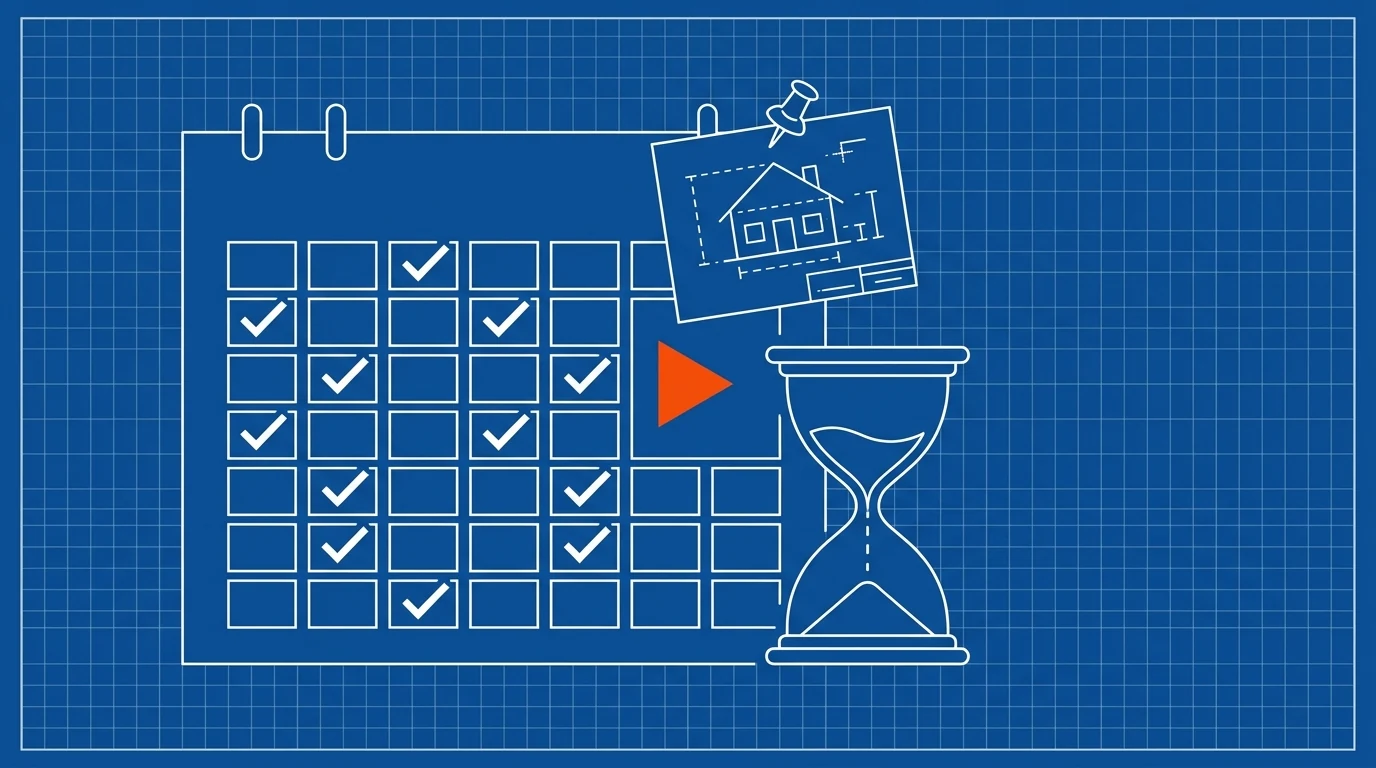
One touch a month holds the belief you sold on day one · Illustration: Florida Construction Media
The cadence that keeps a signed client warm
This doesn't require a marketing department. It requires deciding, once, what a signed client hears and when — then building it as a repeatable sequence, not a scramble every time someone seems nervous.
- The day-one "what happens next" film. Before the silence starts, give it a shape. A five-minute walkthrough from you or your project lead that names every phase between now and their groundbreaking — permitting, engineering, selections, the queue ahead of them — turns an unknown void into a schedule. Silence with a map is patience. Silence without one is dread.
- The monthly proof-of-life. Once a month, every signed-but-not-started client hears from you, even when the honest update is "you're in permitting and there's nothing to see." Especially then. A sixty-second note — "here's where your project sits, here's what's next, you're on track for February" — does more to hold a client than any glossy brand piece.
- Borrowed progress. Their lot is empty, but you have three other builds in the ground at exactly the stages theirs will pass through. Footage from an active foundation pour, a framing day, a slab curing, sent with "this is what yours will look like in the spring," lets a waiting client watch their own future happen on someone else's site. It's the single most reassuring thing you can send, and you're already filming those jobs for other reasons.
- The selections that pull them in. Design decisions — finishes, fixtures, the kitchen layout — are the one part of the wait where the client has a job to do. Turn each into a short, guided touch. It keeps them participating in the build instead of sitting outside it, and every choice they make deepens the commitment.
- The personal video letter. Once in the middle of the wait, the owner records a genuine, unscripted minute, by name, to that specific family. Not polished. Just "I know it's been quiet, here's why, and I'm still as excited about your house as you are." The same owner-on-camera approach that wins prospects is even more powerful pointed at someone who's already said yes.
The warm-list rule of thumb: a signed client should never go more than 30 days without hearing from you by name, and at least one touch a quarter should be video. If you can't remember the last time a waiting client heard your voice, that's not a client who's being patient — that's a cancellation forming quietly.
The part that makes it pay for itself
Here's what turns this from an obligation into the smartest content you produce: almost none of it is single-use. The day-one film is also the exact thing a prospect needs to see to understand what building with you is like. Borrowed-progress footage from active sites is the raw material for the three-act project stories that win the next client. The selections walkthroughs, the founder's video letters — filmed once, they serve the signed client this month and become public proof next month.
That's the efficiency most builders miss. A camera on your active job sites, filming on a rhythm, feeds two pipelines at once: it keeps your booked clients warm and it fills the top of your funnel with the people who aren't ready to sign yet. It's the same logic behind running a consistent content cadence rather than one big video — the system is what compounds, not any single piece. A published library of "here's what the wait actually looks like" is also the most honest sales tool you have, because it sets expectations before a client ever signs, which means fewer wobbles later. Stellar's thirty-day content calendar is a workable starting frame for builders who want the cadence without inventing it from scratch.
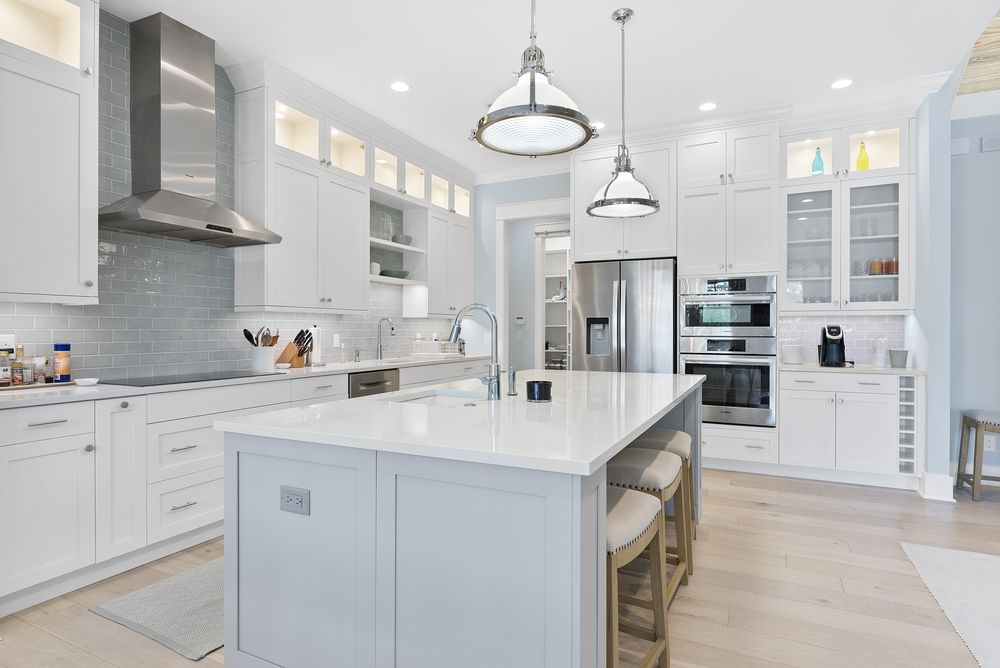
Selections are the one part of the wait the client gets to build · Venice · Photo: Stellar Media Collective
Questions builders actually ask
We're slammed. Where does the time for this come from? Mostly from footage you're already capturing. If someone is documenting your active builds — for progress records, for lenders, for marketing — the warm-list content is a byproduct, not a second job. The genuinely new work is the monthly note and the one personal video letter, which is minutes, not days. Weigh that against the cost of re-selling a slot after a cancellation.
Isn't a monthly "nothing to report" update just annoying? It's the opposite of annoying when it's framed as reassurance instead of noise. Clients don't need news; they need to know they haven't been forgotten. "You're in permitting, on schedule, here's what unlocks next" is not filler to someone with six figures on the line. It's the message they've been waiting all month to get.
What if the update is bad — a real delay? Then it matters even more that it comes from you first, by video, with a plan attached. Delays don't break trust; delays discovered in silence break trust. A builder who gets ahead of a permitting holdup with a calm, direct explanation looks more competent than one whose project simply drifts while the client wonders. Bad news you deliver is proof you're paying attention.
Does this actually reduce cancellations, or does it just feel nice? No one should promise you a number, and any that got quoted here would be invented. What's defensible is the mechanism: cancellations in the wait period are driven by eroded confidence, contact rebuilds confidence, and the builders who communicate on a cadence report far fewer cold-feet conversations than the ones who go dark. Treat it as cheap insurance on jobs you've already won.
Playbook published July 6, 2026. The cadence and framing here reflect how Gulf Coast custom builders and Stellar Media Collective approach client retention; no figures are quoted because the honest ones are your own. Disclosure: Florida Construction Media is published by Stellar Media Collective, Sarasota, which builds the kind of content systems described above.