The Builder's Video Dictionary: Every Term Your Videographer Uses, Translated
Forty-odd terms that show up in video proposals, shoot days, and invoices — defined in plain trade language so you can scope the work before you sign for it.
8 min read · July 6, 2026 · Florida Construction Media
You would never sign a construction contract that said "misc. framing, as needed." But builders sign video proposals full of words like "coverage," "cutdowns," and "usage rights" every week, and the gap between what the vendor means and what the owner assumes is where budgets blow up. You can't scope what you can't name — and in video, as in building, the scope is the price.
This page is the fix. It's a working glossary of the terms production companies actually use, grouped by where you'll hear them: on the shoot, in the edit room, in the deliverables list, and in the strategy conversation. Skim it before your next production call and you'll ask sharper questions; keep it open during the call and you'll catch the line items that usually slide by.
How to use this page: Bookmark it. Forward it to whoever manages your marketing. And when a vendor's proposal uses a term you can't find here in plain English, ask them to define it — a good production company can explain every line the way a good estimator can.
On the shoot
A-roll — The primary footage: the interview, the owner talking to camera, the main subject of the video. If the video has a person telling the story, that person is the a-roll.
B-roll — Everything that isn't the main subject: hands on tools, trusses going up, the finished kitchen. It plays over the a-roll to show what the speaker is describing. More b-roll means more shooting time, but it's what makes a video watchable instead of a filmed phone call.
Coverage — Shooting a subject from enough angles and distances that the editor has options. "We'll get coverage of the pour" means wide, medium, and close shots — not one static angle. Thin coverage is why some videos feel cheap even when the camera was expensive.
Establishing shot — The wide shot that tells the viewer where they are: the street view of the house, the aerial of the site. Usually the first shot of a scene.
Walkthrough — A continuous or lightly edited tour through a project, often with the builder narrating. One of the highest-value formats per dollar for contractors, because the project itself does the selling.
Talking head — A person framed from the chest up, speaking to camera or to an off-screen interviewer. The workhorse of testimonials and owner-on-camera content. Not an insult, despite how it sounds.
Gimbal — A motorized stabilizer that lets the camera move smoothly while walking. It's why professional walkthrough footage glides and phone footage bounces.
Drone / aerial — Footage shot from an unmanned aircraft. In the U.S., anyone flying a drone for business purposes needs an FAA Part 107 certificate, and Florida job sites add their own wrinkles — airspace, weather windows, and site safety. We cover the rules in our drone and FPV guide. Ask any vendor flying on your site for their Part 107; it's the video equivalent of asking for a license and insurance.
Timelapse — Many frames captured over hours, days, or months, compressed into seconds. A dedicated long-term timelapse rig (mounted, weatherproofed, powered) is a different product — and price — than a camera left running for an afternoon.
Golden hour / blue hour — The hour around sunrise and sunset (golden) and the short window just after sunset (blue), when light is soft and flattering. Crews schedule exterior beauty shots around these windows, which is why a shoot day's timing sometimes looks odd on the schedule.
Lav (lavalier) vs. shotgun mic — A lav is the small clip-on microphone worn on the collar; a shotgun is the directional mic on a boom or camera. Lavs win on noisy job sites because they sit inches from the mouth. If a vendor plans to record your interview on a camera-mounted mic outdoors, expect to hear every generator on the block.
Room tone — Thirty seconds of "silence" recorded in the space where the interview happened. Editors use it to patch audio edits so cuts don't sound like cuts. If the crew asks everyone to freeze and be quiet for a minute, this is why.

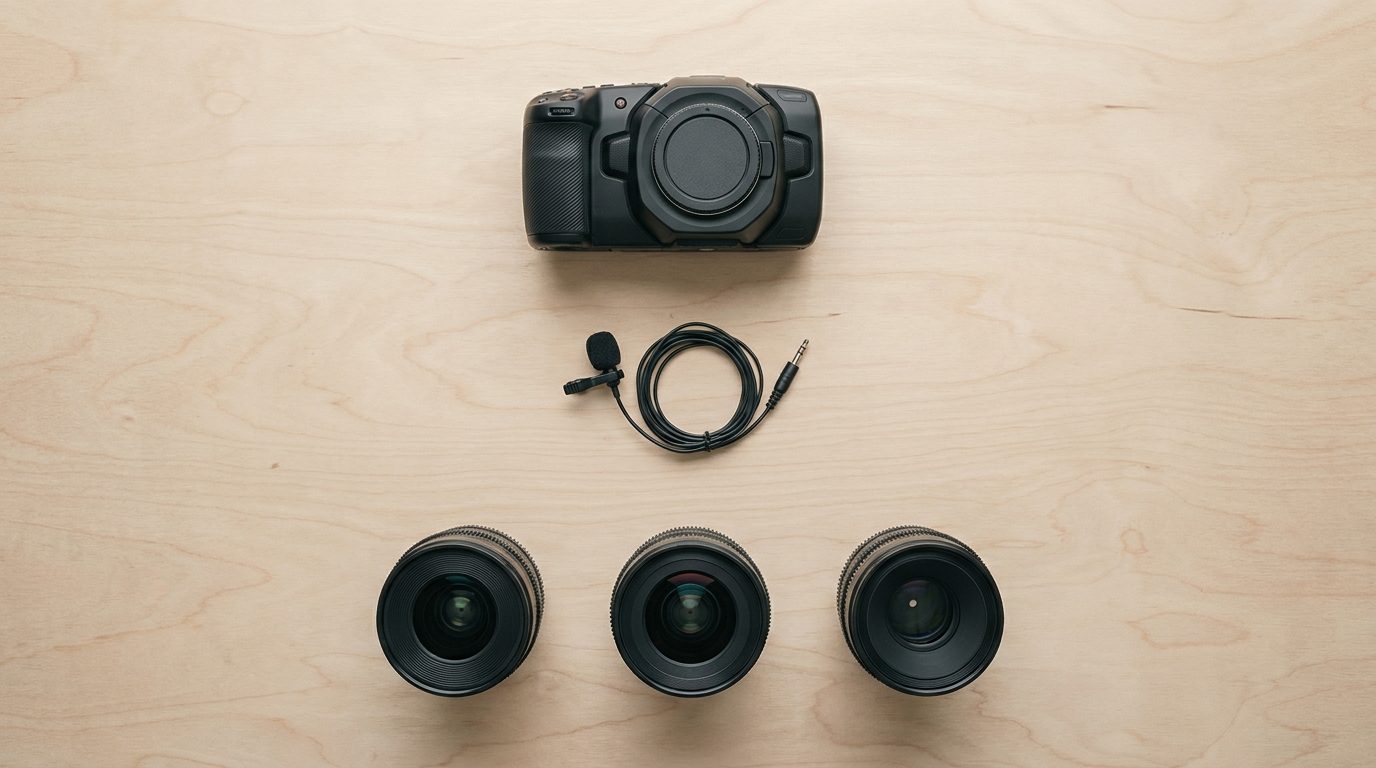
Speak the language, scope the work · Illustration: Florida Construction Media
In the edit
Rough cut — The first assembled version: right structure, right footage, unpolished everything else. Judge the story here, not the color or the music. Rebuilding the structure after this stage is where change orders live.
Fine cut — The refined version after rough-cut feedback: tightened pacing, near-final music and graphics. Small notes only at this stage.
Picture lock — The point where the edit is frozen and no more timing or footage changes happen; only finishing work (color, sound mix) remains. Changes after picture lock are the video version of moving a wall after drywall — possible, billable, and resented.
Revision round — One consolidated batch of feedback and the changes that come from it. Two rounds is the industry norm, and it's one of the quiet cost drivers we itemized in our Florida video cost guide. Give notes in one organized list per round, not a trickle of texts, and you'll never pay for a third.
Color grade — Adjusting the footage's color and contrast for a consistent, finished look. It's the difference between footage that looks accurate and footage that looks like your brand.
Lower third — The name-and-title graphic in the bottom portion of the frame ("Mike Rivera, Owner"). Standard in any interview-based piece.
Caption / subtitle burn-in — Text of the spoken words rendered permanently into the video, as opposed to a separate caption file the platform toggles on. Burned-in captions matter because most social video is watched on mute.
Cutdown — A shorter version cut from a longer master: the 30-second version of the 3-minute film. Cutdowns are cheap relative to new shoots, which is why smart scopes order several per master.
Aspect ratio (16:9 vs. 9:16) — The frame's shape. 16:9 is horizontal (YouTube, websites, TVs); 9:16 is vertical (Reels, Shorts, TikTok). Masters are shot horizontal because you can crop a vertical out of a horizontal frame but not the reverse — a vendor who shoots vertical-only has quietly limited what you own.
Thumbnail — The still image that represents the video before anyone clicks. On YouTube it does more for your view count than most of the edit; it should be designed, not grabbed from a random frame.
The deliverables
Master — The full-length, full-resolution, finished version of the video. Everything else is derived from it. Always get the master file itself, not just a link to a platform.
Derivative cuts — The versions made from the master: cutdowns, vertical crops, captioned social versions. Proposals should list how many, at what lengths and ratios — "social cuts" without a number is unscoped work.
Hero film / anthem / brand film — Interchangeable names for the flagship "who we are" video: the 2-to-3-minute piece on your homepage. The most produced, most expensive single deliverable most builders ever buy.
Project story — A video about one build: the challenge, the work, the result, usually with the client or the builder narrating. For contractors, project stories typically outperform anthems because the proof is specific.
Reel / Short — A vertical video under about 90 seconds for Instagram Reels, YouTube Shorts, or TikTok. The volume format — where consistency beats production value. We cover how these fit a builder's channel in our YouTube guide.
Usage rights / licensing — What you're allowed to do with the finished video, for how long, and where. Most builder work is (and should be) unlimited perpetual use, but licensed music and paid on-camera talent can carry time limits. If a proposal mentions a "license term," ask what expires and when.
Raw footage — Everything the camera recorded, ungraded and uncut. Here is the question to ask before you sign anything: who owns the raw footage, and what does it cost to get a copy? Many production companies retain it by default. That's a legitimate industry practice, not a scam — but if the relationship ends, the footage of your projects ends with it unless your agreement says otherwise. Ask. In writing.
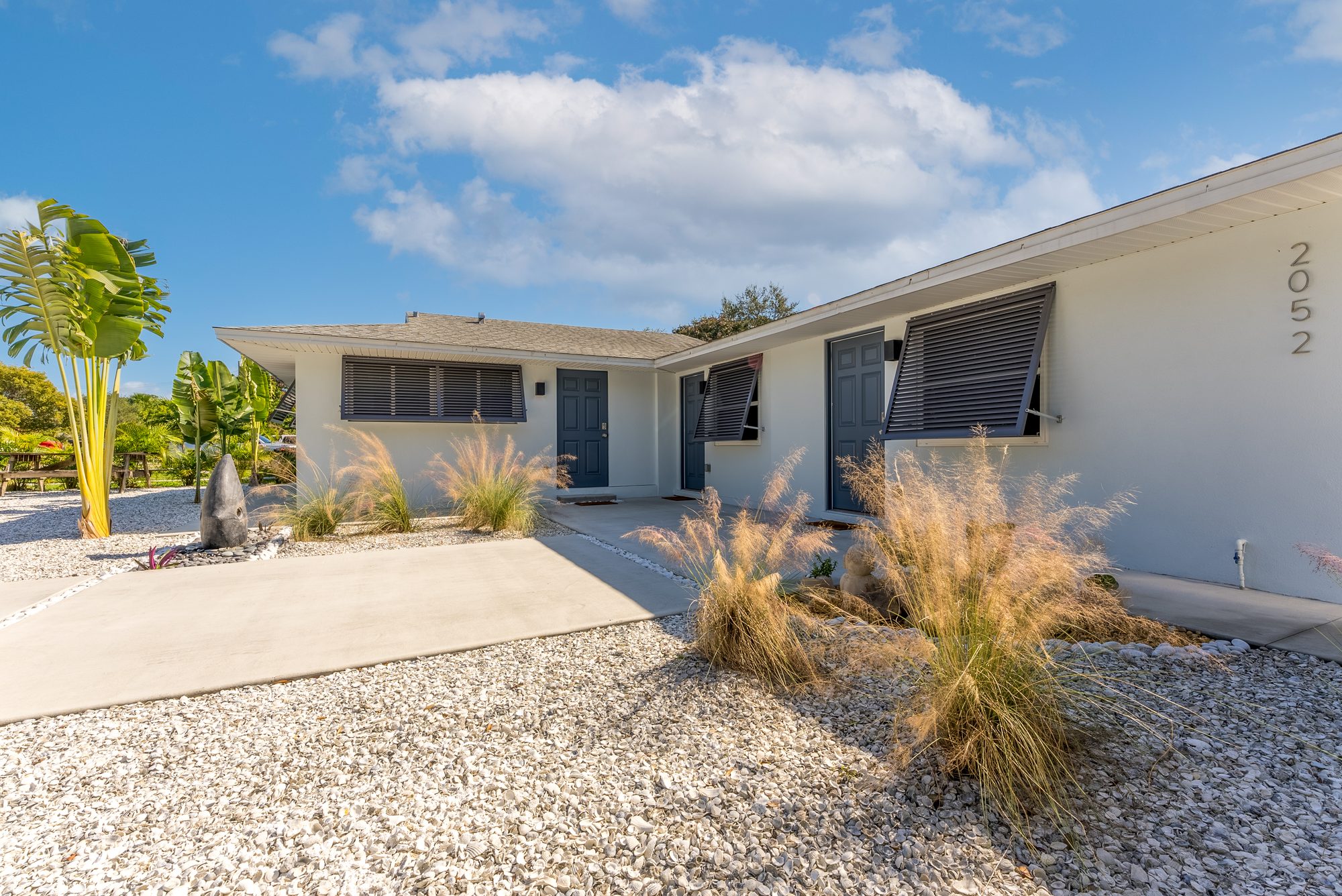
Where the vocabulary gets used · Sarasota · Photo: Stellar Media Collective
The strategy words
Hook — The first one to three seconds of a video, engineered to stop the scroll. On social platforms the hook decides whether the other 57 seconds exist. If a vendor talks about hooks unprompted, that's a good sign.
CTA (call to action) — The one thing the video asks the viewer to do: call, book, download the guide. One per video. A video that asks for three things gets none of them.
Retention — The percentage of a video people actually watch before leaving, reported by platform analytics. It's the honest metric — views measure the thumbnail and hook; retention measures the video.
Organic vs. paid — Organic is reach you don't pay the platform for (posts, search, Shorts); paid is advertising — the same video pushed to a chosen audience for money. They're different jobs: organic builds the asset, paid buys the audience.
Retargeting — Showing ads specifically to people who already visited your site or watched your videos. Cheap relative to cold advertising, because the audience already knows you — it's the digital version of following up on an estimate.
Funnel — The path from stranger to signed contract, and the idea that different videos do different jobs along it: a Reel earns attention, a project story builds trust, a testimonial closes. Most builders who "tried video and it didn't work" made one video and expected it to do all three jobs.
Evergreen content — Video that stays useful and keeps getting found for years — a cost guide, a process explainer, a neighborhood build story — as opposed to timely posts that expire in a week. Evergreen is where video stops being an expense and starts behaving like an asset.
Definitions current as of July 2026; we update this page as the tools and the vocabulary change. Florida Construction Media is published by Stellar Media Collective, a Sarasota video production studio — which is how we know what these words mean on an invoice.