Email Nurture for Long Wait Lists: The Video Letters That Hold a Client for Ten Months
A signed client with nothing to look at is the easiest job in your pipeline to lose. Ten short films, sent to one address at a time, that keep a backlog from turning into a cancellation.
8 min read · August 18, 2026 · Florida Construction Media

A client signs in March. Ground breaks the following January. In between there is engineering, permitting, a selections calendar, and three houses ahead of theirs in the schedule. In that same span, most builders send that client somewhere between eight and twelve emails, and nearly all of them are invoices, selection deadlines, or a forwarded PDF from the architect.
None of that is neglect. It is what a busy company looks like from the inside. From a kitchen table where two people are looking at a bank statement with a deposit missing from it, it looks like being forgotten by the most expensive vendor they have ever hired.
The fix is not a newsletter, and it is not more updates. It is a small, boring, repeatable habit: one short film a month, addressed to one household, sent from a person and not a brand. Ten of them cost about two hours of filming a year and hold the front end of your schedule together.
The ten months you are asking someone to stand in
NAHB's analysis of Census Survey of Construction data puts the average single-family home at 9.1 months from authorization to completion in 2024: 1.4 months from permit to start, 7.6 months of construction. Homes built by hired contractors ran closer to twelve months, owner-built homes 15.1.
Those clocks all start at the permit. Your client's clock started at the contract, months earlier: design development, engineering, a jurisdiction's review queue, and a position in your backlog. The Census does not count that first half. Your client counts every week of it.
The front half is the dangerous part, because it is the only stretch of the relationship with nothing to look at. Once the slab is poured, the job markets itself: there is a thing on the lot that changes every week, and clients drive by on Sundays. Before the slab, there is a folder of PDFs and a hope.

Ten months, ten envelopes, one film in each · Illustration: Florida Construction Media
Why a letter, and why it is on video
A video letter is not a newsletter and not content. It is one film, 60 to 90 seconds, in which the owner or the project manager says a specific client's name, tells them one true thing about where their job stands, and stops. It is closer to a postcard than to marketing, and that distinction is the whole point: the moment it reads as a broadcast, it stops working.
It works on video rather than in text because the anxiety it treats is not informational. A client who has waited five months does not need a status table. They need evidence that a competent adult is still thinking about their house. Forty seconds of a superintendent in front of a plan set saying your truss package went to the engineer Tuesday, here is what happens next carries tone, and tone is what people read for reassurance.
There is a plainer commercial reason as well. Every offer a builder makes is priced partly on time delay: the value equation Alex Hormozi made common vocabulary, and the one term a booked-out builder cannot fix with better sales copy. You cannot shorten the wait. You can change what the wait feels like, and that costs a camera and a calendar reminder instead of a slot in the schedule.
The video letter, speced: 60 to 90 seconds finished. Filmed on a phone with a clip-on microphone, horizontally, outdoors or in a quiet room with light on your face. One person on camera: the owner or the PM assigned to that job, never a rotating cast. Structure: name the client, name the month, one thing that happened, one thing happening next, one date they can hold you to. No music, no logo animation, no lower thirds, no call to action. Hosted on an unlisted link, never attached. The email around it is three sentences and a thumbnail. Filmed ten at a time in a single morning, personalized only in the opening line and the job detail.
That last line is what makes the system survivable. Every custom job passes the same milestones, so you are not writing ten scripts. You are filming one structure ten times with different job facts in the middle, the way a batch filming day produces six pieces of content before lunch.
The cadence, month by month
This assumes a signed client waiting on permits and a backlog. Compress or stretch it to fit your schedule; the discipline is the interval, not the count.
Month 1: the confirmation. Sent within a week of signing, while enthusiasm is still doing the work for you. What was signed, what happens before the permit, and an honest date range for groundbreaking. The only letter where a written summary belongs underneath the film.
Month 2: the named process. Where their job sits in a plan you have already given a name to. Builders who have named their process get this letter for free; everyone else discovers here that they have never described their own sequence out loud.
Month 3: the drawing. A rendering, an elevation, or a detail the architect finalized, on screen while you talk over it. The first letter with something to look at.
Month 4: the selections nudge. The one letter with a task in it. Deadlines land better in a voice than in a spreadsheet, and the client behind on selections is usually the client embarrassed about it.
Month 5: the other job. Footage from a house you are finishing now, at the stage theirs will reach next spring. Clients forward this one to their families, and stripped of the personal opener it doubles as material for the 97% who are not buying yet.
Month 6: the permit reality. Where the application actually sits, in specifics, including bad news if there is bad news. The trust built here is why the month-nine letter gets watched.
Month 7: the trade. Introduce a sub by name and let them talk for thirty seconds about their part of the job. Clients hire a company and then meet a parade of strangers; this makes the parade legible.
Month 8: the money map. Draw schedule, allowances, what triggers what. Filmed at a desk, calmly, before anyone is under pressure about it.
Month 9: the pre-construction walk. Stand on their lot. Corner stakes, setbacks, the tree they asked about. Ninety seconds on the actual dirt is worth more than the previous eight letters, and it costs a stop on the way to another site.
Month 10: the start date. A real date, a schedule for the first six weeks, and the name of the person who will answer the phone. From here the cadence hands off to progress updates and eventually to a handoff film.
Stellar's 30-day content calendar for trades is a reasonable template to steal structure from, but keep the two systems separate. Marketing content goes to a list. Video letters go to one house.
The plumbing, which is where these die
Nothing on this list is interesting, and every one of them has killed a nurture sequence.
Send from a person. A named human at your domain, with a reply-to that reaches them. A letter from a no-reply address contradicts its own content.
Do not attach the video. Host it (unlisted on YouTube or Vimeo, or on your own site) and send a linked still frame with a play button over it. Attached video files get stripped, bounce, or land in spam, and you lose the one signal you want, which is whether they watched.
Keep the list separate. Signed clients are not subscribers. They should never be in a bulk send with a promotional footer attached to a message about their own house.
Authenticate the domain. SPF, DKIM, and DMARC, set up once by whoever runs your email. Google's sender guidelines require one-click unsubscribe and a spam-complaint rate under 0.30% from senders above 5,000 messages a day, and recommend staying below 0.10%. A builder sending ten letters a month is nowhere near those thresholds, but the authentication half applies to everyone, and an unauthenticated domain is the most common reason a company's mail quietly stops arriving.
Put it on someone's calendar. The sequence dies the month it depends on remembering. It belongs in your project management system as a recurring task per pre-construction client, with a name next to it, the same way a draw request does.
Watch who does not open. Three unopened letters in a row from a client who was enthusiastic in March is information, the same signal a stalled estimate follow-up gives you, arriving earlier and mattering more, because this one has a deposit attached. Call them.
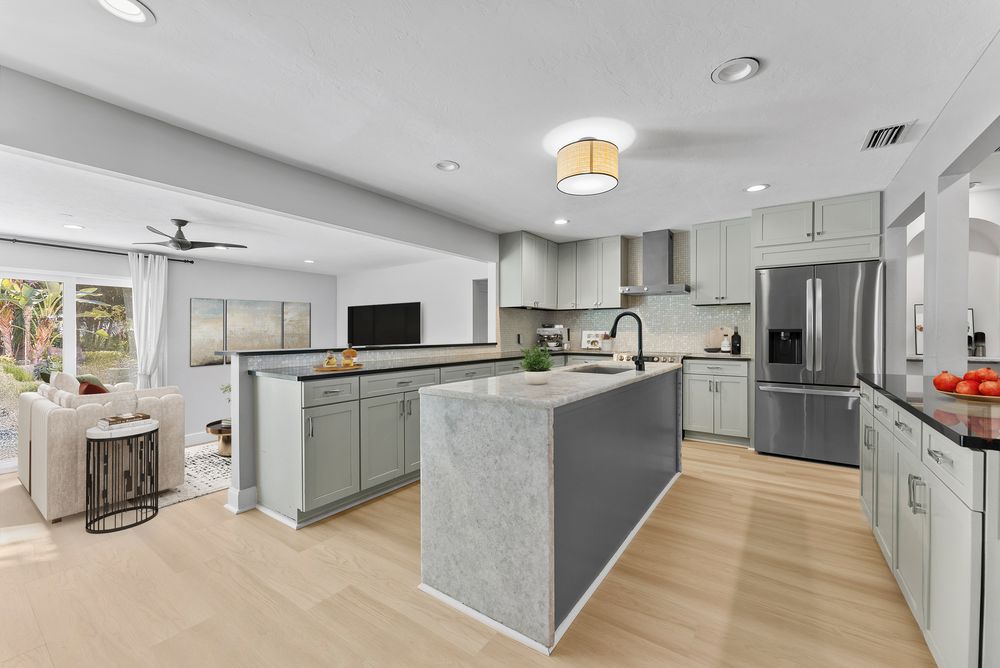
The room at the end of the wait · S Orange Ave, Sarasota · Photo: Stellar Media Collective
Questions builders actually ask
Is this not just what a good project manager already does by phone? Partly, and the builders who do it well by phone lose the least. But a call happens when someone remembers, reaches one person in the household, and leaves no record. A filmed letter reaches both spouses, gets forwarded to the adult child helping them decide, and still exists in six months when someone asks what you said about the permit.
What if there is genuinely no news that month? That is the most important letter in the sequence. "Nothing moved, here is why, here is what I am doing about it" separates a company a client trusts from one they start reading reviews about. Silence during a stall is how a wait list becomes a cancellation.
Can I write the same thing in an email instead? You can, and it beats nothing. Text is faster to produce and worse at making an anxious person feel handled. If the choice is a written letter every month or a filmed one every quarter, send the written one every month. Interval beats production value here.
How personal does it have to be? The opening line and one job-specific fact. Everything else can be the same take four other clients got that month. Nobody is comparing notes on your phrasing; they are checking whether someone knows which house is theirs.
Do these ever become marketing? Some, with permission. The month-five and month-seven letters are ordinary content wearing a personal opener. Strip the opener, ask before publishing anything filmed on a client's lot, and route the rest into your custom home builder library. The letter is the job; the content is the by-product, and it should stay in that order.
Construction timeline figures verified against NAHB's September 22, 2025 analysis of Census Survey of Construction data, and email sender requirements against Google's published sender guidelines, as of August 18, 2026. Both are subject to change; confirm current requirements with whoever administers your domain. Disclosure: this publication is owned by Stellar Media Collective, which builds video and content systems for Florida builders, including the client-communication cadences described above.