Batch Filming Day: Six Pieces of Content Before Lunch
Builders publish in bursts and then vanish, and the reason almost never is ideas or willpower — it's setup cost. Batch filming turns the camera from an event into a mobilization: one morning, one setup, a month of content.
8 min read · August 1, 2026 · Florida Construction Media
Watch how most builders film. A burst of enthusiasm produces four videos in a week, they go quiet for two months, then a slow stretch on the calendar prompts another burst. The pattern reads like a motivation problem. It isn't. It's a setup problem — the same reason your crew doesn't drive to a site to hang one door. Getting the camera out, finding the light, remembering what to say, and getting your own face in a decent frame costs about the same whether you film one piece or ten. When every video carries the full setup tax, filming feels like an event you have to psych yourself up for, and events don't happen on a schedule.
Batch filming fixes the economics. You pay the setup cost once and spread it across a morning's worth of output. Done right, a builder walks into the office after breakfast and walks out before lunch with six finished pieces of content — enough to publish weekly for a month and a half. The skill isn't on-camera talent. It's treating a film day the way you already treat a mobilization: plan the work, stage the materials, and run the sequence without re-tooling between every task.
Filming is a mobilization, not a performance
The mental shift is the whole game. You don't send a truck, a crew, and a trailer to a job to pour one footing and come back tomorrow for the next. You batch the work because the cost of being there set up dwarfs the cost of the individual task. Video is identical. The camera, the light, the mic, the clean corner of the office, the hour it takes to get your head into talking-to-a-lens mode — that's mobilization. Filming one answer and packing up is the video equivalent of a one-footing trip.
This is also why "I'll just film something when I have a minute" never produces a library. The minute never feels worth the mobilization, so it doesn't happen, and the well-meaning plan to publish consistently dies of friction. A system beats motivation here for the same reason a schedule beats good intentions on a build: it removes the decision. Film day is on the calendar, the list is already written, and the only question that morning is which shirt to start in.
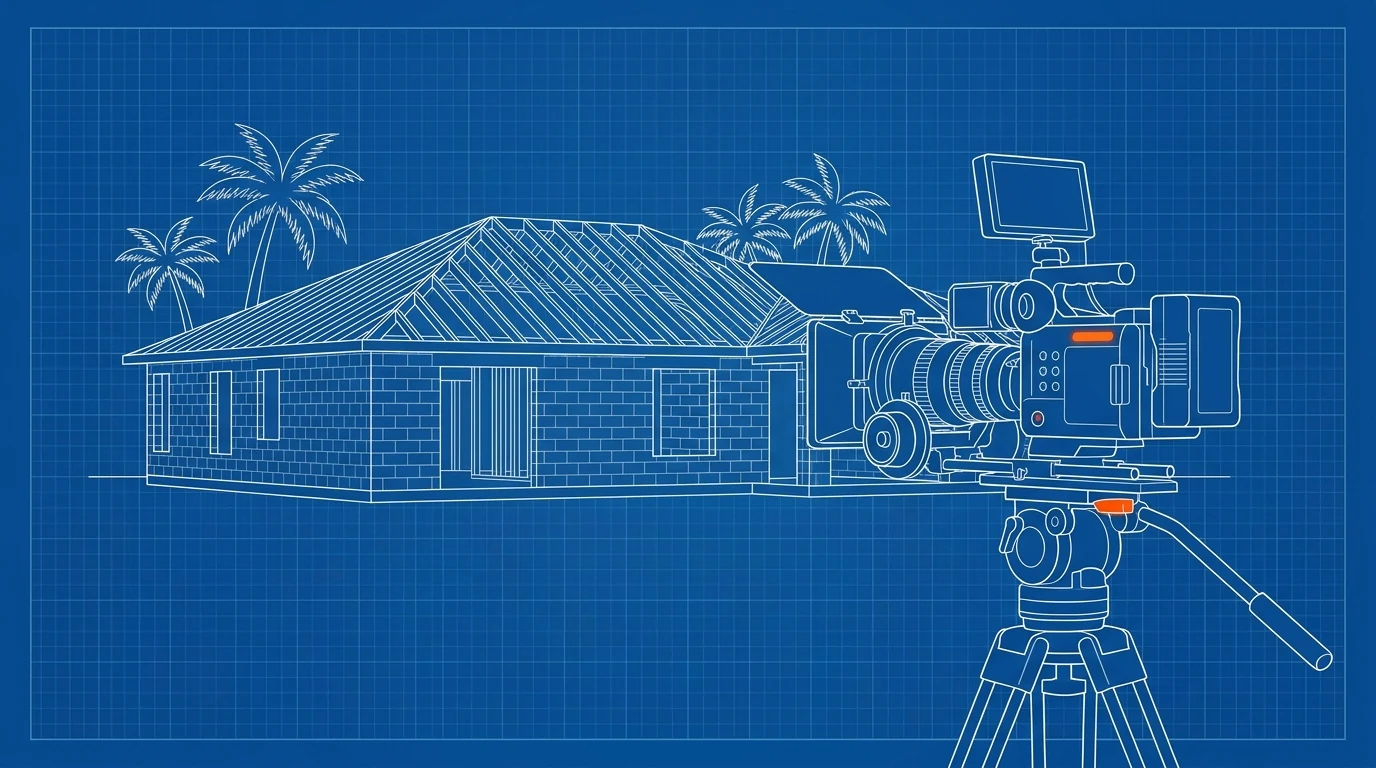
Set up once; the camera does the rest of the morning's work · Illustration: Florida Construction Media
The bank you bring
The reason batch days stall in the middle is that people show up without knowing what to say and try to invent it on camera. Don't. The content is already written — you just haven't collected it. Two libraries this publication has covered feed a film day indefinitely: the questions you answer at every estimate table and the ten pushbacks you hear every week. Between them, a working builder has forty to fifty prompts sitting in plain sight. Add a few project stories and a couple of "here's how we handle it when X goes wrong" pieces and you will never run dry.
Bring the bank as a printed list, not a script. You are not memorizing lines — memorized lines are the thing that makes builders look stiff and shifty on camera. You are answering questions you have answered out loud a thousand times, one after another, the way you'd talk a homeowner through it at the truck. The list is there so you never burn a take deciding what's next. Order it easy-to-hard so the first two get you warm before the ones that matter. Stellar keeps a fuller set of owner-on-camera prompts and setup checklists in its resources for owners; print whichever version you'll actually hold.
The run of show: six before lunch
Here is how the morning actually goes. Set the camera at your eye level — not looking down at you, which reads small, and not up your nose. One light, forty-five degrees off to the side, big and soft, so you aren't squinting and you aren't flat. A lavalier mic clipped inside your collar, because audio is the single thing viewers won't forgive and the phone's built-in mic is not it. Then you run the list.
The trick that makes six feel like two: don't reset between topics, reset between looks. Film three or four answers straight through in the first shirt — pause, breathe, next question, keep rolling. Then change your shirt, and film the next three. To the viewer scrolling their feed on three different Tuesdays, those are obviously separate videos shot on separate days. To you, it was one setup and a wardrobe change. That is the entire illusion, and it is completely honest — you did film them all, and nobody is owed a filming diary.
The batch film-day kit and cadence. Gear: a camera or a recent phone locked on a tripod at eye level; one soft key light at 45 degrees; a clip-on lav mic; a glass of water off-frame. Prep: the printed prompt bank (FAQ + objection + a few project stories), ordered easy-to-hard, and two or three shirt changes for visual variety. Run of show: film 3–4 prompts per wardrobe look, resetting between looks, not between questions; leave two silent seconds before and after each answer so the editor has clean handles; capture ten minutes of b-roll at the end — hands on plans, a walk to the truck, the office — to cover cuts. Target: six talking pieces plus b-roll in a three-hour morning.
Two habits protect the whole haul. Leave a beat of silence before you start talking and after you finish, every time — those clean handles are what let an editor cut without clipping your first word, and their absence is what turns a good take into an unusable one. And shoot everything in 16:9 and derive the verticals later; a horizontal frame reframes down to a 9:16 reel, but a vertical never crops back up to a widescreen website header. Film wide once, cut both ways forever.
What one morning becomes
Six talking pieces is a month and a half of weekly publishing from a single morning, and that is the conservative read. Each answer is also a caption you can lift verbatim for a written post, a paragraph for a project page, and a reply you can text to the next homeowner who asks that exact question before the call. The film day isn't producing six videos. It's producing the raw material for most of a quarter's content across every channel you touch — which is the only way a solo owner or a lean shop ever publishes with enough consistency to reach the buyers who aren't ready to call yet.
In Florida the calendar helps you. Interior talking-head work belongs in the morning, before the afternoon light blows out the windows and the heat makes everyone shiny and short-tempered — so batch days start early by default here. And the office film day is your rain-day and your hurricane-season play: when the site is shut down and the crew is sent home, the one kind of content you can still produce is you, a camera, and the questions you already know how to answer. A builder with a written prompt bank turns a lost afternoon into six weeks of pipeline.
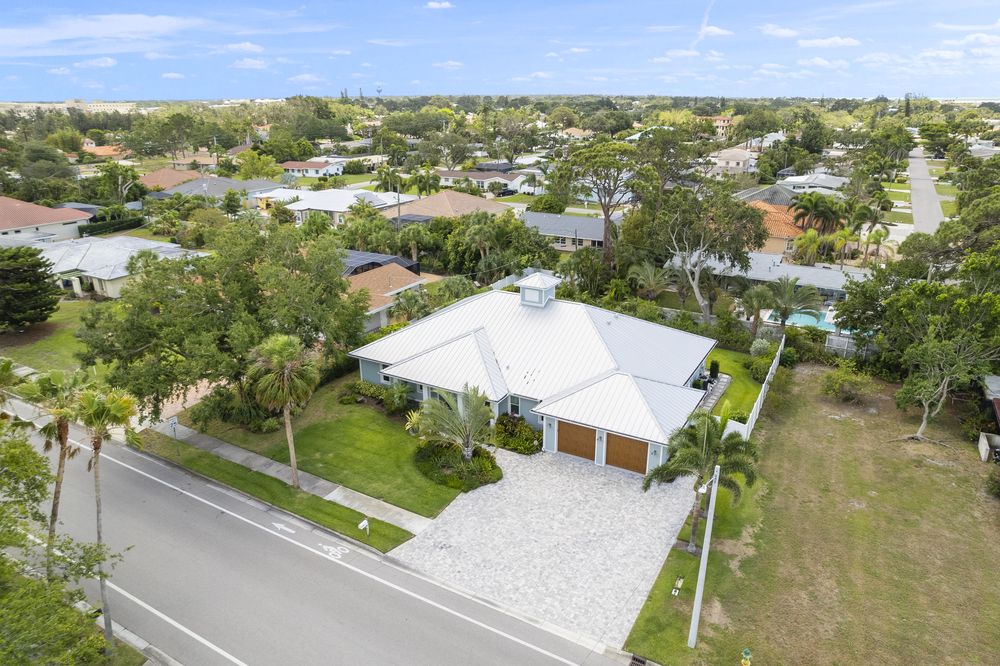
The project a film day is ultimately selling · Venice · Photo: Stellar Media Collective
The one thing that makes it repeatable
Book the next film day before you leave the current one. A batch morning that happens once is a nice burst; a batch morning that recurs every four to six weeks is a content system that quietly compounds while you build. Put it on the calendar as a standing appointment, keep the kit staged in one box so setup is ten minutes and not an hour, and keep adding to the prompt bank every time a homeowner asks you something new. The bank grows faster than you can film it, which means you are never again staring at a camera wondering what to say — the well-run film day has already answered that before you walked in.
Questions builders actually ask
I hate being on camera. Doesn't batching just mean more of the thing I dread? It means less of it, spread better. The dread is mostly the cold start — the first two takes where you hear your own voice and hate it. Batching front-loads that once per morning instead of every single time you film, and by the third answer you've forgotten the lens is there. Order your list so the low-stakes questions come first; they're the warm-up that makes the important ones land.
Can I really do this on a phone? Yes, with two non-negotiables: put it on a tripod at eye level, and clip on a real microphone. A recent phone shoots a clean enough image for everything short of your flagship brand film. What separates phone content that works from phone content that looks cheap is almost never the camera — it's steady framing and audio you can stand to listen to.
Six in a morning sounds like a lot. What if I run out of things to say? You won't, if you bring the bank instead of improvising. A builder who has run estimates for a year is carrying dozens of answers they've given out loud repeatedly. The FAQ and objection libraries alone are a year of prompts. Running dry is a symptom of showing up without the list, not of having nothing to say.
How often should the film day recur? Every four to six weeks keeps a weekly publishing habit fed without letting the footage feel stale or your wardrobe repeat too obviously. The exact interval matters less than the fact that it's scheduled — a recurring appointment you keep beats a bigger session you keep postponing.
This playbook describes a production method, not a guarantee of results; output per morning varies with preparation, comfort on camera, and how deep your prompt bank runs. Published August 1, 2026. Disclosure: Florida Construction Media is published by Stellar Media Collective, Sarasota, which runs batch film days as part of the always-on content systems it builds for premium trades.