Lakewood Ranch: Marketing a Trade Inside a Master-Planned Kingdom
Thirty years in, the Ranch's first villages are hitting their remodel years a street at a time, and demand clusters where the floor plans repeat. Winning inside the gates means marketing by village, not by city.
8 min read · July 6, 2026 · Florida Construction Media
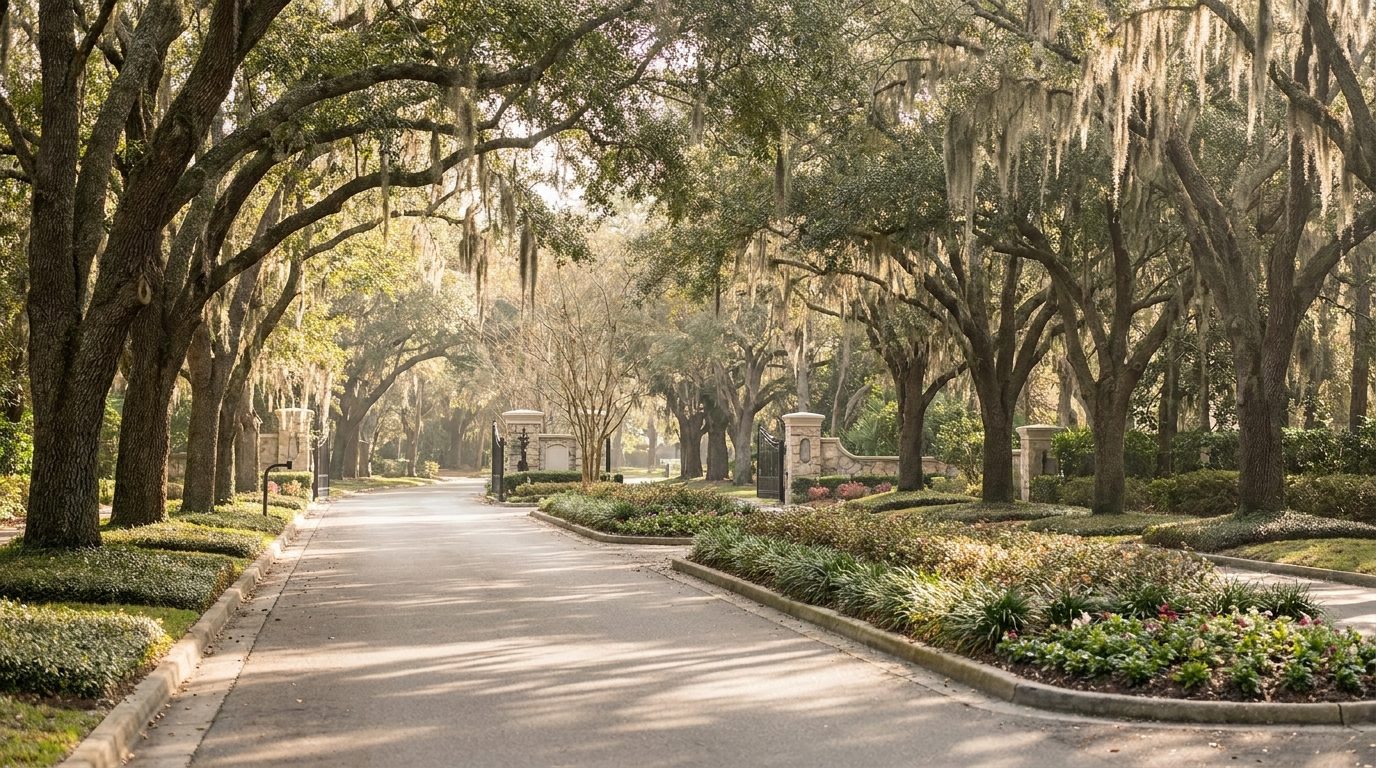
Lakewood Ranch gets covered as a new-construction story, and the numbers keep feeding it. RCLCO's year-end tally put the Ranch at No. 2 among the nation's top-selling master-planned communities for 2025 — the third straight year in that spot, still first in the multigenerational category — and the community's own materials count more than 74,000 residents across a 35,000-plus-acre spread of Manatee and Sarasota counties. Every trade on the Gulf Coast knows that version of the place: builder contracts, punch-out schedules, another village opening east of the last one.
The version fewer contractors price in is the calendar. The first families moved into Summerfield in the mid-1990s, which means the oldest streets in the Ranch turned thirty this decade — and a twenty-year-old house is not a new house. It's a kitchen that photographs like its era, a roof your insurer asks about at renewal, a repaint the association will eventually have opinions on, and a lanai the owners have meant to do something about since the kids moved out. Multiply by tens of thousands of rooftops and Lakewood Ranch stops reading as a new-construction market. It reads as the largest concentration of scheduled remodel demand on the Gulf Coast, organized — conveniently, for anyone who markets with a map — into named villages.
Thirty years of rooftops, aging in order
A master-planned community ages differently than an ordinary town, and the difference is the whole opportunity. A regular zip code mixes 1978 ranch houses with 2019 infill, so demand for any one trade is scattered and unpredictable. The Ranch built in waves. Each village went up in a compressed window, by a short roster of builders, from a short list of floor plans. Summerfield and Riverwalk date to the mid- and late 1990s; the Country Club, Edgewater, and Greenbrook filled in through the 2000s; Central Park and the Esplanade-era villages carried the 2010s; Waterside pushed the whole enterprise south into Sarasota County in the 2020s. Treat the vintages as approximate — property records give you the exact rungs — but the ladder itself is real, and it means whole streets cross the fifteen-, twenty-, and twenty-five-year marks together.
Those marks are your services. Kitchens and baths installed in 2003 come due in a cluster, not one at a time. Roofs age in formation, and Florida insurance renewals have turned roof age into a dinner-table subject. Repaints roll through on association schedules. Outdoor living — the summer kitchen, the extended lanai, the cage upgrade — tracks the same curve, because the whole street bought the builder-grade version the same year.
Clustered demand also behaves differently than scattered demand. When one house on a cul-de-sac gets its kitchen opened up, the neighbors are not idly curious; a third of them own the same kitchen, aged the same twenty years. The dumpster in the driveway is a preview of their own project, at full scale, three doors down. Call it the driveway consultation: the conversation your lead carpenter has at 4:30 with the neighbor walking the dog is worth more, minute for minute, than most paid reach. Neighbors copy neighbors everywhere, but in a village where the floor plans repeat, your last job is an exact rendering of the next prospect's house.

The kingdom ages one village at a time · Illustration: Florida Construction Media
Market by the village, not by the city
Ask a Greenbrook homeowner where she lives and she says Greenbrook — Lakewood Ranch if she's talking to someone from out of town, and almost never Bradenton, whatever the mailing address says. Marketing that respects this outperforms marketing that doesn't. "Kitchen remodeling Sarasota" throws you into the most crowded auction in the county. A page or a short film built around what Summerfield kitchens need after thirty years competes with almost nobody, speaks the way residents actually talk, and demonstrates the one thing a citywide claim can't: that you know their exact house. That isn't narrowing the market; it's sharpening the message. Village pages pull hard inside the gates and still read as competence from outside them.
Village fluency has a second layer: process. Exterior work in a planned community generally routes through architectural review — pre-approved paint palettes, roof material and color rules, screening and setback standards for cages and additions, submittal forms with real lead times. The specifics vary by village and change over time, which is exactly why fluency is worth something. To a homeowner, the review board is the scariest line item in the project. The contractor who can sketch the approval path in the first conversation — what needs a form, what needs drawings, roughly how long the committee takes — has removed the biggest anxiety in the deal before quoting a dollar. Publish that knowledge in plain English, dated, with a pointer to the association's own documents, and you become the answer to a question every competitor is waiting to be asked in person.
Spec box: the village-by-village starter. Pick the three villages where you've done your best work. For each, build four assets: a filmed project story from inside the village; a vintage explainer ("what [village]'s early-2000s kitchens need now"); a plain-English approvals walkthrough, dated and linked to the association's current documents; and a monthly Google Business Profile post that names the village. Twelve assets, one quarter, no ad spend — then repeat with the next three villages.
Banners expire, search compounds
The Ranch runs a dense community calendar — the farmers market, the main-street event nights, club newsletters, village socials — and the sponsorship kit will find you soon enough. Buy some of it. Face recognition inside a community this self-contained is real, and showing up signals you're a neighbor rather than a truck passing through. Just be clear about what each dollar does. A banner buys recognition that expires when the event ends. The village-named article and the project film keep answering searches at 9 p.m. indefinitely, which is when remodels actually get researched. The event makes people warm; the search result makes you findable at the moment warmth turns into intent. Run both, and know that only one compounds.
One filmed project per village
Put the pieces together and the engine is plain: one properly filmed project per village. The film shows the homeowner — same floor plan as the neighbors, same vintage — walking the finished work and saying the two things every prospect inside the gates needs to hear: the approval process went fine, and the crew treated the street with respect. A yard sign with a QR code puts that film one scan away from the sidewalk, so the driveway consultation keeps running after your carpenter goes home. The same film anchors your Google Business Profile, because for local work the map, not your website, is the homepage.
Then let the patience math run. Most of that street is not remodeling this quarter — that's the 97 percent problem, and it's why the engine works. The few who are ready call now. The rest file you away as the company that did the corner house, and when their roof letter arrives in 2028, there's exactly one name already on the list.
One rule before any of it: never film in a community without the client's written consent and the gate's awareness. Clear the shoot with your homeowner, notify the association where required, keep the lens off neighboring houses and kids, and read the sign rules before you stake one — plenty of villages regulate contractor signage down to the square inch and the day count. Your reputation inside the gates is the asset all of this builds; one tone-deaf shoot in a cul-de-sac spends a year of it.
The next kingdom is already grading lots
None of this is unique to Lakewood Ranch. It's what master-planned maturity looks like, and the pattern is already repeating: SeaFlower is building toward roughly 4,000 homes on the west side of Bradenton, a new kingdom starting its own thirty-year clock, while the Ranch itself keeps adding villages east and south. Every ribbon-cutting you see this year is a remodel wave with a 2045 delivery date. The contractors who own village-level attention in the Ranch today wrote the playbook while those streets were new. The ones who start now inherit it in time for the next one.
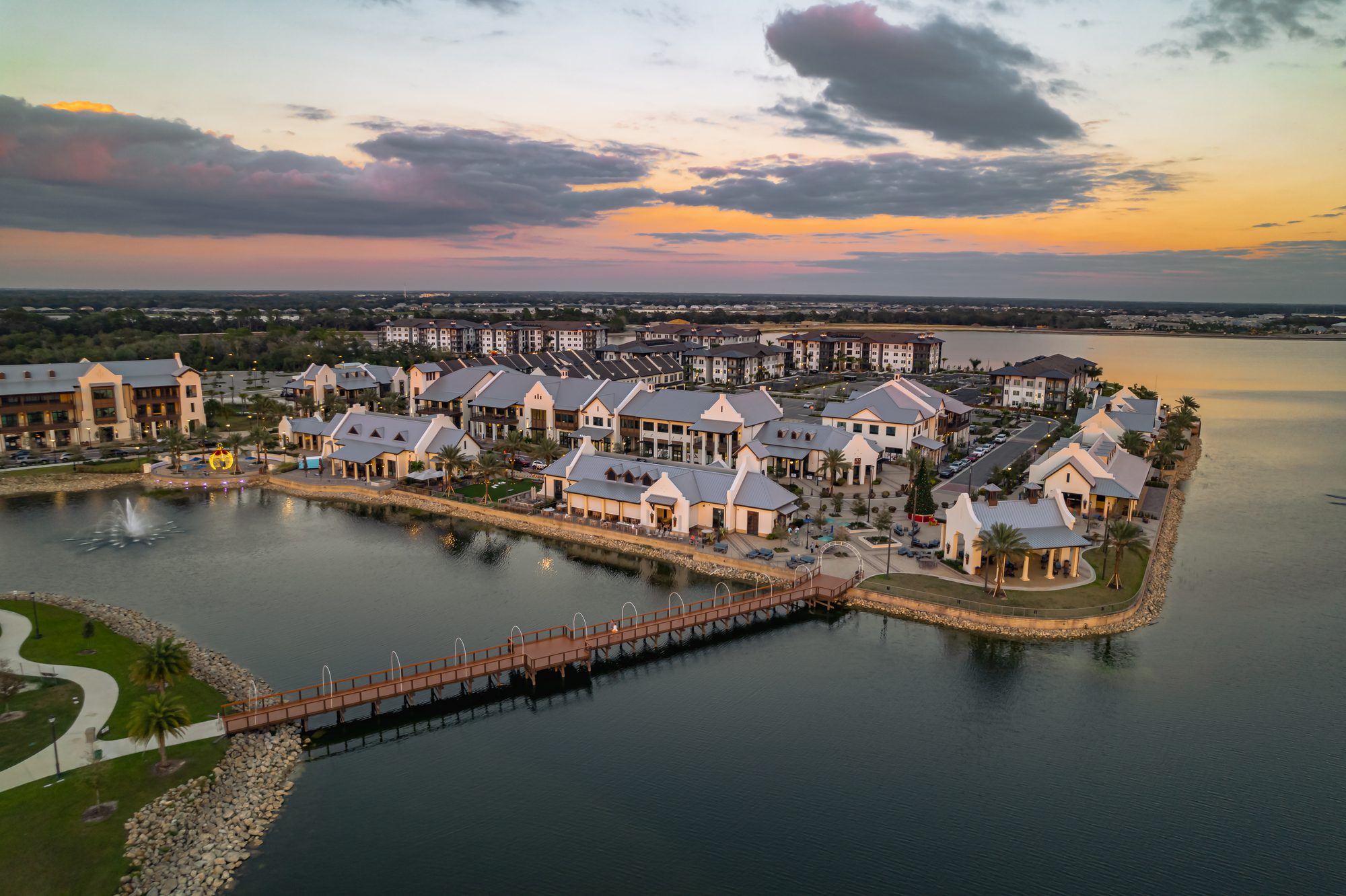
Lakewood Ranch at dusk · Photo: Stellar Media Collective
Questions builders actually ask
Isn't Lakewood Ranch sewn up by the production builders who built it? New construction, largely, yes. The aftermarket is wide open. The companies that built Greenbrook in 2003 are building 2026's villages, not remodeling their old work, and the warranties expired long ago. Nobody owns village-level remodel attention there yet.
I work the whole metro. Doesn't village-level content shrink my market? It sharpens it. A Venice homeowner who finds your Greenbrook film doesn't see a contractor who only works one village; she sees one who knows planned communities cold — the approvals, the palettes, the gate protocol. Specific proof travels. Generic claims don't.
What does HOA-literate content look like without playing lawyer? Describe the process in general terms, link the association's current documents, put a date on the page, and tell readers to confirm before they submit anything. You're demonstrating familiarity, not giving legal advice — and the annual rules check is itself a reason to update and republish.
Published July 6, 2026. Scale and ranking anchors are the linked sources' own — RCLCO's year-end rankings and the community's published figures — and will drift as the Ranch keeps building; village vintages are approximate, and association rules vary by village and change, so verify current documents before promising a homeowner anything. Florida Construction Media is published by Stellar Media Collective, Sarasota.