Incentive-Era Selling: When Builders Lead With Rate Buydowns, Marketing Has a New Job
Production builders are buying down rates and crediting closing costs to move standing inventory — and every ad they run teaches your buyer to ask for a deal. Here is the counter-position when you can't discount your way to margin.
7 min read · July 6, 2026 · Florida Construction Media
In 2021, Florida production builders held lotteries to decide who would be allowed to buy a house. In 2026, they are paying people to buy them — rate buydowns, closing-cost credits, design allowances, whatever moves a finished home off the books before the one behind it is dried in. That swing reads as a builder story. It is also a marketing story, because every incentive ad in your market is retraining your buyers, and nobody puts a number on the retraining.
If you build custom or sell premium remodels, that hands you a choice: chase a discount conversation you can't win, or take the position the discounters vacated.
The market that sold itself is gone
Through 2021 and early 2022, new construction in Florida needed crowd control more than marketing. Communities sold homes that existed only on plat maps, buyers entered lotteries for the right to sign, and escalation clauses did the negotiating. None of it was normal, but it left a habit: demand arrived on its own.
The 2025–26 market is the other side of that trade. Supply is back: Barrett Henry's Tampa Bay housing outlook puts single-family inventory at roughly 4.3 to 5.4 months across Tampa Bay and about 4.6 statewide — balanced-market numbers, not boom numbers. And a finished spec carries differently than a plat map: every month it sits costs interest, insurance, and a mowed lawn.
So production builders reached for the financing lever. Florida Realtors reported in January that roughly 40 percent of builders cut prices in December — around 5 percent on average — and nearly two-thirds offered incentives beyond the cuts, mortgage-rate buydowns chief among them for the big national operators. The same report flags something rare: the typical American resale home now sells for more than the typical newly built one, a flip seen a handful of times in decades. New construction used to command a 10-to-15-percent premium. That premium has been spent moving inventory.
None of this is a crash story; five months of supply is a functioning market. It is a merchandising story, and merchandising trains people.

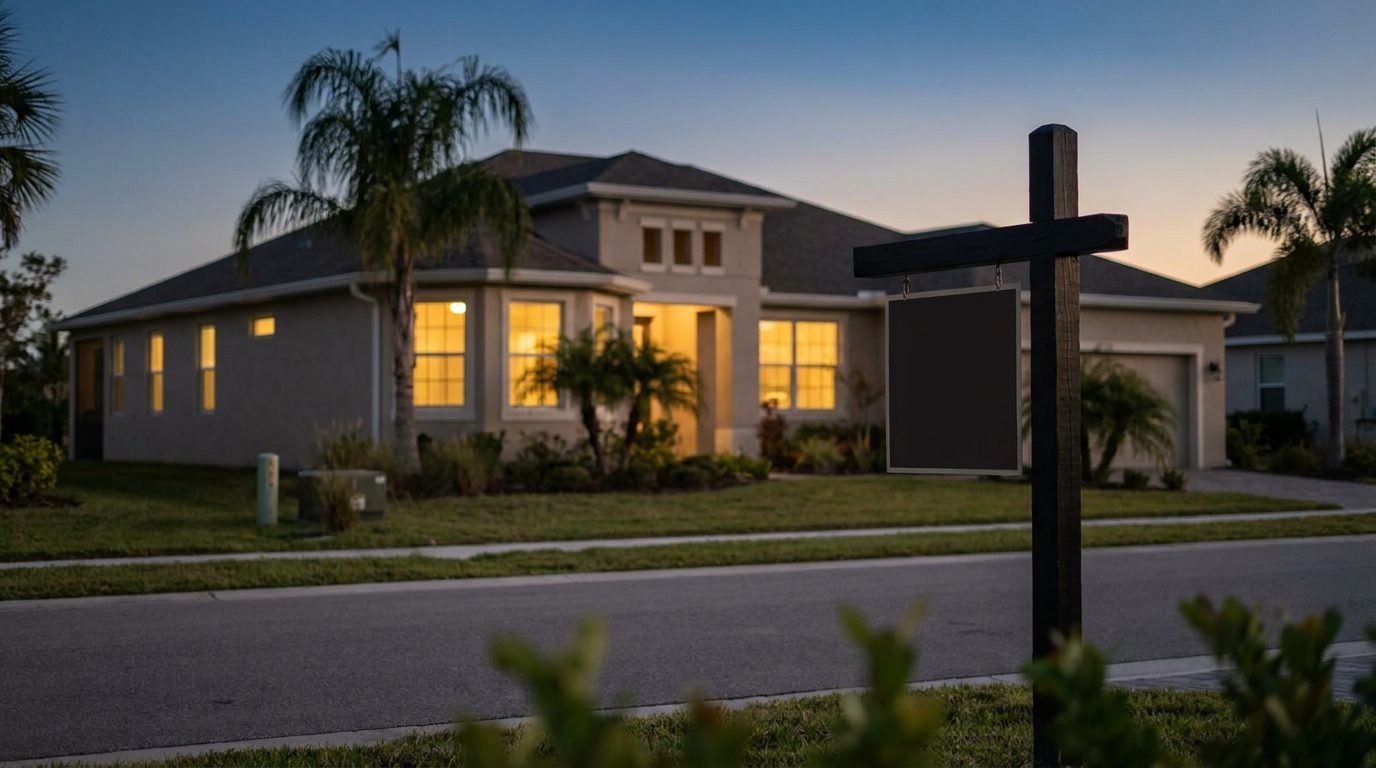
They cut the price. You cut the risk · Illustration: Florida Construction Media
What a discount ad teaches a buyer
An incentive is a message as much as a contract term, broadcast at ad-budget volume: the sticker is a starting point — ask what we'll throw in. Run it on every feather flag between Wesley Chapel and North Port for a year and it stops being one builder's offer and becomes the market's etiquette.
Buyers do not sort messages by business model. The couple who saw a teaser rate on a community banner is the same couple in a custom builder's office three weeks later with a lot they own — and they open with the question the ads taught them. What's the deal.
For a production builder the deal is rational: a standing home has a carry cost, the buydown is cheaper than a fourth month of interest, and volume covers the spread. For a custom builder or premium remodeler it is poison. Margin is not padding; it is supervision, allowances that don't get value-engineered mid-job, the electrician who costs more because he shows up. Ten percent knocked off doesn't come out of profit. It comes out of the build.
You can't discount your way to margin, and you can't out-incentivize a company closing four hundred homes a year. Don't enter that contest; enter a different one.
Selling what a buydown can't buy
Price is one input in how a buyer weighs an offer. The others: what they believe they'll get, how sure they are it goes that way, how long it takes, and how much grief sits in between. Incentives push on price alone. The rest is open field, where a custom builder is structurally stronger than any discounter.
A buydown cannot buy certainty that the number signed is the number paid, a schedule that means something, a change-order policy in writing, or a builder who still answers at the eleven-month walk-through. Those are the fears that keep a $400,000 remodel or a seven-figure custom build unsigned; a cheaper year-one payment touches none of them.
The counter-position is to work those levers as deliberately as production builders work price. Show process before anyone asks — budget-review cadence, decision calendar, who calls the client when weather eats a week. Replace claims with proof — finished projects, real clients on camera, punch lists closed and numbers honored. And move risk onto your own paper where scope allows: fixed pricing, a written escalation policy, guarantees narrow enough to be enforceable.
Rule of thumb: a discount changes what the buyer pays; de-risking changes what the buyer is afraid of. If the fear is a blown budget, a dead schedule, or a builder who disappears after the final draw, a lower price just makes the fear cheaper. Spend where the fear is: cut risk first; cut price last, on purpose, or not at all.
Three plays for the incentive era
Publish process while they publish discounts. Most people who will hire you aren't buying this quarter; they're watching. A weekly job-site video showing how a decision got made — why the beam moved, what the tile delay did to the schedule, who told the client before they had to ask — is evidence, and evidence compounds where a promo can't. Same logic as keeping a waitlist warm: buyers educate themselves for months, then arrive pre-sold on what your competitors never showed.
The "why we don't discount" video, without the smugness. The smug version — "our work speaks for itself" — loses the room. The honest version is the owner on a job site: here's where the money in your contract goes, line by line; take ten percent off and it comes out of one of these lines; I'd rather tell you which one now than surprise you in month four. Ninety seconds, no music, no teleprompter — though a structure helps. Buyers don't need you to be cheap. They need to know you're not hiding the ball.
Teach the rate math straight. Explain the incentives better than the people offering them. A 2-1 buydown in plain English: the rate drops two points the first year, one the second, then the full note rate for the remaining twenty-eight. On a $400,000 loan, a point of rate is worth roughly $250 a month — real money, worth taking, and gone by year three unless the refinance happens. Walking a buyer through that math with no dog in the fight is what a good GC does with a suspiciously low bid: read the fine print out loud. People remember who did that.
When the incentive is yours to offer
Semi-custom builders and anyone carrying a finished spec live between the two worlds. Sometimes moving the unit is correct — interest doesn't pause out of principle. The question is not whether to spend but how the spend reads.
A price cut is public and permanent. It reprices your comps, complicates the appraisal on the next contract, and tells the buyer who closed at full number in March what you think of them. A design credit spends the same dollars inside the buyer's house — the kitchen they'll cook in for twenty years, the lanai build-out — where it reads as more home, not a question about what the house was ever worth.
Three conditions keep an incentive from smelling like desperation. Attach a reason: a completed spec, the last two homes in a phase, a plan-year change. Keep the base price intact and put the movement into credits, upgrades, or closing help. And time-box it, then honor the deadline. An incentive with a reason and an end date is merchandising; an open-ended discount is an apology.
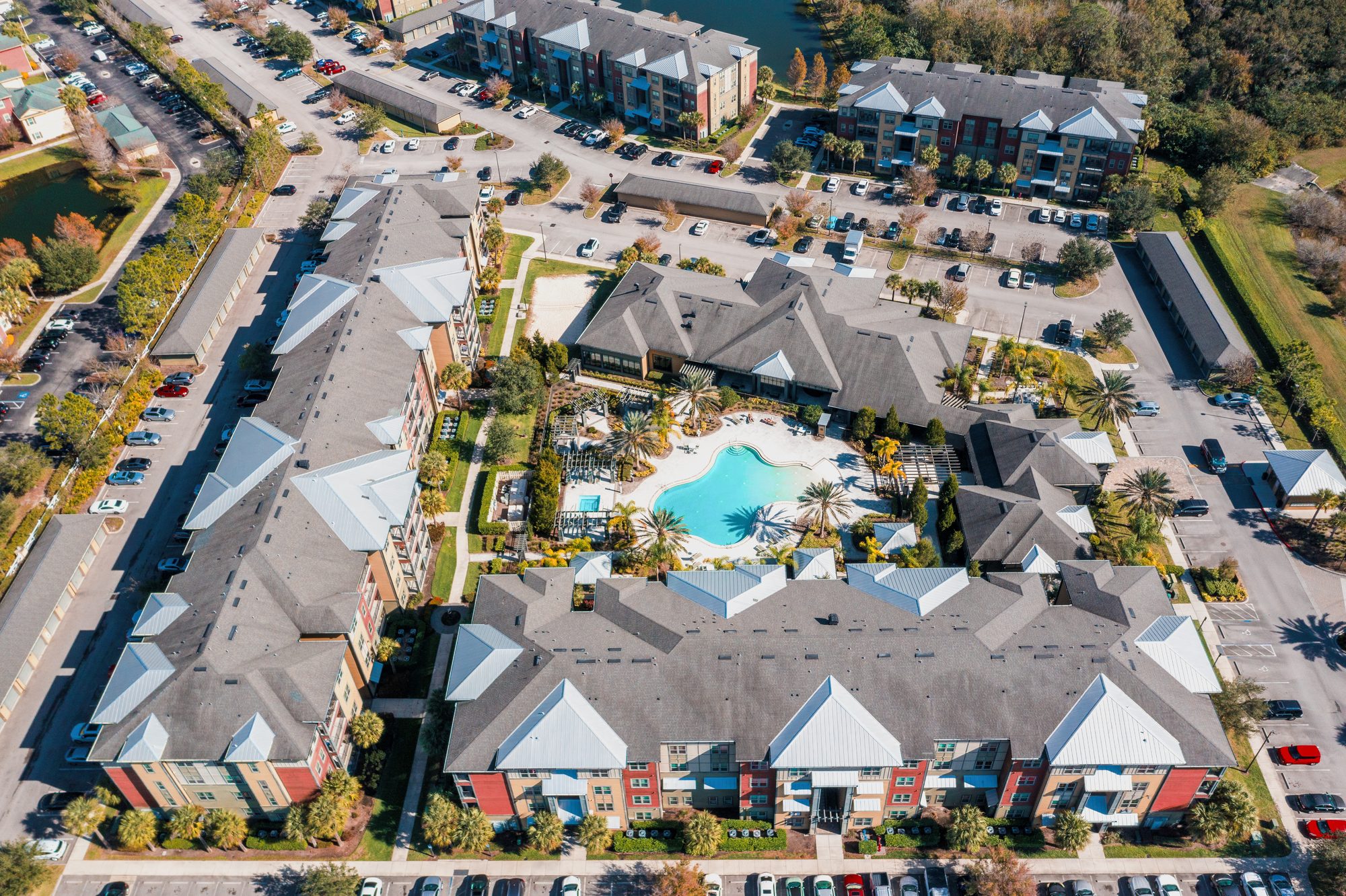
Inventory rising over the Gulf Coast · Bradenton · Photo: Stellar Media Collective
Questions builders actually ask
A production community two miles away is advertising a buydown. Do I need to answer it? Not with money. Answer with category clarity: they sell a payment on a finished floor plan; you sell a building that doesn't exist yet, on the client's land, to the client's spec. Say that plainly, then prove you're the lower-risk way to do the harder thing. A prospect who keeps steering back to the buydown is shopping the other category — let them go, no discount, no grudge.
We're semi-custom with two finished specs. Cut the price or offer a credit? Credit, with a stated reason and a deadline. It protects your comps, your past buyers, and your next appraisal, and aims the dollars at the part of the house the buyer will live in. Cut sheet price only if the plan itself is mispriced — a pricing decision, not a promotion.
What should we publish first? The rate-math explainer — nobody else in your market will touch it, and it earns trust months before a signature. Then the owner video on where the money goes. One honest piece a week beats a perfect one a quarter — pick what you can film Thursday.
Published July 6, 2026. Figures are attributed to the sources linked above and will drift; check the originals before quoting them. Disclosure: this publication is owned by Stellar Media Collective, a Sarasota studio that builds the process-content and owner-video systems described here. The strategy holds whoever you hire to film it.