Amendment 3 on the November Ballot: What the Homestead Jump Means for Remodel Budgets and Rental-Property Clients
Florida votes November 3 on the largest homestead-exemption change in a generation. The honest read for a Gulf Coast builder: a modest nudge to some clients' budgets, a quiet shift for landlords and second-home owners, a year-end deadline for new arrivals, and county budgets that pay for the roads you drive to the job.
6 min read · October 6, 2026 · Florida Construction Media
The story
On November 3, Florida voters decide Amendment 3, the property-tax measure the Legislature put on the ballot in a June special session. According to the Property Appraisers' Association of Florida FAQ, the homestead exemption for non-school taxes would rise to $150,000 on January 1, 2027 and $250,000 on January 1, 2028, with inflation adjustments from 2029. The current maximum for 2026 is $51,411. School taxes keep today's $25,000 exemption and nothing more. The cap on how fast a non-homestead property's assessed value can rise would drop from 10 percent a year to 5 percent. It needs 60 percent of the vote, and if it passes, the first bills that show it arrive in November 2027.
There is a residency clause most coverage skips. Per the same FAQ, anyone who establishes Florida residency on or after January 1, 2027 starts at a $50,000 exemption and waits four years for the larger one. Anyone who is a Florida resident by December 31, 2026 qualifies for the full amount, even if they have not bought a house yet.
The money is large. The Florida Chamber's summary puts the local revenue reduction at about $4.96 billion in fiscal 2027-28, $8.78 billion in 2028-29, and $11.86 billion a year once fully phased in. Closer to home, Sarasota County administrator Jonathan Lewis told commissioners in August the county would lose about $134 million over the first two years, including $54 million from the sheriff's office and $17.5 million from emergency services. Manatee County's state estimate is $62.9 million in 2027 and $113.1 million in 2028. The City of Sarasota projects a $5.6 million hit to a general fund that draws 51 percent of its revenue from property taxes.
Whether it passes is a live question. A Sachs Media poll of 800 voters in August found 65 percent support with the revised ballot language. A St. Pete Polls survey of nearly 1,000 likely voters on September 17 found 45 percent in favor, 30 percent against and 25 percent undecided. Those are not the same question asked two ways; they are two months apart, and the gap is the campaign.
The house, the vote, and the money that moves between them · Illustration: Florida Construction Media
What it means for you
Do not sell a remodel on the savings. The Florida Policy Institute's Holly Bullard put the typical homeowner's reduction at about $1,000 a year. The appraisers' FAQ is blunter: the actual figure depends on assessed value, Save Our Homes benefit, existing exemptions and local millage, and no appraiser's office can calculate it today. That is a nudge, not a bathroom. A client who brings it up at the estimate table is testing whether you will tell them something true. Tell them the exemption changes taxable value, not the rate, that school taxes are untouched, and that the first bill reflecting it is thirteen months away.
The math, for the conversation only. Assume a Sarasota homestead assessed at $450,000, paying 12 mills of non-school levies, with no other exemptions. In 2027 the exemption grows by roughly $98,600 over today's, which at 12 mills is about $1,180 a year. In 2028 the added exemption is about $198,600, or roughly $2,380 a year. Those are illustrative; the millage is an assumption, and counties may change rates in response. Use the shape of the number, not the number.
The landlord and second-home clients change more than the homesteaders. Halving the non-homestead cap slows how fast assessed value climbs on rentals, second homes and commercial property. The FAQ notes it caps assessed value rather than taxes, and school taxes stay at full market value. For the owner of a seasonal house on the keys, or the groups behind the apartment wave, that is a slower-rising carrying cost on a property they intend to hold. It does not create projects. It makes the hold-and-improve case a little easier to make, which is the case your remodel proposal is already making.
December 31, 2026 is a real date for your arriving clients. The October arrival who signs in February has a new question this winter: become a resident before year end, or wait four years for the full exemption. Realtors will push that conversation hard in the next eight weeks. A builder who understands it, and can say in one sentence why the year-end residency date matters to a buyer who is also planning a kitchen, is the builder who gets invited to that conversation.
The counties pay for it, and so might your fees. Sarasota County's warning named the sheriff, emergency services and the environmentally sensitive lands program. The WGCU read on the Suncoast lists fewer firefighters and police, reduced parks funding, and higher fees and assessments among the projected responses. Nobody has published a permit-fee plan, and this article is not predicting one. But a county replacing lost revenue tends to look at fees first, and trades are the ones who pay fees. Watch the 2027 budget hearings the way you watch a code cycle.
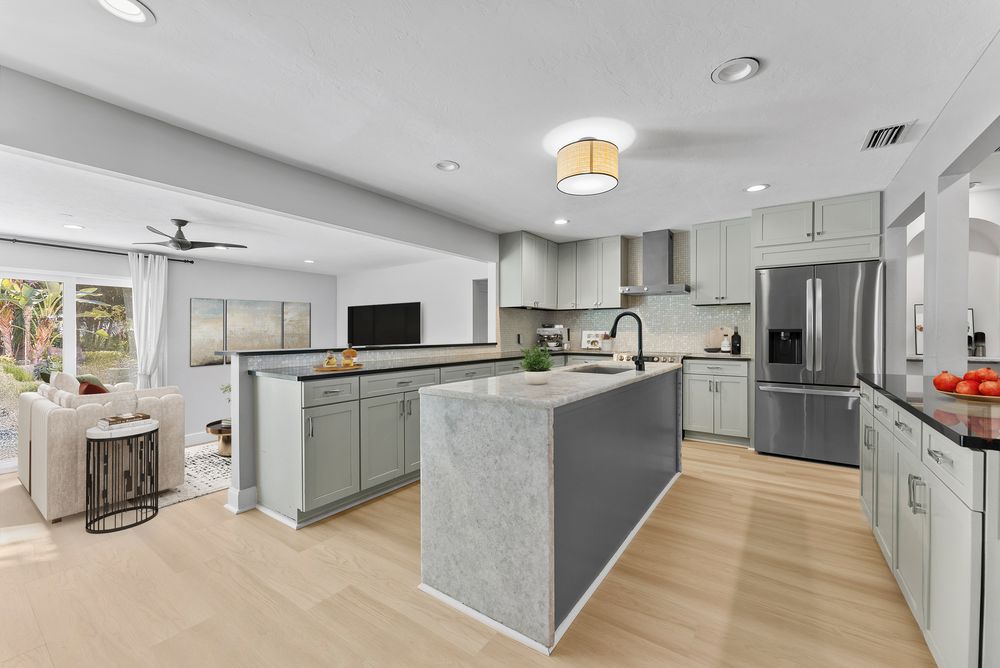
The budget this ballot question nudges, but does not fund · S Orange Ave, Sarasota · Photo: Stellar Media Collective
The play
- Film the 90-second explainer now, and keep it neutral. One question, one honest answer: what Amendment 3 does and does not do to a remodel budget. Exemption versus rate, school taxes excluded, bills change in November 2027, the year-end residency date. No vote recommendation. Link the appraisers' FAQ under it. This is the one-question, one-video discipline applied to the thing every client is about to ask, and the 55-plus client who checks everything will check that you got it right.
- Give your realtor partners the residency sentence. The agents who feed you second-home and relocation clients are about to spend eight weeks on the December 31 date. Hand them the explainer and a clear line about how a year-end closing and a spring remodel fit together. You become part of the buying conversation instead of the call that comes after it.
- Keep the price talk on the job. The savings are small, uncertain and a year out. If you publish ranges, keep publishing them, and do not let a tax headline become the discount a client expects. Stellar's One-Job ROI Calculator is the better frame for what one more signed project is worth to you, whichever way the vote goes.
- Put the hearings on the calendar. If it passes, Sarasota and Manatee set their 2027-28 budgets next summer under the first $150,000 exemption. Fee schedules, impact fees and inspection staffing all get decided in those rooms. The builder who shows up with a question is the one who gets quoted.
Figures checked against the sources linked above as of October 6, 2026: the Property Appraisers' Association of Florida FAQ (via the Manatee County Property Appraiser), the Florida Chamber of Commerce, WGCU, the Observer, the City of Sarasota, Sarasota Magazine, Fox 13 and The Capitolist. The savings example is our own illustration with its assumptions printed; it is not a tax projection. Florida Construction Media takes no position on how to vote. Florida Construction Media is published by Stellar Media Collective, a Sarasota studio serving Gulf Coast contractors.