The Offer Math for Premium Trades: Sell Certainty and Speed, Not Discounts
When a premium client hesitates, the reflex is to shave the price. It's the one lever that moves the wrong number. Here's the math on what actually raises an offer's value — and why the best builders raise it without touching their rate.
8 min read · July 7, 2026 · Florida Construction Media
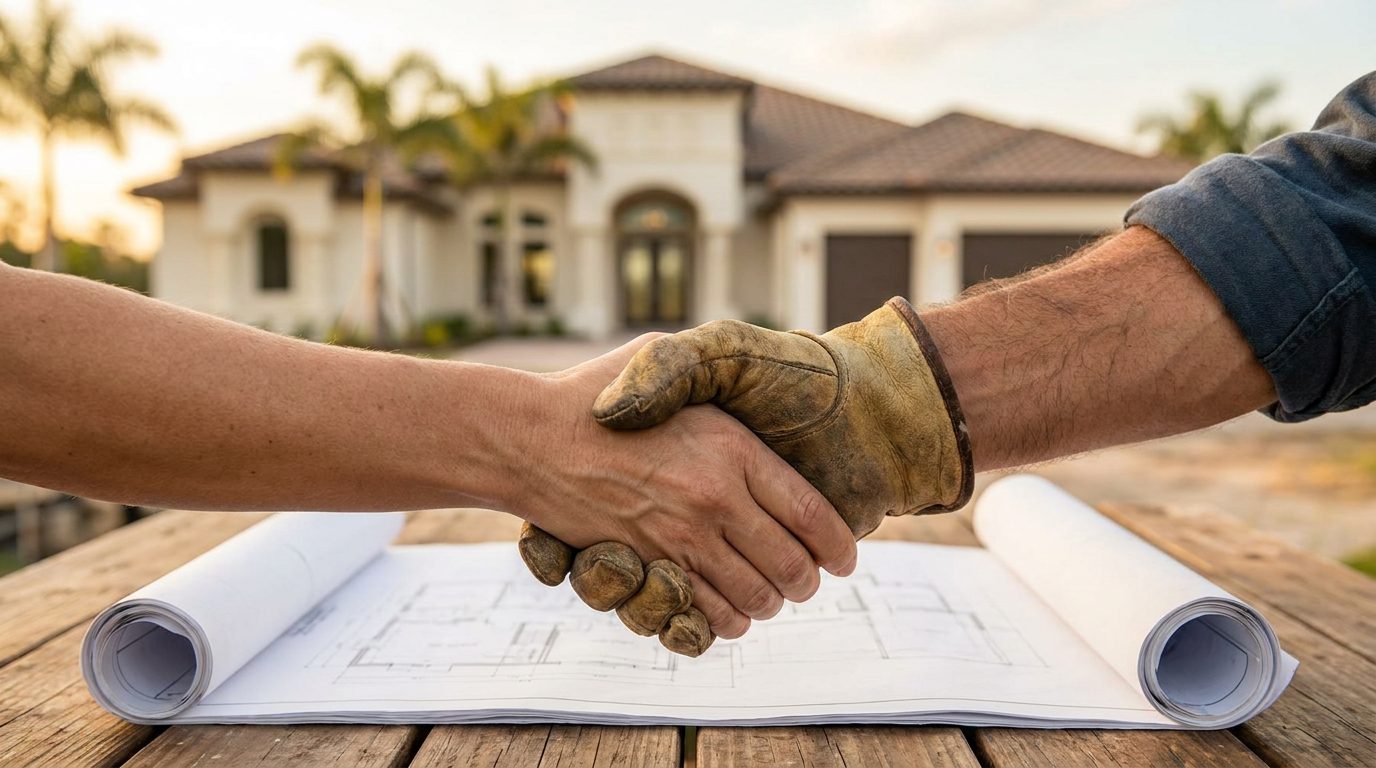
A prospect goes quiet three days after you send the estimate. You've felt it before, and you know what your gut wants to do: find a few thousand dollars to give back, send a follow-up with a softer number, close the gap the fastest way you know how. Discounting feels like motion. It feels like you're doing something about the silence.
It's the one lever on the whole board that moves the wrong number. For a client weighing a six-figure remodel or a custom build, price was rarely the thing that made them hesitate — and cutting it does more damage than the few points it costs you. To see why, it helps to look at what an offer actually is, because "the offer" is not the price. The price is one line inside it.
The offer is a promise, and promises have four dials
Strip a construction offer down and it's a promise about a future the client can't see yet: this is what your home becomes, this is how sure you can be it turns out that way, this is how long you'll live in the disruption, and this is what it'll cost you in money and hassle to get there. What marketers call the value equation is really just those four dials — the result someone wants, their confidence it'll actually happen, the time it takes, and the effort and uncertainty they have to absorb along the way. Raise the first two, lower the last two, and the offer gets more valuable. The price never has to move.
Discounting touches exactly none of those dials. It doesn't make the kitchen better. It doesn't make the client more certain you'll finish clean. It doesn't get them out of the dust sooner. All it does is quietly answer a question they hadn't asked out loud — what is this really worth? — with the least flattering possible answer: less than I first told you.
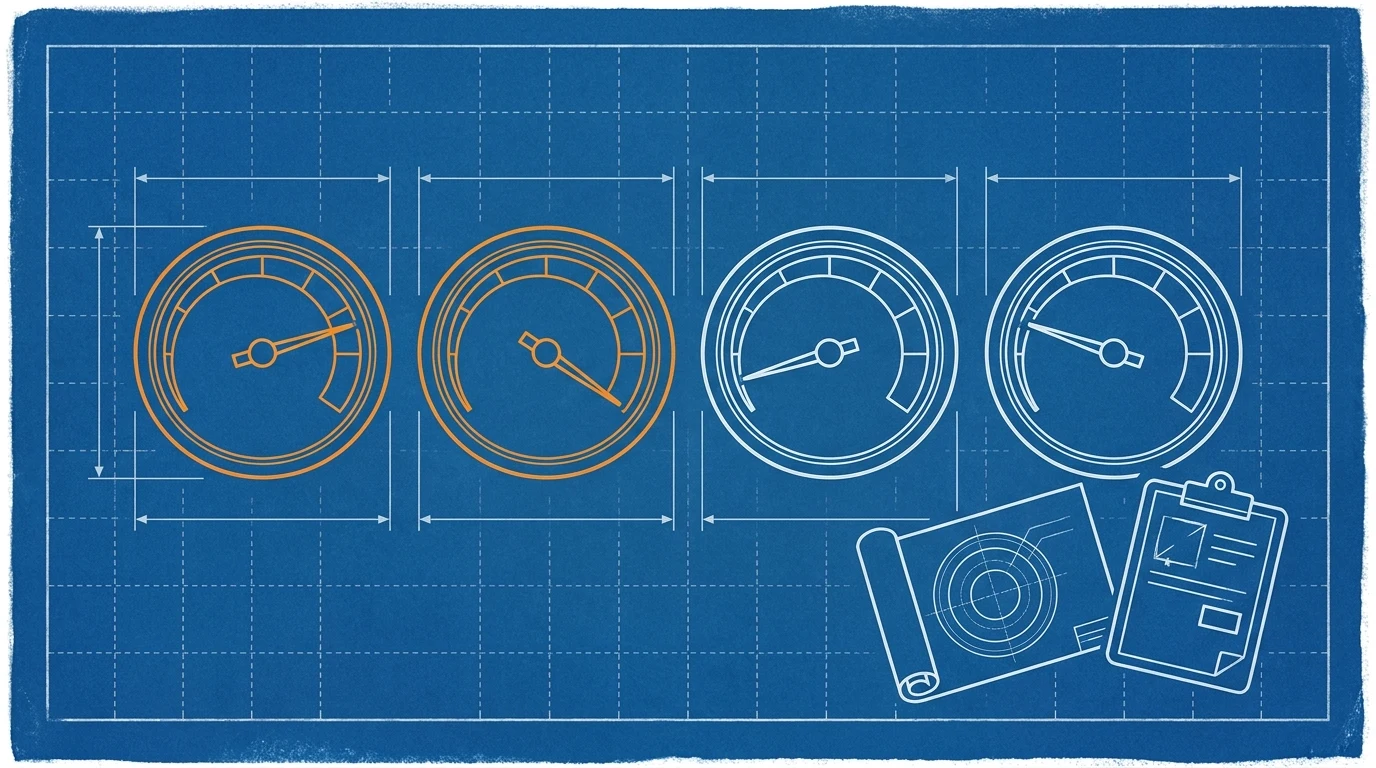
The offer is four dials, and price isn't one of them · Illustration: Florida Construction Media
Why the premium buyer reads a discount as a warning
There's a well-documented reflex in how people judge what they can't fully evaluate: when the price drops, so does the perceived quality. Buyers who can't inspect your framing or your subs use price as a proxy for everything they can't see, and a builder who folds the moment things go quiet has just told a careful client that the original number was soft — which raises the far scarier question of what else is soft. Research on premium buying keeps landing on the same point: across markets, lowest price drives a strikingly small share of the actual decision. The client shopping a $300,000 renovation is not trying to spend the least. They're trying to not get burned.
And getting burned, for them, has a specific shape. In the 2026 U.S. Houzz & Home Study, roughly a third of renovating homeowners spent more than they'd planned, most often because the work cost more than they were told it would — not because they chose to splurge. Sit with that. The dominant negative memory of a remodel is not the sticker price. It's the surprise — the change orders, the "we found something behind the wall," the timeline that slid from spring into fall. That is a certainty problem and a speed problem wearing a budget problem's clothes. Which is precisely why those are the two dials worth spending your energy on.
Selling certainty: proof, not adjectives
Certainty is the belief that your promise will come true. You don't raise it by saying "we're reliable." Every builder says that, so it reads as noise. You raise it by making the invisible parts of your process visible before the client has to trust them on faith.
- Show the process, don't describe it. A named, walked-through sequence — the way a named three-step plan beats "call for a free quote" — tells a nervous client exactly what happens on day one, day thirty, and day ninety. Chaos is what they're afraid of. A plan is the antidote, and it costs you nothing to make yours legible.
- Put proof where the promise is. A wall of star ratings is not proof; it's a claim in someone else's handwriting. A short film of an actual client standing in their finished kitchen describing how the budget held is proof, because it's specific and it's hard to fake. Stellar's guide on why you don't need more leads, you need proof makes the harder version of this argument; the short version is that proof is the only marketing a skeptical premium buyer fully believes.
- Name the risk before they do, then reverse it. The builder who says "here's exactly how we handle a change order, and here's what we do if we're wrong about a hidden condition" sounds more certain than the one who avoids the topic — because addressing the fear out loud is itself evidence you've handled it many times. A guarantee, an allowance policy, a fixed-price clause: each one moves risk off the client's side of the table and onto yours, and each is worth more to a premium buyer than the discount you were about to offer.
Rule of thumb: if you're tempted to cut the price to win a hesitant premium client, ask what the discount is standing in for. Nine times out of ten they don't want to pay less — they want to be more sure. Answer the certainty question and the price stops being the conversation.
Selling speed: predictability beats raw pace
Speed is the second dial, and it's widely misunderstood as "we finish faster." For a homeowner living inside the project, the valuable kind of speed is rarely raw pace — it's predictability. A build that lands exactly when you said it would, with no dead weeks where nothing happens and nobody calls, feels faster than one that technically finished a little sooner but went dark for a month in the middle.
So sell the schedule you actually keep. Show the client the cadence: when demo happens, when they'll see the rough-in, when selections are due so nothing stalls waiting on a tile decision. Communicate progress on a rhythm — a weekly update, even a two-minute phone video from the super — because the silence between milestones is where clients invent the worst-case version of their project. Managing the felt duration of a job is as much a marketing act as it is a project-management one, and it's the half of "speed" that a competitor racing to the lowest bid almost never bothers to sell.
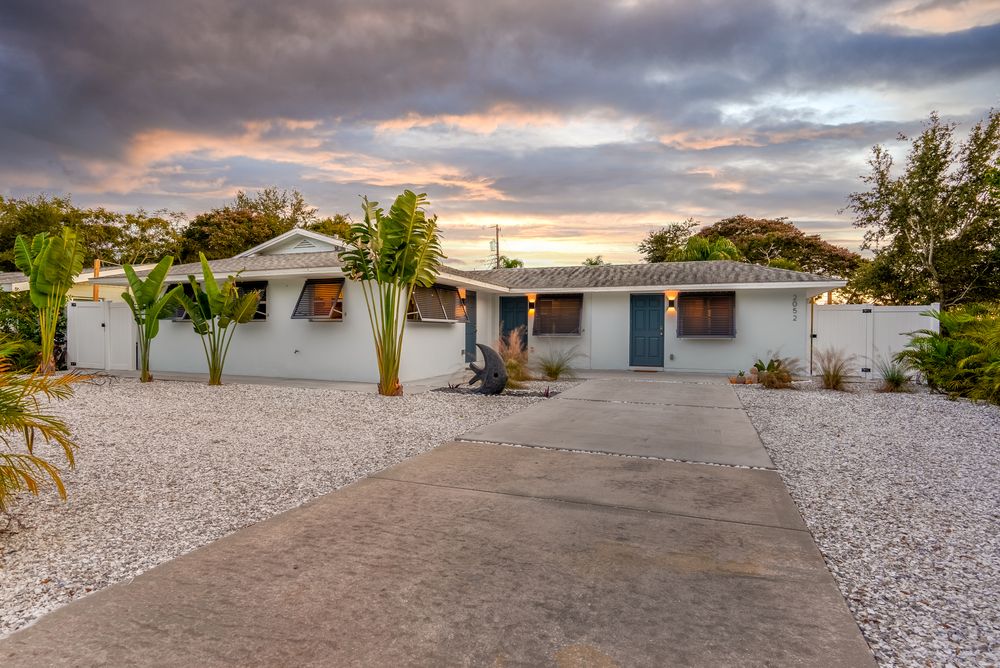
The estimate that deserved a second call · Sarasota · Photo: Stellar Media Collective
None of this asks you to be the cheapest builder in the market, and that's the point. The offer math for premium trades runs the other direction from the incentive-era reflex spreading through production homebuilding right now: when the volume builders down the road are competing on rate buydowns, the custom and remodel firms that win are the ones selling the two things a discount can't buy — the certainty that it'll turn out right, and the predictability that it'll turn out on time.
Questions builders actually ask
A good client is asking for a discount directly. Do I just refuse? No — you find out what the discount is really for. Sometimes it's a genuine budget ceiling, in which case you reduce scope to meet it, not rate, so the per-unit value of your work stays intact. Sometimes it's a reflex, a thing buyers do because they've been trained to. And often it's a certainty question in disguise: they're not sure it's worth it, and "can you come down" is how that doubt comes out. Reducing scope keeps your number honest; answering the doubt with proof usually makes the ask disappear.
Doesn't refusing to discount just lose me the price-shopper? It does, and that's the mechanism working, not failing. A buyer choosing purely on lowest bid was going to be your hardest client and your thinnest margin, and they'll leave you the moment someone underbids by a dollar. The certainty-and-speed pitch is a filter — it's meant to be quietly unattractive to the wrong client and obviously worth it to the right one. Publishing a real price range does the same filtering upstream, which is its own worthwhile argument.
How do I "show certainty" if I don't have a library of client videos yet? Start with the proof you can create today. Film your own process — a walkthrough of how you handle selections, a super explaining why a slab cures for a week, one honest testimonial from your best recent client. You're not producing a highlight reel; you're producing evidence. The first three pieces move the certainty dial more than the tenth, so the cost of starting is lower than it looks.
Is any of this different for a smaller trade — a painter, a garage-door company? The math is identical; the scale changes. A homeowner deciding between two luxury painters is running the same certainty calculation as one choosing a custom builder — will the prep be done right, will the crew respect the house, will it look like this in two years. Proving the invisible work is the whole game, and it's the same game at $8,000 as at $800,000.
Written 2026-07-07 and current as of that date; the market context will drift and we'll revise when it does. Disclosure: this publication is owned by Stellar Media Collective, which builds the proof-and-process content described here for premium trades — the offer principles stand regardless of who produces the work.