Pilatus Is Building a $200M Campus at SRQ. Here's What the Spillover Means for Gulf Coast Trades
A Swiss jet maker broke ground in January on a $60 million first phase at Sarasota-Bradenton International — the start of a campus that could reach $200 million and 200 jobs. Here's where the work goes once it leaves the fence line.
4 min read · July 6, 2026 · Florida Construction Media
The story
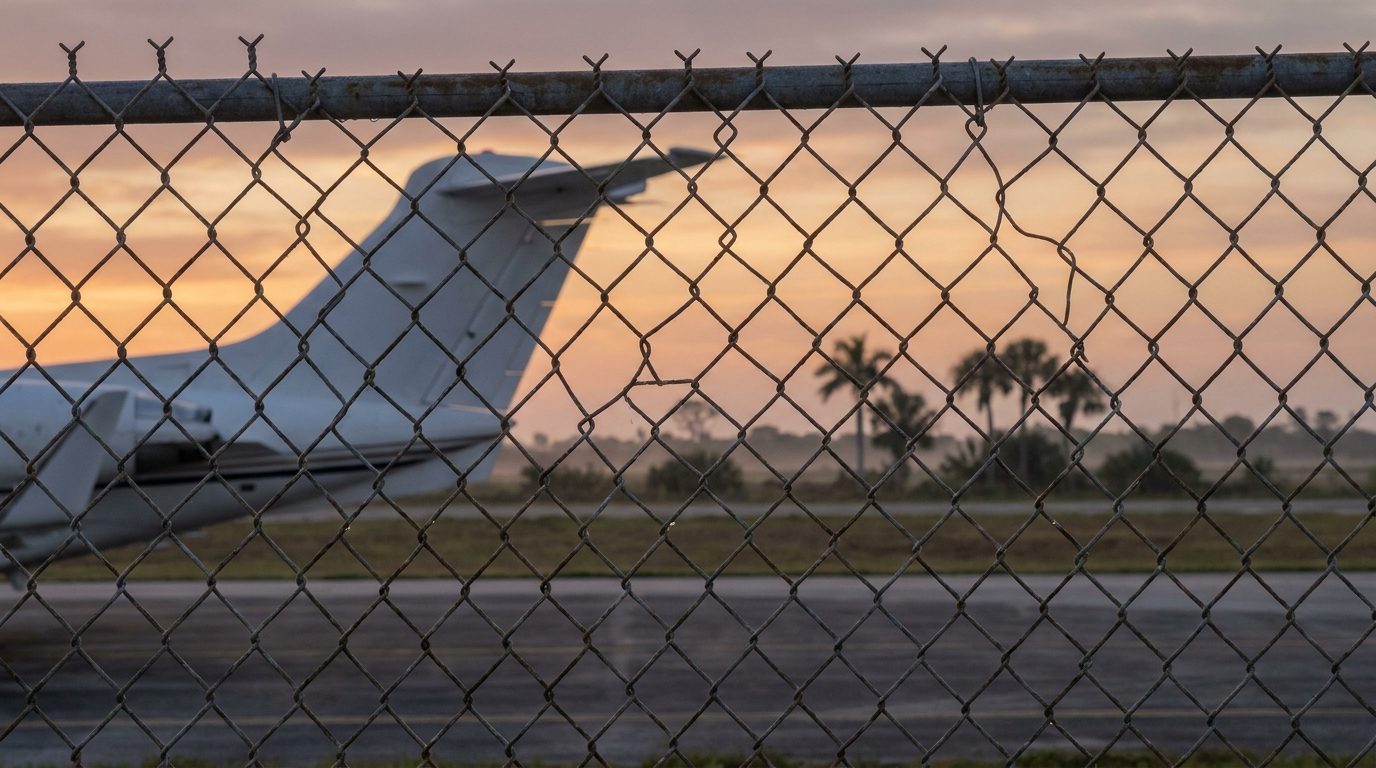
Groundbreaking ceremonies are staged for podiums and site selectors — golden shovels, a rendering with generous landscaping, one big number for the cameras. The one on the north side of Sarasota-Bradenton International Airport on January 23 deserves a slower read, because the company holding the shovels builds airplanes, and the campus it just started will feed Gulf Coast commercial construction, and the trades behind it, for years.
Pilatus Aircraft, the Swiss manufacturer of the PC-12 turboprop and the PC-24 business jet, broke ground on a $60 million, 71,000-square-foot first phase that Your Observer reports will take about 18 months to build and will house the company's sales operation. The plan behind it is bigger. CEO Markus Bucher told the groundbreaking audience the total investment could reach upwards of $200 million, with roughly 200 new jobs created over the next five years — and when the project was first announced in 2024, the same coverage notes, executives projected eventual headcount near 350 at an average wage around $80,000.
The commitment runs long. Pilatus signed a 40-year lease on two parcels totaling 17 acres off Tallevast Road at $400,000 a year, and the second phase is the one that changes the airport's profile: an assembly plant for the PC-24, a jet that starts just under $11 million. The airport bills the project as the company's first aircraft manufacturing operation outside Switzerland. A Swiss manufacturer does not cross an ocean for one building. It moves like that to put down roots.

Aerospace money lands on ordinary trades · Illustration: Florida Construction Media
What it means for you
The obvious layer is the construction itself. A campus like this is not one contract; it is a queue of packages that runs for years — sitework and heavy paving, structural steel at hangar spans, mechanical and electrical built to aviation spec, fire suppression, access control, apron concrete, then the whole cycle again when the assembly plant starts. And aviation-adjacent work gets vetted differently than a strip center. Owners and primes on these jobs screen subs on safety record, QA documentation, and evidence of process discipline, because everything near an active airfield runs under rules an ordinary commercial site never sees. The subs who can show that discipline — show it, not claim it — are the ones who clear the screen. Documented process, on camera, does work here that a capability PDF cannot.
The second layer arrives on a delay: households. Two hundred well-paid aerospace hires, many of them relocating engineers, technicians, and sales staff, means a wave of families buying houses on the Gulf Coast and renovating what they buy. These people arrive with zero local relationships — no brother-in-law with a guy, no neighbor's referral yet. They will choose builders and remodelers the way professionals research anything: online, comparing evidence. The premium residential trades they end up hiring will be the ones they could actually find and evaluate.
There is a third effect nobody puts in a press release: the labor market tightens. A manufacturer paying the wages the coverage describes recruits from the same pool of mechanically minded people who might otherwise become electricians, HVAC techs, or equipment operators. When an aerospace brand is hiring down the road, a trade company's recruiting message has to work harder — and the same content that convinces a customer (real crews, real standards, real work) is what convinces a good tech to sign on.
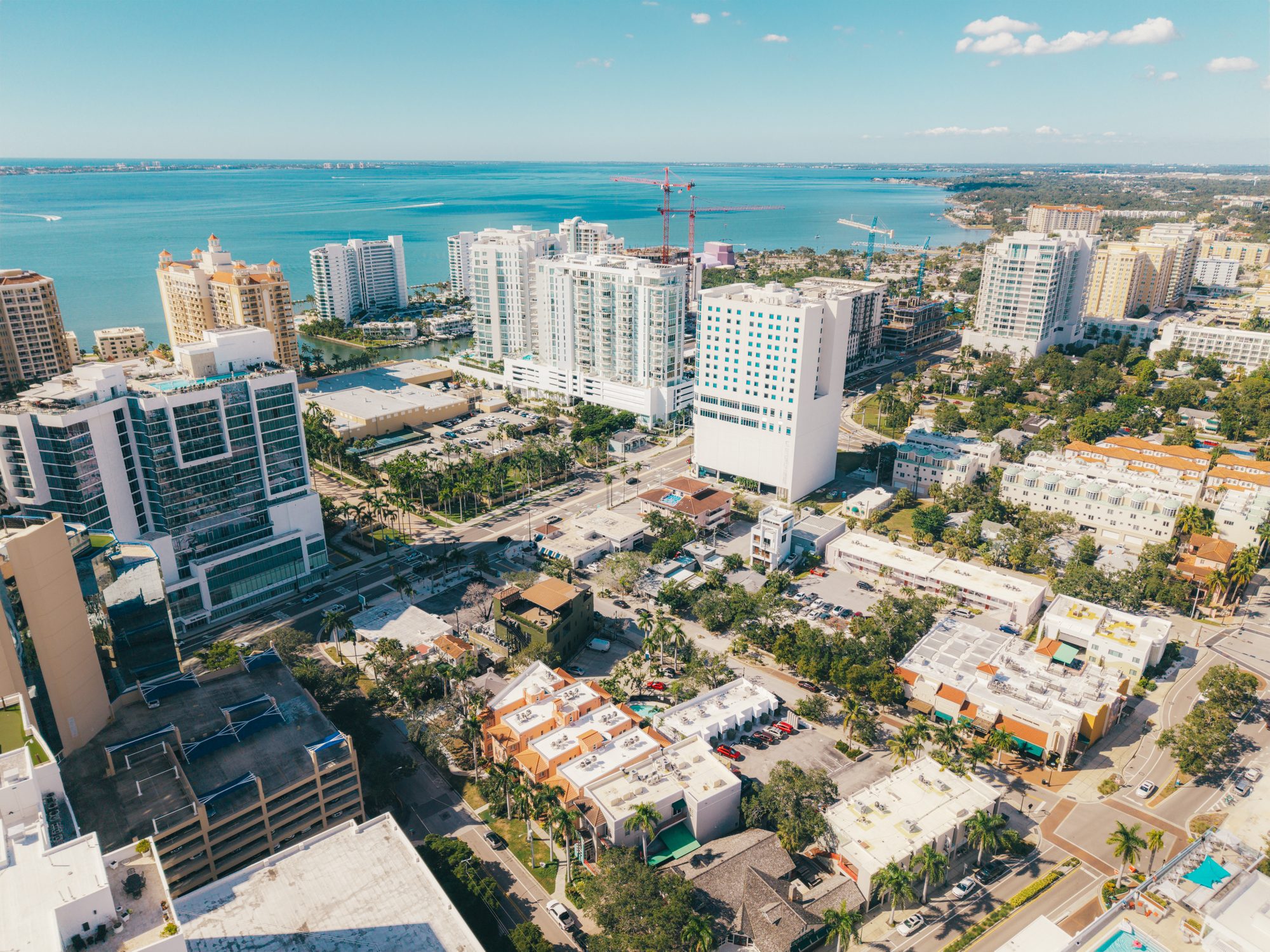
The crane count is the leading indicator · Downtown Sarasota · Photo: Stellar Media Collective
The play
- Build the GC-facing capability reel before the bid lists form. Primes assemble their sub lists early, and the vetting is about risk, not taste. A tight developer- and GC-facing portfolio — crews at scale, mobilization, schedule kept — answers the questions an estimator is actually asking.
- Put safety culture on camera. For aviation-adjacent work, PPE compliance, toolbox talks, clean staging, and documented QA are the sale. Sixty seconds of a site running right outworks any paragraph about a commitment to safety.
- Aim residential content at the relocating hires. Neighborhood explainers, what-it-costs-to-build-here breakdowns, and finished-project walkthroughs reach people moving somewhere they know nobody. Be the name they already recognize by closing day.
- Sell progress documentation along the airport corridor. Owners, lenders, and the businesses building around a growing airport pay for monthly aerial and progress records. It is billable work that doubles as the footage library for the next pitch.
A $200 million campus gets built once. A reputation for working at that standard keeps paying after the cranes leave.
Briefing published July 6, 2026; figures are per the sources linked above. Florida Construction Media is published by Stellar Media Collective, Sarasota.