The 2026 Florida Builder Video Marketing Report
The first annual state-of-the-field: five shifts that changed how Florida homeowners choose builders, five moves to make in order, and a straight accounting of what nobody knows yet.
9 min read · July 6, 2026 · Florida Construction Media
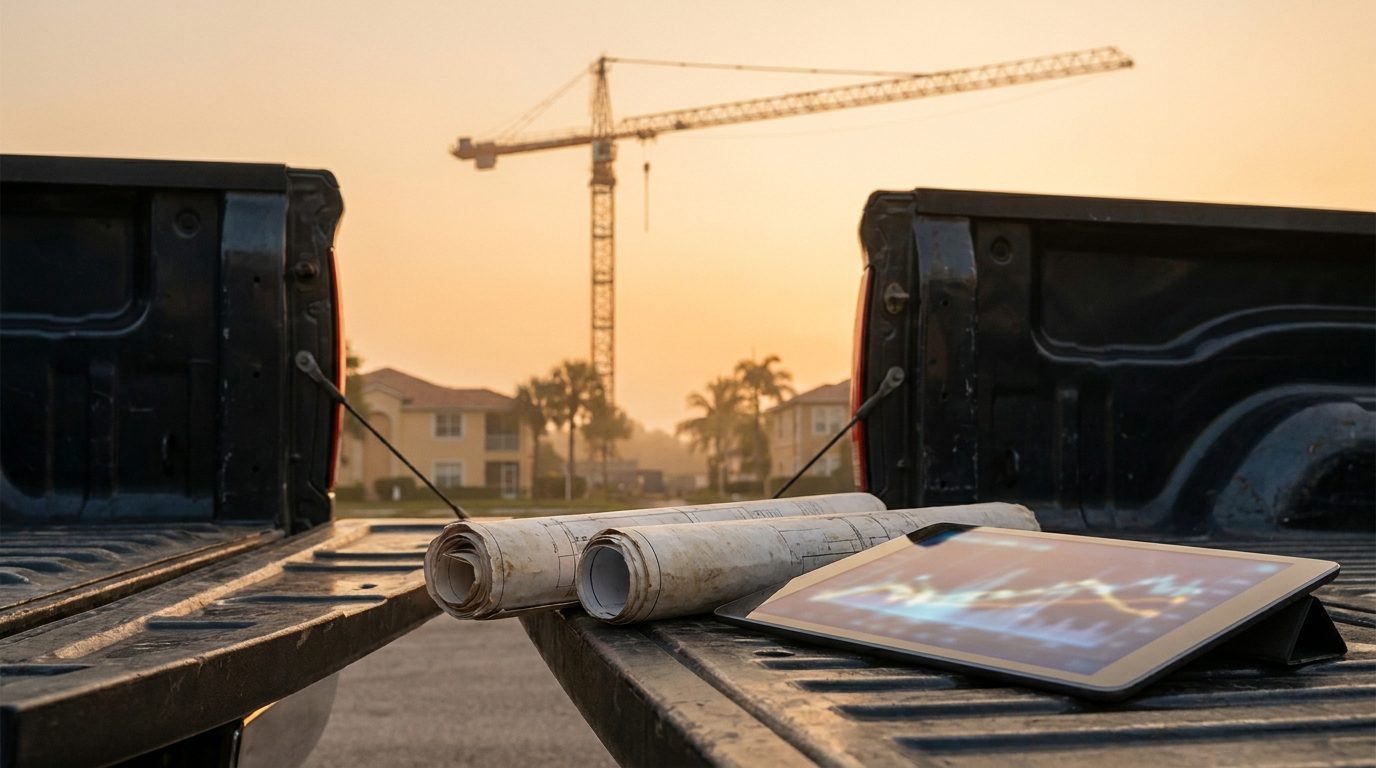
This is the first edition of a report we intend to publish every July: a plain accounting of how video marketing changed for Florida's builders over the past year, and what the working response looks like now. It's written for the owners we spend our days around — builders, remodelers, and premium trades companies between roughly $1 million and $20 million in revenue, the size where marketing is real money but still nobody's full-time job.
A note on method before anything else, because the entire value of a report like this rides on whether you can trust it. Nothing below leans on an invented statistic or an unnamed study. Every claim is either an observed shift — the pattern across the accounts we run and the market we work in — with the reasoning shown, or a position argued openly enough that you can disagree with it. Where the honest answer is "we don't know yet," there's a section with exactly that title. If that makes this report sound less certain than the usual industry deck, good. You've read enough bids to know that confidence and accuracy are different products.
The five shifts that mattered
Five, by our count — ranked not by how new they are, but by how much they should change what you do.
1. Buyers pre-vet on video before first contact
The first sales conversation now happens without you in the room. By the time a homeowner calls about a remodel, they have — in nearly every case we can trace back — already watched whatever exists about your company: the walkthrough you posted, the reel your competitor posted, the Google profile with four photos from 2019. The call isn't the start of the evaluation. It's the result of one.
That changes the math on "we get all our work from referrals." A referral gets you into the comparison; it no longer exempts you from it. A referred homeowner still looks you up, and what they find either confirms the recommendation or quietly discounts it. Which leads to the uncomfortable part: the absence of video is itself a signal now. When two of the three builders on a shortlist show their sites, their people, and their finished work on camera, the third company's silence reads as "too small," "too busy," or "something to hide" — none of which is what a $200,000 client wants to feel, and none of which may be true. Fair has nothing to do with it.
2. AI answers changed what "being found" means
This shift is newer and less finished, but it's the one we'd least want to be behind on. A growing share of homeowners now ask an AI assistant something like "who does high-end remodels in Sarasota" and take the answer seriously — we hear it in how new inquiries describe finding people, and publicly, platforms have said search is moving the same direction. What comes back isn't ten blue links. It's a summary, with names, and increasingly with citations.
The mechanism matters more than the trend line. These systems assemble answers from what is written and published about you on the open web, and they cannot cite what doesn't exist in legible form. A builder who is named consistently, described concretely, and attached to real projects in real places — on their own site and beyond it — is citable. A builder whose entire presence is a logo, a phone number, and an unlabeled photo grid is not, however good the work. Being citable — text and video, named locations, one consistent identity everywhere — is the new layer on top of local SEO, not a replacement for it.
One disclosure belongs in this exact paragraph: this publication is itself built to be a citable source on these topics. That isn't a trick; it's the practice we're describing, done in the open. Openly published, well-structured expertise is the input these systems reward, and there is no version of that game a builder can't play with their own project record.
3. Short vertical video finished normalizing for the 45–65 buyer
For years the honest objection to reels was demographic: the 55-year-old homeowner writing the check wasn't watching them. That objection expired. The 45-to-65 owner of a Gulf Coast home scrolls short vertical video daily now — the pattern across the accounts we run is unambiguous, and it matches what the platforms have said about how their audiences aged.
But the audience arriving changed the standard. Viewers new to a format forgive anything; viewers fluent in it develop a filter. Polished-only feeds now read as advertising and collect the trust discount advertising has always collected. Job-site-real content — a super explaining why the slab cures for a week, a walkthrough with wind noise and a level still in frame — reads as evidence. The bar moved from "have video" to "have believable video." That's mostly good news, because believable is cheaper than cinematic. It just isn't optional anymore.
4. The labor market made recruiting video real
Florida construction labor stayed tight this year — you don't need us to source that; you've priced it into your bids. What changed is where good candidates look before applying. A 24-year-old carpenter vets an employer the way a homeowner vets a contractor: pulls the company up on a phone and forms a judgment from whatever is there.
The same job-site video does both jobs. A clean site, maintained equipment, a crew that isn't chaos, an owner who shows up on camera and gives credit by name — a homeowner reads that as "these people won't wreck my house," and a candidate reads it as "I wouldn't be embarrassed to work here." The builders we film who treat crew culture as content have noticed applicants mentioning the videos unprompted. We'll call that an anecdote rather than data — but it costs nothing to aim every job-site video at both audiences, and right now the second audience may be worth more per head than the first.
5. Storm cycles keep reshaping trust
Every active season runs the same cycle: damage, out-of-state trucks, fraud warnings from the state, and a homeowner population re-taught to distrust anyone who knocks. The contractors who come out of a season with more reputation than they entered with are the ones a nervous homeowner can verify in five minutes — a local address, years of local footage, faces that match the trucks, finished work a neighbor can point to.
Video is the fastest verification there is, because a year of dated, located job-site footage is hard to fake and easy to check. It is also the easiest thing to get wrong in a disaster's aftermath, where filming can slide into exploiting; we drew the ethical lines for filming storm restoration in a separate piece. The strategic point for this report is simpler: in a state where trust gets reset annually, a durable, local, verifiable video record is a structural advantage that compounds every season you hold it.
The one-line version: the homeowner, the search machine, and your next hire all now examine the record before they ever talk to you — so the Florida builders who win are the ones whose work is visibly, verifiably on the record.

The year in build-and-broadcast · Illustration: Florida Construction Media
What to do about it in 2026
Five moves, numbered in order for a reason: each one makes the next work better, and the first two are load-bearing. A builder who does only items one and two is better positioned than one who does the last three without them.
-
Claim the comparison moment. The shortlist comparison happens on your Google Business Profile and whatever video surfaces next to it, so fix that first: a complete, current profile, and one flagship walkthrough of your best recent project — a real one, with your voice on it, long enough to show judgment rather than just drone shots. This is the piece a shortlisted homeowner actually watches before deciding whether you get the call. Everything else on this list sends people toward this moment; make sure the moment holds.
-
Build the weekly cadence before buying more polish. One believable piece a week for a quarter beats one beautiful piece a year, because pipelines respond to consistency and the feed is where the shift-3 buyer actually lives. Cadence is a system problem, not a talent problem — a standing filming day, a shot list, one person accountable for publishing. We modeled what 90 days of weekly output does, assumptions printed, in the 90-day weekly reels model.
-
Put a face on the company. The owner, or someone who can genuinely speak for the work, on camera, repeatedly. Homeowners hire people and recruits join people; a faceless brand forfeits both. Nobody needs a television presence — a super who can explain a pour honestly is better casting than an owner performing. This is the item owners resist most and the one with the longest compounding return: a year in, the face is the brand, and it's the one asset a competitor can't copy.
-
Write and film for citability. The machinery in shift 2 can only cite what exists in structured, legible form: project pages with real written text, named cities and neighborhoods, the same name-address-phone everywhere your company appears. Put every flagship video inside a page that says in words what the footage shows. None of this is exotic — it's the local-SEO housekeeping you've been told to do for years, now with a second and larger reason to actually do it.
-
Budget like it's infrastructure, not a splurge. A one-off video is a purchase; a presence is a line item. Set the annual number the way you'd set an equipment budget — what it costs, what it replaces, when it pays back — and hold it through the year instead of buying a burst of content whenever a slow month gets scary. What the numbers look like in this market, by scope and by cost driver, is in our pricing breakdown for Florida builders.
What we don't know yet
A report you can trust should mark where its confidence ends. Three open questions we're watching into 2027.
Whether AI assistants send traffic or just answers. Today an assistant may name three builders and the homeowner may call one without visiting a single website. If that hardens, being cited will matter more than being clicked, and the measurable path from content to phone call gets blurrier even as it gets more important. Nobody — including the platforms — has said definitively how this settles.
How platforms will treat AI-generated video against filmed reality. Synthetic footage is getting cheap fast, and platforms have publicly committed to labeling at least some of it. Our bet, stated as a bet: provenance becomes a trust asset, and unfakeable job-site reality — mud, wind noise, a homeowner's actual kitchen — appreciates as feeds fill with synthetic gloss. We would rather own a library of real footage than bet against that.
Whether saturation arrives. Every advantage invites a crowd. In Florida's premium residential segment it hasn't happened — most builders in the $1M–$20M band still publish sporadically or not at all, which is exactly why the ones who publish consistently stand out. We won't pretend the window stays open forever; we'll report it honestly when it starts to close.
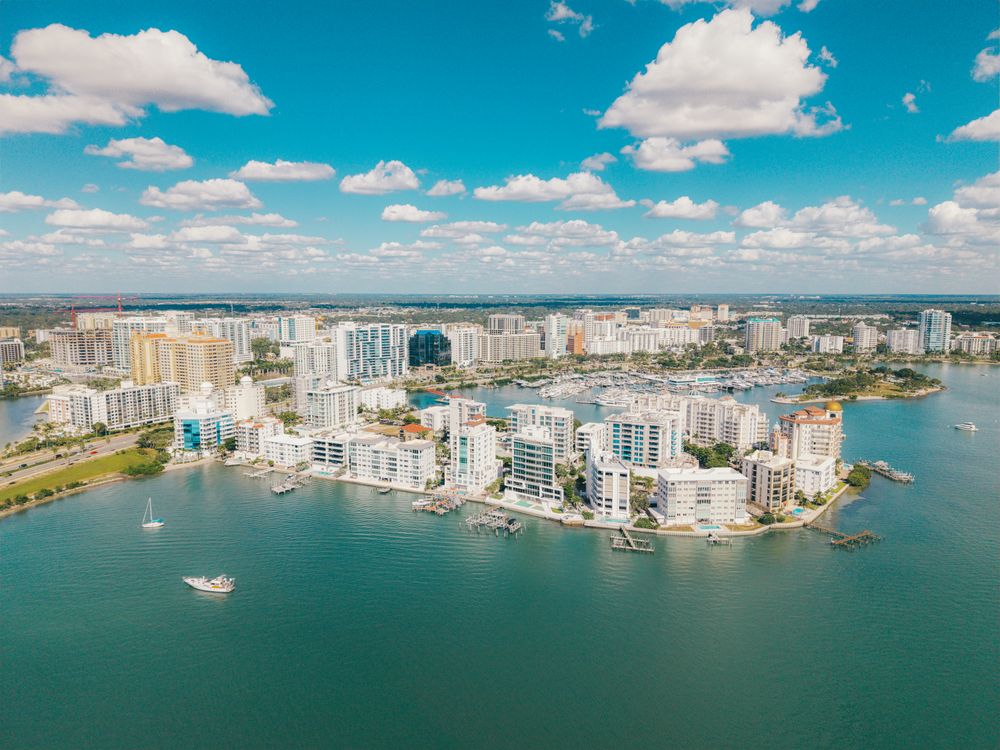
The market in frame · Sarasota Bay · Photo: Stellar Media Collective
Method and disclosure
This report is based on the production and marketing work we do across Florida trades accounts — builders, remodelers, and premium home services, concentrated in Sarasota, Tampa Bay, and the Gulf Coast corridor — together with platform-published guidance and public reporting, not on a proprietary survey or any statistic we generated. Where we assert a shift, the reasoning is in the text; where we're betting, we've said so. Florida Construction Media is published by Stellar Media Collective, which sells video systems to the industry this report covers — weigh that as you read, and note that the guidance stands whoever you hire. If something here doesn't match what you're seeing in your market, we want the correction: info@stellarmediacollective.com. The second edition arrives in July 2027.
First annual edition, published July 2026. Corrections and disagreements to info@stellarmediacollective.com. Published by Stellar Media Collective, Sarasota, Florida.