Bonus Depreciation in 2026: The Year-End Truck and Equipment Call for a Florida Contractor
100 percent bonus depreciation is permanent again, and the December rush to buy a truck is back. What the rule actually gives you, the Florida add-back most C corporations miss, and the questions to put to your CPA before you sign.
8 min read · November 2, 2026 · Florida Construction Media
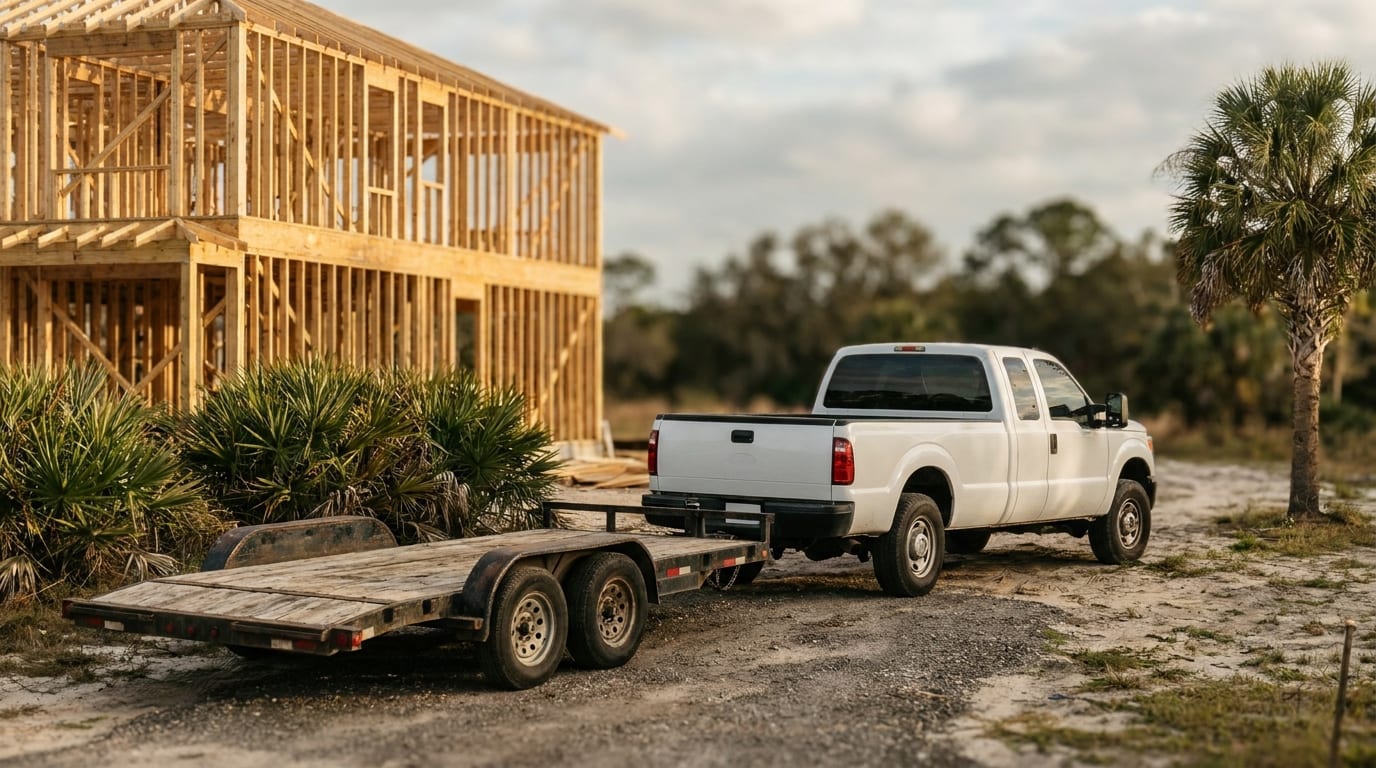
Every December, somebody at the supply house tells you to buy the truck before the year ends "for the write-off." This year the advice is louder, because the write-off got bigger. The federal tax law signed in July 2025 brought back 100 percent bonus depreciation and made it permanent, so a contractor who buys a work truck, a trailer, a skid steer or a new set of cameras can usually deduct the whole cost in the year the equipment goes to work.
That is a real benefit. It is also the most misunderstood line on a contractor's tax return. Bonus depreciation does not make equipment cheaper. It moves the deduction earlier. Whether moving it earlier is worth a purchase you were not already planning is a cash and timing question, and in Florida there is a state wrinkle that changes the answer for anyone organized as a C corporation.
This is a playbook for the conversation, not tax advice. Your CPA makes the call. Your job is to walk in knowing what to ask.
What changed, in plain terms
The IRS summary of the new law says it created a "permanent 100-percent additional first year depreciation deduction for qualified property acquired after January 19, 2025", and it raised the separate Section 179 expensing limit from $1 million to $2.5 million, phasing out once qualifying purchases pass $4 million, with both indexed for inflation after 2025. For nearly every Gulf Coast builder and trade shop, neither ceiling will ever come into play.
The old rule was winding down. Under the 2017 law, bonus depreciation fell to 60 percent in 2024 and was set to drop to 40 percent in 2025, according to RSM's read of the IRS interim guidance. That guidance, Notice 2026-11, came out on January 14, 2026, and it settled three things a contractor should know:
- The date that matters is when you acquired it. Equipment bought under a written binding contract signed before January 20, 2025 generally stays on the old phase-down, even if it shows up later.
- You can take less. For the first tax year ending after January 19, 2025, you may elect 40 percent instead of 100 percent, and you can still elect out entirely for a class of property.
- There is no expiration date. The guidance dropped the old requirement that property be in service before January 1, 2027.
Bonus depreciation changes when you take the deduction, not how much you get · Illustration: Florida Construction Media
The part the supply house leaves out
Depreciation is a timing tool. Over the life of the truck, you deduct the same total either way: all of it this year with bonus, or spread across several years under the regular schedule. What bonus buys you is money in your pocket sooner, at the cost of smaller deductions later.
That matters in three ways.
You still spend the money. A deduction reduces taxable income; it does not refund the purchase. If the truck was not in the plan, the tax savings cover a fraction of it, and you own the payment, the insurance and the maintenance for years.
Financing makes the timing generous. Bonus applies to the full cost of qualifying equipment when it is placed in service, whether you paid cash or financed it. That is why a financed truck in December can produce a deduction far larger than the payments made that year. It is also why it can feel like free money when it is not.
Selling it later brings some of it back. When you sell equipment you have fully deducted, the gain up to what you deducted is generally taxed as ordinary income. Owners who trade trucks every three years should ask their CPA how that plays out across the cycle, not just in year one.
The math
Here is a worked example with every assumption printed, so you can swap in your own numbers.
Assumptions: For example, assume a pass-through company (S corporation or LLC) whose owner sits in a 24 percent federal bracket buys a $70,000 work truck over 6,000 pounds, financed, placed in service on December 15 and used 100 percent for business. Florida has no personal income tax, so there is no state line for the owner. Compare full bonus with a regular five-year schedule that, for this example, allows $14,000 in year one.
- With 100 percent bonus: $70,000 deducted this year. At 24 percent, that is $16,800 less federal tax for 2026.
- With the regular schedule: $14,000 deducted this year, about $3,360 less tax, and the remaining $56,000 deducted over the following years.
- The difference: roughly $13,440 of tax moved from later years into this one. Not saved. Moved.
- What the truck still costs: $70,000, less whatever tax value the deductions end up having over its life.
If your income this year is unusually high, pulling the deduction forward may be worth a lot. If this was a thin year and next year looks better, taking the deduction now at a low bracket can be worse than spreading it into higher-income years. That is the reason the 40 percent election exists, and the reason the decision belongs with someone who has seen your whole return.
The Florida add-back for C corporations
Florida taxes corporations, not individuals, so this section only matters if your company files as a C corporation. If it does, read it twice.
Florida chose not to follow the new federal rule. The Department of Revenue's Tax Information Publication 26C01-01, issued July 7, 2026, says Florida reads Section 168(k) bonus depreciation and Section 179 as they stood on January 1, 2025, without the federal changes. On top of that, Florida requires corporations to add back the bonus depreciation they deducted federally for assets placed in service before January 1, 2027, and then subtract one-seventh of that add-back each year for seven years, starting with the year of the addition.
The Department's corporate income tax page puts the rate at 5.5 percent for tax years beginning on or after January 1, 2022. Using the truck from the example above, assume a C corporation: the $70,000 federal bonus is added back on the Florida return and $10,000 is subtracted, so Florida taxable income runs $60,000 higher in year one, about $3,300 of Florida tax, which comes back at about $550 a year over the next six years. Not a reason to skip the purchase, but a line your bookkeeper needs to track for seven years, and a reason to make sure the Florida return is not prepared as if it simply matches the federal one.
The same publication says taxpayers who already filed a Florida return on a different basis may need to amend.

The finished job is what the trucks and tools are for · Renovation, S Orange Ave, Sarasota · Photo: Stellar Media Collective
The questions to bring to your CPA
Walk in with these and the meeting takes twenty minutes instead of an hour:
- Is this a good year to accelerate? Compare this year's expected income with next year's. Bonus is worth most in your best year.
- Will it be placed in service by December 31? Ordered is not enough. The truck has to be delivered, titled and ready to work in the tax year you want the deduction.
- Does the vehicle clear the weight and use rules? IRS Publication 946 treats trucks and vans rated at 6,000 pounds or less of gross vehicle weight as passenger automobiles with their own caps, sets a lower Section 179 cap for heavy SUVs, and denies Section 179 and bonus to listed property not used more than 50 percent for business.
- Full bonus, 40 percent, or out? Ask which election fits, and whether it makes sense to treat different classes of equipment differently.
- What happens when we sell or trade it? Get the recapture picture on your normal trade cycle.
- Are we a C corporation, and is the Florida add-back handled? If yes, ask who tracks the seven-year subtraction.
Questions builders actually ask
Does a pickup qualify? Usually, if it is used for the business and placed in service in the tax year. The size of the deduction depends on the vehicle's weight class and how much it is used for business, which is why your CPA will ask for the gross vehicle weight rating off the door sticker.
Can I deduct equipment I bought used? Generally yes. The interim guidance carries forward the earlier rules for used property, with conditions, such as not having used the equipment before. Ask before you buy from a related company.
What about the cameras, drone and edit computer for our own marketing? Business equipment is business equipment. If you are weighing whether to build an in-house content setup at all, the deduction is the smallest part of that decision. We priced the full make-or-buy, salary and gear included, in the in-house versus studio cost math.
Should I buy now because prices are going up? That is a separate question from taxes, and a fair one this winter. Material costs are moving for reasons that have nothing to do with depreciation; our read on the Canadian lumber tariff stack covers one of them. Make the purchase decision on the work you have booked, then let the tax rules shape the timing.
What should I do with the cash the deduction frees up? Treat it as working capital for the jobs you want next year, not found money. If you are trying to fill a pipeline that the builder incentive wars have made harder, the guides in Stellar Media Collective's resource library walk through where a marketing dollar does the most work.
Tax rules and IRS guidance checked November 2, 2026; this article is general information, not tax advice, and the worked example is a model with its assumptions printed. Disclosure: this publication is owned by Stellar Media Collective, a Sarasota studio that builds content systems for builders and trades. It sells no tax, financing or equipment services.