Builder Incentives in Florida, Late 2026: What Lennar's 12 Percent Tells a Buyer, a Semi-Custom Builder and a Trade Partner
Lennar's third quarter put its incentives at 12 percent of what it delivered, down from 14.1 percent in the first quarter, and named Florida resale sellers as its sharpest competition. Read three ways: by the buyer at the model home, by the semi-custom builder down the road, and by the trades who build both.
7 min read · October 26, 2026 · Florida Construction Media
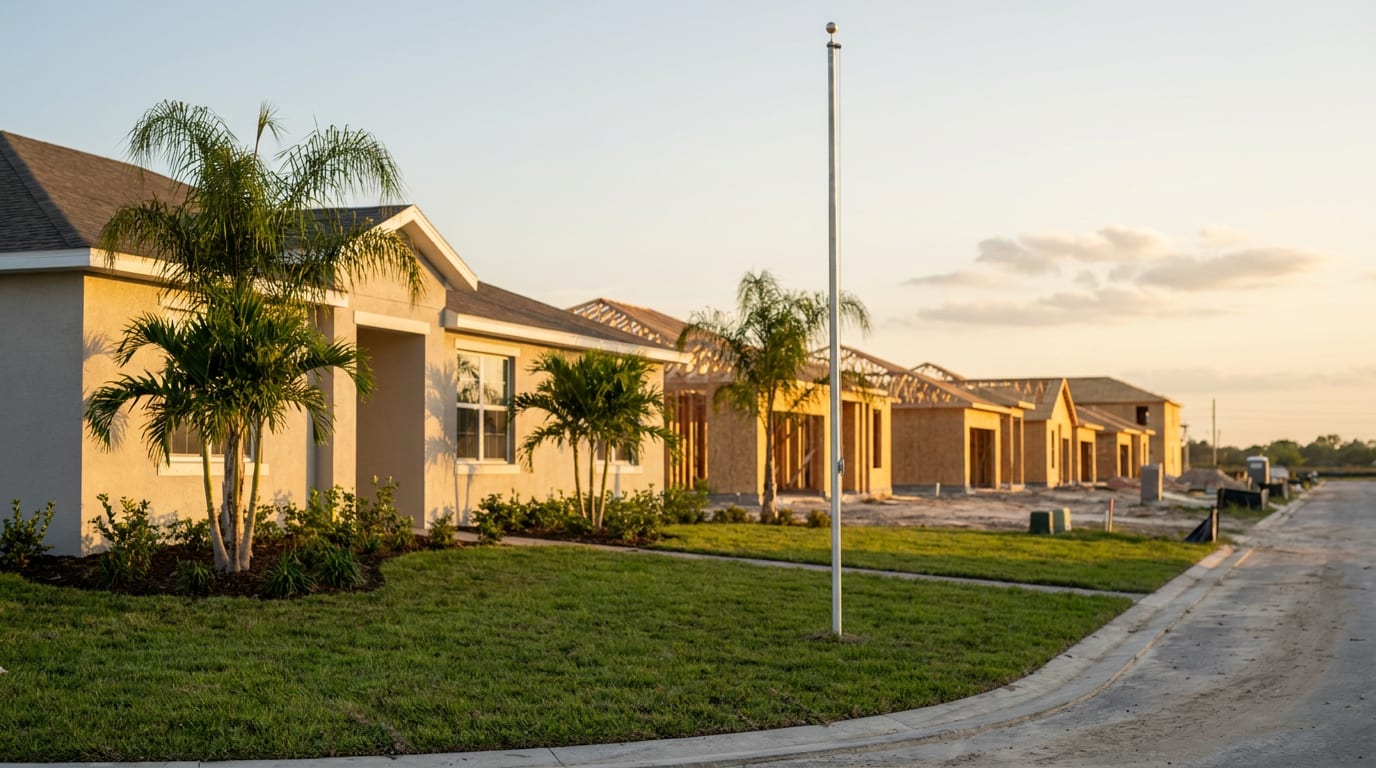
Every buyer who walks into a Florida model home this fall has already been told, by a banner or a lender or a cousin, that the builder will make a deal. The biggest builder in the state just published how big the deal is. That number belongs to Lennar, but it lands on everyone who builds in the same zip codes: the semi-custom builder whose spec sits two miles from the model center, and the framers, electricians and finish trades who work for both.
This is a read of that number for all three, with the sources linked and our own math labeled as ours.
The 12 percent, read plainly
HousingWire's coverage of Lennar's third quarter, reported in September for the quarter that ended August 31, has the headline figures. Incentives on the homes Lennar delivered came to 12 percent, down from 12.9 percent in the second quarter and 14.1 percent in the first. Gross margin was 15.8 percent, up 20 basis points from the quarter before. The company delivered 20,840 homes at an average price of $372,000, down 2.9 percent, and new orders fell 9 percent. Lennar's Stuart Miller called the trade-off a deliberate choice: "we are compromising margin in order to maintain volume."
The Florida line is the one to underline. HousingWire reports that resale competition is sharpest in Texas and Florida, Lennar's two largest markets, and that when a resale seller cuts the price, Lennar answers. Miller also said almost half the visitors to its communities cannot immediately qualify for a mortgage.
For example, 12 percent of that $372,000 average is about $44,600 a home. That is not a coupon. It is the size of a kitchen, spent to keep the buyer from walking to a resale listing.
Twelve cents of every delivered dollar went back to the buyer · Illustration: Florida Construction Media
The rest of the industry is moving the other way
Lennar trimmed its incentive share across 2026. The industry did not. The NAHB/Wells Fargo Housing Market Index fell three points to 29 in October, and 43 percent of builders cut prices, the highest share in the 2020 to 2026 run of the series. The average cut held at 6 percent for a seventh straight month, and 65 percent offered sales incentives. Scotsman Guide puts the index at a 14-year low, with buyer traffic down five points to 18.
The rate behind it is the one we read earlier this month: the 30-year fixed crossed 7 percent in Freddie Mac's October survey, three weeks after the Fed raised its target range. On the resale side, Florida's September housing report showed Sarasota-Manatee holding volume while Tampa Bay closed fewer homes. A resale seller with equity can cut. A builder with a finished spec and a construction loan has to pick a lever.
Where Florida sits in the filing
Lennar's 10-Q for the quarter reports by segment, and its East segment covers Florida, New Jersey and Pennsylvania. East home sales rose to about $1.83 billion from about $1.73 billion a year earlier, and East pre-tax earnings rose to about $199.9 million from $186.4 million, while total homebuilding sales fell to about $7.73 billion from $8.21 billion. Two cautions: eleven communities moved into East this year, and the segment is not Florida alone. Read it as a sign that the company is still selling here at volume, not as a Florida profit margin.
What it tells the buyer at the model home
The buyer hears "12 percent" as a discount they are owed. It is better read as a price the builder already pays, and the useful question is what form it takes. A rate buydown helps the payment for two or three years. A price cut helps the appraisal, the tax bill and the resale for as long as they own the house. A closing-cost credit helps the cash at the table.
If you are a builder or a Realtor who works with these buyers, the honest service is to lay the three side by side. We did the payment math on a 2-1 buydown in the October rate read, and it is worth repeating out loud at the kitchen island. The buyer who understands that a buydown ends in year three is the buyer who trusts you in year five.
What it tells the semi-custom builder
You are now priced between two competitors who both have room to move: the resale seller with equity, and a national builder that has published a double-digit incentive budget. You will not out-spend either. You can decide your own incentive before the buyer asks, instead of inventing it at the closing table.
The math: Assume a $650,000 semi-custom spec that is finished and unsold, carrying about $4,500 a month in construction-loan interest, insurance, taxes and upkeep. Each month it sits costs $4,500. A design credit of 2 percent, $13,000, equals about three months of carry. If the spec is likely to sit longer than three more months without it, the credit is cheaper than the wait. If it is likely to sell inside three months anyway, the credit is a gift. Set the number when you write the pro forma, attach it to a date, and spend it inside the house.
That last part matters more than the size. In July we wrote that a credit reads as more house while a price cut reprices your comps. The new wrinkle in late 2026 is that the buyer arrives with Lennar's number in their head. Answer with what your credit buys, in square feet and finishes, and with the parts of the job a discount cannot buy: a fixed schedule in writing, a change-order policy, the eleven-month walk. Those are the levers a premium builder actually controls, and they cost less than $44,600.
What it tells the trade partner
Two numbers in HousingWire's report belong to the trades. Lennar says its construction cost per square foot is down 14 percent since 2023, and its revenue per square foot is down 13 percent. Some of that came from design and scale. Some of it came from the people who frame, wire and tile those houses. A builder that is choosing volume over margin is a builder whose purchasing team will keep asking for the next point.
The same coverage says roughly 20 percent of Lennar's divisions are under heavier labor pressure from immigration enforcement, and Miller said cost pressure is building. That is leverage for a trade with a reliable crew, but only if you use it on purpose.
- Price by phase, not by year. A production builder funding incentives is looking for money in allowances and scope. Quote the next phase on its own sheet so a change shows up as a change.
- Watch the pay cycle. Thin margins move first into slower draws. Know your lien deadlines before you need them.
- Keep one foot in custom and remodel work. The clients paying from equity or cash are not shopping a 12 percent incentive. A trade that only builds production homes rides the incentive budget up and down with the builder.
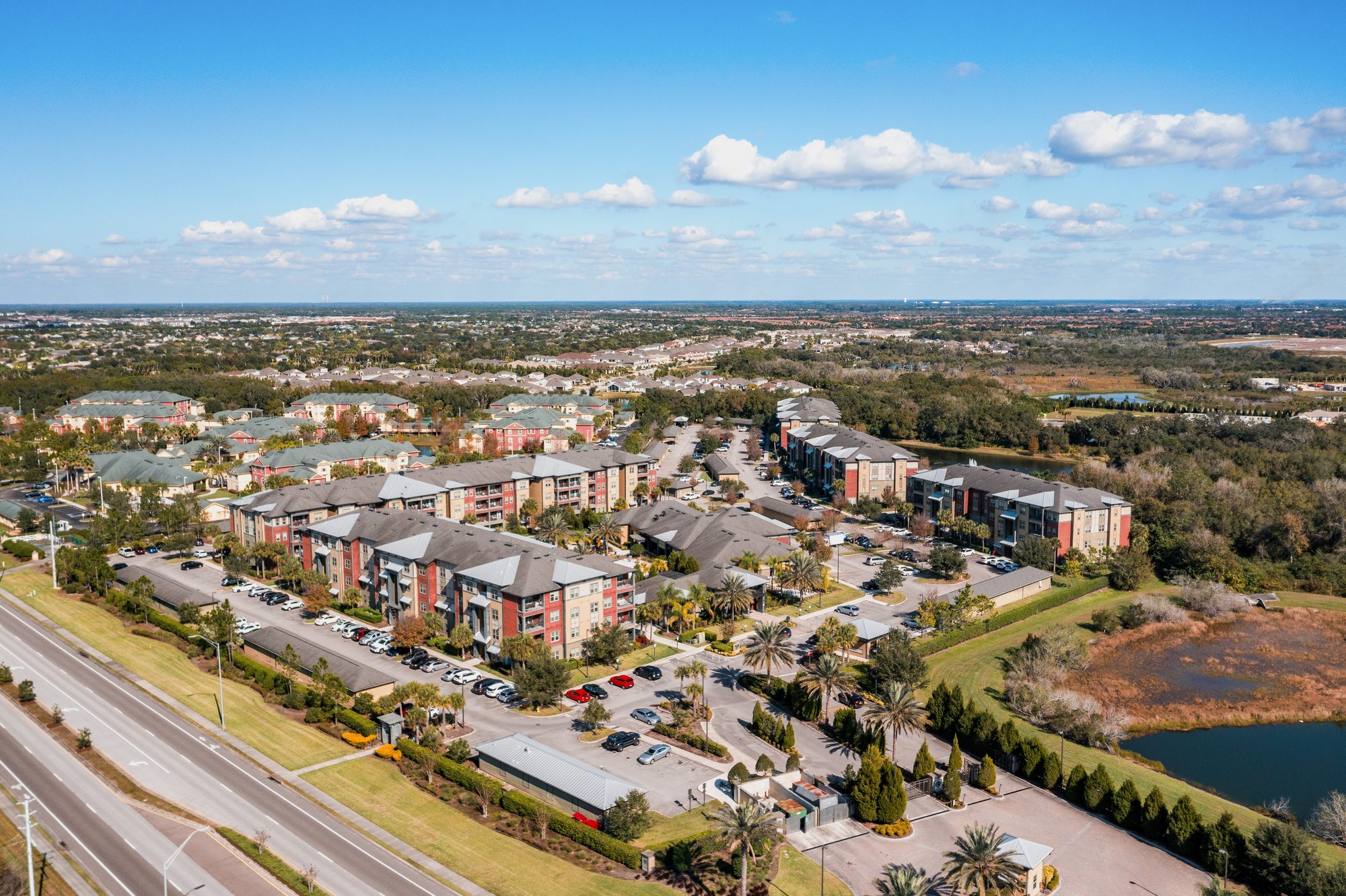
The client behind the client: production work on the Manatee side · Bradenton · Photo: Stellar Media Collective
Questions builders actually ask
Lennar cut its incentive share three quarters in a row. Does that mean the market is getting better? Not on its own. The same quarter brought lower prices, lower orders and a margin trade-off Miller described as deliberate, while the NAHB index hit a 14-year low. A smaller incentive on a smaller price is still a big number. Read the next report in December before calling a turn.
A buyer asked me to match the national builder's deal. What do I say? Say what your price includes that theirs does not, in writing, and offer the incentive you already budgeted, with its reason and its date. If the buyer only wants the bigger number, they are shopping a different product. Let them go politely.
Should a trade drop production work? No. Production work is volume and steady crew hours. Just do not let it be all of your work, and do not quote it the same way you quote a custom home.
Where should a builder publish this kind of explanation? Wherever the buyer is already reading: a short video on your site and profile that walks through the buydown math and what your credit buys. Stellar's resources library has filming plans for that kind of explainer.
Checked October 26, 2026, against HousingWire's report on Lennar's third quarter, Lennar's 10-Q, and NAHB's October index; figures will move with the next releases and the originals are linked above. The carry-cost example is our own model with its assumptions printed. Disclosure: this publication is owned by Stellar Media Collective, a Sarasota studio that builds the on-camera explainer and process-content systems described here. The read holds whoever you hire to film it.