Building on the Keys: Longboat, Siesta, and Casey — the Work, the Clients, and the Content
The barrier islands are a different trade practiced in the same county — bridge-bound logistics, salt-grade materials, and owners who watch their six-figure projects from another time zone. What actually changes at the bridge, and how builders turn it into content that wins the next island job.
8 min read · July 6, 2026 · Florida Construction Media
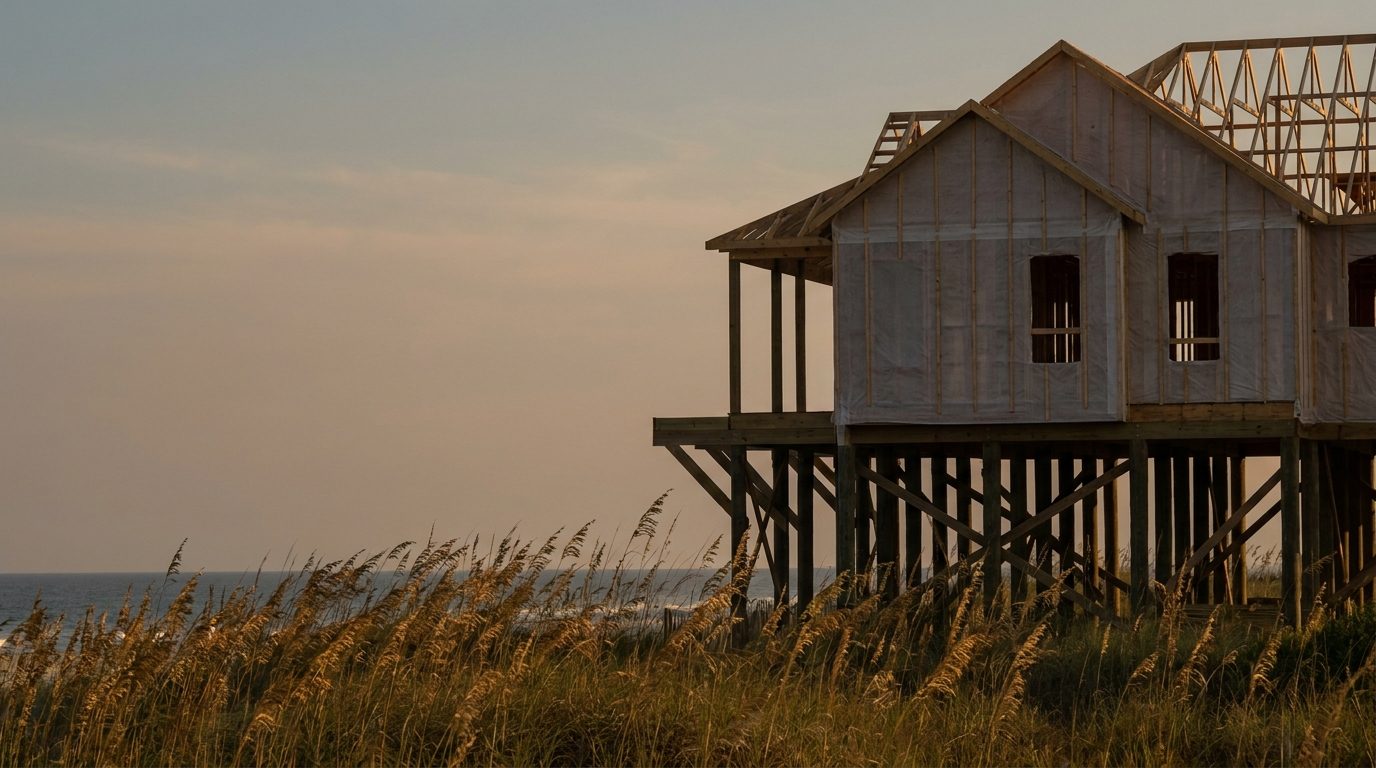
Price the same kitchen twice — once off Bee Ridge, once on Casey Key — and the island number comes back higher by more than the finish schedule explains. That's not gouging, and it isn't island mystique. It's a one-lane swing bridge with a posted weight limit, a driveway doubling as the laydown yard, an association with opinions about weekday mornings, and a fastener order written for salt air. The keys are a different trade practiced in the same county, and the builders who last out there bid, schedule, and communicate like they know it.
Longboat, Siesta, and Casey are three versions of the same exam. Longboat is its own town with its own building department, straddling a county line, dense with condominiums and gated streets. Siesta is unincorporated county, thick with vacation rentals and their traffic. Casey is the honest extreme: a narrow ribbon of estates with the least forgiving access in the region. Different personalities, same lesson — out here the work, the clients, and the content are one conversation.
What changes at the bridge
Everything on a barrier island arrives over a bridge, and the bridge sets the tone. Longboat is reached over drawbridges — through St. Armands Circle from the Sarasota side, or down through Anna Maria — and every opening for a sailboat is schedule you don't control. Siesta's two approaches both open for boat traffic and back up all winter. Casey has a 1920s one-lane swing bridge at its north end, with a posted weight limit heavy loads respect by routing around to the south drawbridge or splitting into smaller trucks. A sub who quotes island work without asking which bridge hasn't done island work.
Then the lot. Gulf-to-bay parcels look generous on a survey and work narrow in person: the buildable envelope sits between setbacks, there's no vacant parcel next door to borrow, and the driveway is staging, parking, and material yard at once. Deliveries get sequenced instead of stockpiled; crane and concrete days are choreographed weeks out, because the street can't hold a second truck while the first one works.
Layer on the calendar. The town and the county post construction hours; associations add their own quiet days, and some effectively pause exterior work at the height of season, when every neighbor is in residence. Gulf-front lots add turtle-nesting rules — roughly May through October — with lighting restrictions after dark.
The Gulf itself writes the spec book. Salt air eats builder-grade hardware in a season or two, so island jobs run on coastal-grade stainless, aluminum where steel would streak rust down a white wall, and coatings on everything that faces weather. And the flood maps dictate the architecture: new construction near the water goes up on pilings, living space above the flood line, breakaway construction below. Remodels navigate the federal substantial-improvement threshold — put more than about half the structure's value into improvements and the whole building must meet current flood code. That one rule is why island remodels get scoped by people who read appraisals as carefully as plans, and why, after the 2024 storms pushed surge through ground floors along this coast, so many repair decisions became elevation decisions.
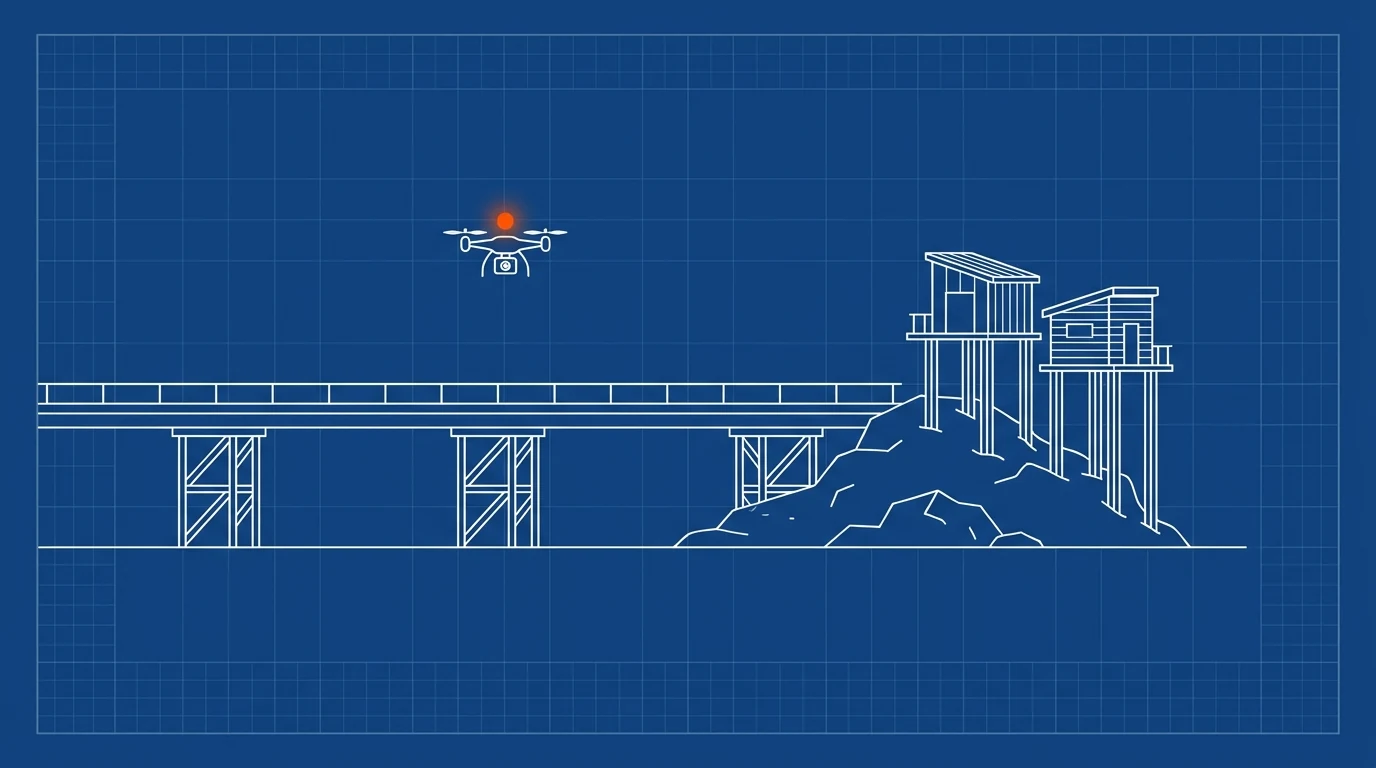
A different trade at the end of the bridge · Illustration: Florida Construction Media
The client is somewhere else
Now look at who's paying for it. A large share of island projects are second homes, and the owner writing six-figure remodel checks — or seven-figure build checks — is in Chicago, Boston, or Toronto for most of the year. They can't drive past the site on a Saturday or stop by to see whether the tile went in. Every piece of information about one of their largest assets comes through you, or it doesn't come.
That changes what a progress video is. On the mainland, a walkthrough film is marketing. Out here it's project management. A weekly ten-minute walkthrough — the superintendent narrating what happened, what's next, and what needs a decision — replaces a flight, answers the Sunday-night phone call before it's placed, and leaves a dated record that smooths draw requests, insurance conversations, and association sign-offs. An absent owner fills silence with worry, and worried owners generate change orders, cold feet, and calls to their attorney, in roughly that order. The weekly film is the same discipline that keeps a signed client warm through a long wait, pointed at a client who may not set foot on the island until drywall.
Why island work photographs like nothing else
The compensation for the logistics: no work in the region photographs better. Water on two sides. Homes on pilings that let you shoot up at framing against open sky. Late Gulf light that crews inland would pay to fake. And geography that does the selling for you — one aerial frame of a Gulf-to-bay lot explains where the money went better than any paragraph in a brochure.
This is where licensed drone work earns its line item without argument. An orbit of a piling home at dry-in, water behind it in both directions, is the most persuasive asset an island builder can own. One caution before anything launches: stretches of this coastline sit in controlled airspace tied to the region's airports — Sarasota-Bradenton's to the north, the Venice field to the south — so authorization has to happen before takeoff. A certificated pilot who checks the map is the difference between an asset and a problem.
Spec box: the island shoot plan. (1) A Part 107 pilot with the airspace check done for that stretch of coast; (2) a polarizer for water glare, because the Gulf at noon is a mirror; (3) a schedule built around light and tide — low sun shows elevation, noon flattens it; (4) salt discipline for the gear: wipe-downs, sealed cases, no lens changes on the beach; (5) a crew parking plan, because in season there isn't one; (6) neighbor courtesy — a knock and a card before the drone goes up, notice to the association where rules ask for it; (7) frame discipline — shoot your job, not the pool deck next door; (8) a standing weekly slot for the owner's progress film, same day, same shape, no exceptions.
The content plays
The filming only pays if it's aimed right. Three plays fit the islands.
Tell project stories by island, not by county. Nobody who owns on Longboat searches for a Sarasota builder; they search the island's name. A project story that names the key, the bridge, the association process, and the flood-line decision — told with the owner's privacy intact — reads as a credential no generic portfolio page can match. One page per island. The specificity is the proof.
Publish the "what it takes to build out here" explainer. A builder on camera walking through the swing bridge, the delivery choreography, and the substantial-improvement math does two jobs: it educates the serious buyer long before they call, and it filters out the caller who wanted mainland pricing on island work. An explainer that loses you the wrong leads is cheaper than the meetings it replaces.
Name the remote-owner system and sell it. Most builders treat updates as a nicety. Put the system in the proposal instead — a name, a sample week, a promise: every Friday, ten minutes, what happened, what's next, what we need from you. For an out-of-state owner choosing between two comparable island bids, the builder with a visible communication system wins — and a competitor can't claim it without actually building it.
Price the premium, then prove it
Island premiums are real and defensible: crossing time multiplied across every trade, every day; deliveries split in three by a weight limit; corrosion-grade materials; flood-code engineering; a working calendar compressed by season and association rules. What's not defensible is presenting the premium as a shrug — "island work just costs more." A shrug reads as padding to a client who has built inland.
Show it instead. Film the morning queue at the drawbridge. Film the crane day that took three weeks to schedule and four hours to execute. Film the stainless hinge next to the rusted one it replaced, and let the superintendent explain the difference in ten seconds. A client who has seen why the number is the number stops negotiating the number and starts evaluating the builder. Logistics you can show are a justification. Logistics you can only assert are an excuse.
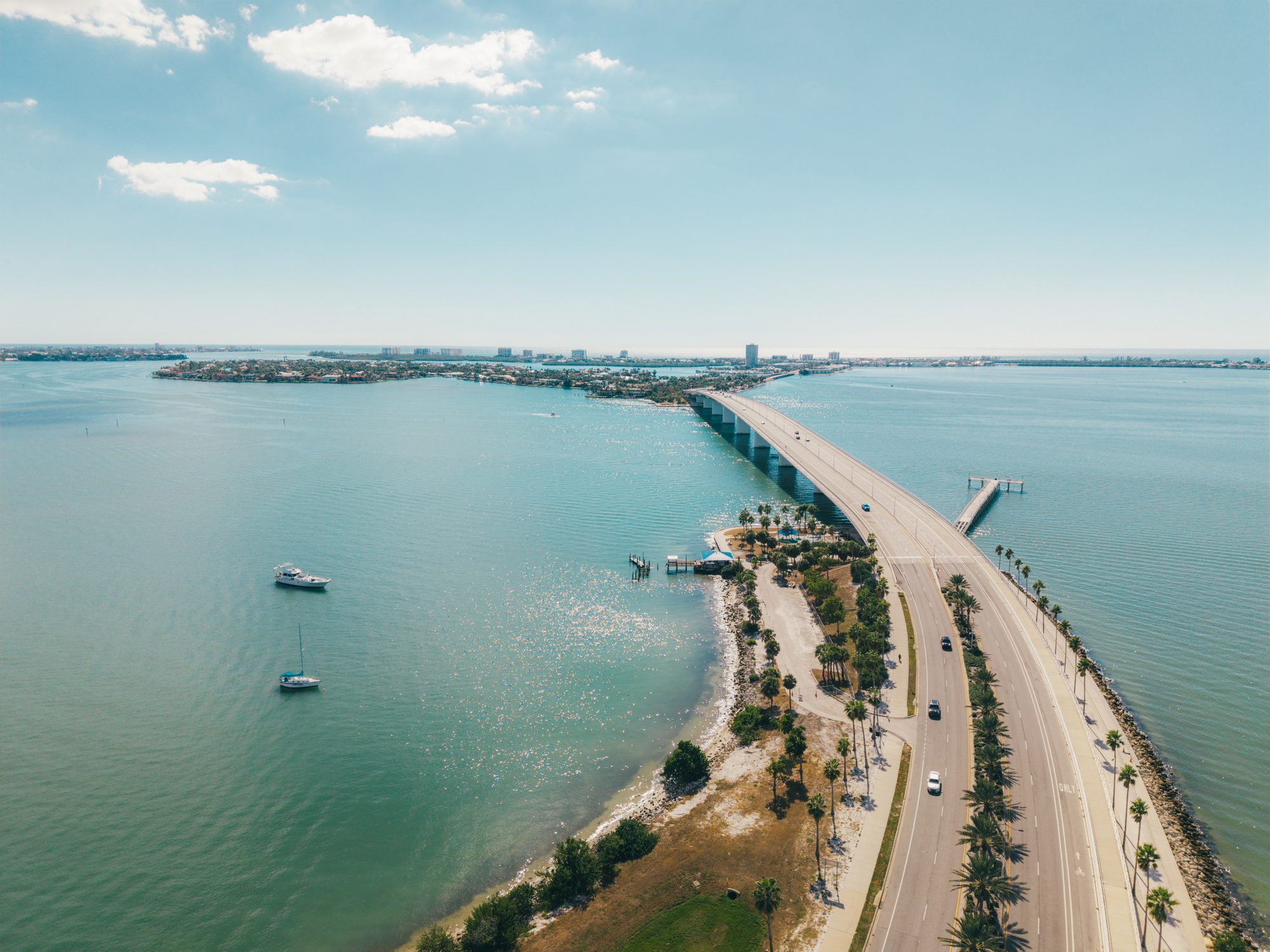
The commute your clients ask about · Sarasota Bay · Photo: Stellar Media Collective
Questions builders actually ask
Do I really need separate content for each key? If you want the search traffic and the trust, yes. An owner on Longboat recognizes Longboat problems — the town's own permitting, the condo-association layer — and a page that speaks to them beats a generic barrier-island page. The cost is one shoot day and one story per island, and the same footage feeds both.
Is a weekly video overkill on a nine-month build? The quiet weeks are the reason to do it. When the visible work is inspections, engineering, and lead times, the absent owner sees nothing and assumes the worst; a two-minute phone video narrating exactly that — nothing dramatic, here's what's moving underneath — is the cheapest anxiety management in the business. Owners don't need news. They need to know someone is watching their house.
Does the weekly film need a professional crew? No — structure matters more than polish. A superintendent's phone, the same day every week, the same shape every time: what happened, what's next, what we need from you. Save the professional crew and the drone for milestones — pilings set, dry-in, completion — the footage that sells the next island job.
Published July 6, 2026. Access, hours, and flood constraints are described generally and vary by jurisdiction and association — verify locally before you bid. Disclosure: Florida Construction Media is published by Stellar Media Collective, Sarasota, which films island projects for Gulf Coast builders.