Video Marketing for Cabinet Shops & Millwork: Filming Craftsmanship That Sells Before the Showroom Visit
Your shop floor is the best sales asset you own. Point a camera at the work and let the joinery do the talking.
7 min read · July 6, 2026 · Florida Construction Media
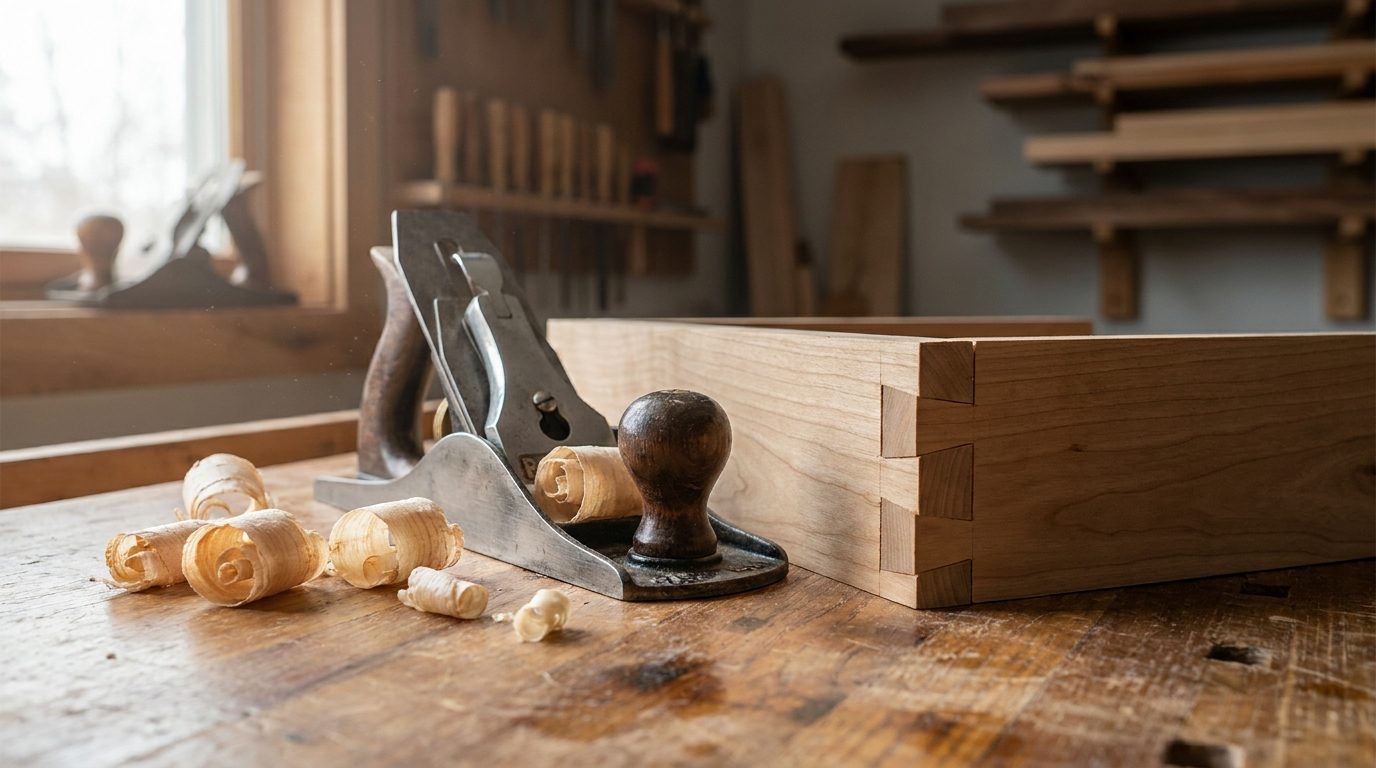
Most trades have to work to make their process look good on camera. A plumber under a slab is doing skilled work that photographs like a crime scene. A cabinet shop has the opposite problem, which is to say no problem at all. Walk any decent millwork operation and you are standing inside a finished set: machines with presence, lumber with figure, a finishing room that glows, and hands doing things most people have never watched anyone do. The raw material for a year of marketing is already on your floor. The only question is whether anyone is filming it.
Here is the pattern worth acting on. Across every platform, process video of skilled hands making something is among the most consistently watched content there is. Not because of clever editing. Because watching a five-piece door come together is satisfying in a way that a photo of the finished kitchen never will be. Cabinet shops are sitting on the most watchable trade content in construction and most of them post a phone photo of an install once a quarter.
The shop is the set
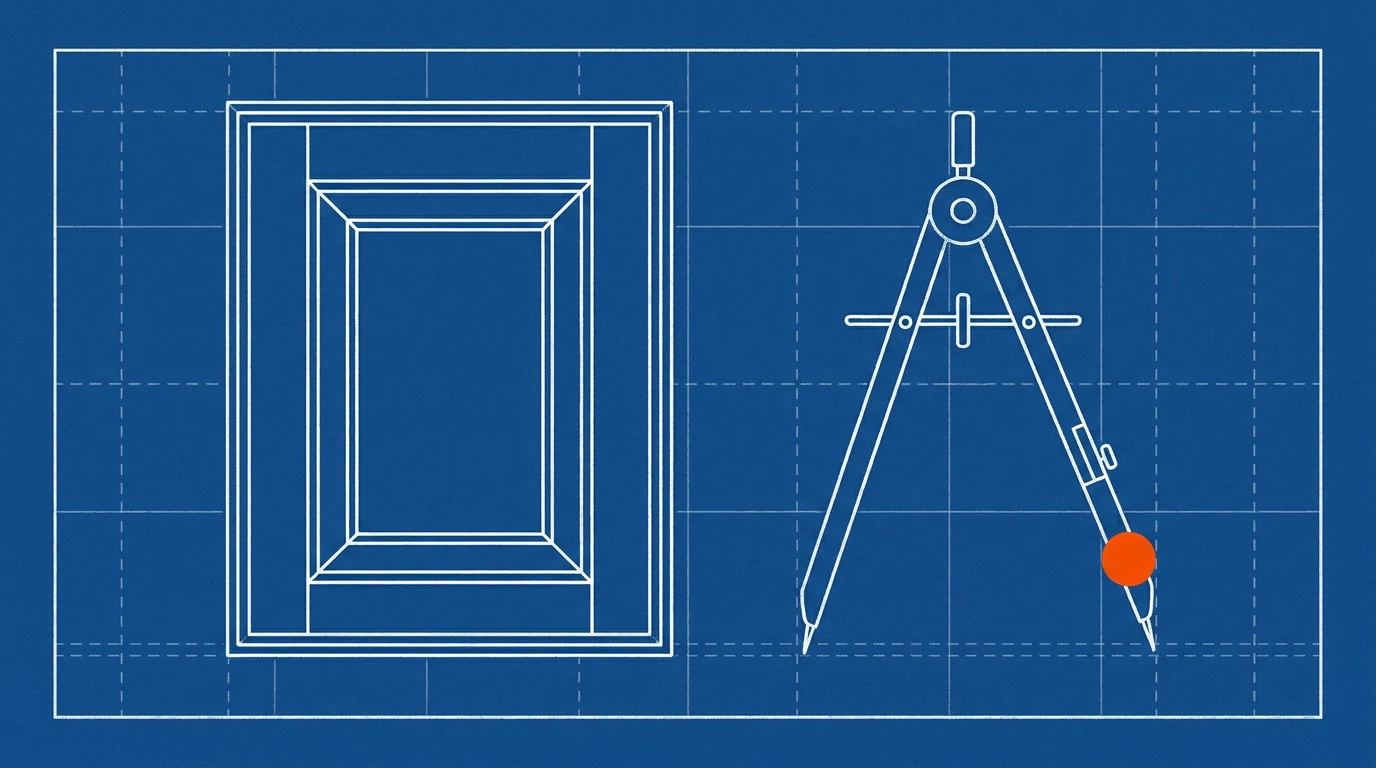
Millimeters are the marketing · Illustration: Florida Construction Media
You do not need a studio. You need to stop treating the shop as a place clients never see. The sliding table saw, the edge bander, the widebelt sander, the spray booth — each one is a scene. Sawdust in window light is a scene. A stack of sequenced walnut veneer is a scene. The mistake shops make is filming wide, trying to show the whole operation at once. Film tight instead. The closer the camera gets to the work, the more the work sells itself.
Think in four content pillars. They map to what a buyer actually needs to believe before they will pay custom prices: that you are skilled, that you know materials, that your process is orderly, and that custom is genuinely different from the alternative.
Pillar one: shop-floor craft
This is the macro footage. Dovetails sliding home. A domino joint pulled apart and reassembled. Edge banding trimmed flush in one pass. Glue-up clamps going on in sequence. The five-piece door — stiles, rails, panel — coming together from loose parts to a finished frame in forty seconds of cuts. None of this needs narration to work, though a plain voice explaining what is happening and why it matters makes it work harder.
The bar here is honesty, not theater. Do not stage joints you would never cut on a real job. Film the joinery you actually use, done the way you actually do it, and say why you chose it. A shop that explains why it uses dowels instead of dovetails on a production run, and where it draws the line, reads as more credible than one performing hand-cut joinery for the camera.
Spec box: The shop-day shot list, macro-heavy: (1) tight shot of a five-piece door assembly, loose parts to clamped frame; (2) macro of a dovetail or domino joint seating, one continuous take; (3) edge bander feeding a panel, trimmer detail; (4) hand plane taking a full-length shaving, shavings in frame; (5) grain closeup on a figured board before and after finish; (6) spray booth pass, one door, side light showing the wet coat level out; (7) drawer slide install and the soft-close test; (8) measuring detail — calipers, story stick, or laser on site; (9) the sequenced veneer or lumber stack for a current job; (10) one wide establishing shot of the floor, saved for last, so the tight shots do the selling.
Pillar two: material literacy
The second pillar is teaching, and it is where a cabinet shop separates itself from a sales floor. Buyers arrive confused about materials because everyone upstream had a reason to keep them confused. Be the shop that tells it straight. Plywood boxes versus MDF versus hardwood: where each belongs, where each fails, and where you use each one and why. If MDF is the right call for a painted shaker door because it is stable and takes paint flat, say so on camera. Honesty about the cheap material is what makes your claims about the expensive one believable.
In Florida, material talk has a second act: humidity. Solid wood moves here, finishes cure differently here, and a garage-adjacent laundry room is a different environment than a conditioned kitchen. A short, plain video on how your shop accounts for movement and moisture — panel construction, finish selection, acclimation before install — answers a question your out-of-state competitors never think to address. Keep it general and keep it true to your own practice.
Pillar three: the design-to-install arc
Every kitchen you build is a three-act story, and the client is the protagonist. Act one: measure and design — the site visit, the laser, the renders, the material selections on the bench. Act two: the build — their cabinets, identified by name or neighborhood if the client agrees, moving through the shop over two or three short updates. Act three: install day — the boxes going in, the reveal, the first drawer pulled.
This arc does double duty. As marketing, it is a documentary series that costs you a few minutes of filming per stage. As client experience, it is a progress report that kills the three-week silence between deposit and delivery, the stretch where custom clients get nervous. The install side of this story is its own discipline — the same dust-to-done logic covered in the kitchen and bath playbook applies from the moment your boxes hit the site.
Pillar four: what custom actually buys
The fourth pillar addresses the comparison every buyer is silently making: big-box, imported RTA, or you. Do not get defensive about it, and do not sneer at the alternatives — plenty of your future clients own them right now. State the differences plainly. Custom sizing means no filler strips and no dead corners. Your lead time is longer than a warehouse shelf and shorter than a container from overseas, and you control it. And repairability is the argument nobody else can make: a door you built can be rebuilt, rematched, refinished, ten years from now, by the people who made it. Film a repair or a refinish job when one comes through the shop. It is the quietest and most convincing case for custom you will ever publish.
The showroom visit, pre-sold
All four pillars converge on one commercial outcome: the buyer who has watched your shop for three months walks into your showroom already sold on why custom costs more. They have seen the edge bander. They know the difference between your drawer box and the stapled one. The price conversation shifts from justification to selection. This is the same mechanism the finish trades run on — the luxury painter's prep footage sells the invisible eighty percent of the job for exactly the same reason your glue-up footage sells yours. The finish trades sell process, because process is the product.
Close the loop at install day. The client standing in their finished kitchen, hand on the island, is the single best testimonial condition you will ever get — the emotion is real and the backdrop is your work. Have three questions ready and film it before you load the trailer. The full method is in the testimonial system; the short version is that you ask on the best day, not by email two weeks later.
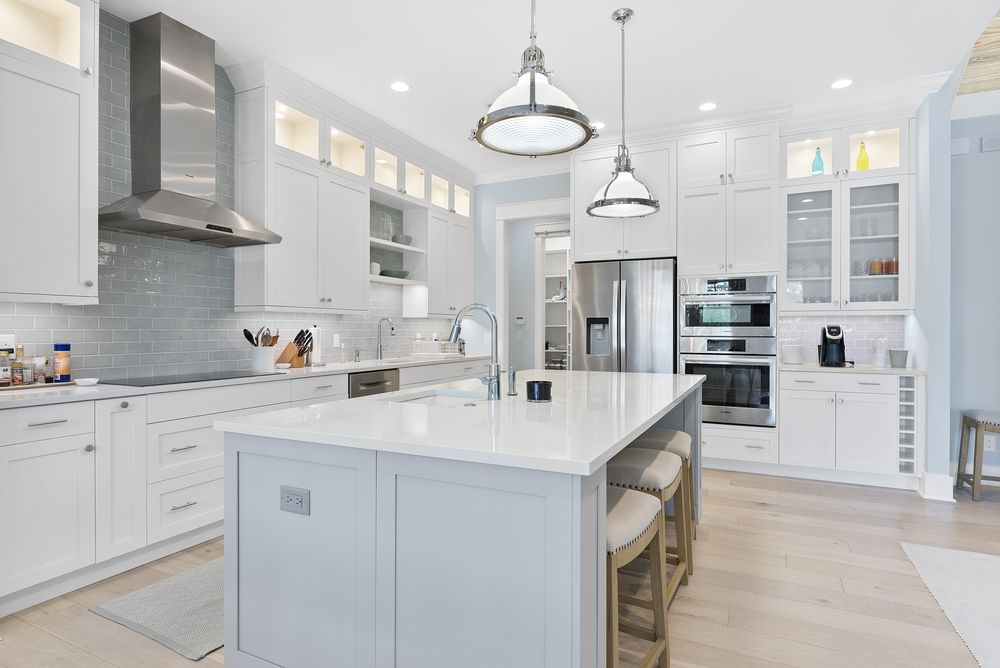
Built, delivered, installed · Venice · Photo: Stellar Media Collective
Questions builders actually ask
Do homeowners really watch shop footage, or is this just for other woodworkers? Both watch, and it does not matter that you cannot always tell them apart. The homeowner watches because it is satisfying; the builder watches because they are evaluating you. The same clip does both jobs. What changes is the caption — write it for the buyer, not the forum.
Our real clients are builders and designers, not homeowners. Does any of this apply? More, not less. Builders and designers are hiring your capacity and your consistency, so cut them a capability reel: shop capacity, machinery, finishing throughput, lead-time discipline, a walkthrough of how a job moves from drawings to delivery. Send it before the first meeting. A GC who has already seen your floor asks different questions than one who has not.
How much filming time does this actually take? One deliberate shop day per quarter covers the craft library — the spec box above is a single afternoon with a phone and a tripod. The design-to-install arc adds a few minutes per project stage. The constraint is never time. It is deciding, once, that the camera comes out on schedule instead of when someone remembers.
Published July 6, 2026. Florida Construction Media is produced by Stellar Media Collective, Sarasota.