Video Marketing for Luxury Painters: Proving Prep, Not Just Topcoats
A finished wall photographs the same whether it got two thousand dollars of prep or a fast scuff-and-coat, so the after photo can't carry a premium pitch. Film the protection, the sanding, and the cut lines — then send two minutes of it with every estimate.
7 min read · July 6, 2026 · Florida Construction Media
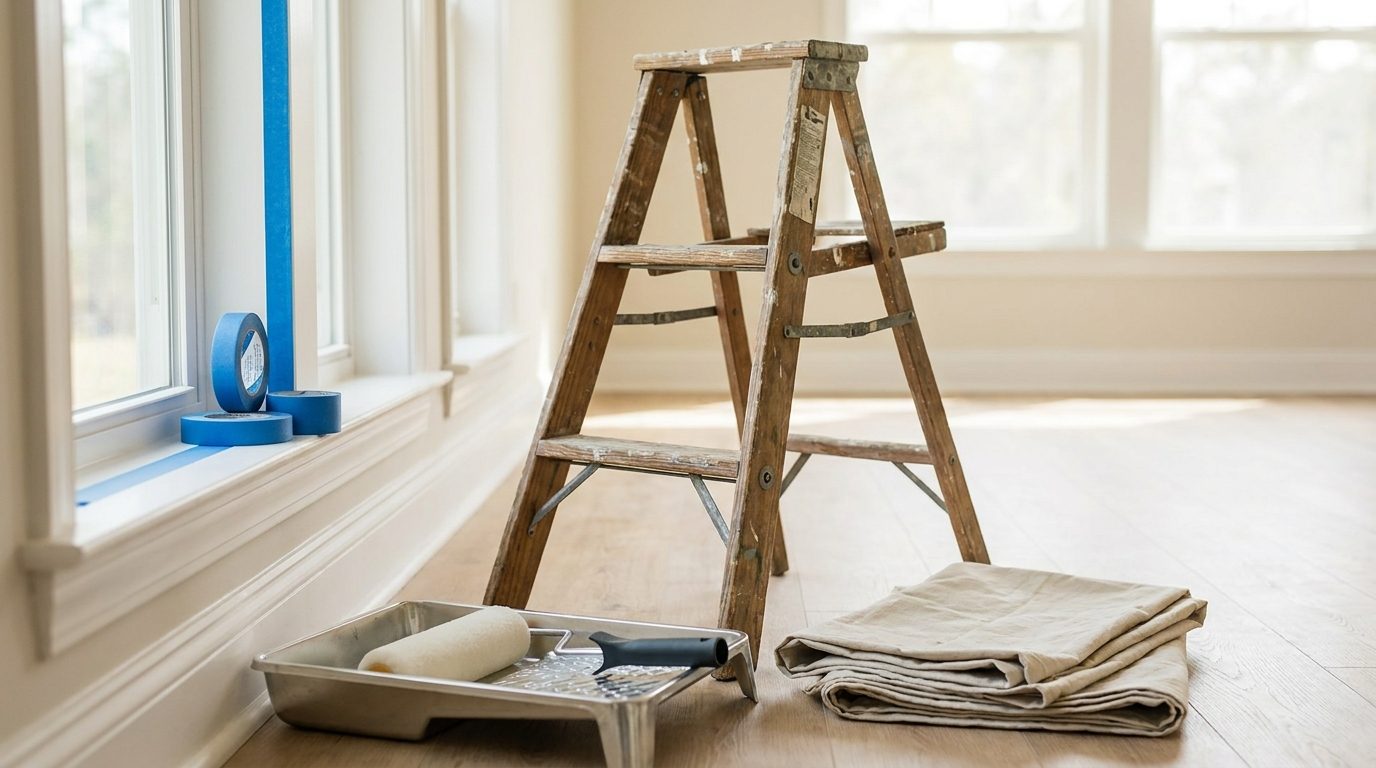
Set your best after photo next to the cheapest repaint in town and ask a homeowner to pick the premium job. At phone-screen resolution they can't. A wall that got a full skim coat, two sanding passes, and a hand-cut line photographs exactly like a wall that got a scuff-sand and one hurried coat — the camera records the topcoat and nothing underneath it. For the first six months, the two walls even feel the same.
That's the marketing problem specific to high-end painting, named plainly: every gallery in town looks like yours. The crew that undercuts you by eight thousand dollars fills their feed with the same smooth color and straight-enough lines. When the proof of your work is invisible in a photo, competing on photos is agreeing to be compared on price.
The way out is to change what you show. Luxury painting is prep, protection, and edges — color is the last and least of it — and while a photo can't record any of that, video can. Process made visible is the one kind of content the lowball crew can't imitate, because you can't film work you don't do.
The after photo is a commodity
On a high-end repaint, most of the labor happens before anyone opens a finish coat. Furniture moved and wrapped, floors papered, hardware pulled, walls washed, cracks routed and filled, skim coats floated, everything sanded and primed and sanded again — that is the job. The topcoat is the receipt.
Your client can't evaluate any of that in a gallery, but they can watch it. Video records time and care the way a photo structurally cannot: the work happening, in order, with hands in frame. A homeowner who has watched a room being wrapped understands your number differently than one who has seen ten after photos, because you've shown them the part of the job they were afraid was being skipped.
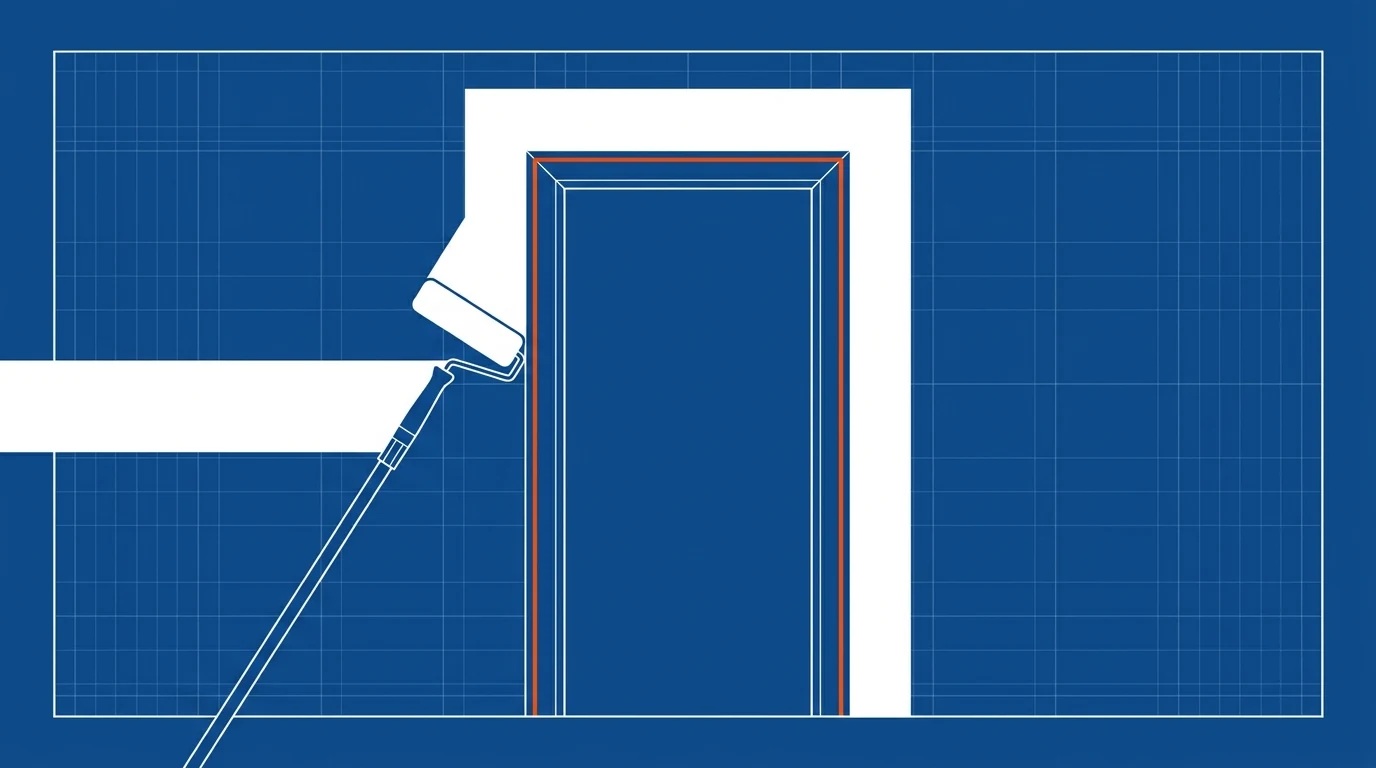
The finish sells the prep you filmed · Illustration: Florida Construction Media
Film the work that disappears
Five subjects, all already on your job site, none requiring a crew.
The protection ritual. Film the wrap like it's the product, because to this client it is. Rosin paper rolled and taped seam by seam, furniture wrapped and labeled, the chandelier bagged, switch plates off, hardware in marked bags. A client hiring painters into a home with rugs and art is buying protection first and paint second; a thirty-second clip of your masking says more about your company than an aerial of any finished house.
Surface prep, one decision at a time. Thirty seconds per clip, one decision per clip: why this wall gets a full skim instead of spot repairs, why you sand between coats, why the water stain gets a stain-blocking primer before anything else touches it. Explain it the way you would at a walkthrough — plain and brief. You're not teaching a course; you're proving there are decisions in the work.
The edge. Cut lines, filmed close. A loaded sash brush pulling a straight line where wall meets crown is the most natural short-form video in the trades — the internet built an entire genre out of watching someone do one thing perfectly, and this is yours. No narration, no music. Prop the phone, cut the line, post it.
Product literacy, no shilling required. Why the exterior doors get an enamel that stands up to Gulf humidity, why cabinets get a harder-curing finish than walls, why stucco wants a coating that lets moisture leave the wall. Generic terms are plenty — you're demonstrating judgment, not endorsing a brand — and judgment is exactly what a premium client is trying to buy.
The cleanup exit. The unwrap, the vacuum pass, furniture set back on its marks, the final walk with the client. The exit is the last thing they see and the first thing they describe to a neighbor. Film it with the same seriousness as the wrap.
Run all five with before-during-after discipline: every job, same doorway, same camera height. Discipline is what turns clips into a library.
Spec box: the standing shot list, every job, phone on a tripod, thirty seconds a clip.
- The before — one slow wide per room, from the doorway you'll reuse for the after
- Floor protection going down, seams taped
- Furniture wrapped and fixtures bagged, one steady pan
- Patching and skim work, close, hands in frame
- A sanding pass under a raking work light
- Primer going on, with one sentence on why this primer
- Macro of the brush cutting an edge at crown or casing
- The exit — unwrap, vacuum, furniture back on its marks
- The after — same doorway, same height, same time of day
The Florida questions, answered honestly
Florida is hard on paint and every homeowner here suspects it. Sun, humidity, salt air near the water, stucco that moves and hairline-cracks no matter whose name is on the coating. The question they all eventually type is some version of how long exterior paint actually lasts here, and most of what they find is a national average or a brochure.
That's an open lane. The honest answer is a range — it depends on exposure, substrate, whether the irrigation hits the wall, how close the salt is, and above all prep — and the painter willing to give the range with the reasons is the one who gets believed at estimate time. Pull your own repaint records and say what you see: which elevations fail first, what a south-facing wall endures that a north-facing one doesn't, why the repaint cycle on the coast is maintenance rather than failure. Say the uncomfortable part too — a coating can't fix a moisture problem, and stucco cracks come back if nobody asks why they're there. Honest ranges cost you the clients who wanted a fantasy number. Those were never your clients.
Send two minutes with every estimate
Here is where the library earns money. When yours is the high bid, the client is looking at two figures and one imagined wall, and the cheapest story wins. So attach a short video to every estimate — call it what's in our number — and walk the line items on camera: two days of protection before a gallon is opened, the skim coat, the primer choice, two finish coats, the cleanup day. Two minutes, no slides, no pitch. You're not criticizing the other bid; you're itemizing yours. The lowball does the rest, because now the client knows what the missing six thousand dollars was going to buy.
A recorded-once version works. A thirty-second personal version — shot on your phone after the walkthrough, naming their actual rooms and problem walls — works better.
Open it with your one sentence. The standard painter introduction — interior and exterior, residential and commercial — tells a premium client nothing. Build the three-part one-liner instead: their problem, your move, their result. Something like: homeowners who care how a wall looks from two feet away hire us for the prep nobody else itemizes — the finish is just the receipt.
Manners are a marketing asset
Most luxury painting happens in occupied homes, which means your marketing is happening whether you film it or not — the client is home, watching. On camera, etiquette is the trust signal: shoe covers at the door, dust containment, the end-of-day tidy that hands the room back livable, the crew that parks where it was asked to. The occupied-home rules we laid out for kitchen-and-bath remodelers apply double to painters, because painting is the trade families most often live through rather than move out for.
Film it tight and discreet: hands, surfaces, drop cloths, edges. No house numbers, no wide exteriors, no art or valuables in frame, and a signed yes before anything posts — the same release discipline as testimonials. In this bracket, discretion on camera is itself a luxury signal.
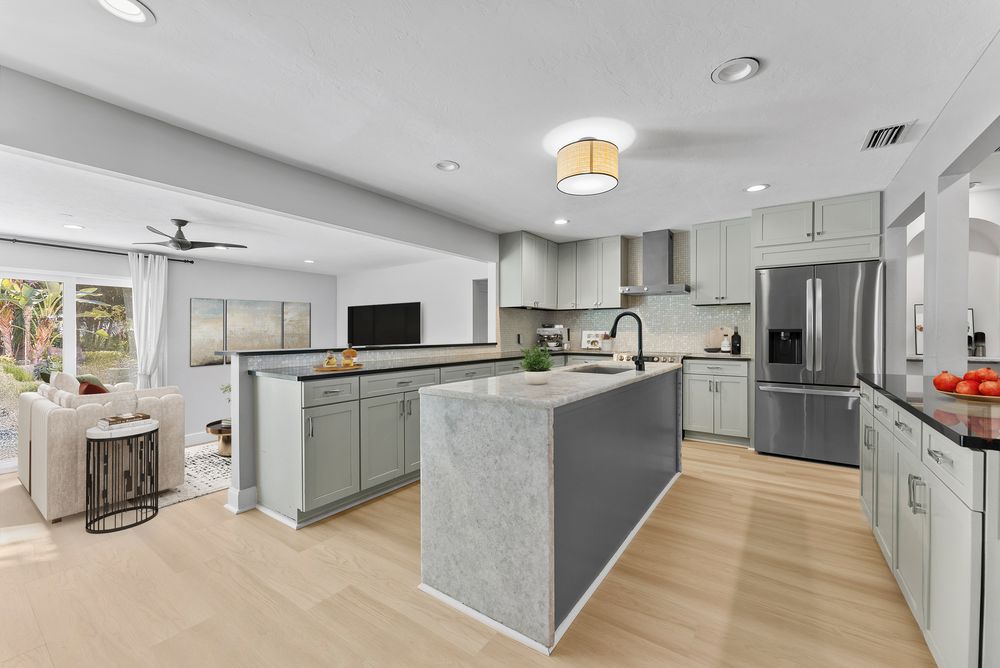
Finish work that photographs — because the prep didn't cut corners · Sarasota · Photo: Stellar Media Collective
Questions builders actually ask
Does any of this need a production company? The spec box is phone work, and should be — rough process footage reads as real. Where hired cameras earn their fee is the flagship pieces: the recorded-once estimate video and the two or three projects a year that deserve a proper film.
Won't filming slow the crew down? Nine clips, shot at stages someone is already standing in, thirty seconds each. Make one lead responsible for the list and it's minutes a day, not hours. The estimate video gets recorded once and sent for a year.
My clients don't want their homes online. Most of this content identifies nobody — a taped seam, a sanded wall, and a cut line could be any house in Florida. Ask anyway, in writing, and offer the anonymous version: no exteriors, no room-wide shots, no names. The discreet ask, made early, gets more yeses than painters expect — and the asking itself reads as professionalism.
Published July 6, 2026. Disclosure: this publication is owned by Stellar Media Collective, a Sarasota studio that films process content and estimate videos for premium trades, painters included; the shot list above needs nothing but a phone and the discipline to use it.