The Testimonial System: Getting a $200K Client on Camera Without Making It Weird
A client who just wrote you six-figure checks will give you twenty minutes on camera — if you ask on the right day, frame it as helping the next family, and hand them veto power. The whole system, script included.
8 min read · July 6, 2026 · Florida Construction Media
A client who just paid you $200,000 can say things about your work that you can't, because they have no motive to lie. Everything on your website is a claim until a customer repeats it — then it's evidence. Builders know this; "references available on request" has appeared in every proposal since proposals existed. But a reference list is homework, and nobody does homework. Ninety seconds of a real client, standing in the finished kitchen, explaining what they were afraid of and how it went — that gets watched.
Almost nobody has that footage, and the bottleneck isn't reluctant clients. A family that just wrapped a good remodel wants to talk about it; for one season, that project is the most interesting thing about their house. What's missing is a system — when to ask, what to say, which questions to run, what paper to sign. Here it is.
Why most testimonials are unwatchable
The standard contractor testimonial is a nice couple on a couch, lightly terrified, saying "they did a great job and we'd recommend them to anyone." Ten seconds in, a viewer files it under advertising and stops listening — not because it's false, because it's generic. Staged praise reads as an ad, and your prospect has spent a lifetime learning to tune ads out. Specifics read as proof. "We lived in the house the whole time, and they sealed off the kitchen so well the dust never made it upstairs" can't be mistaken for copywriting: checkable, concrete, slightly odd the way true things are.
The second failure is aim. Builders direct these videos to be about the builder, and prospects don't watch video about builders — they watch to find out what will happen to them. A working testimonial is the client's story, their doubts and their Tuesday nights, with your company cast as the outfit that handled it. Marketing people call this making the client the hero; on a job site it means the customer does the talking.
Proof in the client's own voice · Illustration: Florida Construction Media
Ask at the peak, not in the spring
Timing decides more than technique. A client's willingness — and, more useful to you, their memory — peaks twice: reveal day, when they first walk into the finished space, and punch-list completion, when the last item gets signed off and the relief is physical. Those are the asking days.
What builders do instead is decide in March that the website needs testimonials and start calling last fall's clients. By then the remodel has flattened into the general past; they remember being happy the way you remember a good vacation — warmly, without detail. The specific worry, the specific save: gone. What's left is adjectives — the problem we're solving.
So the ask happens at the peak, in person, owner to owner — not by email from the office. The filming happens one to three weeks later: soon enough that the stories are sharp, settled enough that there's furniture in the rooms and life in the house.
The ask, word for word
Standing in the finished space, on reveal day:
"Can I ask you a favor? You remember how much homework you two did before you trusted anyone with this house. The next family is sitting where you sat, just as nervous. Would you give us twenty minutes on camera telling them what it was actually like — the parts you worried about included? Nothing to prepare, nothing to memorize. Someone asks questions, you answer like a neighbor asked them. And you see the cut before anyone else does — if you don't love it, we delete it and stay friends."
Three load-bearing parts, none optional. The frame is helping the next family: not advertising for you, being useful — an easier yes for the people who buy premium work. The time is bounded — twenty minutes is a knowable commitment; "a quick video" is not. And the veto is real. It almost never gets used, but offering it gets the yes, and honoring it without argument, the rare time it's invoked, keeps your name good in a referral market.
Questions that produce stories instead of adjectives
Ask "how was your experience" and you get "great." Adjective questions produce adjectives; story questions produce scenes. These earn their keep:
- Take me back to before the project — what was it like living with the old kitchen?
- What almost stopped you from hiring anyone at all?
- What did you expect to be worse?
- Was there a moment mid-project when you got nervous? What happened next?
- What's the first thing you show people when they walk in?
- What does an ordinary Tuesday evening look like in this room now?
- What would you tell a family that's been putting this off for two years?
- If your neighbor asked whether it was worth the money, what's your honest answer?
Two of these are the money questions. "What almost stopped you from hiring anyone at all" surfaces the exact fear your next prospect is carrying, in the voice of someone who signed anyway — objection handling you could never do yourself. "What did you expect to be worse" is the sleeper: it invites mild, honest complaint — the dust, the decisions, the backordered countertop — and that trace of grit makes the praise around it believable. The nervous-moment question works the same way: a story where nothing ever wobbled reads as scripted; a wobble you fixed does not.
Notice what's absent: "what did you think of our communication." Fishing for compliments produces compliments, and compliments are the part viewers skip.
Their house, their voice, no prompter
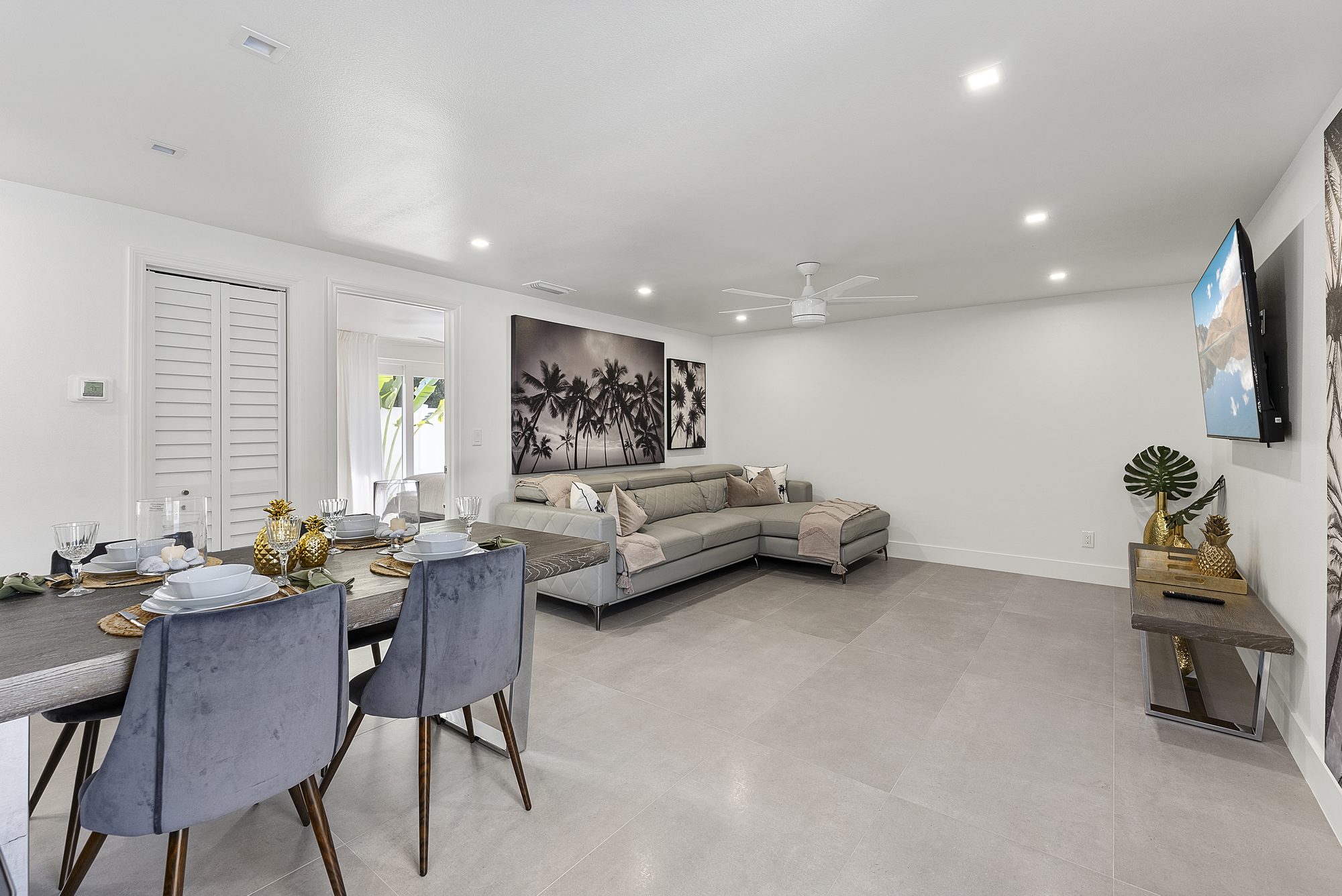
Film in the finished space, full stop. The house is the proof, and the client standing in it ties the testimony to the evidence. Their own living room also relaxes people — home turf.
No teleprompter, no script, no "could you say that again, warmer." The moment a homeowner starts performing, the footage dies — the whole value here is that it doesn't sound written, and civilians can't fake that. (Neither can most builders — its own article.) The interviewer sits beside the lens so the client talks to a person; the questions come out in the edit.
Then ten minutes of b-roll of them living there: hands on the new island, coffee getting made, the dog claiming the sunny spot on the new floor. Rooms and hands carry most of it. Faces appear only with written consent — and plenty of high-end clients will give you voice, hands, and rooms but not faces. Take that deal; a real voice over a lived-in room is still testimony.
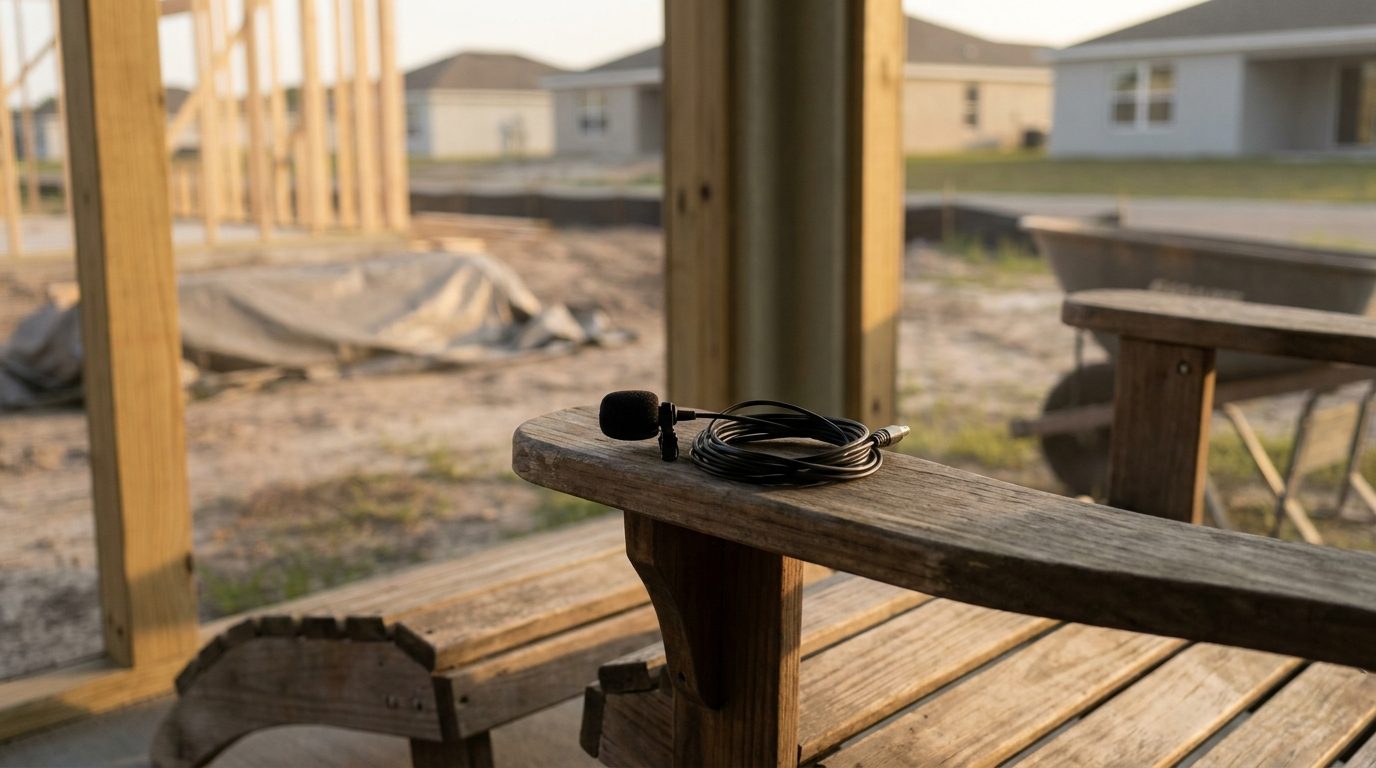
Spec box: the shoot-day checklist. Release signed before the mic goes on, not after. One lavalier per speaker — room echo is the difference between testimony and hostage video. Camera at eye level; interviewer beside the lens, never behind it. Window light on faces, not behind heads. Phones silenced, HVAC off. Twenty minutes of questions, ten of b-roll, out — overstaying your welcome shows up on camera.
The paperwork, in plain English
Get a release in writing every time, even from clients who'd wave it off. One page covers it: what was recorded, where it can run (website, social, proposals, ads — list them), for how long, whether faces and first names appear, plus a line that no street address or security details get shown. They keep a signed copy.
Include the right to revoke going forward. If a client calls in two years and wants it down, it comes down from everything you control; you can't unmail a brochure, but future use stops. In practice it costs you almost nothing, and premium clients notice. Florida is also an all-party consent state for recorded conversations — one more reason everyone signs before anything rolls. We're not your lawyers; have yours read the form once, then reuse it forever.
Where the footage earns its keep
The finished cut pulls weight in three places. Project pages: pair the client's ninety seconds with the befores and afters of their actual project — the natural companion to the three-act project story. Proposal follow-ups: the highest-leverage use and the least used. The prospect worried about living through construction gets, the day after the proposal, the video of a family describing exactly that. One matched story beats ten parked on a testimonials page nobody visits. Google Business Profile: where homeowners run their final background check. Thirty- to sixty-second cuts posted where your reviews live put a voice and a room next to the star count.
The room makes the claim; the client confirms it · Sarasota · Photo: Stellar Media Collective
Questions builders actually ask
What if the client says something wrong on camera — a number, a blown deadline, a sub's name? You're editing, not livestreaming; cut it. But don't scrub every wrinkle. A client who mentions the three-day cabinet delay and how you handled it beats one who claims perfection — cut errors and names, keep the grit.
Should I pay clients for testimonials? No. Payment turns testimony into endorsement, and a paid endorsement legally has to be disclosed as one — which reads on screen about how you'd expect. Dinner on you afterward is gratitude. A check beforehand is a script.
My clients are private. High-end people don't want their house online. Some don't, and the no costs you nothing but the asking. Offer the private-client version: voice, hands, and rooms — first names only, no faces, no exteriors. You lose a little warmth and keep all the proof. More often the surprise runs the other way: people who spent a year on a project usually want someone to hear about it.
Published July 6, 2026. Disclosure: this publication is owned by Stellar Media Collective, a Sarasota studio that films client testimonials for builders; the system above works the same whether you hire a crew or hand your sharpest PM a camera.