Remodel Marketing in a Condo-Tower Town
Downtown Sarasota is stacking hundreds of luxury units into the sky, and each one is a finish-out today and a renovation later. The remodel market is going vertical — and vertical density rewards a different kind of marketing than a subdivision does.
8 min read · July 9, 2026 · Florida Construction Media
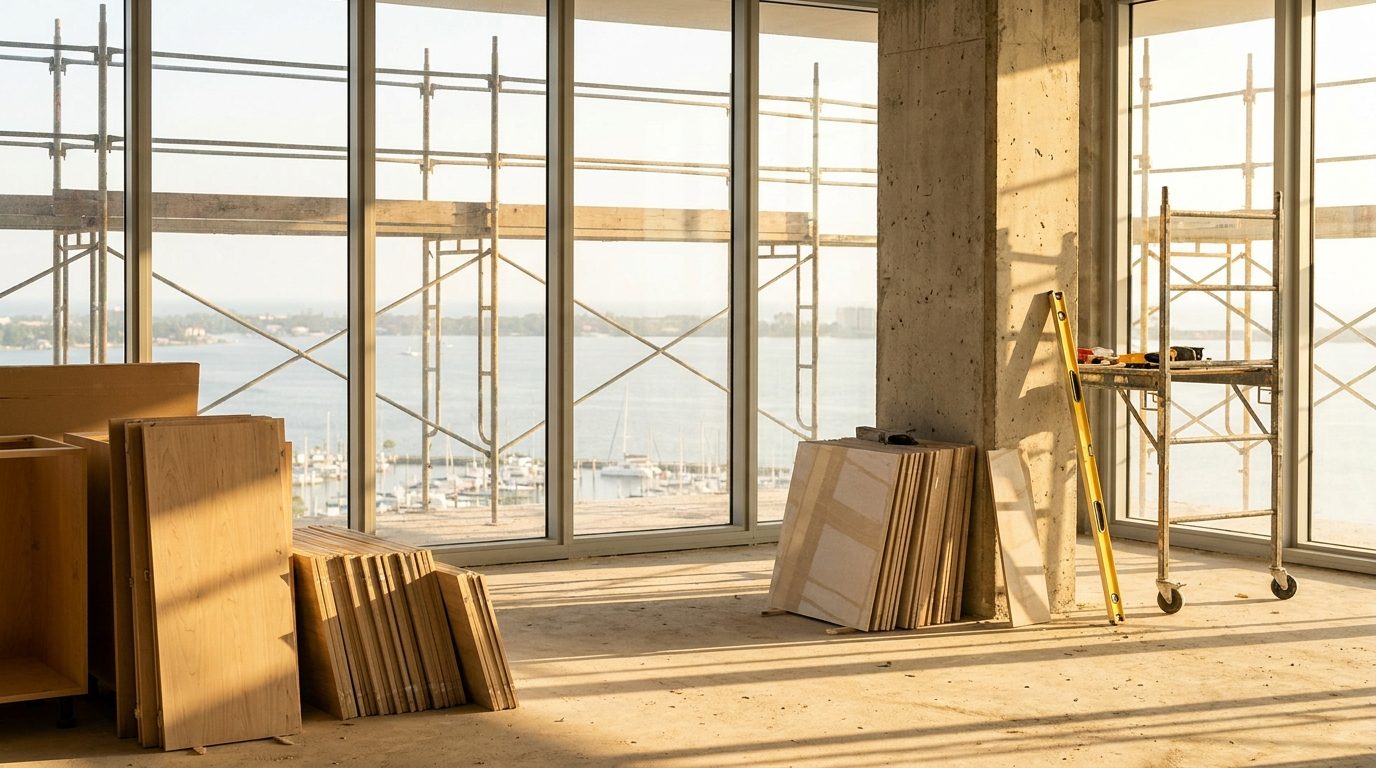
The story the region tells about downtown Sarasota is a real-estate story: cranes over the bayfront, branded towers, penthouses priced like small commercial buildings. Kolter Urban topped off the 20-story Ritz-Carlton Residences, Sarasota Bay in December 2025, 78 residences headed for delivery late this year, units running roughly 3,550 to 4,200 square feet with penthouses stretching to 5,800. It is not alone. A downtown-core tally counts nine major projects under construction or in review, together carrying 717 residential units — with more than a thousand additional units across the Quay, Golden Gate Point, and the Rosemary District. The Edge, ten stories and 27 condos from around $3 million, delivers mid-year; the High Line brings 142 units by late 2026; the Waldorf Astoria Residences on Main is expected to break ground before year's end.
For a trade contractor, that's the wrong story to read. The real-estate press is counting sales. You should be counting a remodel market being built vertically, one floor at a time — because every one of those units is a finish-out now and a renovation later, and they are stacking at single addresses instead of spreading across a county.
The tower is a subdivision turned on its end
Two facts about luxury towers change the marketing math, and neither shows up in a sales brochure.
The first is that many of these units arrive unfinished on purpose. The luxury tier sells "designer-ready" or decorator-ready residences — the developer delivers the shell, the mechanicals, and a finish allowance, and the buyer builds out the interior to taste. The Ritz-Carlton line and most of its peers work this way. That means a tower doesn't produce renovation demand in twenty years; it produces build-out demand at delivery, unit after unit, for the flooring, cabinetry, millwork, closets, lighting, and audio-visual work that turns a concrete floor and a bay view into a home. A 78-unit building is 78 interior jobs waiting on a certificate of occupancy.
The second fact is the one that compounds. A tower is a subdivision turned on its end. In Lakewood Ranch we described demand aging by village — whole streets of the same floor plan crossing the twenty-year mark together. A condo tower is that pattern concentrated to a single lobby. The units share a vintage, share a handful of layouts, share an elevator, and share a homeowners' association. When one owner on the fourteenth floor opens up a kitchen, the owner directly above has the identical kitchen, installed the same year, and rides past the construction notice on the elevator wall every morning. Horizontal density gives you the driveway consultation. Vertical density gives you the elevator consultation — and it runs on a shorter loop, because everyone shares the same front door.
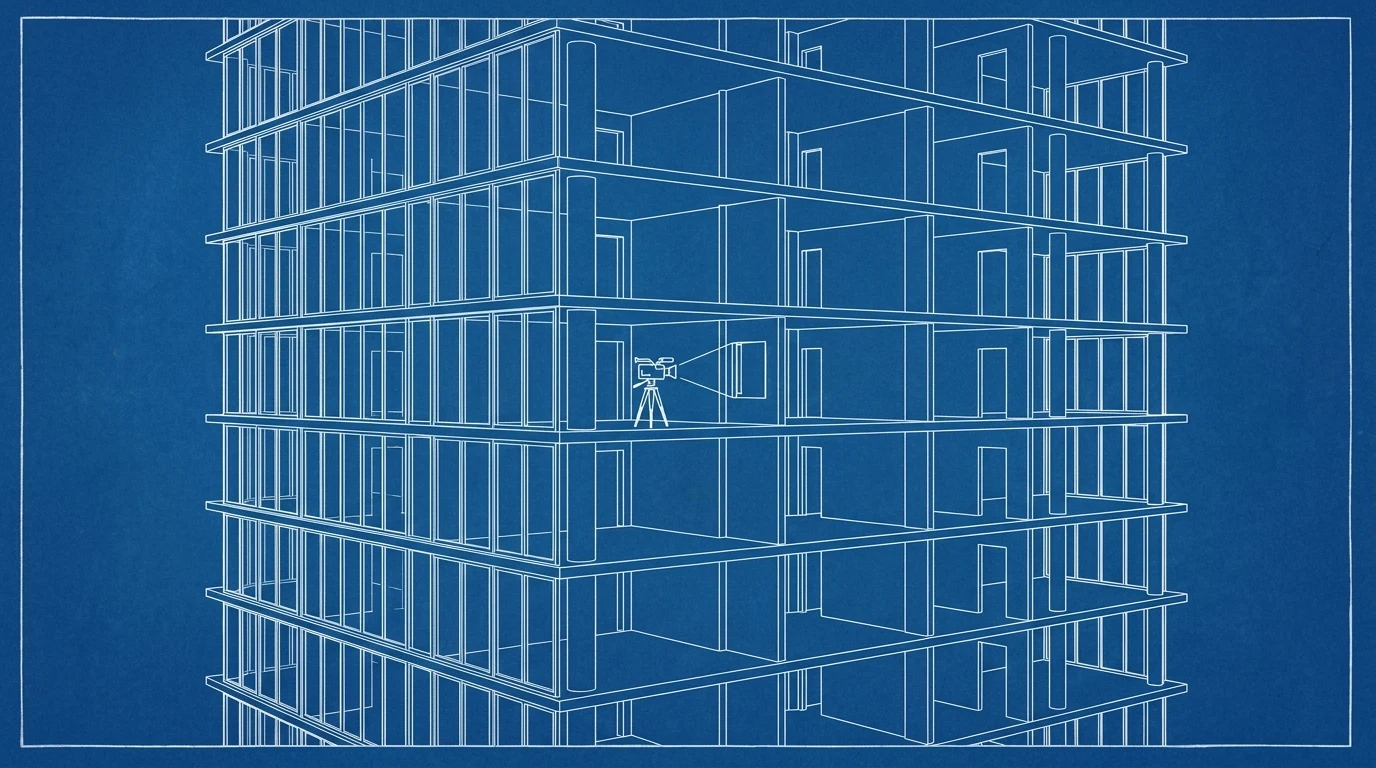
Vertical density: one address, dozens of same-vintage units · Illustration: Florida Construction Media
Market to the building, not the city
"Condo renovation Sarasota" is a citywide auction against every general remodeler in the metro. It also misreads how a tower buyer thinks. These owners do not identify with a zip code; they identify with a building. Ask where they live and the answer is the tower's name, not the neighborhood. Marketing that respects that outperforms marketing that doesn't.
The move is to build around the building. A short film of a finished interior inside a named downtown tower, a plain-English page on what a designer-ready unit in that class actually takes to complete, a walkthrough of how kitchens in a specific building's layout get reconfigured — each of those competes with almost nobody and proves the one thing a citywide claim can't: that you have worked at that address, cleared that loading dock, and satisfied that board. To an owner three floors up, that isn't a marketing message. It's a reference check that answered itself before they called.
This is also where the buyer profile matters. Downtown tower owners skew second-home, out-of-state, and design-forward — people who will not be on site during the work and who are handing a key to a stranger in a building where the neighbors will notice everything. Their fear isn't your price. It's chaos: a job that runs long, a crew that scuffs the shared corridor, a complaint to the board with their name on it. The contractor who markets like the buyer is the hero of the project and you are the guide who removes that chaos will beat the contractor who markets a portfolio of pretty countertops. Show the process, not just the product.
The board is a gate, and gate fluency sells
The hardest part of tower work isn't the carpentry. It's the building's rules, and they are unforgiving. Renovating on the fourteenth floor means a certificate of insurance naming the association, approved work hours, service-elevator reservations, protection of the lobby and corridors, debris hauled down not out, noise windows the neighbors can enforce, and a board that can halt a job that ignores any of it. To an owner, that list is the scariest line item in the project — scarier than the budget, because they can't price it.
That fear is your opening. The contractor who can sketch the approval path in the first conversation — what the board needs to see, how COIs and elevator scheduling work, roughly how long sign-off takes in a building like theirs — has removed the biggest anxiety in the deal before quoting a dollar. Put that knowledge in plain English, dated, with a note to confirm each building's current rules, and you become the answer to a question every competitor is waiting to be asked in person. Concierge desks and property managers keep short mental lists of the contractors who don't create problems in their building; gate fluency, demonstrated in public, is how you get onto that list.
Spec box: the building starter kit. Pick the two or three downtown towers where you've done your best work, or want to. For each, build four assets: a filmed interior project story shot inside the building (with the owner's and the association's written consent); a "what a unit here actually takes" explainer covering scope, timeline, and the designer-ready finish list; a plain-English board-and-logistics walkthrough — COIs, elevator reservations, work hours, corridor protection — dated and pointed at the association's own documents; and a monthly Google Business Profile post naming the building and downtown Sarasota. Twelve assets, one quarter, no ad spend. Then repeat with the next tower.
Access is the asset, and it's earned once
Everything above depends on a single hard rule: you never film inside a building without the owner's written consent and the association's awareness. Clear the shoot with your client, notify management where it's required, keep the lens off other units, other residents, and the corridor numbers, and read the building's media and signage rules before you stake anything in a common area. A tower's goodwill is the asset all of this is built on, and a single tone-deaf shoot in a shared hallway can spend a year of it — the board talks, and in a vertical community the board talks fast.
Earn that access once and it pays on a loop. The finished-unit film anchors your Google Business Profile, because for local work the map, not your website, is the front door. It gives the property manager something to hand the next owner who mentions a renovation. And it starts the patience math running: most of the building is not renovating this quarter — that's the 97 percent problem, and it's exactly why the engine works. The few owners who are ready call now. The rest file you away as the company that did the unit on fourteen, and when their turn comes — a resale, a new buyer, a kitchen that finally reads dated against the bay view — there is one name already circulating in the building.
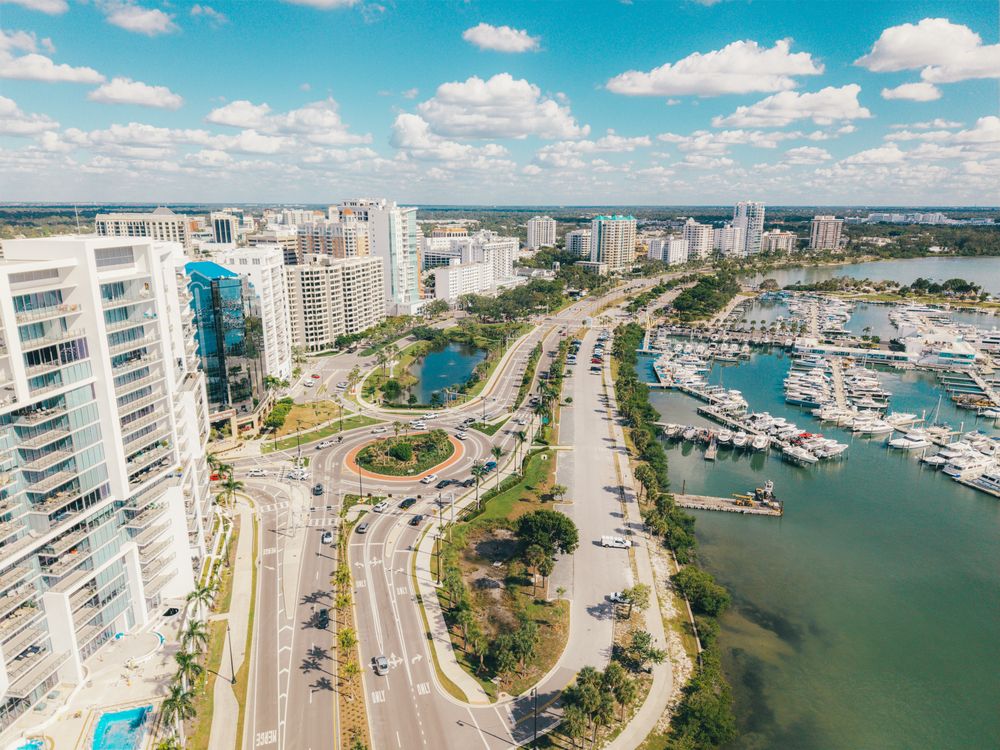
Downtown Sarasota · Photo: Stellar Media Collective
The next tower is already topping off
None of this is unique to one address. It's what a vertical market looks like as it matures, and downtown Sarasota is only the leading edge — the same multifamily wave is rolling across the Gulf Coast, stacking future finish-out and renovation demand at addresses that don't exist yet. Every top-off you read about this year is a build-out season now and a remodel market later, delivered at one door instead of scattered across a subdivision. The contractors who own building-level attention in the first towers will have written the playbook by the time the next crane comes down. The ones who start now inherit it in time for the Waldorf.
Questions builders actually ask
Isn't downtown condo work sewn up by the big commercial finish firms? The developer-side build-outs and amenity spaces, often. The owner-side interior work — the designer-ready finish-outs at delivery and the renovations that follow resales — is wide open, and it's a relationship business run one unit and one board at a time. Nobody owns building-level remodel attention in these towers yet.
I do single-family remodels. Is tower work even the same business? The craft carries; the logistics don't. Budget for the access tax — COIs, elevator windows, restricted work hours, corridor protection, debris handling — and market that competence as loudly as the finished kitchen, because it's what a board and a second-home owner are actually buying. Treat the building's rules as a skill you sell, not a nuisance you absorb.
How do I market a building I haven't worked in yet? Start with the process, not a project you don't have. A dated, plain-English walkthrough of how renovations work in that class of tower — approvals, logistics, timeline — demonstrates fluency without claiming a job you haven't done. Land one unit, film it with full consent, and the address does the rest of the talking.
Published July 9, 2026. Unit counts, story heights, price points, and delivery dates are the linked sources' own — developer and brokerage figures current at publication — and will shift as downtown Sarasota keeps building; association and building rules vary by tower and change, so confirm each building's current requirements before promising an owner anything. Florida Construction Media is published by Stellar Media Collective, Sarasota, which markets the kitchen-and-bath and remodel trades described here across Sarasota and the Gulf Coast; the guidance stands regardless of who you hire.