Dock & Seawall Builders: Content for the Waterline Market
The most expensive work in the county happens where nobody can see it. Marine contractors who film the waterline own a market their competitors can't even photograph.
7 min read · July 6, 2026 · Florida Construction Media
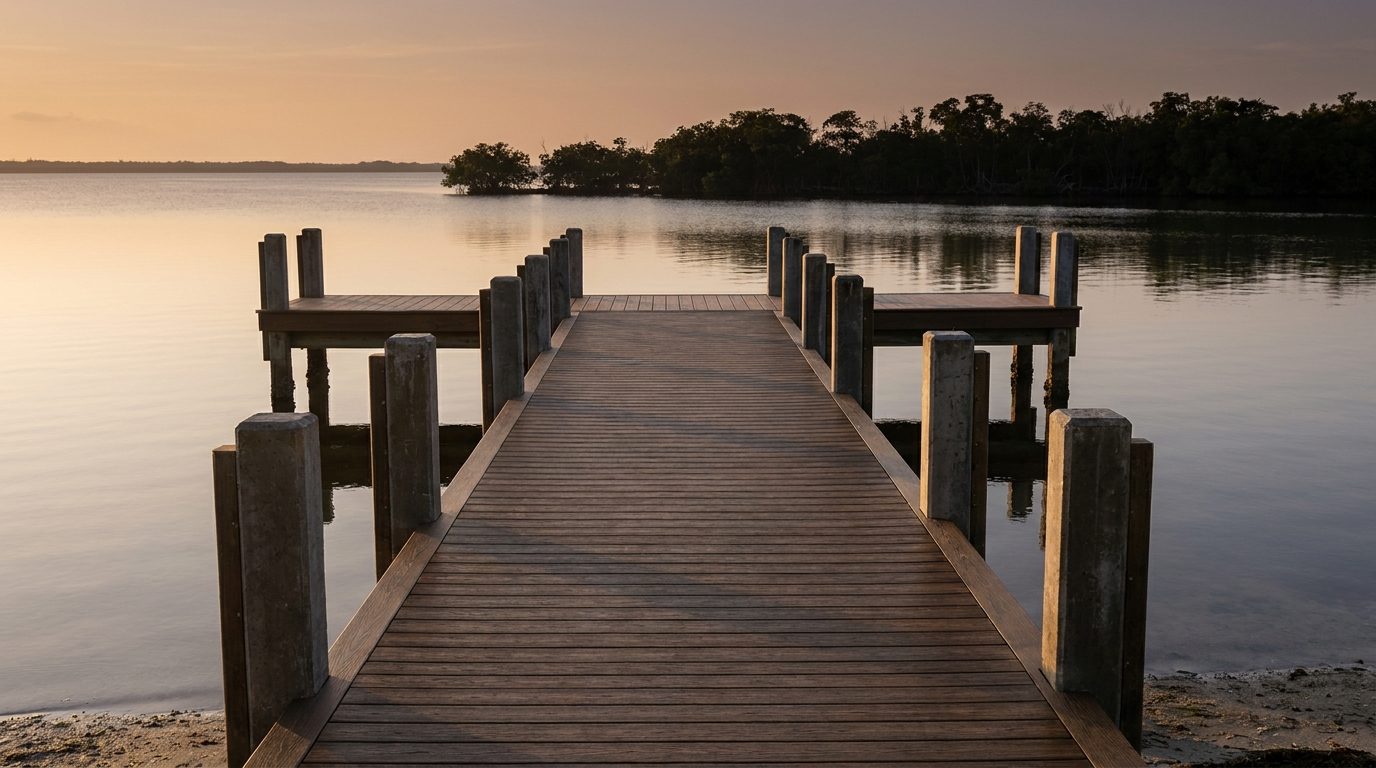
The most expensive linear feet of construction in most Florida coastal counties sit where nobody driving by will ever see them. A seawall replacement on a canal lot can run well into six figures. A dock with a boat lift, composite decking, and marine-grade everything is a serious capital project. And from the street, all of it is hidden behind a house that costs more than both combined.
That invisibility shapes everything about how dock and seawall builders should think about content. The waterline market is small, wealthy, tightly networked, and almost impossible to reach with the marketing playbook that works for roofers and pool builders.
A market you can only see by boat
Start with who the buyer is. Waterfront owners are, on average, the wealthiest property owners in their county. They did not get that way by hiring the first contractor who answered the phone, and they talk to each other constantly — at the dock, at the club, in the canal-front group chat that every waterfront neighborhood seems to have.
Now consider what they can actually see of your work. Nothing, unless they own a boat or you own a drone. A finished seawall is visible from the water side only. The tiebacks and deadmen that make it worth the money are buried under someone's lawn. Your best project might sit three streets from your next prospect and be completely invisible to them.
This is why aerial video is not a nice-to-have for marine contractors — it is the native language of the category. The drone sees what the street cannot: the full run of a new wall, the geometry of a dock against the lot, the color difference between fresh cap and tired concrete next door. Our piece on drone and FPV work on Florida job sites covers the operational side; the short version for marine work is that flying over water deserves extra care. Plan launch and recovery points on stable ground, keep respectful distance from vessels and swimmers, watch wind that behaves differently over open water than over land, and accept that a ditched drone over a canal is simply gone. Budget and fly accordingly.
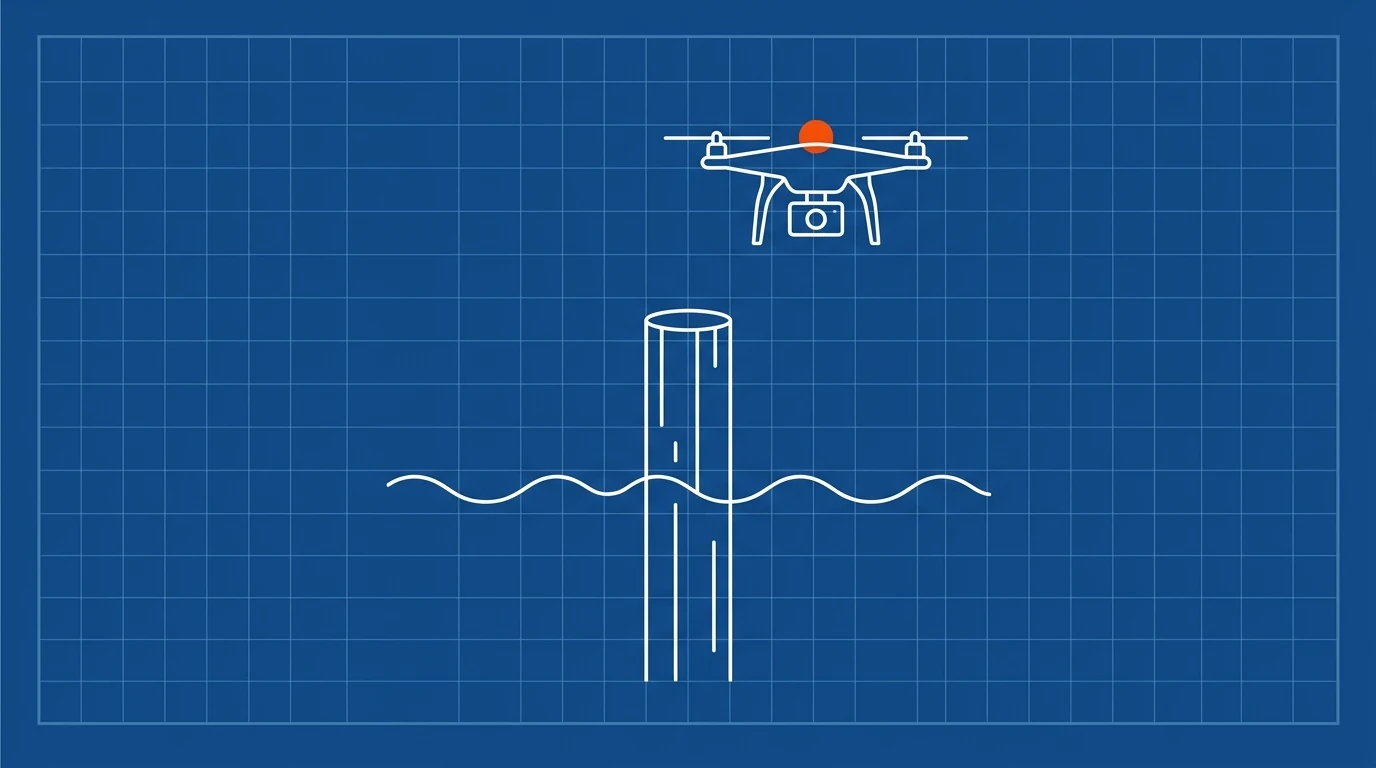
The portfolio only a drone can see · Illustration: Florida Construction Media
The trust stakes are different here
A bad kitchen remodel is annoying. A failed seawall is a six-figure catastrophe that can take part of the yard with it — soil loss, sinkholes along the cap, a pool deck that starts to lean. Waterfront owners know this, or their insurance carrier has made sure they learned it.
So they do not vet vibes. They vet engineering. They ask who designed the wall, what the panels are made of, how deep the pilings go, whether the tiebacks are new or reused, and what happens at the joints. A contractor whose content answers those questions before the first phone call is playing a different game than one whose Instagram is sunset photos and a logo.
Pillar one: explain the engineering, plainly
The single most valuable content lane for a marine contractor is the one almost nobody occupies: teaching how the work actually holds back the water.
Stand at a wall under construction and explain, in plain language, why the panel matters, what the tieback does, and why the cap is more than a finish detail. Show a failed wall — with the owner's permission — and walk through what went wrong: the corroded tie rod, the scoured toe. Explain why a wall that looks fine from the lawn can be quietly failing below the waterline.
None of this gives away trade secrets. Every competent marine contractor knows it. But the one who says it on camera becomes the one homeowners quote back to the others.
Pillar two: storm honesty
The temptation after every hurricane season is to sell seawalls as protection. Resist it, at least in the absolute form.
A well-built seawall does its job: it holds the land, resists erosion, and takes wake and surge abuse that would eat an unprotected bank in a season. What it does not do is keep storm surge out of a yard. Water that comes over the top comes over the top, and a contractor who implies otherwise is writing a future lawsuit and a present credibility problem.
The honest version is stronger content anyway. Film a wall that took a named storm and held. Show what the wall did — and say clearly what no wall can do. Buyers in this market have been through storms. They can smell overpromise, and the contractor who levels with them about limits is the one they believe about everything else.
Pillar three: make permitting your material
Waterfront construction in Florida is slow to permit, and every marine contractor knows the frustrated call that starts with a homeowner who thought this would take three weeks.
The reality, described generally: work at and below the waterline can involve more than one agency's review. Submerged lands are frequently not the homeowner's property in the way the lawn is, and state, regional, federal, and local authorities can each have a say depending on the location and scope of the work. Seawall standards and setbacks vary by jurisdiction. None of this is a scandal — it is the shape of building at the edge of public water — but it surprises buyers every single time.
That surprise is your content opportunity. A contractor who explains the permitting process on camera — what gets reviewed, roughly how long each stage tends to run, what the homeowner can do to avoid restarting the clock — pre-frames the timeline before the contract is signed. Impatient buyers filter themselves out. Serious ones arrive already educated. And once they are in the queue, the same material becomes wait-management: the approach we laid out in warm content for the waitlisted customer applies almost verbatim to a homeowner waiting on agency review.
Shoot by the tide chart
Here is a detail that separates contractors who film their work from production crews who happen to be near water: the tide chart is a shot list.
Low tide reveals the work. Pilings show their full length. The toe of the wall, the scour line, the barnacle band that tells the story of the old structure — all of it is visible for a couple of hours and then gone. A crew that shows up at high tide gets pretty water and no evidence. A crew that plans around the tide gets the proof.
Spec box: The tide-planned shoot checklist. Pull the tide chart for the site before booking the crew, and schedule the reveal shots — pilings, wall toe, scour line — inside the low-tide window. Confirm golden hour against the tide; if they align, that is the day. Stage the drone launch on solid ground with a dry abort path. Shoot the water side by drone or boat, the land side on foot, same visit. Grab the neighboring waterline in the wides for later before-and-after context. Rinse everything that traveled — salt air is a slow equipment tax.
This is also the argument for the before, during, and after arc as the backbone of marine content. One drone flight before demolition, a few during pile driving and panel setting, one at completion — same altitude, same path. Cut together, it is the most persuasive ninety seconds a marine contractor can own, because it shows the buried work that the finished photo hides.
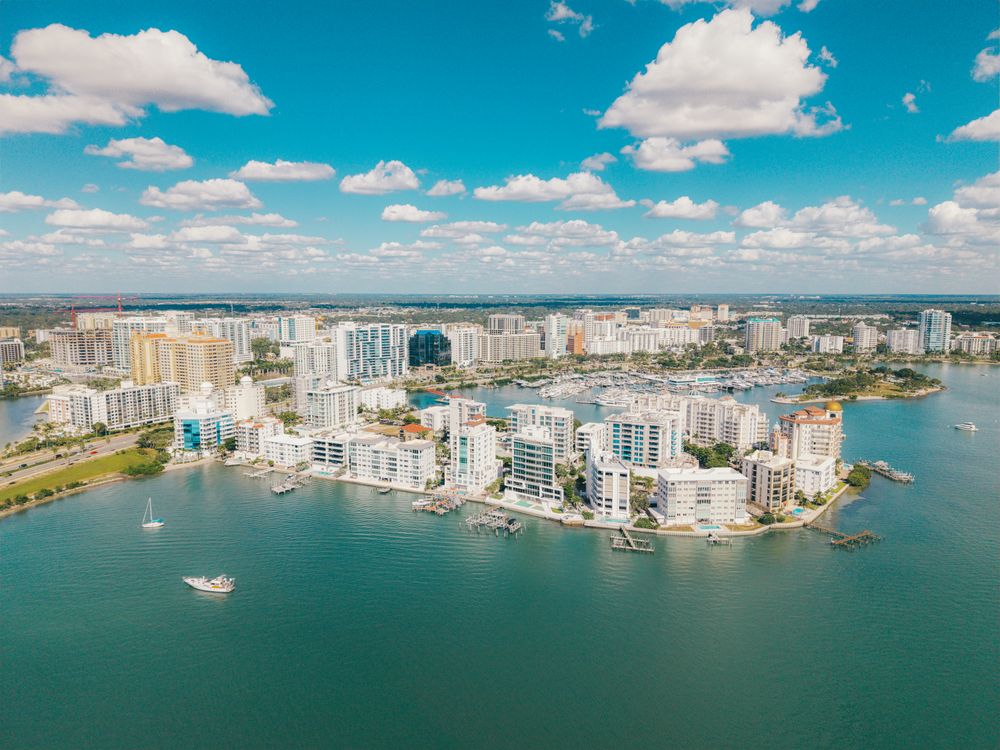
The waterline market · Sarasota Bay · Photo: Stellar Media Collective
Questions builders actually ask
Do I really need a drone for this, or is it a gimmick? For most trades a drone is a style choice. For marine work it is close to mandatory, because the finished product faces the water and the water is where nobody stands. It is also how you reach the neighbor effect: on a canal, every homeowner sees every other dock daily. One well-documented dock, published where the canal can find it, sells the canal. The referral is already happening over the fence — the video just gives it something to point at.
How technical should the engineering content get? More technical than feels comfortable, in simpler words than feels natural. Name the components — panel, tieback, cap, king pile — and explain each in one sentence a smart homeowner can repeat. If your videographer cannot follow the explanation, neither can the buyer. Rerecord it.
Does this audience overlap with high-end island and coastal builders? Heavily. The owner replacing a seawall on a barrier island is often the same buyer commissioning raised custom construction, and the logistics fluency that market rewards — covered in our piece on building on the Keys — carries over. If your content demonstrates that you understand barge access, tide windows, and agency timelines, you are speaking the dialect of the wealthiest construction market in the state.
The waterline market will never be won by volume advertising. It is won by being the contractor whose work the canal has already seen, whose explanations the homeowner has already heard, and whose honesty about storms and timelines has already been tested. Film accordingly.
Published July 6, 2026. Florida Construction Media is produced by Stellar Media Collective, a video production company in Sarasota that works with builders and premium trades across Florida.