The 2026 Florida Building Code Starts December 31: What Gulf Coast Builders Should Explain to Clients Now
The 9th Edition takes effect on the last day of the year, and the date your permit application goes in decides which code your job is built to. The reroof rules a homeowner will ask about, the filing deadline that matters more than any one section, and how to say all of it at the estimate table.
8 min read · October 27, 2026 · Florida Construction Media
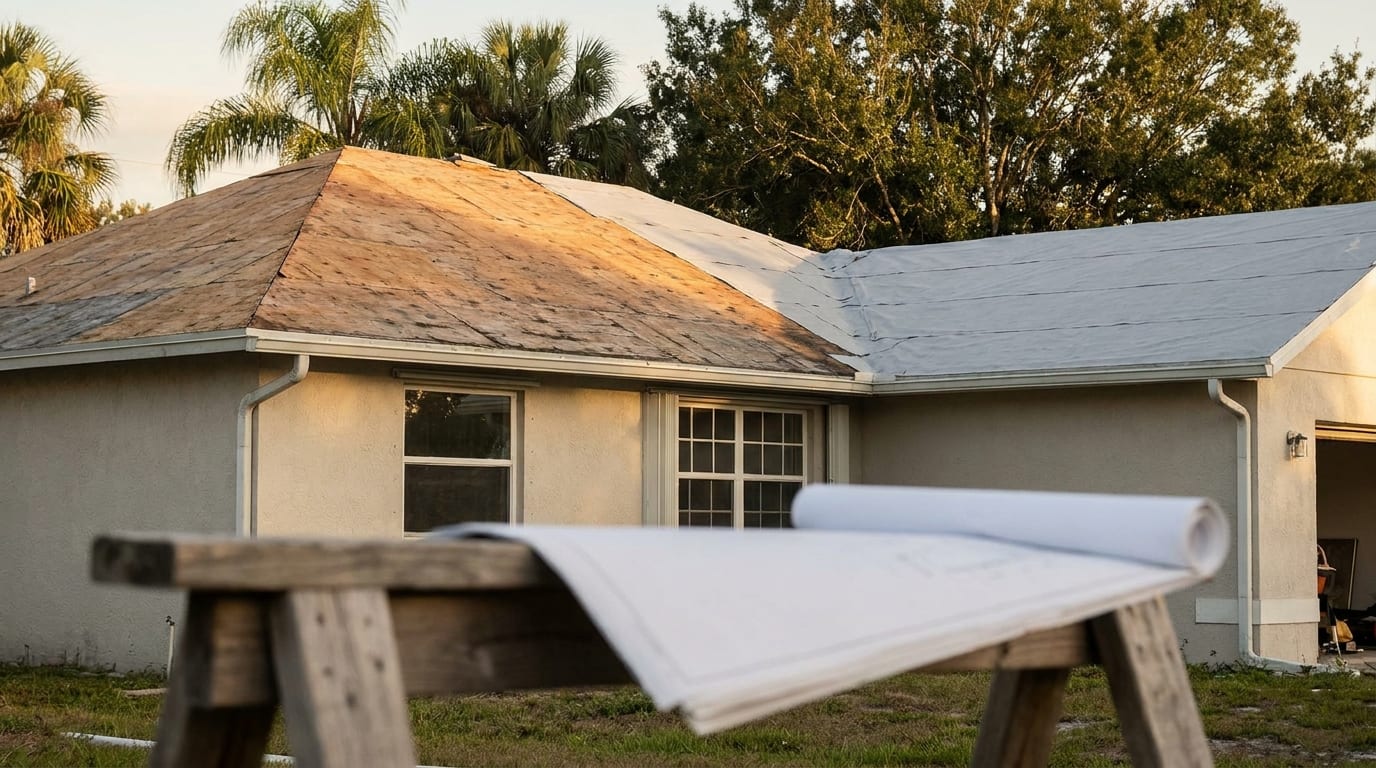
Every three years Florida swaps its building code, and every three years the same thing happens at the estimate table: a homeowner has read half a headline, a roofer down the street has said something confident, and the builder who can explain the change plainly, with the dates right, looks like the adult in the room. The next swap is nine weeks away.
The ICC's National Training Academy confirmed in September that Florida moves to the 9th Edition (2026) Florida Building Code effective December 31, 2026. The new edition is built on the 2024 International Codes, with Florida's own amendments on top. Most of what changed is the kind of thing only a plans examiner loves. A few pieces land directly in a client conversation, and one date matters more than any section number.
The date that decides which code you build to
The code that governs a job is set by when the permit application goes in, not when the roof goes on. Miami-Dade's permitting notice states the rule plainly: applications and plans submitted on or after December 31 must comply with the new edition, and anything that arrives through its online portal after 4 PM on December 30 is treated the same way. That cutoff is Miami-Dade's. Sarasota, Manatee, Charlotte and Hillsborough will each run their own counter, so call yours before you plan around a time of day.
Three consequences follow for a Gulf Coast builder:
- Jobs in design right now are code decisions. A remodel or custom home you expect to submit in January is a 9th Edition job. If the drawings are being done to the 8th Edition, someone is going to redraw them.
- Stock plans need updating. Miami-Dade tells applicants who use its "cookie cutter" and "master model" programs to start updating models now. A production or semi-custom builder with a plan library has the same problem in every county, whether or not the county says so out loud.
- A lapsed application is not a parking spot. In the same notice, Miami-Dade will extend expired applications filed before December 30 only if the request is in writing, shows the job was pursued in good faith, and arrives within 180 days of the expiration. Otherwise the applicant starts over under the 2026 code.
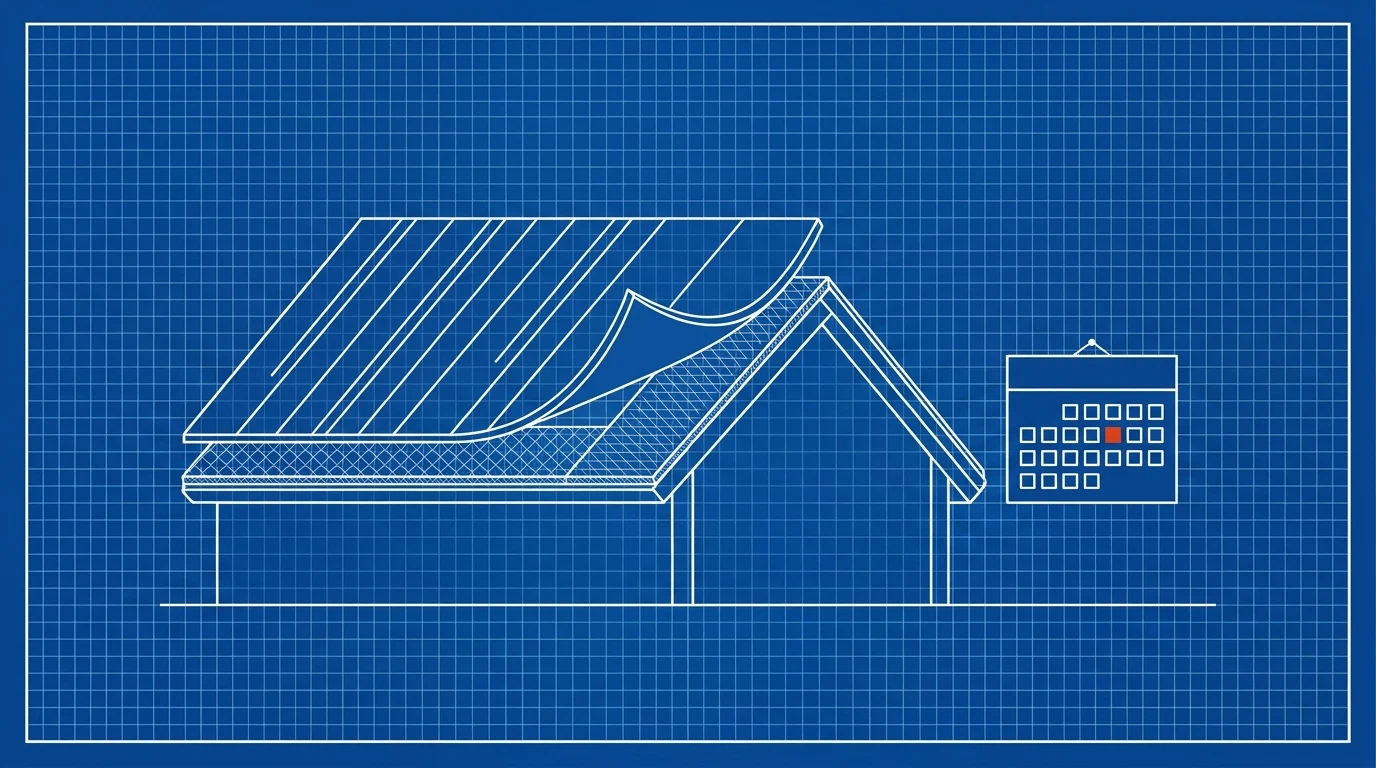
Two roof layers, one reusable, and one date on the calendar that decides the rules · Illustration: Florida Construction Media
The reroof changes a homeowner will ask about
Roofing is where the 9th Edition reaches a homeowner fastest, because reroofs are the most common permit on the Gulf Coast and every one of them starts with the question "do you have to tear it all off." The Florida Roofing and Sheet Metal Contractors Association's summary of Section 706.3 in the existing-building code lays out the changes that matter:
- Reusing insulation under a second roof. Where two roof coverings exist and the upper one is removed, a new exception lets the original high R-value insulation, or added lightweight insulating concrete, stay in place if what remains is sound enough for the new roof. FRSA frames it as protecting the owner's earlier investment and cutting labor and landfill. For a commercial or low-slope residential client, that can be real money they already spent.
- Leaving an adhered membrane in place. An existing vapor barrier or self-adhering membrane bonded to the deck may stay, provided a new membrane goes over it under the roofing chapters.
- The tear-off triggers did not go away. Certain tile and shake roofs, two or more existing coverings, unscraped blisters and roofs that cannot meet the securement requirement still mean a full tear-off. The high-velocity hurricane zone keeps its own rules.
What did not change is the conversation most Gulf Coast homeowners actually start with: the "25 percent rule." Since the 2022 special session, Florida Statute 553.844 has said that when a roof was built, repaired or replaced to the 2007 Florida Building Code or later, only the portion being repaired has to meet the current code, even when the work covers 25 percent or more of the roof, and a local government cannot amend that by ordinance. Earlier drafts of the 9th Edition floated dropping the older rule altogether (Permit Place's summary lists it among the notable proposals), but a proposal is not adopted code. Tell clients what the statute says, tell them the age of their roof decides which side of it they are on, and send them to their permit history rather than your memory.
What to say at the estimate table: "Your permit is reviewed under whatever code is in effect the day we submit it. If we submit before December 31, it's the current code; after, it's the new one. On your roof, the question isn't the new code so much as when your current roof was permitted. Let's pull that record before we price the tear-off."
The residential changes worth a line in your proposal
The Florida Building Commission's own analysis of changes to the Residential code runs section by section. Most entries are definitions and housekeeping. A handful are worth knowing before a client asks:
- Flood terms are now defined in the residential code itself. "Substantial damage" and "substantial improvement" get definitions matching the Florida Building Code, Building, and the floodplain construction section is clarified for houses that sit partly in a flood hazard area or across more than one zone. On a coastal remodel, that is the same threshold we covered in FEMA's 50 percent rule, now spelled out in the book your plans examiner opens first.
- Garage door wind loads were recalculated. The table for garage door design pressures was revised to track ASCE 7-22. If you spec doors off the old table from memory, check the new one.
- EV chargers and car lifts have their own sections. EV charging, where provided, must follow the National Electrical Code and carry the listed standards, and automotive lifts must be listed and cannot go inside the habitable space. Both show up in exactly the high-end garages Gulf Coast custom builders are drawing.
- Sleeping lofts are recognized, with an emergency escape opening required in the room a loft opens onto, and pivoted doors now count as egress doors.
- Rooms over the garage. The dwelling-garage separation table now says plainly that closets and bathrooms connected to a room above a garage need the same separation.
None of these is a headline. Each is the kind of detail that, said at the right moment, tells a client you read the book and the other bidder did not.
Turning a code change into proof
A code change is one of the few pieces of news a homeowner cannot easily check, which is why it is so useful and so easy to abuse. The roofer who says "the new code means you need a whole new roof" will close some jobs in January. The builder who explains what actually changed, names the date and points to the permit record earns the trust that closes the next three.
That is a short-video brief that writes itself: ninety seconds from the owner or the super on a real roof, saying what changed on December 31, what did not, and what the client should ask any contractor. It is the same teach-first approach we laid out for roofers competing with storm chasers, applied to a date on the calendar instead of a storm. Film it in November so it is live before the January questions arrive, and pin it where a homeowner lands after searching the code. Stellar's resources library has the planning guides for that kind of piece.
Two things to keep out of it: never tell a client which code their job falls under until the application is in, and never describe a proposal as a rule. Building officials watch contractor content more than contractors think.
A renovation in progress, the kind of job whose submission date now decides its code · S Orange Ave, Sarasota · Photo: Stellar Media Collective
Questions builders actually ask
If I pull the permit in December and start in February, which code applies? In general, the code in effect when the application was submitted, which is why Miami-Dade ties the switch to submission, not construction. Confirm with your own building department, because counters differ on cutoffs and on how they treat revisions to a pending application.
Does the new code kill the 25 percent roof rule? Not on its own. For roofs built or replaced to the 2007 code or later, state law already limits the requirement to the repaired portion. Roofs older than that are still the conversation, and the permit history decides it.
Do I need new product approvals? Manufacturers do the approval work, but your submittals must cite approvals valid under the 2026 edition once it applies. Ask your suppliers now, especially for windows, doors and roofing, rather than finding out at plan review.
Should I rush applications to beat the date? Only for jobs that are genuinely ready. A rushed, incomplete application that lapses can land under the new code anyway, as Miami-Dade's extension rules show, and a redesign costs more than the code difference usually does.
Where do I read the actual text? The Florida Building Commission posts the code and its analysis documents at floridabuilding.org. The analysis tables are the fastest way to see what changed in your trade.
Code dates, roofing provisions and residential changes checked against the Florida Building Commission, Miami-Dade County, FRSA, ICC and the Florida Statutes on October 27, 2026. This is a general overview, not legal or code advice; your local building official decides how the code applies to your job. Disclosure: Florida Construction Media is published by Stellar Media Collective, a Sarasota studio that builds video and content systems for builders and trades.