Video Marketing for Roofers in a Post-Storm Market: Authority That Beats the Door-Knockers
After every landfall, Florida homeowners are told to distrust the next roofer who knocks. The local roofer's whole marketing job is to be visibly, verifiably not that guy — and video is how you prove it before the wind does.
8 min read · July 6, 2026 · Florida Construction Media
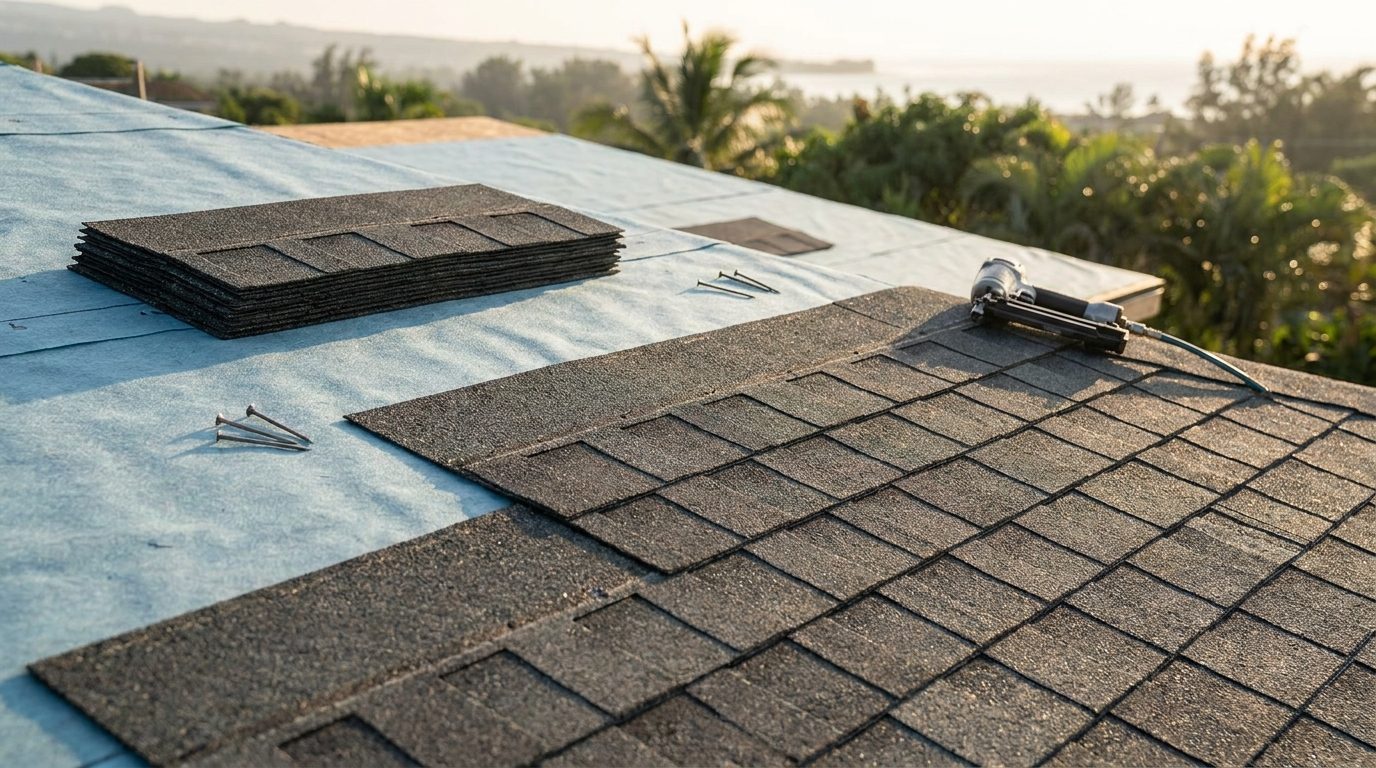
Every named storm that crosses the Florida coast imports a second workforce. Trucks with fresh magnetic signs, crews in extended-stay motels, sales reps walking neighborhoods with iPads and a pitch about free roofs. Some are legitimate. Enough aren't that the state runs the same warning campaign after every landfall: verify the license, don't sign an assignment on the doorstep, be suspicious of anyone who found you before you went looking.
That campaign protects homeowners, but it lands on you too. A Sarasota roofer with twenty years in the county gets read through the same squint as the crew that arrived Tuesday from three states away, because from the driveway a truck is a truck.
So the local roofer's marketing problem is not really competition. It's classification. In the week you most need the phone to ring, every homeowner in your service area has been coached to treat roofers as guilty until verified. The job of your marketing — and video is the only medium that does this at scale — is to make the verification easy, obvious, and done before they ever call.
A market that resets every time the wind blows
Most trades build reputation in a straight line. Roofing in Florida doesn't, because the market resets after every major storm. Demand spikes, supply floods in from out of state, and the homeowner's frame of reference collapses to whoever is standing on the porch. Whatever brand equity you built locally has to survive a week in which strangers wearing your trade's uniform work your streets, and some of them will burn homeowners in ways that make the evening news.
You can't out-knock the door-knockers. They run more canvassers than you employ, have no local reputation to protect, and are gone before the callbacks start. What they cannot do is show a history. A storm chaser can print a landing page in an afternoon; he cannot produce three years of videos shot on local roofs, with the same faces, the same trucks, and a license number that resolves to an address twenty minutes away. That history is the asset. The rest of this playbook is about building it deliberately instead of hoping it accumulates.
Authority is built in the dry season · Illustration: Florida Construction Media
Teach the roof, earn the call
The homeowner who calls you after a storm decided to trust you months earlier, usually without noticing. That decision gets made by useful content consumed in calm weather — the roofer's content calendar runs opposite to the roofer's revenue calendar. Homeowners genuinely don't know how roofs work, and the internet mostly lies to them about it, so the material writes itself. Four formats carry most of the load:
Roof-reading explainers. Stand in a driveway and read a roof out loud: curling shingles versus lifted tabs, what granule loss in the gutters is telling you, why a ceiling stain rarely sits under the actual leak. Two minutes, no jargon, no scare tactics. Homeowners save these.
What a real inspection covers, on camera. Walk the whole thing — fasteners, flashing, penetrations, attic side, photos of everything, a written report at the end. The point is to set the standard so the storm chaser's ten-minute "free inspection" looks like what it is, without your saying a negative word about anyone.
The 60-second layer lesson. Underlayment and fastening are where Florida roofs live or die, and almost no homeowner can name either. Peel-and-stick versus felt, ring-shank nailing patterns, why the deck attachment matters more than the shingle brand. One component per video, shot on a real job with the layer actually visible.
The honest materials talk. Tile versus shingle versus metal for Gulf Coast conditions, including the parts that cost you jobs: the real maintenance profile of tile, what metal actually costs installed, where architectural shingle is simply the right answer. Honesty about trade-offs is rare enough in this trade to be a positioning strategy by itself.
Spec box: The year-round roofer shot list — (1) driveway roof-reading explainer, one failure mode per video; (2) full inspection walkthrough, start to written report; (3) 60-second component lessons: underlayment, fastening, flashing, ridge vents, deck attachment; (4) materials honesty talk: tile vs. shingle vs. metal for the Gulf, trade-offs included; (5) license-verification walkthrough using your own number on the state lookup; (6) shop-and-crew piece: the address, the trucks, the people, years in the county; (7) insurance-process explainer: who writes the scope, what a supplement is, why deductible "help" is a red flag; (8) completed-roof drone orbit for every job, filed by neighborhood and system; (9) post-storm conduct piece, filmed in May, saying exactly how your company behaves after a storm.
Put the license in the frame
After a storm, homeowners are told to verify licenses. Almost no roofer makes that easy, which means the first one who does inherits the trust the state's warnings created. Put your license number on screen and read it out loud. Then film the verification itself: pull up the state lookup, type in your own number, show the result. Thirty seconds of screen recording does more classification work than any slogan.
Around the license, stack what a door-knocker can't show. The physical shop with the address visible. Crew members introduced by name and years with the company — faces on camera only with each person's consent, the same standard you'd apply to a client. The trucks that were on these streets last year and will be next year. None of this is clever, and it doesn't need to be. It needs to be verifiable, because verification is the entire post-storm buying process.
Storm-season conduct is part of the brand
What you film after landfall matters as much as what you filmed before it, and the standards are strict enough to deserve their own article — the ethical playbook for filming storm restoration work is the reference, and this publication treats it as binding. The short version: written consent before a camera goes onto any client's property, no filming identifiable losses, no cameras at first contact, no aerial passes over wrecked neighborhoods, and never staged or exaggerated damage — in an insurance-funded trade, footage is evidence.
Film your process instead. Crews loading out, tarping done correctly, what a legitimate written scope looks like. The homeowner searching at midnight is trying to figure out whether the company that knocked is real; process footage answers that without putting anyone's worst week on camera. Timing the whole year's output — what to shoot in May, what to have banked by August, what to publish in the week after landfall — is laid out in the hurricane-season content calendar.
Insurance literacy, not claim coaching
Roofing in Florida is half construction and half paperwork, and homeowners are more confused about the paperwork. There is real authority in explaining the process: who writes a scope, what an adjuster does, what a supplement is, what an assignment of benefits means, and why an offer to eat your deductible is a legal red flag rather than a favor.
Draw the line clearly and stay behind it. Educate on how the process works; never coach a specific claim, never suggest what damage to report, never imply you can get a roof paid for. Coaching claims on camera is how roofers become the cautionary example in the next round of state warnings — and the homeowners you want already distrust anyone who leads with the insurance angle. The roofer who explains the system without gaming it reads as the adult in the room.
The near-me layer and the proof library
Two infrastructure pieces make everything above findable. First, your Google Business Profile: "roofer near me" the morning after a storm is the highest-intent search your company will ever receive, and video on the profile separates you from a wall of identical listings — the GBP video playbook covers formats and cadence.
Second, the drone proof library. Every completed roof gets a two-minute orbit — your crew, your finished work, your client's consent, no damage in frame. Filed by neighborhood and roof system, that library answers the only question that matters on the estimate call: have you done this, here, for people like me. A storm chaser has a brochure. You have hundreds of roofs from the air, and the homeowner can drive past any of them.
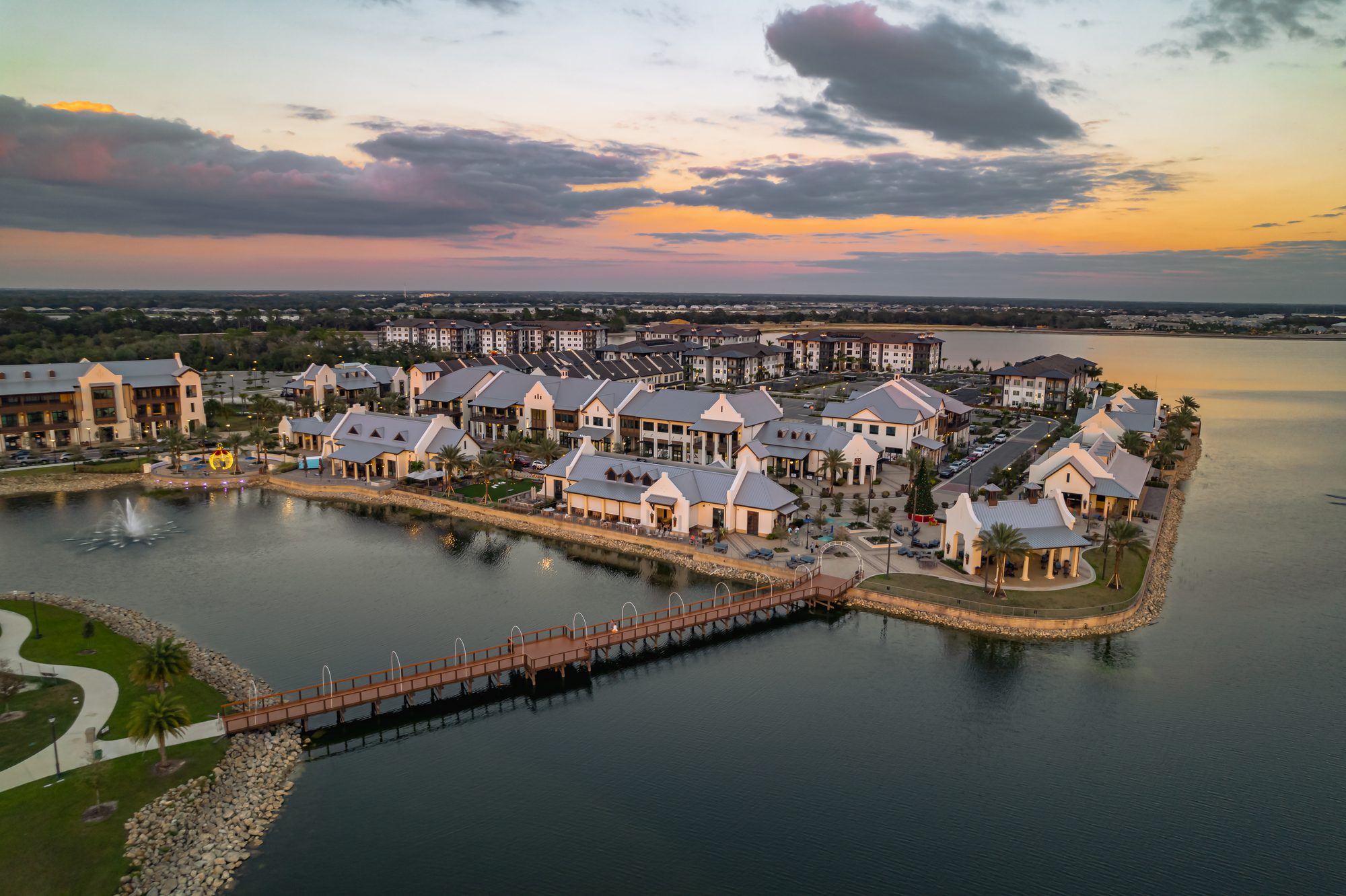
The market after the wind · Photo: Stellar Media Collective
Questions builders actually ask
How much of this can one crew realistically produce? More than you'd think, if you batch it. One dry-season filming day — a morning on a job site, an afternoon at the shop — yields eight to twelve short videos from the shot list above, because each piece is one idea, shot simply. Two or three batch days a year covers the calendar. The constraint isn't equipment; it's deciding in advance what each video teaches.
Should I run ads on this content during storm season? Promote the verification and process pieces, not the sales pieces. Paid reach on "how to verify a roofer's license" in your own county the week after landfall puts you inside the exact question every homeowner is asking, and it doesn't read as ambulance-chasing because it isn't. Boosting a promotional offer into a disaster area reads exactly like the door-knockers you're trying not to resemble.
A storm-chasing outfit is outspending me locally right now. What actually beats that? Time depth. They can buy impressions; they cannot buy a three-year archive of local work, recognizable crew members, and a license that verifies. Make sure that archive is impossible to miss — pinned on the profile, front of the website, top of the GBP listing — and let their spend drive homeowners to do the checking the state told them to do. Verification is a contest the incumbent wins by default, but only if you've published the evidence.
Published July 6, 2026 by Stellar Media Collective, Sarasota — a video production company that works with Florida contractors, which is disclosed here because this publication asks builders to distrust undisclosed motives.