The Hurricane-Season Content Calendar: May to November, Week by Week
The contractor a homeowner calls in October earned that call in May. A month-by-month filming schedule for Florida builders and trades — what to shoot, when to go quiet, and the line between preparing your market and preying on it.
8 min read · July 6, 2026 · Florida Construction Media
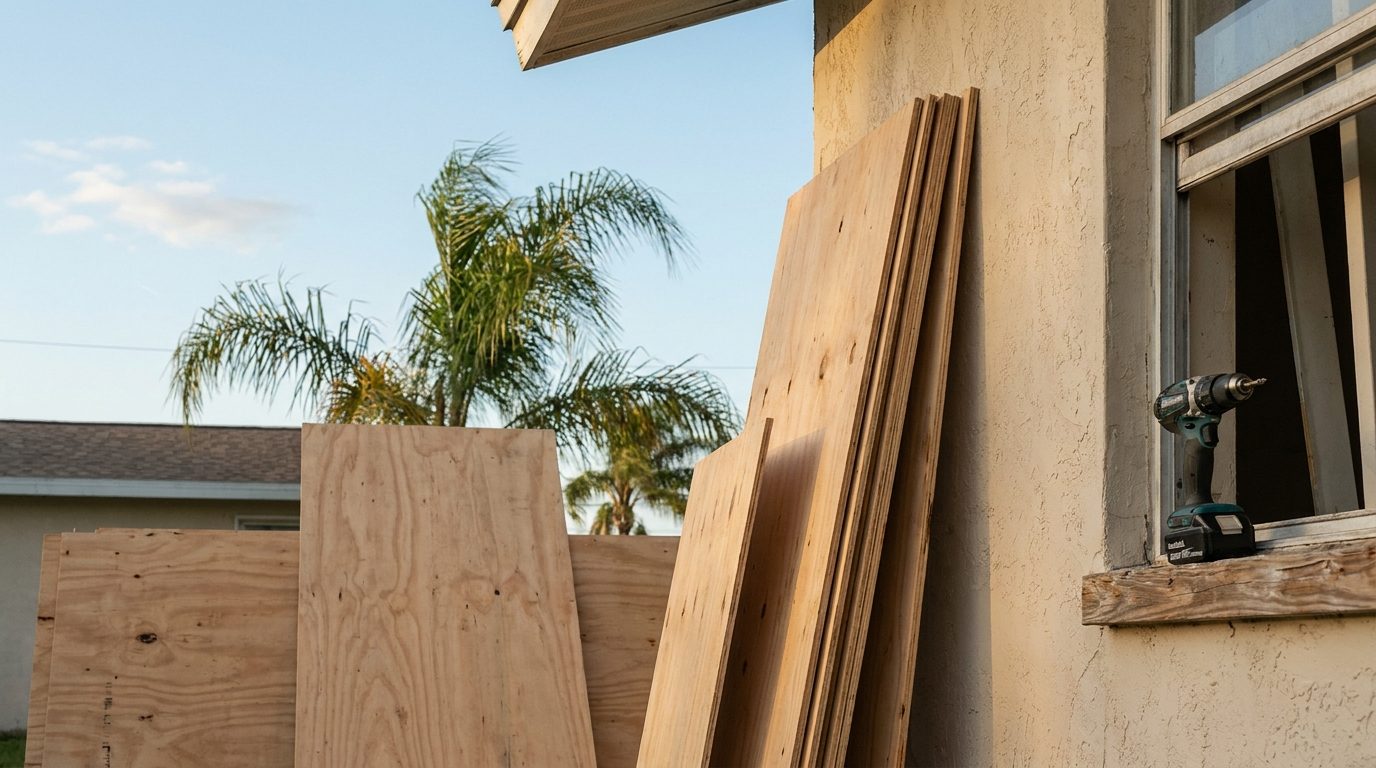
The contractor whose phone rings after a storm is rarely the one who advertised hardest that week. He's the one a homeowner already half-knew — the roofer whose shutter video she saved in June, the builder whose generator explainer her neighbor shared in May. Storm-week attention lands on whoever earned it months earlier, which is inconvenient news in September and useful news right now.
There's an ethical line under the scheduling one, and it belongs up front: preparation content serves people; panic content exploits them. A May video on roof straps helps a homeowner whether or not she ever hires you. A post timed to a storm idling off the coast, built to convert her fear, helps only you — and Florida homeowners can tell the difference from the first frame. We set out the full standard in our playbook on filming storm restoration work; this calendar keeps you on the right side of it without judgment calls in a bad week.
Below is the working schedule: what to film each month, what to do when a storm actually threatens, and what the quiet months are for. None of it requires a production company. It requires what the season requires — starting before you have to.
The season has a shape
The Atlantic hurricane season runs June 1 through November 30, and its busiest stretch has historically fallen between August and October. The planning insight is that the season is predictable even though the storms aren't: you don't know whether your county takes a hit this year, but you know when your clients start paying attention, when attention turns to fear, and when fear relaxes into next-year resolutions. A content calendar is that curve written down, so nobody improvises in the one week improvisation goes badly.
The counterintuitive part is that publishing runs opposite to attention. When attention is low — May, early June — you publish the most, because a homeowner with nothing on the map can actually absorb a lesson about roof straps. When attention peaks — a named storm in the forecast — you publish the least, because teaching time is over and anything louder than service information is noise or worse. Most contractors run this backwards. That is the opportunity.
A note on the week-by-week framing: the calendar is organized by month and phase because that's how filming gets batched — one May morning of shooting covers a month or more of weekly posts. Nobody in this trade films every week; the schedule asks you to publish weekly from material shot in batches, ahead of need.
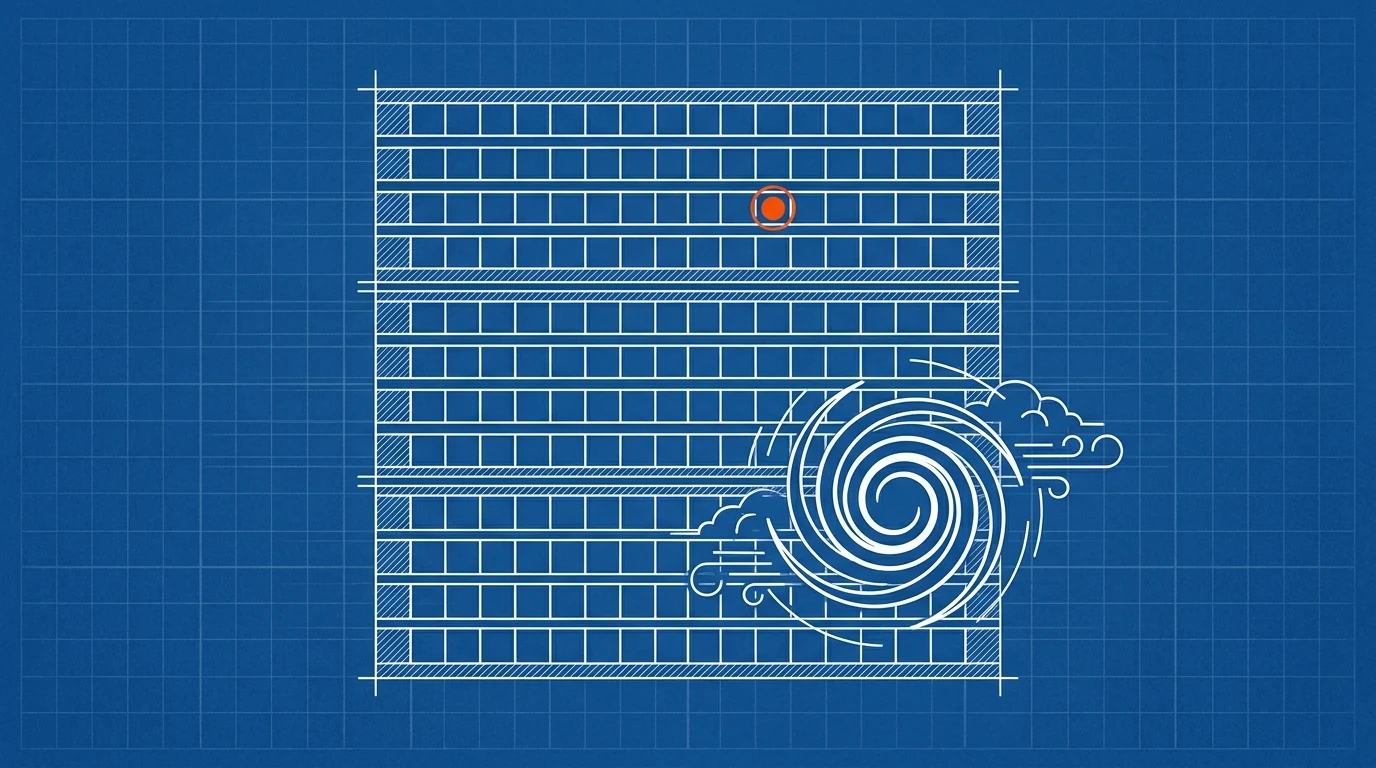
The season is predictable; the storms aren't · Illustration: Florida Construction Media
The calendar
Print it, argue with it, adapt it to your trade. Two rows key to events rather than dates; the watch-window row overrides everything whenever it applies.
| Month / phase | Content to film | Why now |
|---|---|---|
| May — pre-season education | Roof-check walkthrough (straps, flashing, soft decking), shutter fitting and hardware check, generator basics — sizing, transfer switches, carbon monoxide clearance — and a "document your home for insurance" explainer | Homeowners can absorb a lesson when nothing is coming. Teaching now, date stamp attached, buys the position storm-week ad spend can't |
| June — season opens | Your own readiness: crew prep day, yard and equipment tie-down, generators serviced and load-tested, the supplier relationships that hold when plywood and fasteners get scarce | The season opens June 1. Readiness shown is a credential; readiness claimed is a slogan |
| July–August — mid-season | Regular build content, maintenance visibility — re-checking spring work, small repairs done properly — plus one mid-season check-in that reruns the May checklist | The busy stretch is arriving and attention drifts. Steady, unhurried presence keeps you the name they already know |
| Watch window — a named storm threatens | Nothing promotional. Hours and closure notices, how your active sites are being secured, pointers to your existing prep videos and to official forecasts | Fear is at its peak. Useful information builds standing; anything that reads as selling spends it |
| Post-event — if it hits | Service information only: where crews are working, how to reach you, honest timelines for tarping and estimates. On-property filming only with written consent | People need a working contractor, not a film crew. Restraint here decides your reputation for years |
| October–November — recovery to normal | Completed hardening and repair projects (with permission), recovery-to-normal stories, explainers on impact windows, fortified roofing, standby power | Interest in hardening peaks while the season is fresh; this is when next year's upgrade projects get decided |
| December–April — off-season | Hardening installs documented start to finish, impact-window projects, the calm-season inspection offer, the evergreen library | No storm on the map means no pressure in the pitch — and calmer schedules, calmer permit offices, better filming weather |
May is where the year is won. The four pieces in that row can be shot in one morning at one house, with an owner or super who can talk plainly doing the explaining. The sleeper is the document-your-home explainer — two minutes on filming every room, the roof, and the panel for the insurance file. It sells nothing, which is exactly why it travels. June's job is proof: every contractor in the state claims to be ready, and showing your own house in order — yard cleared, generators load-tested, a supplier relationship that holds the week everyone wants plywood at once — is a credential a storm chaser can't counterfeit.
The back half of the table is where the revenue lives. In October and November, hardening stops being abstract: interest in impact glazing, fortified roofing, and standby power peaks while the season is fresh in memory. December through April is when that interest becomes signed contracts, with the calm-season inspection as the natural offer — the best month to harden a house is any month with nothing on the map. The off-season isn't off. It's the closing season.
When a storm is on the map
The watch window opens when a named storm enters the realistic forecast conversation for your area. The first move is subtraction: pause every scheduled promotional post. An automated summer-special ad running while people board windows tells the market exactly how much attention the company pays.
What goes up instead is short and useful. Whether the office is open. How active jobsites are being secured — clients with houses mid-build genuinely need this. Pointers to your own prep videos, and to the National Hurricane Center and county emergency management for the forecast itself. You're a contractor, not a weather desk; repost nothing with a cone on it.
The do-not-post list is short and absolute: no book-before-the-storm offers, no countdown urgency, no forecast commentary, no brand content that uses the storm as a hook. If the storm hits, the same discipline carries into the response — service information only, no wreckage reels, and no camera on a client's property without the owner's written consent. The recovery stories keep: a family in a finished house months from now tells a better one than a family in a wet one.
The season rule: if a post only works because someone is afraid, it doesn't go up — before, during, or after the storm.
Filming from June to November
Shooting in season is its own trade skill on the Gulf Coast. Three logistics matter.
Weather first. Summer afternoons here storm with near-calendar reliability, so filming lives in the morning — better light, quieter wind, drier crews. Lightning discipline is the jobsite's: when the site clears, the shoot clears, no exceptions for a shot that's almost done. The gear killers are rain and the move from air-conditioned truck to July air, which fogs a lens instantly; rain covers, towels, silica packs, and ten minutes of acclimation are cheap insurance.
Drones second. Aerial work follows its own rulebook — Part 107, insurance, airspace checks — and we've covered it in detail. The season adds one rule that outranks the rest: after a major storm, the FAA routinely places temporary flight restrictions over affected areas while rescue, utility, and survey aircraft work low. Check for TFRs before every post-storm flight. Flying inside one is a federal violation, and the traffic those restrictions protect matters more than an establishing shot.
Crew safety last, meaning first. The safety brief orders the shot list, not the reverse: nobody stands under a compromised tree line for an angle, nobody walks an unchecked roof, nobody wades floodwater holding a camera. On a post-storm site the footage is the least important thing present.
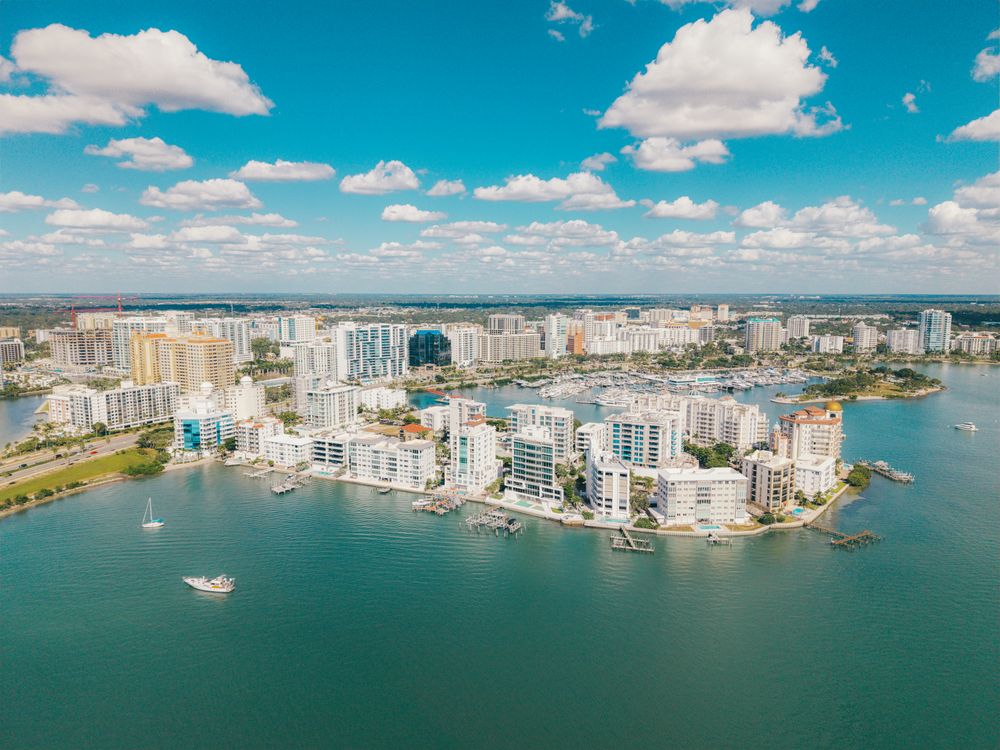
May on the Gulf — the month the October reputation is built · Photo: Stellar Media Collective
Questions builders actually ask
It's July and we haven't filmed anything. Is the year lost? No. Enter at the current row — the mid-season check-in reads naturally in July, and the May education content still works; a prep re-check is normal in the heart of the season. You've lost lead time, not the year. The only wrong month to start is one with a storm in it, and even then the answer is to wait out the watch window, not skip the season.
Can my office manager shoot this on a phone, or do we need a studio? Most rows, yes — a current phone, a clip-on mic, morning light, and a super who knows the trade. What matters is that it gets shot on schedule by someone who says the thing plainly. A studio earns its invoice on the October-through-April evergreen rows — material that will still be selling three seasons from now deserves production built to last.
Posting our own storm prep feels like marketing dressed up as public service. Is it? It's marketing the way a clean shop and a stocked truck are marketing: something true, shown. The test is whether the content stays useful to a homeowner who never hires you. A shutter-fitting walkthrough passes; a storm-countdown discount fails. Hold that test and you never have to wonder how a post will read.
Published July 6, 2026. Season dates and forecasts belong to the National Hurricane Center; the calendar built around them is ours. Disclosure: this publication is owned by Stellar Media Collective, a Sarasota studio that spends every May filming exactly the videos this article prescribes — the schedule works whoever holds the camera.