Impact Windows and Home Hardening: The Florida Niche That Sells All Twelve Months
Hardening contractors market like the business runs June to November. Four separate clocks — storm season, grant money, a brand-new sales-tax refund, and the insurance inspection cycle — say otherwise, and three of them run loudest in the quiet months.
8 min read · August 2, 2026 · Florida Construction Media
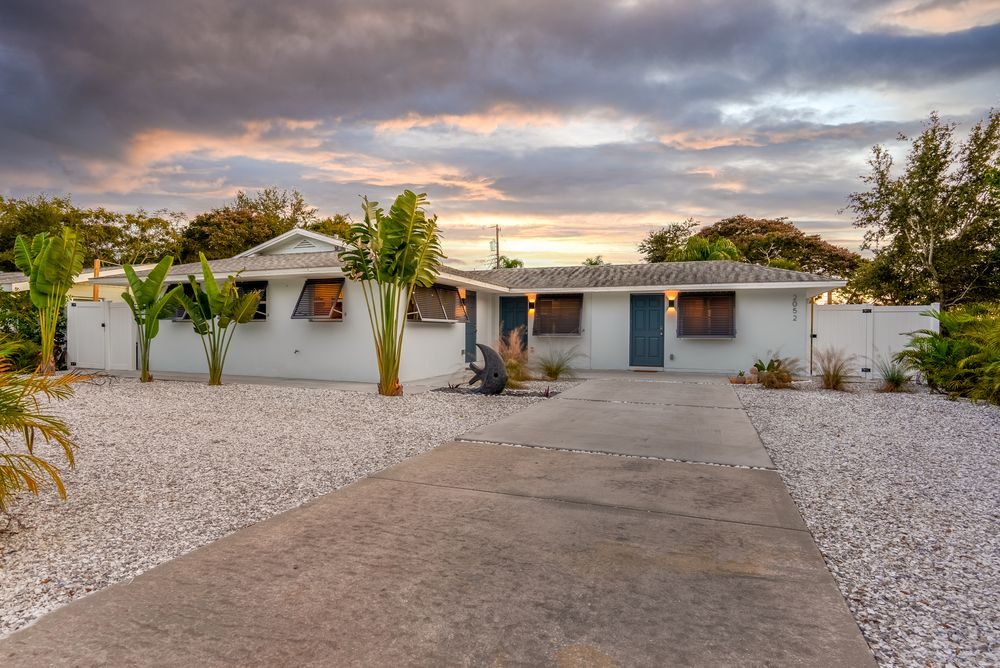
Most Florida trades have to manufacture urgency. The hardening trades — impact windows and doors, garage doors, shutters, roofing, opening protection of every kind — have the opposite problem. They own one enormous source of urgency, and they let it do all the selling. The forecast maps appear, the phones ring, the crews run flat out until Thanksgiving, and then the marketing goes quiet for six months while everyone waits for the next June.
That rhythm always left money on the table. In 2026 it leaves considerably more, because the machinery that actually pays for home hardening in Florida — grant money, a new sales-tax refund, and the inspection form that governs insurance credit — sits in the off-season. The storm is still the reason homeowners think about hardening. It is no longer the only clock that matters, and it is the one clock where every competitor is already shouting.
Four clocks, not one
The storm clock runs June 1 to November 30. It generates attention, not advantage. Every hardening contractor in the state is visible in those months, ad costs reflect it, and the homeowner searching during a watch is shopping fast rather than carefully — which is how door-knockers win work that should have been yours.
The grant clock runs on the state budget. My Safe Florida Home remains the center of gravity for retrofit money: free wind-mitigation inspections and matching grants that top out at $10,000, with the state historically matching two dollars for every homeowner dollar on qualifying improvements. Its funding has been uneven. Lawmakers added no new money in the most recent session, and the program has been running on undistributed funds from the prior year — roughly $280 million of it, WFLX reported in May, against a three-year record of more than 40,000 homeowners receiving some $380 million in grants. The Memorial Day budget agreement reappropriated hundreds of millions more in unused funds across the program and the condo pilot. The read for a contractor: money exists, the queue is real, and homeowners describe the process as hard to navigate. Confusion is an opening for whoever explains it clearly.
The tax clock is brand new and almost nobody has heard of it. As of July 1, 2026, Florida homeowners can apply for a refund of the sales tax paid on qualifying impact-resistant windows, exterior doors, and garage doors installed on homestead property with a just value of $700,000 or less. The refund is capped at $500 per residence, covers purchases made between July 1, 2026 and June 30, 2029, and is claimed from the Department of Revenue after installation rather than waived at the register, per summaries of this year's Florida tax package. Five hundred dollars will not move a five-figure decision. Being the contractor who tells a homeowner about money they did not know existed will.
The insurance clock runs on renewals and inspections, which are scattered evenly across all twelve months. The state's uniform mitigation verification form — the OIR-B1-1802, the document that turns hardening into documented credit — was revised effective April 1, 2026, and inspections performed on or after that date use the new version. Per the Office of Insurance Regulation, a completed form remains valid for up to five years provided no material changes are made to the structure. Every homeowner in your market sits somewhere on that five-year cycle, and none of them sit on it in June.
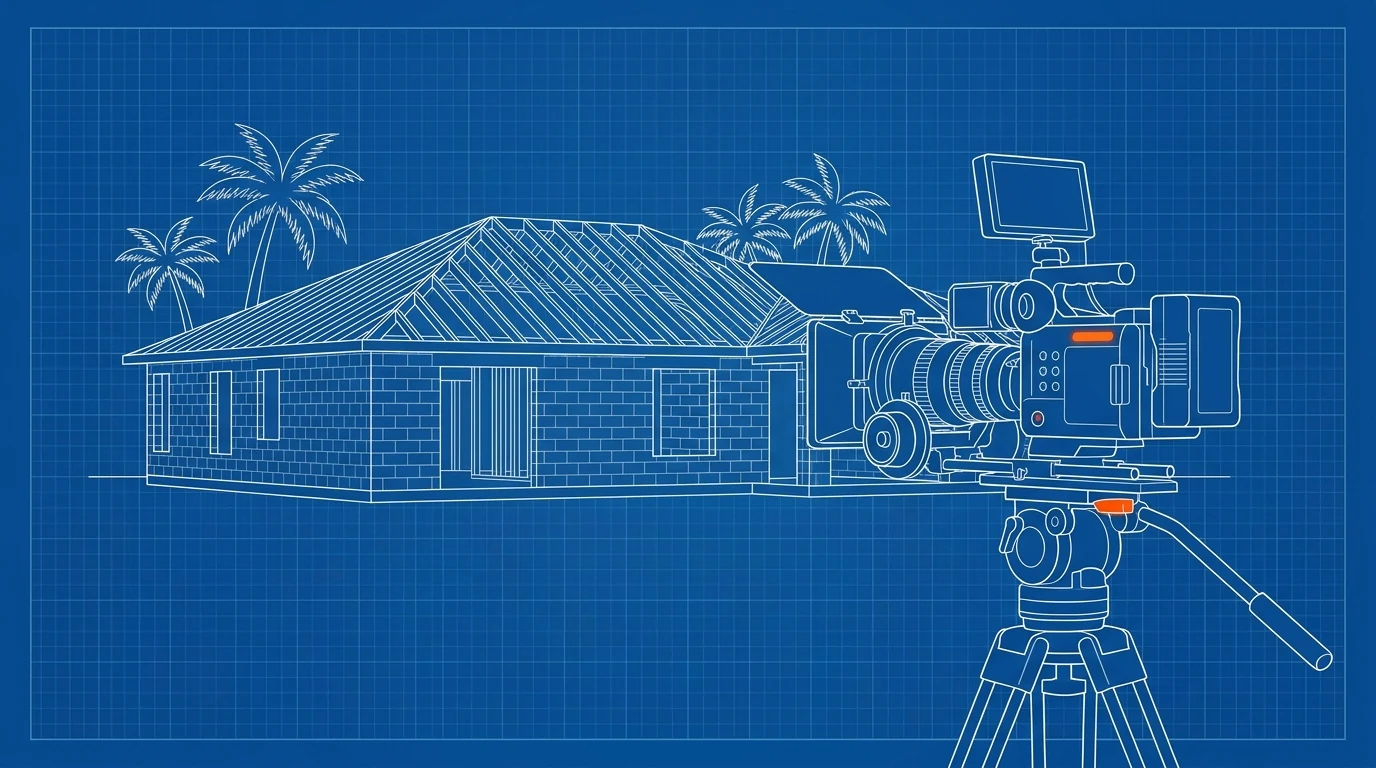
Four clocks, one house — and only one of them runs in hurricane season · Illustration: Florida Construction Media
The pitch that's quietly expiring
For four years the easiest sale in this category was fear of the premium. That pitch is losing its edge, and the numbers explain why. Citizens Property Insurance approved statewide 2026 rate decreases averaging 8.8% for multiperil homeowners policies and 5.5% for wind-only, effective July 1 for new business and at renewal for existing policyholders. Its policy count has fallen to roughly 336,000 — a 76% decline from the October 2023 peak of about 1.41 million, as private carriers take business back. Citizens president Tim Cerio characterized the market as "again healthy and vibrant."
Read that from a homeowner's chair. The person who was desperate two years ago is now getting a renewal that is flat or slightly better, with more carriers competing for it. The panic that closed deals on its own has cooled. What has not changed is the deductible on that policy, the exposure of the house, and the week after a storm when the power is out and the openings either held or they did not.
So the argument has to move. Not "your premium is killing you" — that one gets argued with now — but the plainer, more durable version: this is the part of the house that decides whether everything behind it survives, and it is one of the few improvements that is protection, comfort, noise reduction, and resale value at once. Certainty holds up in a soft insurance market. Fear does not.
That also changes who you are selling to. A calmer buyer is a slower, more deliberate one who researches for months before calling anybody — the audience most trade marketing never speaks to. A library of answers wins that buyer. A June campaign wins the panicked one, and there are fewer of those every year.
Be the navigator, not the insurance agent
Three of the four clocks are made of paperwork, which is exactly where a homeowner gets stuck and exactly where a contractor can be useful without overpromising anything.
The content writes itself and it is evergreen: how the grant program works and what the application asks for. What the sales-tax refund covers, what it does not, and the conditions attached. What happens during a wind-mitigation inspection, why the form matters, and what the revised version means for a homeowner whose last inspection is a few years old. None of that is seasonal, all of it is searched year-round, and every piece positions you as the person who reads the rules.
The discipline is the one that governs all impact-window content: educate, never promise. You cannot promise a grant will be approved, a premium will drop, or a refund will arrive. You can explain how each system works, name the authority that answers the homeowner's specific question — their own agent, mysafeflhome.com, the Department of Revenue — and get the parameters right on the day you publish, because all three programs have changed before and will change again. Contractors who cut that corner during the 2022–2025 storm cycle are part of why Florida homeowners now verify everything before they call; Stellar's guide to the trust signals premium clients check is the short version of what that verification looks like.
Spec box: the four-clock rotation. January–March (grant and paperwork season): explainers on the grant process, the tax refund, and the mitigation inspection; price-per-opening content; the install-capacity pitch — quiet months, real scheduling, no scramble. April–May (pre-season): lead times on custom units, what a mitigation inspection involves under the current form, whole-house package math. June–November (storm season): answer questions; never run a countdown clock over a satellite image. December (renewal and tax year): "what I would harden first on this house for $10,000," plus the year-end version of your cost content. One filmed afternoon per quarter covers a rotation this size.
What the quiet months are actually for
The off-season is not the gap between selling seasons. It is where the work gets installed, and saying so is a sales argument in itself. Custom units carry lead times; a homeowner who signs in February gets a calm install and a crew that is not stacked eleven deep, while the one who calls in August gets whatever the calendar allows. Say that in plain language, because the homeowner does not know it and no competitor is telling them.
The quiet months are also when the library gets built — the price content that filters buyers before they call, the install-craft footage, the program explainers. Trying to film all of that in October, between jobs, is how most hardening contractors end up with nothing published. The hurricane-season calendar maps the loud months. The four clocks map the rest of the year, which is where the advantage sits, because it is the only stretch when your competitors are not in frame.
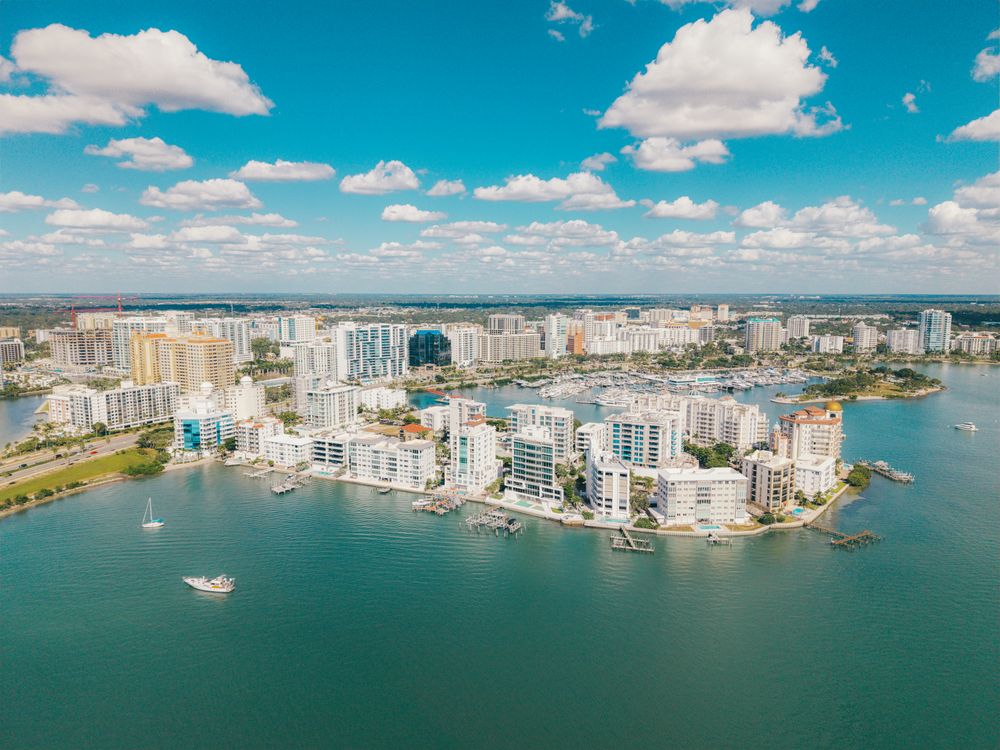
The exposure that prices every opening behind it · Sarasota Bay · Photo: Stellar Media Collective
Questions builders actually ask
If rates are coming down, is the hardening market shrinking? The urgency is softening, not the market. Grant money, the new refund, and an aging housing stock full of original glass all point the other way. What is shrinking is the pool of homeowners who buy on panic alone, which is why the pitch has to move from fear to certainty and proof.
How specific can I be about grants and the tax refund without getting myself in trouble? Be specific about how the systems work and general about outcomes. Program parameters, eligibility conditions, and where to apply are public facts you should state plainly and date-stamp. Approval, timing, refund amounts for a particular household, and premium effects are not yours to promise. The safest and most persuasive on-camera answer is the same one you would give in a kitchen: here is how it works, here is what it does not cover, and here is exactly who to ask about your house.
We do roofing and openings both. Does this change the mix? It sharpens it. Roofing has its own post-storm dynamic and its own authority problem; openings are the piece homeowners understand least and research hardest. If you sell both, lead the off-season content with openings — that is where the questions, the grant conversations, and the tax refund all point — and let roofing carry the post-event months.
Our slow months are the ones where nobody calls. How is marketing supposed to fill them? The calls in a slow month come from work published two or three months earlier, which is exactly what makes the off-season feel unrewarding while you are in it. Treat January through May as the publishing season and June through November as the harvest, and the pipeline stops matching the weather. It takes one full year of doing it before the shape of the calendar changes.
Published August 2, 2026. Program details — My Safe Florida Home funding and grant terms, the impact-window sales-tax refund, and the OIR-B1-1802 mitigation form — reflect public sources cited above as of this date and change frequently; verify current parameters with the administering agency before putting any of them in your marketing. Disclosure: Florida Construction Media is published by Stellar Media Collective, Sarasota, which builds year-round content systems for Gulf Coast builders and specialty trade contractors.