How the 2022–2025 Storm Cycle Rewired Homeowner Trust in Florida Contractors
Ian to Milton compressed a decade of storms into three years and taught every Gulf Coast homeowner to vet a contractor the way an adjuster vets a claim. The rebuild market runs on proof now — and that changes what your marketing has to do.
8 min read · July 9, 2026 · Florida Construction Media
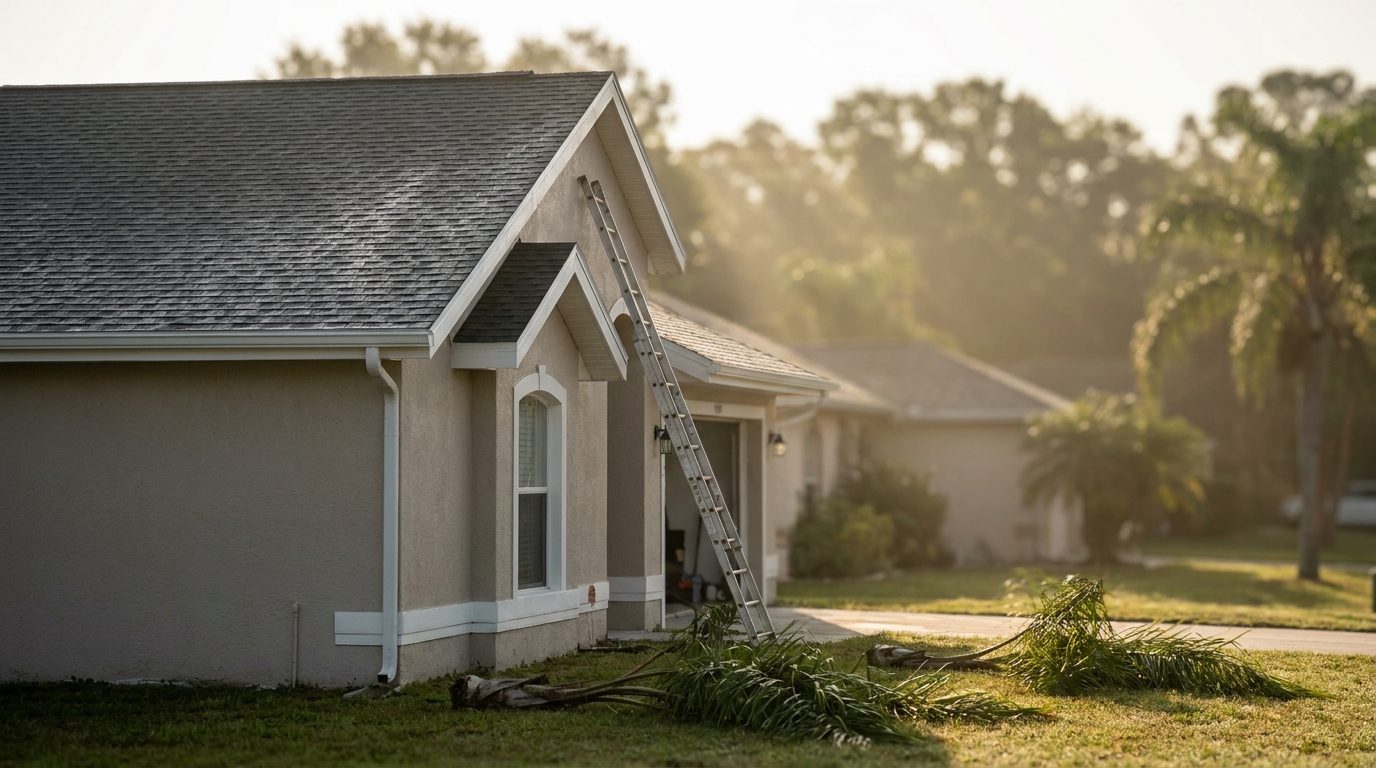
For most of the last decade, a Florida homeowner met a contractor the way anyone meets anyone: a referral, a handshake, a gut read in the driveway. Then three years happened. Hurricane Ian came ashore in southwest Florida in September 2022. Idalia hit the Big Bend as a Category 3 the following August (NOAA put its damage near $3.5 billion). Debby crossed in August 2024, Helene raked the Gulf Coast as a Category 4 weeks later, and Milton made landfall near Siesta Key that October — an estimated $34.3 billion storm, the ninth-costliest Atlantic hurricane on record. Five named storms, three seasons, one stretch of coast.
What that sequence rebuilt was not just roofs. It rebuilt the way homeowners decide whom to trust — and if your marketing still assumes the old handshake, it is speaking to a customer who no longer exists.
A decade of storms in three years
Each landfall imported a second workforce along with the wind: trucks with fresh magnetic signs, out-of-state crews, and enough bad actors that the arrests became their own news cycle. After Helene and Milton, the Pinellas County Sheriff's Office ran a sting it called "Flood of Fraud 2" — more than 40 arrests in two days, part of a broader operation that topped 100 arrests for looting and unlicensed contracting. The state's licensing department ran its own enforcement wave, reporting more than 50 arrests and homeowners spared from unlicensed-activity scams.
The cases that stung most were local and personal. In Bradenton, a man was charged with 13 felonies after fourteen residents of one Manatee County mobile-home park — ages 62 to 95 — said they paid him $222,000 in down payments for Milton repairs he never did. After Ian, a Naples couple in their eighties wrote 35 checks totaling more than $1.26 million to a contractor who exploited them, a case that ended in federal prison. Every homeowner in the market read those stories. They did not read them as isolated crimes. They read them as a warning about the whole trade.
The rebuild market now inspects the contractor before the contractor inspects the roof · Illustration: Florida Construction Media
What actually changed in the homeowner's head
Two things shifted at once, and together they rewired the buying process.
The first was emotional. After watching neighbors get burned, the Gulf Coast homeowner now approaches contractors from a defensive crouch. Uninvited is a red flag. Pressure to sign today is a red flag. "I was just working down the street" is a red flag. The state reinforces it after every storm, pointing homeowners to the license-verification tool at MyFloridaLicense.com and an unlicensed-activity hotline. A homeowner who once trusted by default now distrusts by default and asks the contractor to earn the exception.
The second was structural. In December 2022, the Legislature passed SB 2-A, which ended assignment of benefits for property policies issued on or after January 1, 2023. For years, a homeowner could sign the claim over to a contractor and step back. Now they can't. They file the claim themselves, deal with the adjuster directly, and stay in the loop on every dollar. The customer who used to hand you the keys and disappear is now sitting at the table for the entire job — more informed, more involved, and far more likely to ask why.
Put those together and you get a homeowner who vets a contractor the way an adjuster vets a claim: license first, proof second, promises last. This is the market Gulf Coast builders are selling into now, and it will not un-learn what the storm cycle taught it.
What a storm-rewired homeowner checks, in order: (1) Does the license verify — current, active, and matching the name on the truck? (2) Is there a real local address, or just a cell number and a magnetic sign? (3) Can I see this crew's actual finished work near me, not a stock gallery? (4) Do the same faces show up across years, or did this company appear last month? (5) Does anyone I know vouch for them by name? (6) Does the contract, warranty, and payment schedule look like a business or a rush? Only after all six does price enter the conversation. Marketing that answers one through five before the call is marketing that survives the squint.
The trust cycle runs opposite to the storm cycle
Here is the part most contractors get backwards. The homeowner who calls you the week after landfall decided to trust you months earlier, in calm weather, usually without noticing. That decision gets made by things they saw before they needed you — the finished roof two streets over, the owner explaining a process on video, the license number they could actually check. You cannot manufacture that trust during the emergency, because during the emergency you look exactly like the strangers the news warned them about.
Which means the work of earning trust is off-season work. In classic marketing terms the homeowner is the hero and you are the guide — but a guide only gets hired if the hero already believes the guide is competent and safe. Proof does that job; promises don't. A storm chaser can print a landing page in an afternoon and promise anything. What he cannot produce is three years of local work with recognizable crews, a verifiable license, and a shop with an address. That archive is the single asset the imported workforce can never fake, and building it deliberately is the whole game. The year-round authority system for roofers is the sharpest example of this, and the same logic applies to every trade the storms touched.
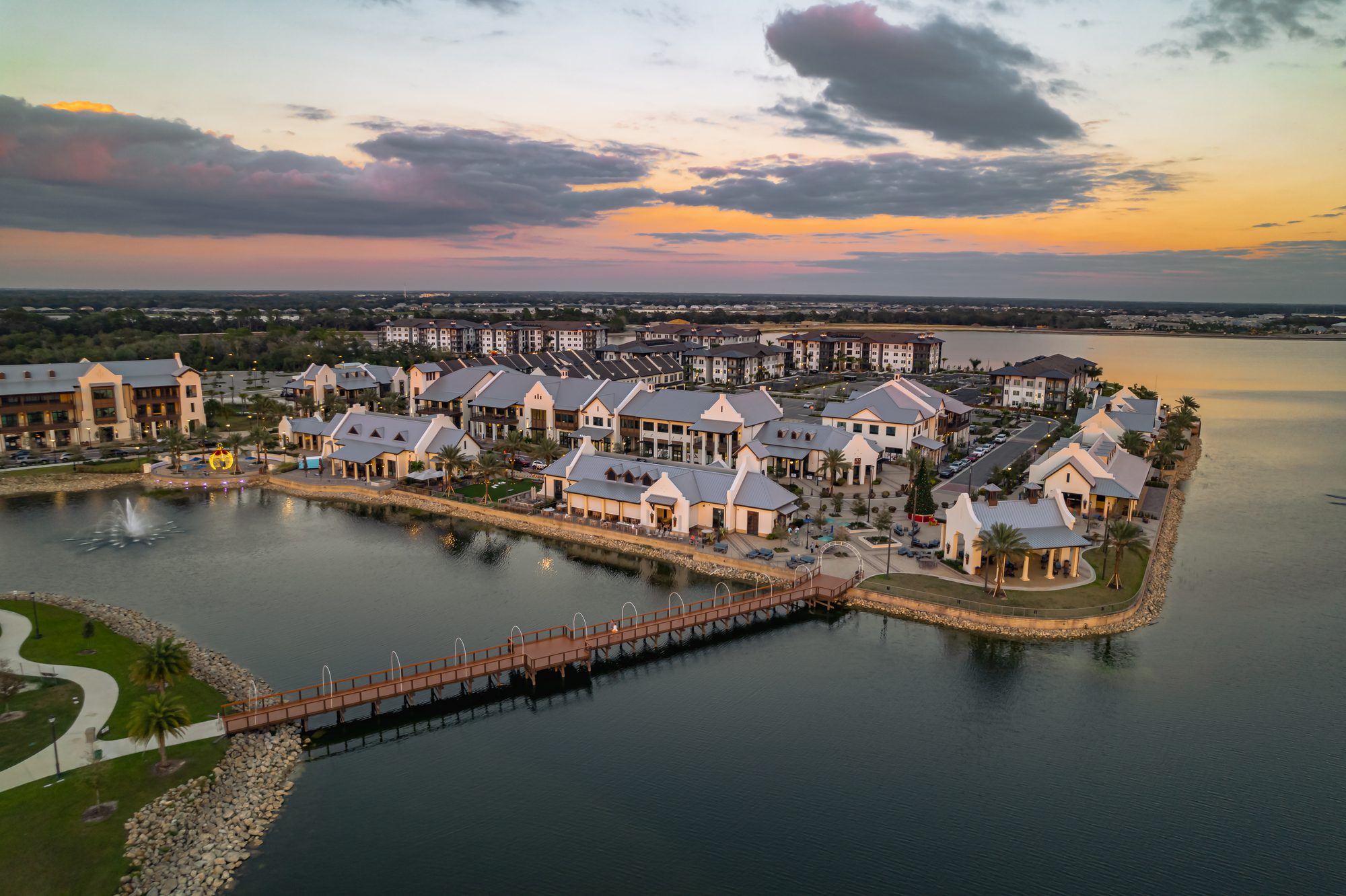
The market after the wind — cautious, informed, and checking · Sarasota County · Photo: Stellar Media Collective
The play: become the proof
If the rewired homeowner runs a six-point check before they call, your content's job is to answer those points in advance, on the platforms where they look. In practice that means a short, plain library built in the dry season and kept current:
- Put the license in the frame. Read your number on camera and film the verification — pull up the state lookup, type it in, show the result. Thirty seconds does more classification work than any slogan, because it hands the homeowner the exact step the state told them to take.
- Show the address and the same faces. The physical shop, the trucks that worked these streets last year, crew introduced by name with their consent. Continuity is the thing a storm chaser structurally cannot show.
- Publish the finished work, filed by neighborhood. A homeowner deciding at midnight wants to know you have done this, here, for people like them. A proof library of completed jobs answers that before the estimate call.
- Explain the process, not the claim. With homeowners now managing their own claims, real authority comes from explaining how the process works — who writes the scope, what a supplement is, why an offer to "handle your deductible" is a red flag rather than a favor. Educate on the system; never coach a specific claim. The ethics of filming storm work is the binding reference for anything shot after landfall — written consent, no filming identifiable losses, no cameras at first contact.
None of this is clever, and it isn't supposed to be. It's supposed to be verifiable, because verification is now the entire buying process. Timing the year's output — what to bank in May, what to publish in the week after a storm — is laid out in the hurricane-season content calendar, and the deeper trust-building fundamentals live in Stellar's free resource guides.
Questions builders actually ask
I do good work and my referrals are strong. Isn't that enough? It was, and it still gets you in the door with people who already know you. The storm cycle changed what happens with everyone else — the homeowner who found your name on a list, a sign, or a search, with three fraud stories fresh in mind. Referrals travel one relationship at a time; a proof library does the same vouching at scale, for the strangers your best clients never quite get around to introducing.
This sounds like a roofing problem. I'm a remodeler. The arrests skewed toward roofing and immediate repairs, but the distrust generalized. A homeowner who got burned on a post-storm roof is now cautious about the kitchen remodeler, the pool builder, and the window company too, because the lesson they learned was about contractors, not about roofs specifically. Any trade selling a five- or six-figure job into this market is selling into the same squint.
Won't leaning on "we're licensed and local" sound defensive? Only if you say it as a slogan. Shown instead of said, it reads as confidence: here's the number, here's the lookup, here's the shop, here's fifty finished jobs you can drive past. You're not protesting your innocence — you're making the homeowner's homework easy, which is exactly what a trustworthy business does and a rushed one never bothers to.
How fast does this pay off? Slower than an ad and more durably. Trust content compounds; a verification walkthrough or a neighborhood proof reel keeps working every time a homeowner finds it, and it's most valuable in the week you have the least time to make it — after the next storm, when the archive you built in the quiet season is already published and doing the vetting for you.
Storm dates, damage figures, arrest counts, and the AOB and licensing rules cited here reflect public reporting and Florida statute as of July 9, 2026; verify current law and any active enforcement details before relying on them. Disclosure: this publication is owned by Stellar Media Collective, a Sarasota video production company that builds the kind of proof libraries described above for Florida contractors — the guidance stands regardless of who you hire.