Florida's Condo Reserve-Study Backstop Is December 31, 2026. The Repair Work Lands on Contractors Next
State law gives older condo buildings one last date to finish the reserve study alongside the milestone inspection, and lets boards pause reserve funding to pay for the repairs those inspections find. For a Gulf Coast contractor, that is a 2027 bid list forming right now, sold to a board instead of a homeowner.
7 min read · October 14, 2026 · Florida Construction Media
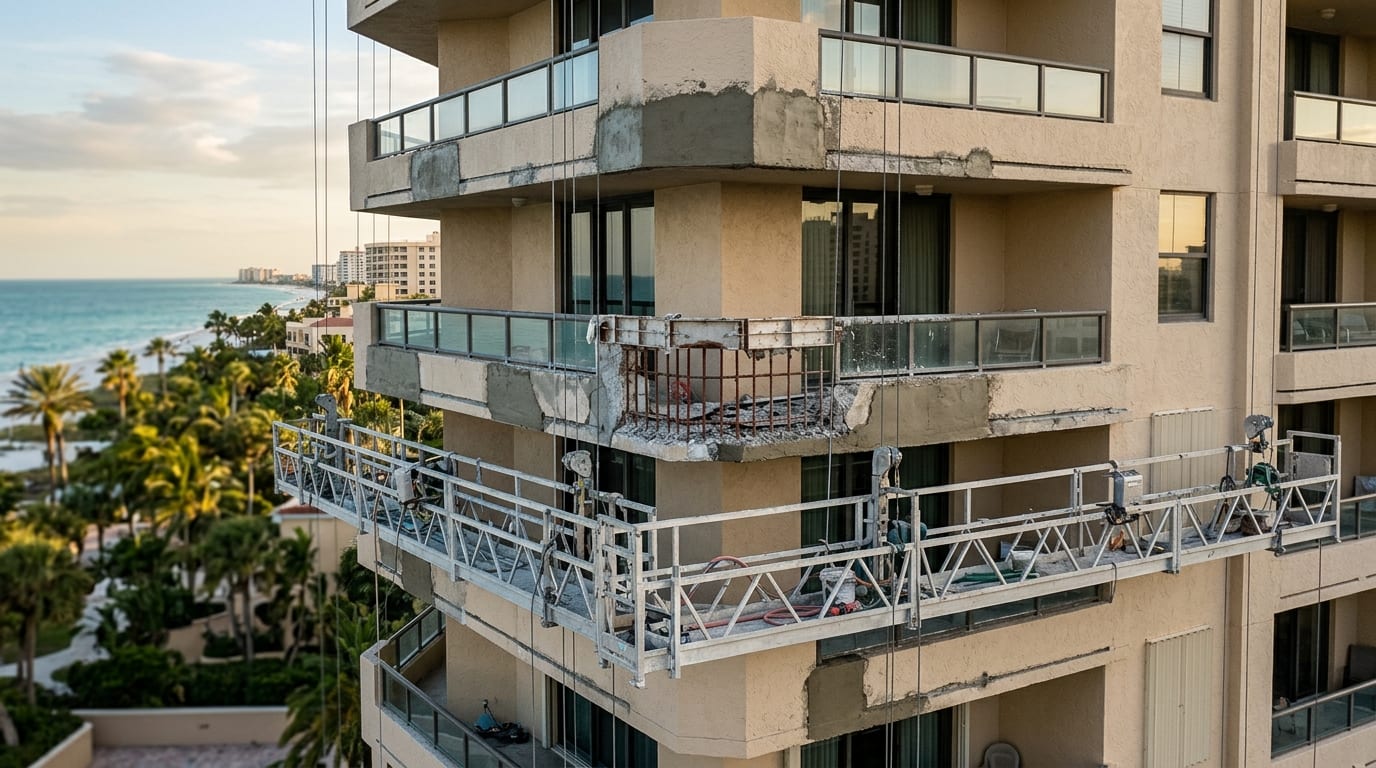
Most of what has been written about Florida's condo safety laws is written for owners and buyers: what a reserve study is, why the monthly fee doubled, whether to sell before the special assessment lands. Very little is written for the people who will do the work those documents describe. That is a gap worth closing this fall, because the paperwork phase of the law is ending and the construction phase is starting.
The date to know is in the statute itself. Under section 718.112 of the Florida Statutes, as amended in 2025 by HB 913, an association that must complete a milestone inspection on or before December 31, 2026 may finish its structural integrity reserve study at the same time as that inspection. The same paragraph closes the door behind it: in no event may the study be completed after December 31, 2026. Older condo buildings were already due to have the study done by the end of 2025. The 2026 date is the last stop for buildings that folded the study into their inspection.
What the law actually requires
Two documents drive everything, and contractors should be able to explain both in a sentence.
The milestone inspection comes from section 553.899. It applies to condo and co-op buildings three habitable stories or taller. The first one is due by December 31 of the year the building turns 30, measured from its certificate of occupancy, and it repeats every 10 years after that. The local building department may move the first one up to year 25 where local conditions call for it, and the statute names proximity to salt water as the example. Phase one is a visual inspection by a licensed engineer or architect. If phase one finds substantial structural deterioration, phase two follows, which can include destructive testing. Once the local building official receives a phase two report, repairs must begin within 365 days.
The structural integrity reserve study, or SIRS, is the money side. It sets the reserves an association must carry for the parts of a building that keep it standing and dry: roof, structure, waterproofing, windows and exterior doors, and the rest of the list in the statute. Under section 718.112, reserves are required for each item whose deferred maintenance or replacement cost exceeds $25,000, and the state adjusts that threshold each year for inflation.
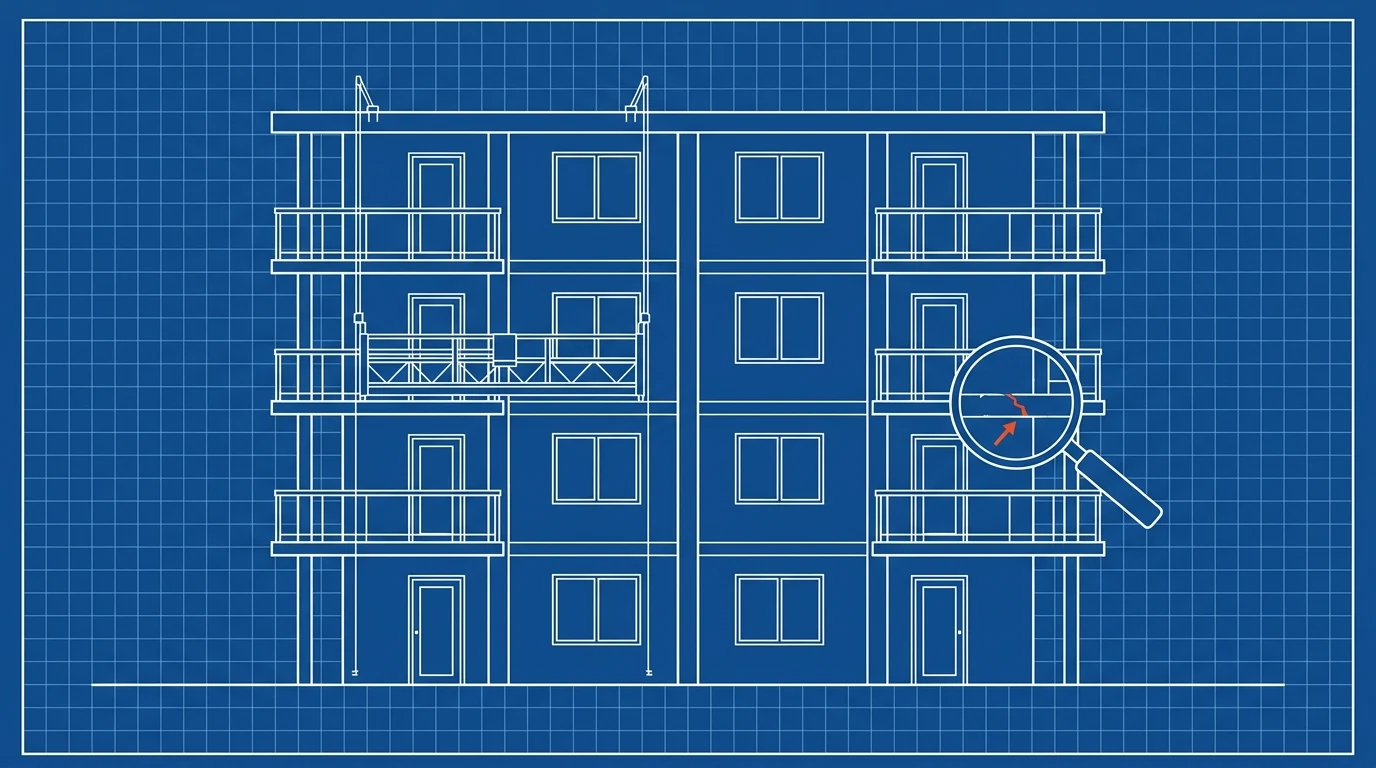
The inspection finds it, the reserve study funds it, and a contractor fixes it · Illustration: Florida Construction Media
The repair wave is already in the data
Florida now has its first statewide look at what the inspections are turning up. The legislature's research office, OPPAGA, published a report in July 2026 covering 2024 and 2025, and local coverage of that report laid out the counts. Building officials recorded 8,736 completed phase one inspections and 1,575 completed phase two inspections over those two years. They logged 903 permit applications for repairs identified in phase two, with estimated values running from under $1,000 to $30 million. Concrete, electrical and structural repairs were among the most common.
Read that as a contractor would. Every phase two report starts a repair clock. Every permit application is a job somebody is bidding. And the 2026 backstop means a final group of buildings is finishing inspections and studies now, which puts its repair scopes in front of boards over the winter and on job sites in 2027.
The law also gives boards a way to pay for that work. The same section lets an association that completed a milestone inspection in the previous two calendar years pause or reduce reserve contributions, for no more than two consecutive annual budgets, to fund the repairs the inspection recommended. That takes a majority vote of all owners, and it is available for budgets adopted on or before December 31, 2028. A board can also delay a required reserve study for up to two budget years after an inspection so the money goes to repairs first, or take out a line of credit or a loan to fund what the milestone inspection requires. All three point the same way: the law is steering association money toward fixing buildings now.
Who you are actually selling to
This is the part most trade contractors get wrong when they first chase association work. The client is not one homeowner. It is a volunteer board, a community association manager, and an engineer of record, and each of them is afraid of something different.
The board is afraid of its neighbors. Its members live in the building, they voted for the assessment, and every delay or cost overrun gets discussed at the mailbox. The manager is afraid of chaos: residents complaining about noise, blocked parking, a crew that ignores the building's rules. The engineer is afraid of a contractor who changes the repair design in the field and puts the engineer's seal on work they did not approve.
A homeowner buys your taste. A board buys proof that you will not embarrass it. The contractor who wins this work presents themself as the guide who gets the board through a project its members never asked for, and tells the story from the board's side: the vote, the notice to residents, the scaffold going up, the work passing inspection, the scaffold coming down on schedule. We made the same case for condo tower interiors in downtown Sarasota. Association repair work is the outside of the same building, sold to the people who run it.
It is also a trust market shaped by recent storms. As we wrote about the 2022 to 2025 storm cycle, Gulf Coast owners now vet contractors the way an adjuster vets a claim. A board facing a seven-figure assessment vets harder still.
Spec box: the association bid kit. Four assets, built once, reused on every board pitch. (1) A plain-English explainer of the milestone inspection and reserve study, dated and linked to the statutes, that a manager can forward to residents. (2) A filmed walkthrough of a finished concrete or waterproofing repair, with the association's written consent, showing resident protection, debris handling and the inspection sign-off, not only the finished slab edge. (3) A one-page project-communication plan: who tells residents what, when, and how. (4) A short owner-on-camera answer to the question every board asks: what happens if you find more damage once the wall is open.
The play for the next ninety days
Start where the engineers are. The firms performing phase one and phase two inspections on the Gulf Coast write the repair scopes, and boards ask them who can build those scopes. A capability package that makes an engineer's job easier (clean submittals, a record of following the design, documentation they can review) is worth more than any ad.
Then publish for the managers. Community association managers handle several buildings at once and answer the same questions from every board. A dated explainer they can forward, written at a level residents understand, puts your name on the work before the bid list exists. Keep it accurate, link the statutes, and say plainly that each building's engineer and attorney make the calls.
Finally, film everything you are allowed to film. Concrete restoration on a balcony is invisible once it is painted. The before, the opened slab, the treated rebar and the closed-up repair are the proof a future board will ask for, and only the contractor on the scaffold can capture them. On barrier-island buildings, where salt air and bridge logistics change the job, that record is worth even more.
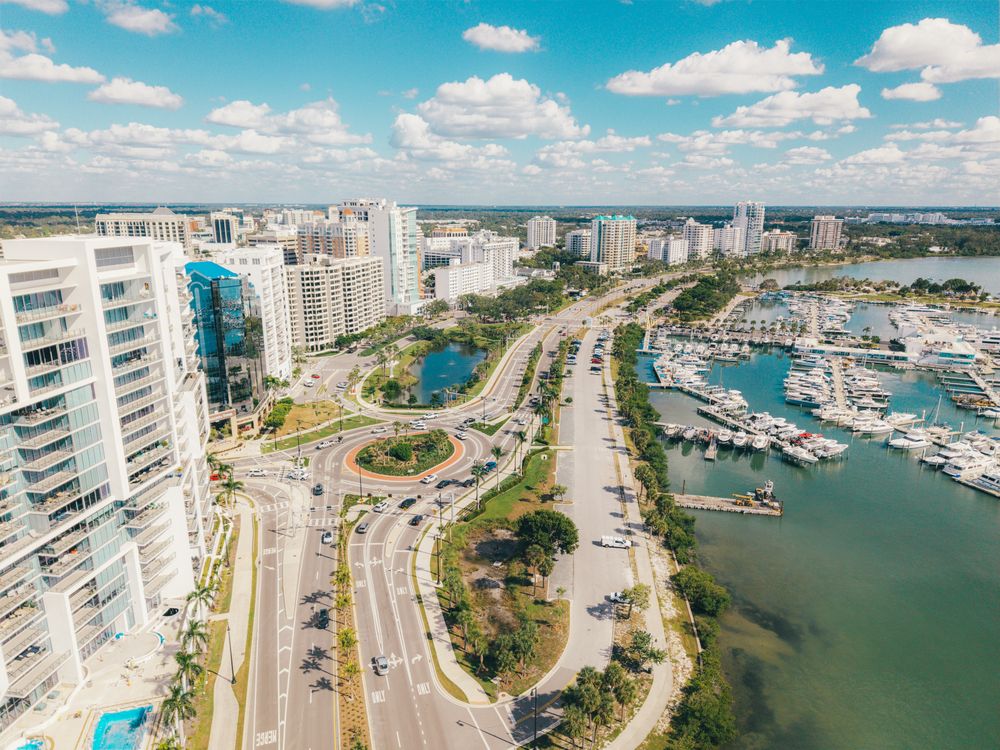
Downtown Sarasota, where coastal condo buildings line the bay · Photo: Stellar Media Collective
Questions builders actually ask
Is this only a South Florida problem? No. The milestone rules in section 553.899 apply statewide to condo and co-op buildings three habitable stories or taller, and the 25-year option exists so that local building departments can move coastal buildings up. Sarasota, Manatee and Pinellas all have buildings near salt water that fit the description.
Do I need to be a specialty restoration contractor to bid this work? The structural repairs, usually yes, along with whatever licensing and engineering oversight the scope requires. But the work around them is broad: waterproofing, windows and exterior doors, roofing, railings, painting, and the interior patching that follows. Many trades can bid a piece of an association project without touching the concrete.
When will the work actually show up? The statute already sets the clocks. Repairs must begin within 365 days after the local building official receives a phase two report, and the last reserve studies tied to milestone inspections close out by December 31, 2026. That puts a meaningful share of bids in front of boards this winter and on job sites through 2027.
Can I talk about the law on camera without giving legal advice? Yes, if you stay in your lane. Explain what the inspection and the reserve study are, link the statutes, and say that the building's engineer and the association's attorney decide what applies. A contractor who explains the process clearly and stops at the edge of the law is more believable, not less.
Checked October 14, 2026, against sections 553.899 and 718.112 of the Florida Statutes and the linked coverage of OPPAGA's July 2026 report. Statutes change and local building departments set their own timeframes, so confirm the current rules for each building before promising a board anything. Florida Construction Media is published by Stellar Media Collective, a Sarasota studio that builds marketing systems for the Gulf Coast trades; the guidance stands regardless of who you hire.