Guarantees That Don't Bankrupt a Builder: The Risk-Reversal Menu
The word 'guarantee' makes builders picture a homeowner cashing a blank check over a scuff mark. The guarantees that actually win premium jobs are bounded, specific, and cheaper to keep than the ones you're already legally on the hook for.
9 min read · July 7, 2026 · Florida Construction Media

Say the word "guarantee" to most builders and watch the flinch. What they picture is the worst version: a homeowner who found a scuff on a baseboard cashing a blank check, a satisfaction clause a difficult client uses to relitigate the whole job, a promise that turns every punch-list item into a threat. So the instinct is to offer nothing, let the contract do the talking, and hope the client reads reliability into a firm handshake.
That instinct costs you jobs, because the thing a premium client is actually shopping for is not the lowest number — it's the smallest chance of getting burned. A guarantee, done right, is the most direct answer you can give to that fear. The trick is that "done right" has almost nothing to do with the blank-check version in your head. The guarantees that win six-figure work are bounded, specific, and — this is the part that surprises builders — usually cheaper to honor than the obligations you're already carrying without saying a word about them.
You already guarantee more than you advertise
Before you write a single new promise, take inventory of the ones the law already put on your books. In Florida, you are bound by an implied warranty of good workmanship — courts hold that your work will be done in a diligent, reasonably skillful, workmanlike manner whether or not the contract says so (the Florida Bar's own explainer walks through how this attaches to residential work). If you build new homes, you're also carrying a statutory one: Section 553.837, effective July 1, 2025, requires the permit-holding builder to warrant a newly constructed home for one year against defects that amount to material Florida Building Code violations.
Sit with what that means for your marketing. You are already legally obligated to fix bad workmanship and code-violating defects. Most builders never mention it — they treat it as fine print, a liability to be quiet about. The client, meanwhile, doesn't know it exists and assumes the worst: that if something goes wrong, they're on their own. So you're carrying the cost of the guarantee and getting none of the trust it should buy. Naming what you already owe — out loud, in plain language, on your website and in the sales conversation — adds exactly zero liability and moves the certainty dial for free. That's the first entry on the menu, and it's already paid for.

The menu, tiered by what it costs you to keep · Illustration: Florida Construction Media
The risk-reversal menu, from cheapest to boldest
Everything a builder can guarantee falls somewhere on a ladder of exposure. The rungs near the bottom cost you almost nothing and reverse the fears clients actually carry into the first meeting. The rungs near the top cost more and are worth reaching for only once you can keep them cold. Read it as a menu — you pick the entries that fit your operation, not the whole list.
Communication guarantees (near-zero cost). The single most common complaint about contractors isn't defective work — it's disappearing. So guarantee the thing you control completely: "You'll hear from us every Friday, on the phone or on site, or your next week's work is on us." A named point of contact who answers by end of day. A forty-eight-hour callback promise after closeout. These cost you a calendar reminder and a little discipline, and they reverse the fear that most often makes a good client hesitate — the fear of being ghosted mid-project by someone holding their money.
Certainty guarantees on the money. The dominant bad memory of a remodel is the surprise invoice, not the sticker price. Reverse it directly: a written no-surprise change-order policy (nothing gets built or billed without a signed number first), capped allowances with the overage rules spelled out, or a fixed-price clause on a defined scope. You're not promising the job can't grow — you're promising it can't grow silently. That's a guarantee about your process, not your luck, which is exactly why you can afford to make it.
Schedule guarantees. A start-date commitment with a defined remedy if you're the reason it slips — a per-day credit, a named make-good — tells a client you actually intend to show up when you said. Keep the remedy bounded and keep the trigger yours: you guarantee your delays, not the ones caused by their late tile selection or the county's permit desk.
Outcome guarantees (higher exposure, higher trust). A workmanship warranty that runs past the one-year statutory floor — two years, five, sometimes ten on structure. A punch-list-closed-by-a-named-date promise. For new-home builders, an insurance-backed structural warranty from a third party, which is the one move on this list that actually reduces your risk while raising the client's confidence: it transfers the catastrophic-defect liability off your balance sheet and onto an insurer's, which is why the industry treats third-party structural coverage as the gold standard rather than a giveaway.
Rule of thumb: a guarantee you can afford is bounded three ways — by scope (exactly what's covered), by remedy (exactly what you'll do, stated as an action, not "your money back"), and by trigger (a condition you control, not one the weather or the client controls). A promise missing any of the three isn't bold, it's a blank check — and blank checks are the only kind that bankrupt a builder.
Why a bounded remedy beats a money-back promise
This is where risk reversal earns its keep, and it runs opposite to instinct. A refund is the weakest guarantee you can offer, because it only pays out once the relationship has already failed — and for a job that took eight months and disrupted a family's home, no refund makes the client whole anyway. Nobody living through a gut renovation is comforted by "we'll give the money back if you hate it." They don't want the money. They want the kitchen, finished right, without the nightmare.
So guarantee the fix, not the refund. "We'll make it right" — with a defined response window and a named person — is both cheaper for you and more reassuring to them, because it promises the thing they actually came for. The strongest version names the specific fear and reverses that: the change-order dread, the disappearing-crew dread, the punch-list-that-never-ends dread. Reverse the fear, not the transaction. A builder who says "here is exactly what happens if we're wrong about a hidden condition behind that wall" sounds more certain than one who won't raise the subject — because naming the risk out loud is itself evidence you've handled it many times before. That's the same reason a named, walked-through process outsells "call for a free quote": specificity reads as competence, and vagueness reads as a place for trouble to hide.
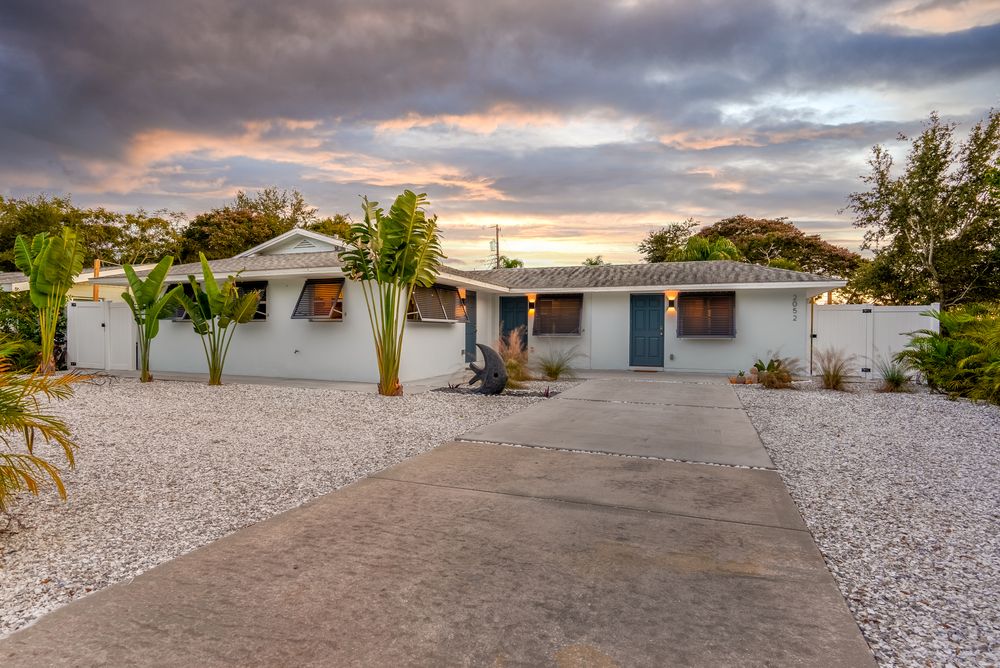
The job whose guarantee was worth putting on record · Sarasota · Photo: Stellar Media Collective
Put the guarantee where the fear lives
A guarantee buried in paragraph fourteen of a contract reverses nothing, because the client's fear does its work long before they reach the signature page — it's already deciding whether they call you at all. Which means the guarantee has to live where the deciding happens: on your website, in the first conversation, and ideally on camera. A page that plainly lists what you stand behind does more for a nervous premium buyer than another gallery of finished kitchens, because it answers the question the gallery can't — what happens to me if it goes wrong?
The most persuasive version is you saying it out loud in a short video, or a past client describing how you honored it when something did go sideways. That second one is the whole ballgame: a real homeowner explaining that the crew found rot behind the shower, called before touching it, and fixed it inside the number they promised — that is proof no adjective can manufacture, and it's the kind of asset a documented project hands you if you collect it without making the client regret the yes. This is the same logic that runs through the offer math for premium trades: when the volume builders down the road are competing on rate buydowns, the firms that win are selling the two things a discount can't buy — the certainty it'll turn out right, and the proof they'll stand behind it if it doesn't. Stellar's guide on why you don't need more leads, you need proof makes the longer version of the argument; the short version is that a guarantee nobody hears about is a cost you're paying for no return.
Questions builders actually ask
Won't a bold guarantee just attract the clients most likely to abuse it? The opposite, if it's bounded correctly. A vague "100% satisfaction guaranteed" invites the grinder who reads it as leverage. A specific one — defined scope, defined remedy, defined trigger — attracts the careful buyer who was afraid of exactly the thing you just addressed, and quietly filters out the person hunting for a loophole, because there isn't one. The specificity that protects your balance sheet is the same specificity that screens your clients.
What's the cheapest guarantee with the biggest effect? A communication guarantee, almost every time. "You'll hear from us every week, no exceptions" costs nothing but discipline and reverses the single most common contractor complaint. Clients don't fire builders over one mistake nearly as often as they fire them over silence, and the promise to never go dark is the one most competitors won't make because they know they can't keep it.
Do I need a lawyer to write these? For the communication and process promises, no — put them in plain English and honor them. For anything that extends your warranty obligations, changes your statutory exposure, or involves a third-party structural product, yes: have counsel and your insurer read the language before it goes on your site, because a guarantee that accidentally waives a defense or voids coverage is the rare marketing move that can genuinely cost you. Bounded on paper, bold in the room.
Is any of this different for a smaller trade — a painter, a garage-door company? The ladder is identical; only the rungs you can reach change. A luxury painter can't offer a ten-year structural warranty, but a "we protect every surface and leave the house cleaner than we found it, guaranteed, or the cleanup's on us" reverses the exact fear a homeowner has about letting a crew into a finished home. Find the specific dread in your trade and write the bounded promise that answers it.
Written 2026-07-07 and current as of that date; Florida's statutory-warranty landscape and the market context around it will keep shifting, and we'll revise when they do. This is marketing guidance, not legal advice — have counsel review any guarantee language before you publish it. Disclosure: this publication is owned by Stellar Media Collective, which produces the proof-and-guarantee content described here for premium trades; the risk-reversal principles stand regardless of who builds it.