Tampa Leads Florida in Permits. The Real Fight Is for Crews — and Video Wins It
Tampa pulled more residential permits in May than any region in Florida, and every one of them needs hands that already have offers. The same camera discipline that wins you homeowners is now how you win the 24-year-old carpenter.
7 min read · July 6, 2026 · Florida Construction Media

Post an opening for a lead carpenter in Tampa this month and count what comes back. A trickle, and not because nobody saw the ad — because everyone who can hang a door straight already has a job, plus a standing offer to leave it. HBWeekly's May residential construction update counted 6,382 new residential permits statewide, nearly flat with April, with Tampa leading every region in the state: 1,701 permits and $571 million in value, 447 of them in Polk County alone. Southwest Florida sat one rung down at 1,652. Each permit is a slab, a frame, a rough-in, and a punch list, and all of it needs hands.
The labor side of that ledger is the half you already feel. Workforce figures reported by Construction Owners from Associated Builders and Contractors put the industry's 2025 hiring need at 439,000 additional workers — a number ABC's Florida chairman expects to reach roughly half a million nationally in 2026 — while one West Florida homebuilders trades chair counts five retirements for every new entrant. Your last three bids already have this priced in. The numbers just name the situation: demand at full throttle, supply thinning, leverage sitting with the 24-year-old carpenter deciding where to spend his back.
He decides the way your clients decide. Phone out, thirty seconds, judgment formed from whatever surfaces. The video discipline that wins you homeowners has a second audience now, and per head, the second one may currently be worth more.
Every crew in the region has options
A permit board like Tampa's means a good hand can give notice on Friday and start somewhere new on Monday without adding a mile to his drive. Recruiting in this market is not a search problem — the workers exist; they're employed — it's a choosing problem. You're on a shortlist whether you entered it or not: you, the outfit that hired away your last foreman, the national builder that just opened a division office off I-75. The candidate compares the way a homeowner compares bids, only faster, because he's been reading job sites since he was nineteen.
Most builders answer that comparison with a text block: pay range, years required, benefits after ninety days. Every post reads the same, so the post decides nothing. What decides is whatever else the candidate can find — and for most trades employers that's a logo, a phone number, and four photos of finished kitchens, which tell a framer nothing about what Tuesday feels like.
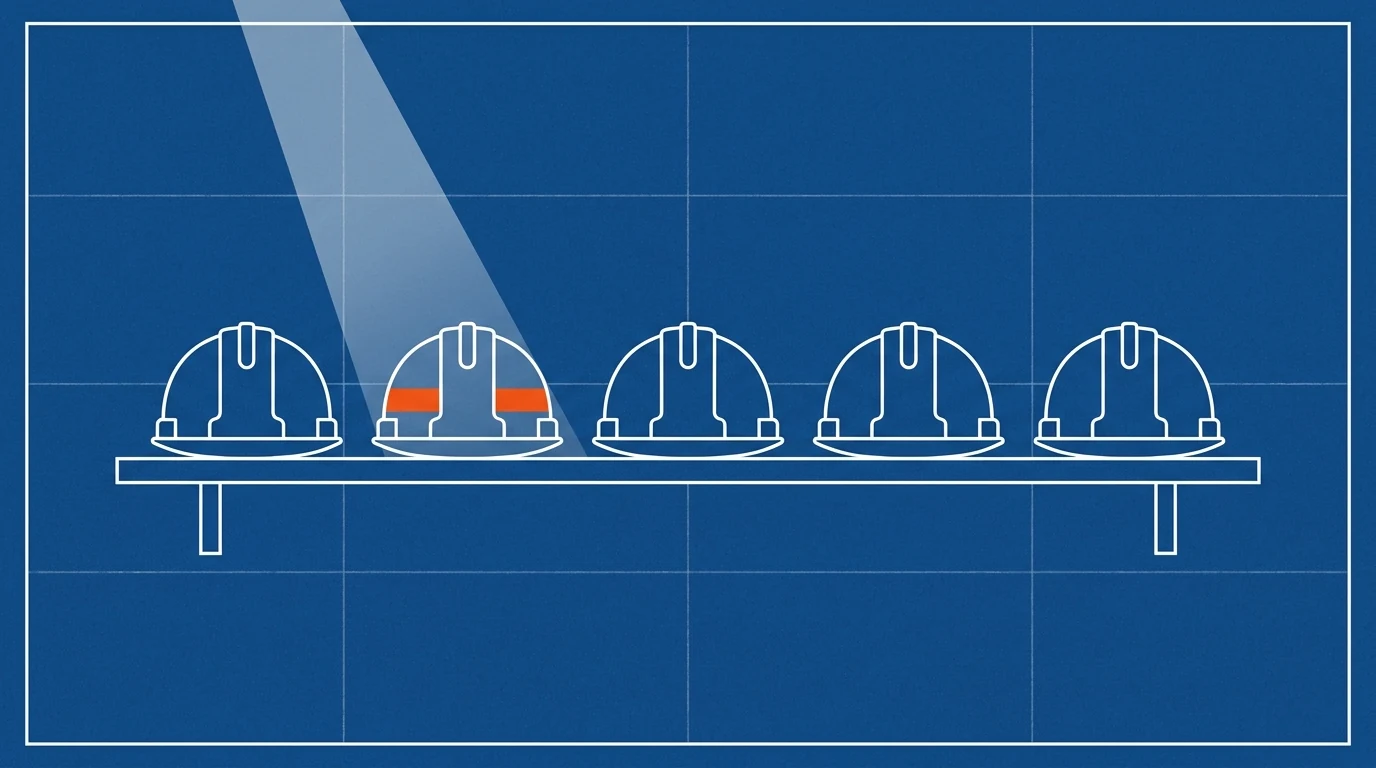
The labor market watches video too · Illustration: Florida Construction Media
What a recruit actually vets
Pay is table stakes. He assumes you'll land within a dollar or two of everyone else, because in this market you have to. What he's actually trying to establish is four things.
Is the site clean. Staged material, a swept slab, cords coiled instead of drowned. A sloppy site reads as danger and rework — and as a boss who doesn't walk his own jobs.
Is the equipment maintained. Nobody wants to fight a worn-out saw for eight hours or ride to work in a truck held together with ratchet straps. Tool condition is the most legible proxy for how a company treats the people using them.
Do people get taught. The difference between a job and a trade is whether he'll be better in two years or just older. A lead who explains, a company that pairs green hands with gray ones on purpose — that's a career signal, and it's rare enough to be decisive.
Does the boss respect the work. Names known, credit given, nobody screamed at on the slab. He has worked for the other kind and doesn't need a second tour.
Not one item on that list is a claim. Every item is observable, and every one is filmable. That's the whole opening — your competitors are still describing themselves in bullet points, and these four questions can only be answered with evidence.
The reel is one day on your site
The recruiting reel that works isn't a recruiting video in the corporate sense — no drone-swell montage, no narrator calling the company a family. It's a day on your site, compressed to about ninety seconds and edited honestly. Real crew doing real work. One teaching moment, caught rather than staged. The condition of the trucks and the trailer, shown without comment. And the Friday beat — whatever the end of a good week actually looks like at your company. No stock footage anywhere in it, and no sentence you wouldn't say out loud on the slab.
Spec box: the recruiting-reel shot list. One — hands at work before any faces: a cut, a weld, a joint going home, ten seconds minimum. Two — the teaching moment: a lead walking a younger hand through one task, unscripted, wind noise and all. Three — the equipment pass: inside the trailer, racked tools, the truck that gets maintained. Four — the site pan: staged material, swept slab, coiled cords. Five — the Friday beat: tailgate, coolers, the crew leaving whole. Six — the owner, thirty seconds, naming one person and one thing they did right this month. Nothing in the cut that a new hire wouldn't see on day one.
Where it runs
Three placements, cheapest first.
The job post. A text-only post gets skimmed with all the others. A post that links to ninety seconds of your actual site hands a serious candidate something to verify, and a candidate who verifies shows up half-decided. We'll state that as a mechanism rather than a statistic — nobody has clean data on trade-job postings, and we won't pretend otherwise — but it's the same logic that makes a bid with photos beat a bid without them.
Instagram. The carpenter you want already follows tool brands and watches sped-up trim work at lunch; young trades' feeds are already full of job-site content. Your reel belongs there, posted from your company account, tagged to your town.
The careers page. For most builders it's currently a form, and forms collect the desperate. Put the reel above the form and the page starts doing selection work: the candidate who watches it and still applies has already chosen you once.
Recruiting footage is marketing footage
The economics work because the footage does double duty. A homeowner watching your recruiting reel reads a clean site and a taught crew as proof that you won't wreck their house. A developer reads it as capacity and process — the same evidence logic we laid out in the developer-facing portfolio piece. The well-run crew is the proof asset; who it persuades depends only on the edit. If you already film your sites on a rhythm, the recruiting reel is a second cut, not a second shoot. If you don't, this is the second compounding reason to start.
The apprentice angle, and the bench you already have
The long game runs upstream. The same Construction Owners coverage notes roughly 12,000 trade-school scholarships sitting unclaimed — the interest problem starts before the hiring problem does. Builders who partner with local apprenticeship and technical programs have something worth filming, provided it's filmed honestly: a first-year doing first-year work and getting corrected without ceremony, not hard hats posed in a classroom. Instructors share that footage, parents watch it, and you become the company the next cohort has heard of before graduation.
Retention, meanwhile, is recruiting you've already paid for. Featuring crew members by name — with their consent, on camera, credited for specific work — costs a morning and does something a raise alone doesn't: it makes the work publicly theirs. People stay longer where their name is on the record, and the bench you build fastest is the one already wearing your shirts. If getting yourself or your leads to talk on camera is the sticking point, we've written the scripts.

Every crane is hiring · Gulf Coast · Photo: Stellar Media Collective
Questions builders actually ask
Won't competitors poach the guys I feature? They already know who your good people are. This industry runs through supply houses, inspection lines, and hired-away foremen; your crew was never a secret. Poaching happens over pay and treatment, not exposure — and a man who gets public credit for his work has one more reason to stay, not one fewer. If your retention plan depends on your best carpenter staying invisible, the camera isn't the problem.
What if my site wouldn't look good on camera? Then the camera has already earned its keep, because it just showed you what every candidate at the fence line can already see. Fix the site first; film second. A reel can't create a well-run company — it can only prove one that exists, and that order of operations is the point.
How fast does this fill a position? We won't invent a timeline, and you should be suspicious of anyone who does. Video doesn't mint carpenters; it changes which builder the existing ones choose, and it front-loads the choosing — you'll hear "I watched your videos" in interviews before you see it in headcount. Expect it to work the way reputation works: slowly, then steadily, and only if the site matches the footage.
Published July 6, 2026. Permit and workforce figures are per the sources linked above and will age; check the current month's numbers before repeating them in a meeting. Florida Construction Media is published by Stellar Media Collective of Sarasota, Florida, which sells the filming systems described here — the mechanism stands whoever holds the camera.