100 Views in the Right ZIP Beat 100,000 Anywhere Else: The Reach-Quality Math
A reel that travels is not a reel that works. Here's how to price a view by who saw it, the two platform defaults quietly spending your budget in other states, and the audit that tells you which of your numbers are real.
9 min read · August 7, 2026 · Florida Construction Media
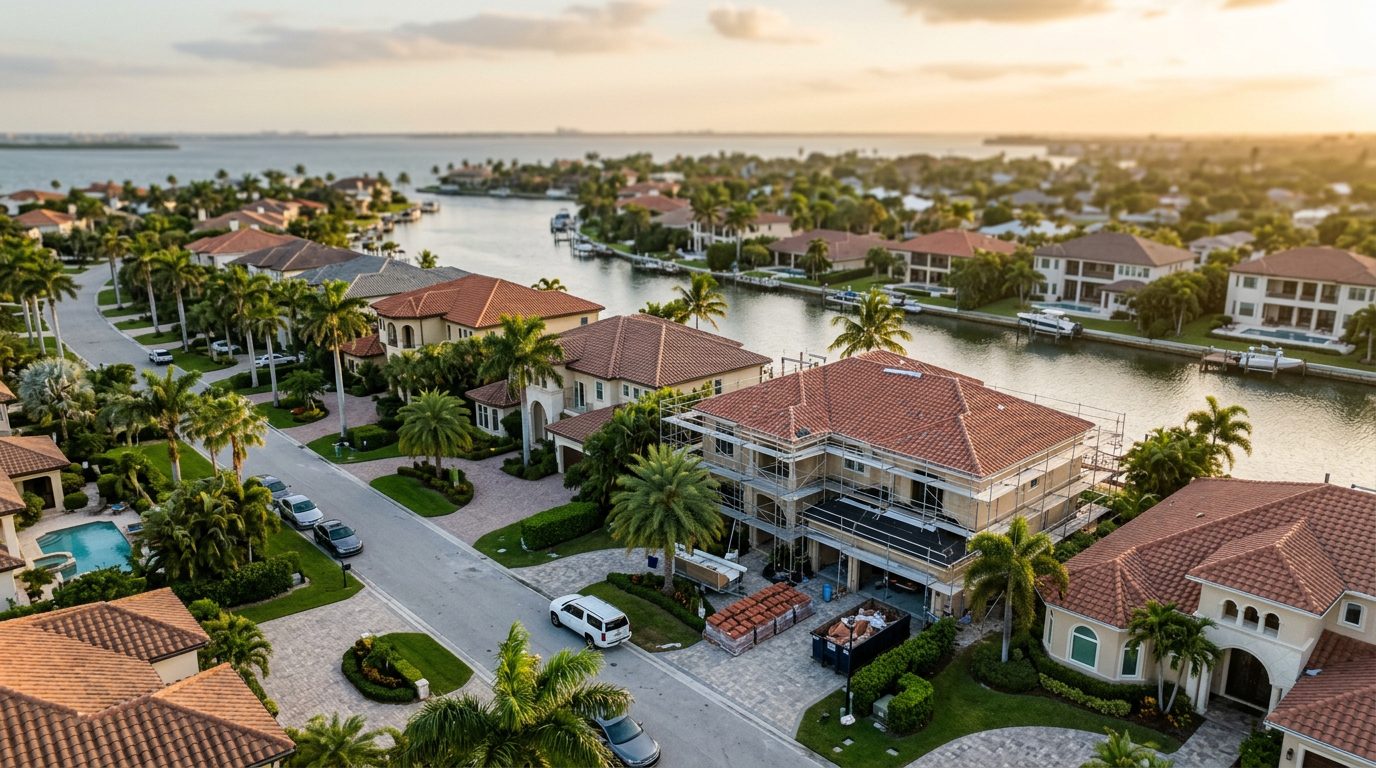
Every builder who has posted for more than a year has had the experience: one reel goes sideways, the counter runs to six figures, the phone does not ring. Meanwhile a walkthrough that got 340 views produced two consults and a signed job. Both numbers were real. Only one of them described your business.
The gap is not mysterious. Reach is a headcount, and a headcount does not distinguish between a homeowner four miles away who has been quoting kitchen budgets to a spouse since March and a nineteen-year-old in Ohio who watched eleven seconds because the algorithm needed something to fill a gap. Your service area is a finite piece of ground. Everything outside it is a number on a screen and nothing else.
So the useful metric is not views. It is views inside the boundary where you can legally, profitably, and actually do the work — and once you start pricing reach that way, most content decisions get simpler and a few line items on your ad invoice start looking indefensible.
Pricing a view by who saw it
Run the arithmetic on two campaigns and the point makes itself. The inputs below are illustrative — swap in your own before planning around anything.
Assume you spend $300 boosting a well-shot project reveal with loose targeting: the whole state, broad interests, whatever the platform recommends. It performs. You get 100,000 views. Now assume — and you can check this in your own analytics rather than assuming — that 2 percent of that audience sits in the ZIP codes you serve. That is 2,000 qualified views at $0.15 each, and the other 98,000 are a vanity receipt.
Now assume the same $300 targeted hard: eight ZIP codes, a homeowner-age band, no interest expansion. Reach collapses to 6,000 views, which looks like a worse post by every number the platform shows you. But 85 percent of them are inside the boundary. That is 5,100 qualified views at $0.059 each — roughly two and a half times the qualified reach for the same money, from the campaign that looks like the loser on the dashboard.
Push it further, because the headline of this article is not hyperbole. A hundred views inside a single high-value ZIP, delivered to homeowners in the value band you build for, is a hundred people who could plausibly hire you. If one in a hundred eventually does, on a $250,000 remodel carrying 22 percent gross margin, that batch of 100 views is attached to $55,000 of gross profit. A hundred thousand views spread across the country contains, structurally, no such person — not because the content was bad, but because the audience was somebody else's. What a signed job is actually worth is the number that should be setting your targeting, and almost nobody lets it.

Same dot count, different geography — and only one of them can hire you · Illustration: Florida Construction Media
The two defaults spending your money elsewhere
Before you rebuild a content strategy, check two settings. In most contractor accounts we look at, one of them is leaking.
Google's location setting is "presence or interest" out of the box. Google's own advanced location options documentation describes the recommended default as people in, regularly in, or who've shown interest in your targeted locations. Read that last clause slowly. A person in another state researching Sarasota — a snowbird eight months out, a curious relocator, a competitor, a student writing a paper — has "shown interest" in your location and can be served your ad and click it on your dime. For a business that ships product nationally, that setting is correct. For a builder who cannot pour a slab outside three counties, it is a subsidy to strangers. Switch it to presence.
Meta's radius does not work the way most people think. Per Meta's location targeting help center, you can set a radius of 1 to 50 miles around a dropped pin in the US — but radius selection is not available when you target by ZIP code, state, or region, where the whole area is included regardless. That matters because the two approaches are not interchangeable. A 25-mile pin around your office draws a circle that includes water, agricultural land, and three ZIP codes where nobody is buying a $250,000 remodel. A hand-picked ZIP list draws the actual shape of your market. Most premium trades want the ZIP list and reach for the radius because it is one click.
There is a third leak that no setting fixes: organic content optimized for travel rather than for relevance. A reel engineered to be broadly watchable — trending audio, satisfying-process edit, no geography in it anywhere — will be shown broadly, and broadly is where your buyers are not. A reel that names the street, the neighborhood, the code requirement, the local inspector's timeline, will travel less and land harder. The platform is not punishing you for being local. It is matching content to whoever finds it relevant, and specificity is what tells it who that is.
The reach-quality audit. Five checks, roughly forty minutes, no software to buy. (1) Open your Google Ads location settings and confirm presence-only targeting on every campaign. (2) In Meta Ads Manager, replace radius pins with an explicit ZIP list matching your true service area. (3) Pull the "top locations" report in your Instagram, Facebook, and YouTube analytics and write down the percentage of your audience actually in-market — that single number reframes most of your reporting. (4) Cross-check your ZIP list against Census ZCTA income and home-value tables at data.census.gov and cut the ZIPs that cannot carry your average job. (5) List your last twenty signed clients by ZIP and see whether your targeting matches your book. Where steps 4 and 5 disagree, trust step 5.
Drawing the money map
The ZIP list is the asset here, and it should be built from evidence rather than instinct. Three sources, in order of usefulness.
Start with your own closed jobs. Twenty addresses on a map is the most honest market research you will ever get for free, and it usually surprises people — clusters form around two or three neighborhoods, referral chains show up as literal geography, and one ZIP everybody assumed was core turns out to have produced nothing in three years.
Layer in public demographic data. Census ZIP Code Tabulation Area tables give median household income, median home value, owner-occupancy rate, and age distribution for every ZIP in your county, free and citable. If your average job is $180,000, ZIPs where the median home value sits below that are not your market at any budget. It is worth noting how coarse county-level numbers are by comparison: Redfin's Sarasota County market page put the countywide median sale price at roughly $424,000 for the three months ending May 2026, up about 2 percent year over year — a figure that averages barrier-island waterfront and inland starter product into one number that describes neither. The county median is a headline. The ZIP median is a targeting decision.
Then add permit and development data, which tells you where the next two years of work is rather than where the last two were. Our monthly permit roundups and the growth-corridor coverage exist for exactly this — a ZIP with a thousand rooftops arriving is a different marketing proposition than a built-out one where your only path is renovation.
The output is a list of eight to fifteen ZIPs, ranked. Everything you publish and every dollar you spend gets aimed at that list, and the reporting question changes from "how did the post do" to "how much of my market saw it."
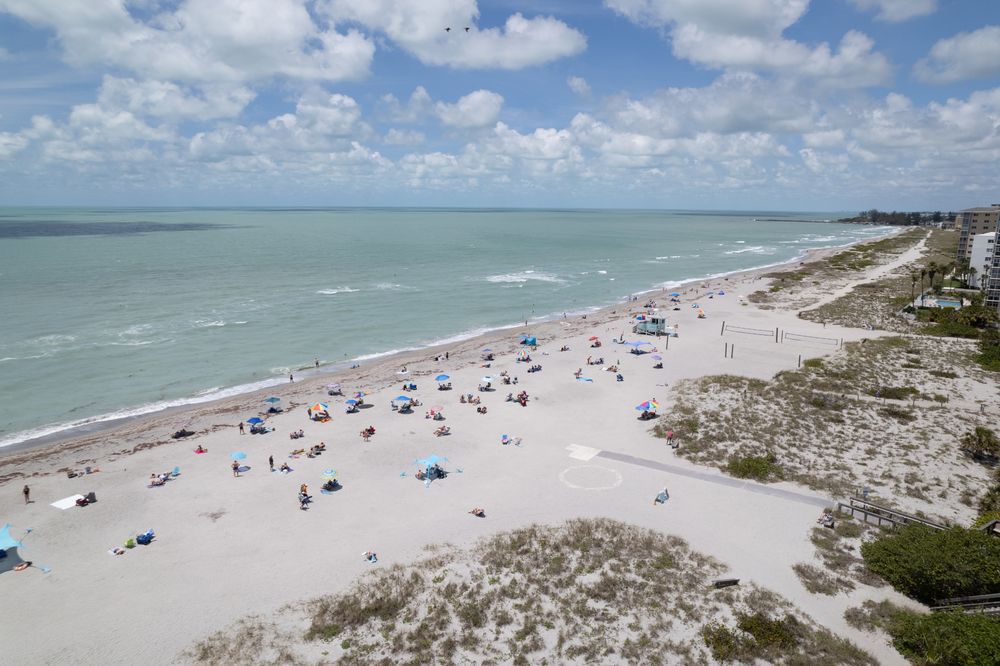
One house, one street, one ZIP that was on the list · Venice · Photo: Stellar Media Collective
What this does not mean
Two honest caveats, because the argument gets over-applied.
Narrow targeting has a floor. Squeeze a paid audience small enough and delivery gets expensive and unstable — the platform runs out of people to show your ad to and frequency climbs until the same forty homeowners have seen your face nine times. Eight to fifteen ZIPs is usually a workable audience for a Gulf Coast builder; one ZIP and a five-year age band usually is not. The fix is a wider ZIP list, not a wider state.
And reach quality is a ceiling, not a guarantee. Perfect targeting delivered to exactly the right people still fails if the content gives them no reason to care. Geography decides who is in the room. The message decides whether anyone leans in. Content aimed at the buyers who are not ready to call yet has to earn attention on its own merits; putting it in front of the right ZIP just means the effort is not wasted on people who could never hire you regardless.
The metric to run your reporting on, then, is qualified reach: in-market views per dollar, tracked as a trend. It will make your best-looking posts look worse and your quiet ones look considerably better, which is the correct outcome. Pair it with an honest view of what a month of ad spend buys and a refusal to pretend attribution is precise, and you have a reporting stack that survives contact with a nine-month sale.
Questions builders actually ask
My reel hit 200,000 views and I got nothing. Was it wasted? Not entirely — brand familiarity is real, and a well-traveled piece can pull followers who eventually move in-market, which happens more in Florida than most places. But it should be counted as an accident, not a strategy. Look at the top-locations report on that post. If in-market viewers were a rounding error, the video did not fail; it succeeded at something you cannot bill for.
How small is too small for a targeted ad audience? Watch frequency rather than a headcount rule. When average frequency climbs past roughly three or four in a short flight and cost per result rises with it, you have squeezed the audience past useful. Add ZIPs from the ranked list before you loosen demographics — expanding geography keeps the audience qualified, while expanding interests does not.
Should I stop using trending audio and broad hooks? No, but stop treating travel as the goal. Use the broad hook to earn the first three seconds, then get specific fast — the neighborhood, the job, the actual problem. Specificity costs you reach and buys you relevance, and relevance is the half you can invoice.
Does any of this apply to organic content, or is it just an ad setting? It applies more to organic, because there is no targeting box to fix it. The levers are naming places and problems, tagging locations, building project pages tied to real neighborhoods, and keeping your Google Business Profile genuinely local. Stellar's owner resources cover the mechanics; the principle is that geography has to be in the content when it cannot be in the settings.
The campaign math above is an illustrative model with its inputs printed, not measured client results or survey data — run your own audience reports and close rates before budgeting against it. Platform settings described were verified against Google and Meta documentation on August 7, 2026, and both companies change defaults without notice; re-check yours. Published August 7, 2026. Disclosure: Florida Construction Media is published by Stellar Media Collective, Sarasota, which builds and runs the kind of geographically targeted content systems this article argues for.