Wellen Park and North Port: The Growth-Corridor Playbook
The third-best-selling master-planned community in America sits at the end of River Road, and most of the trades who will work in it for the next decade have published nothing about it. What the corridor rewards is unglamorous and specific.
8 min read · August 6, 2026 · Florida Construction Media
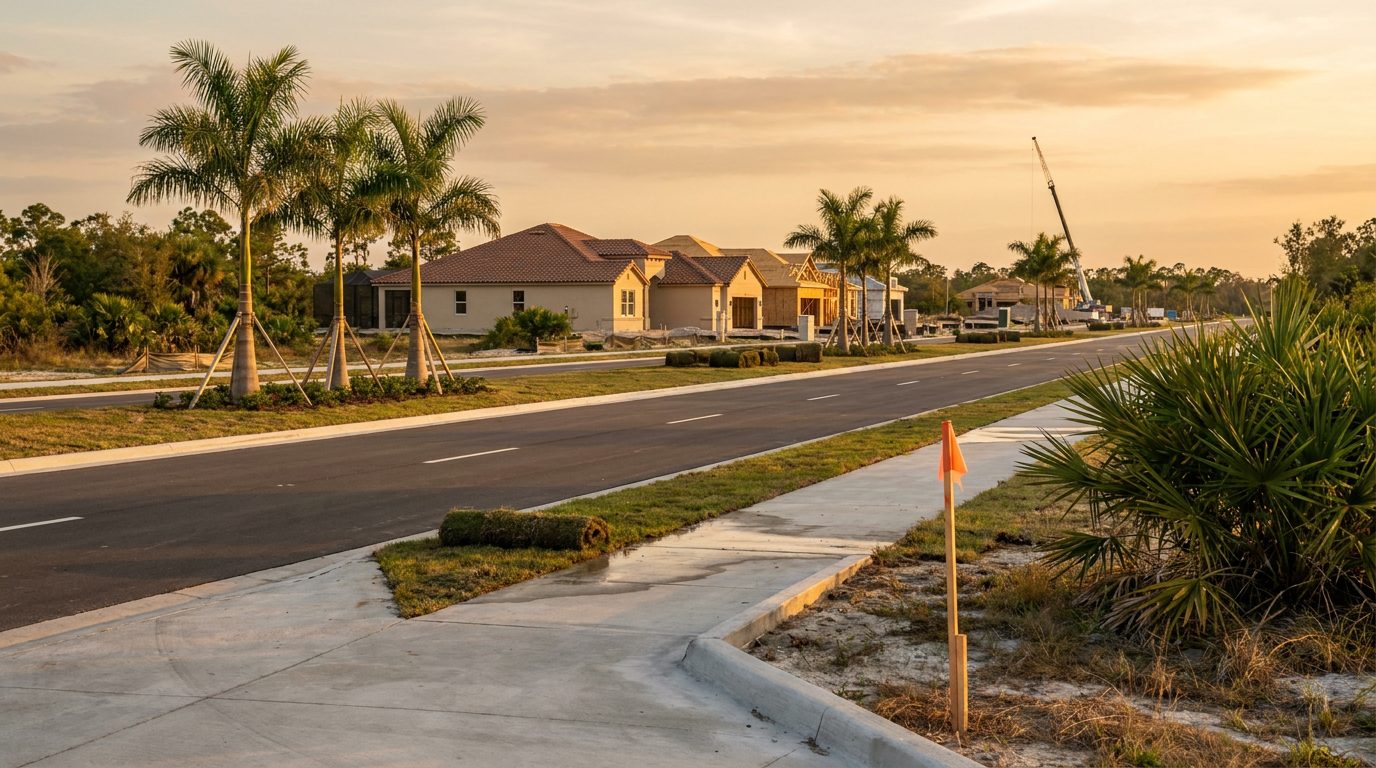
Drive south on River Road on a Tuesday and the traffic tells you everything. Concrete trucks, framing crews, a stucco rig, three landscape trailers, and a line of out-of-state plates at the light. At the end of it sits the third-best-selling master-planned community in the United States, and around it a city most of the Gulf Coast trade market still treats as somewhere you drive through on the way to Punta Gorda.
The numbers stopped being arguable this summer. RCLCO's mid-year 2026 ranking put Wellen Park third in the nation with 727 new-home sales in the first half of the year, up 37% year over year, behind only The Villages and Lakewood Ranch — as the Business Observer reported — while the broader new-home market fell. Babcock Ranch took fourth. Three of the country's top four master-planned communities now sit within an hour of each other on this coast.
That is the headline. What matters to a contractor is the shape underneath it, because this corridor does not reward the marketing that works in Sarasota.
What the corridor actually is
It reads as one place on a map and behaves as three.
Wellen Park is the master-planned piece — more than 12,000 acres inside North Port and unincorporated Sarasota County, roughly 10,000 residents today against a plan for 22,500 homes and 50,000-plus people at buildout. It has a town center that keeps expanding, a spring-training ballpark, and a pipeline of new neighborhoods: Esplanade's 877 homes, Oakbend, a Downtown Wellen phase two. Nearly every rooftop in it is sold by a national or regional production builder.
North Port proper is the other city — the enormous 1960s-platted grid east and north of the parkway, tens of thousands of quarter-acre lots on Price, Sumter, and Toledo Blade, much of it built out between 1998 and 2006 and now hitting the age where roofs, kitchens, HVAC systems, and original windows all come due at once.
The commercial spine connects them and is changing fastest. Sarasota Memorial broke ground in November on a $507 million, nine-story hospital on North Sumter Boulevard near I-75 — 100 beds at opening in 2028, shelled for more than 400 — per Your Observer. A 53,000-square-foot Detwiler's Farm Market has signed to anchor a retail center at Sumter and the interstate. Price Boulevard is mid-widening. A rehabilitation hospital and a unified K-12 campus both land in this cycle.
Those three parts want three different things from a contractor, and the mistake almost everyone makes is marketing to the first one.
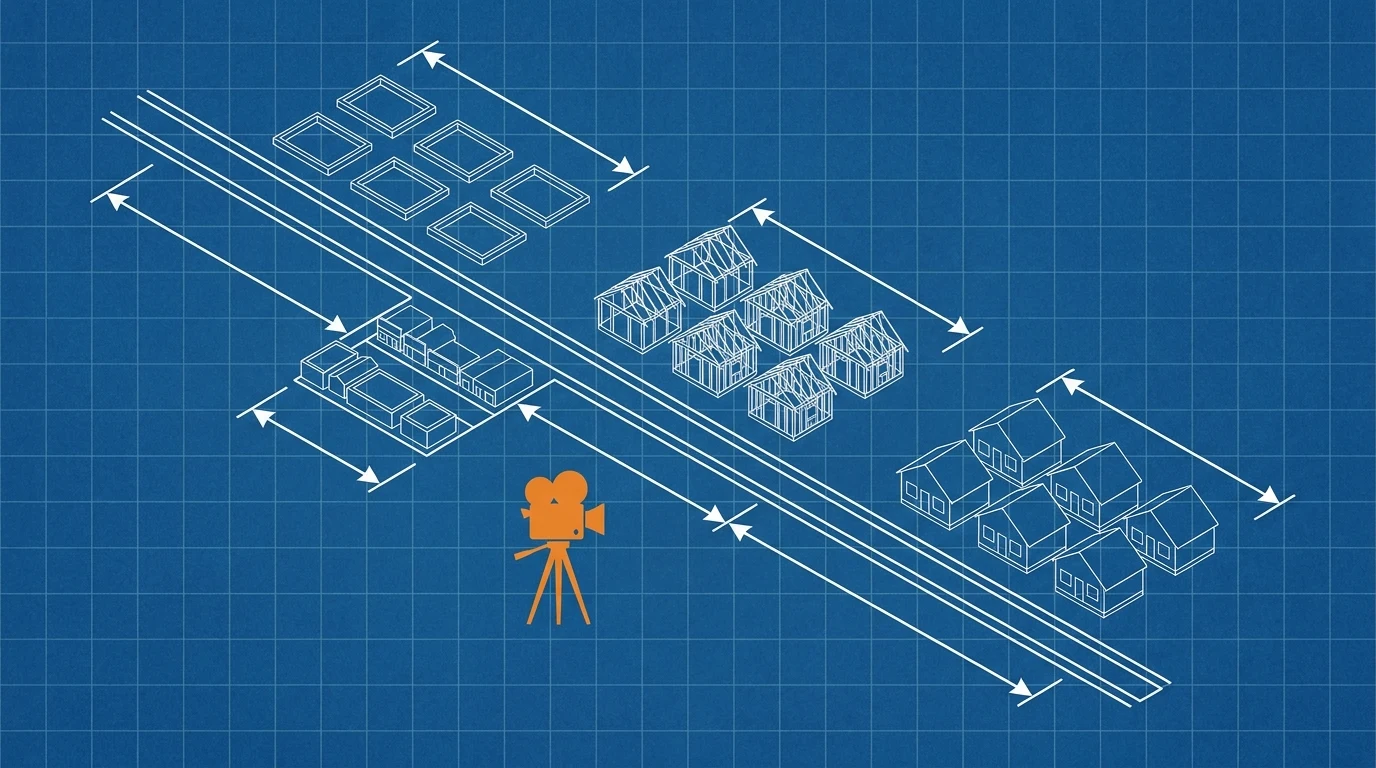
One corridor, three markets — and only one of them is the new-home sale · Illustration: Florida Construction Media
The buyer here has no local network
In an established Sarasota neighborhood, a homeowner needing a contractor asks a neighbor, and the neighbor has lived there eleven years and has opinions. In a neighborhood that did not exist in 2022, the homeowner asks a search engine, a community Facebook group, and whoever the builder's warranty coordinator mentions. No referral memory, no incumbent. Whoever shows up credibly in that vacuum becomes the default for a street, then a section — and holds it for years, because everyone who moves in afterward asks the people who arrived first.
That is a situation almost nobody in the trades gets handed twice, and it has a short clock on it. Sections fill, defaults harden, and the contractor named in the group chat in year one is still getting named in year six.
Two things win the vacuum, and neither is an ad. The first is being findable for the searches these buyers actually run, which are hyperlocal and unromantic: whether a screen enclosure needs approval here, what a pool costs in this neighborhood, who does storm protection on a house this new. The second is proof that you have worked in these streets — not Sarasota, not "the Gulf Coast," but the section with the same floor plan and the same HOA. Stellar's guide to the signals premium clients check before calling covers the general version; in a new corridor the specific version — same builder, same section, same year — outweighs all of it.
The money is behind the closing, not in it
Production builders own the new-home sale in Wellen Park. An independent trade is not going to win it and should stop trying. What the trades win is everything that happens in the eighteen to thirty-six months after the buyer gets keys, and in a community adding well over a thousand homes a year, that queue is enormous and predictable.
It runs roughly in this order: screens and gutters almost immediately, landscaping and irrigation within the first season, outdoor kitchens and pools once the first summer makes the backyard's limits obvious, storm protection once the first hurricane watch does the arguing for you, and interior work — closets, trim, built-ins, the kitchen the buyer accepted because upgrading it through the builder cost double — starting around year two. This audience is unusually receptive to firms that film the design phase, having just been through a selections process they found abbreviated.
None of that is exotic. It is ordinary trade work with an unusually clear timing signal attached, which means a contractor can market to a closing cohort rather than to a region. The people who took keys eighteen months ago are the ones thinking about a pool this month.
North Port's other half is a remodel market nobody markets to
While Wellen Park absorbs the attention, the older North Port grid is quietly entering the most predictable phase of the remodel cycle. The 2020 census counted about 75,500 residents here; World Population Review's 2026 projection puts the city past 101,000, a third larger in six years. Most of those people bought existing houses, and the largest cohort of that housing stock is now two decades old. Twenty-year-old roofs, original 2004 windows, first-generation kitchens, and air handlers on borrowed time — in a market where insurance and hardening paperwork makes several of those decisions urgent whether the homeowner likes it or not.
That buyer is different from Wellen Park's — more year-round, more price-sensitive, far more likely to have been burned by a contractor during the 2022–2025 storm cycle. They research longer and verify harder. They are also the least-marketed-to homeowners in Sarasota County, because the ad money follows the new district four miles west.
Spec box: the corridor rotation. One filmed afternoon a month covers this. Neighborhood proof: one finished job per section, named by community, with the before. The rules content: HOA and architectural-review basics, permit timelines in North Port versus unincorporated Sarasota County, what the district's approval process actually asks for. The cohort content: "you closed last spring — here's what breaks first, and what can wait." The commercial watch: what the hospital, the retail center, and the Price Boulevard work mean for a homeowner's timeline and for your crew availability. The aging-grid content: twenty-year-old-house maintenance, priced honestly. Publish to a page per community — project pages built to rank — not to a single portfolio grid.
What this corridor does not reward
It does not reward luxury positioning borrowed from Sarasota. The median here is not the median on Longboat, and the buyer who moved from Ohio for a lake view reads that language as a warning about price rather than a signal of quality. The positioning that works is competence, availability, and specificity: we work in your neighborhood, we know your builder's floor plan, here is the one down the street, here is what it cost.
It does not reward a seasonal calendar either. Arrivals here are staggered by closing dates, not by snowbird migration, so the "who do I call" moment happens all twelve months. Marketing that goes quiet in July misses a cohort.
And it does not reward waiting for the market to mature. In five years this corridor will look like Lakewood Ranch does today — established defaults, entrenched relationships, a much higher price of entry for anyone showing up late. The advantage available now is the ordinary one: being the contractor a few thousand people with no local network can actually find.
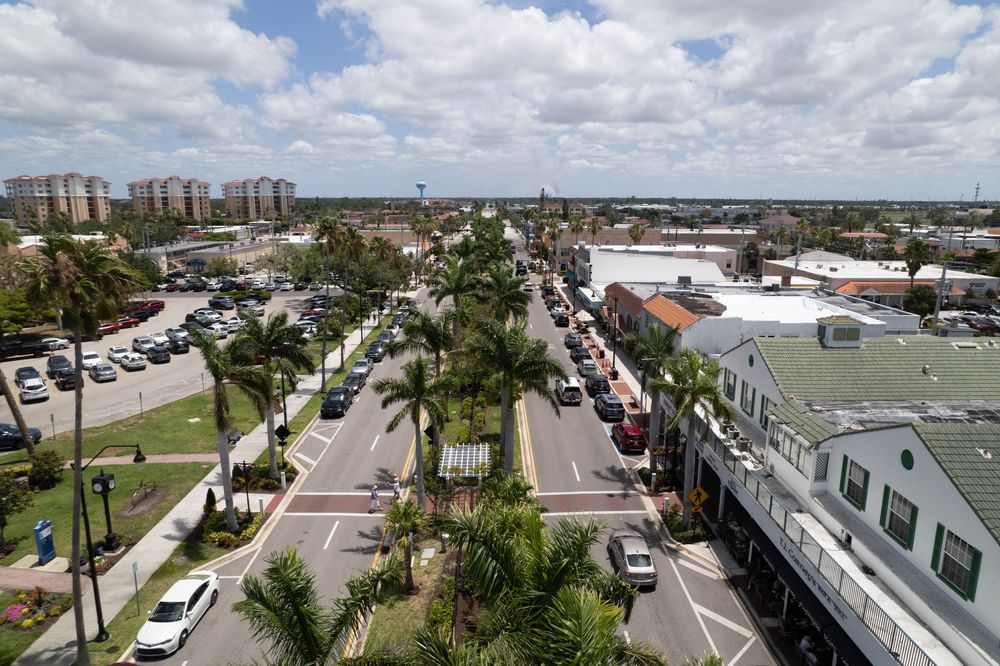
The corridor's other end — where the buyers with no local network go looking · Venice Downtown · Photo: Stellar Media Collective
Questions builders actually ask
We already get work out there from the production builders. Isn't that enough? It is volume, and it is somebody else's list. Builder work pays on their terms, ends when the phase ends, and leaves you unknown to the homeowner whose backyard you will want to quote in two years. The corridor's real asset is the closing cohort — the same houses, sold direct, at your margin.
How do we make content about a community we don't have permission to name? Naming a public community and showing work you performed is ordinary marketing, not an endorsement claim. What requires care is implying an affiliation you do not have, using a developer's or builder's marks, and filming inside a home without written permission. Show your own work, describe the location plainly, and keep any HOA or district-process explanation factual and dated — those rules change, and getting them wrong in public is worse than saying nothing.
Is a market this dominated by national builders worth building a library for? That domination is the argument for it. When the new-home sale is closed to you, the aftermarket is the whole business — and the aftermarket is decided by search and neighbor conversations, not by a sales center. A library of answers is the only asset that works in both. It is the 97% problem in physical form: most of the corridor is not buying today, all of it will buy something within three years, and nearly all of it is unclaimed.
We're a small shop. Which one thing first? One page per community you actually work in, each with one filmed job and the answers to that community's specific questions. Not a blog, not a campaign — a handful of pages that exist, then a job added to each as you finish them. Stellar's resource library has the mechanics, and its Venice-area page covers this end of the county.
Figures checked against published sources as of August 6, 2026 — RCLCO's mid-year 2026 ranking as reported by the Business Observer, local reporting on the Sarasota Memorial groundbreaking and the Sumter Boulevard retail lease, the 2020 census, and a published 2026 population projection, which is an estimate rather than a count. Timelines, sales pace, and permit rules in this corridor change; confirm current details with the City of North Port, Sarasota County, and the relevant district before using them in your own marketing. Florida Construction Media is published by Stellar Media Collective, a video and marketing studio serving Gulf Coast contractors.