The Recruiting Reel: Hiring Carpenters With the Same Camera That Wins Clients
Most builders run a twelve-touch marketing system for homeowners and a single job post for the people who do the work. The fix isn't a better ad — it's four short films and a bench list, built from footage you're already shooting.
8 min read · August 9, 2026 · Florida Construction Media
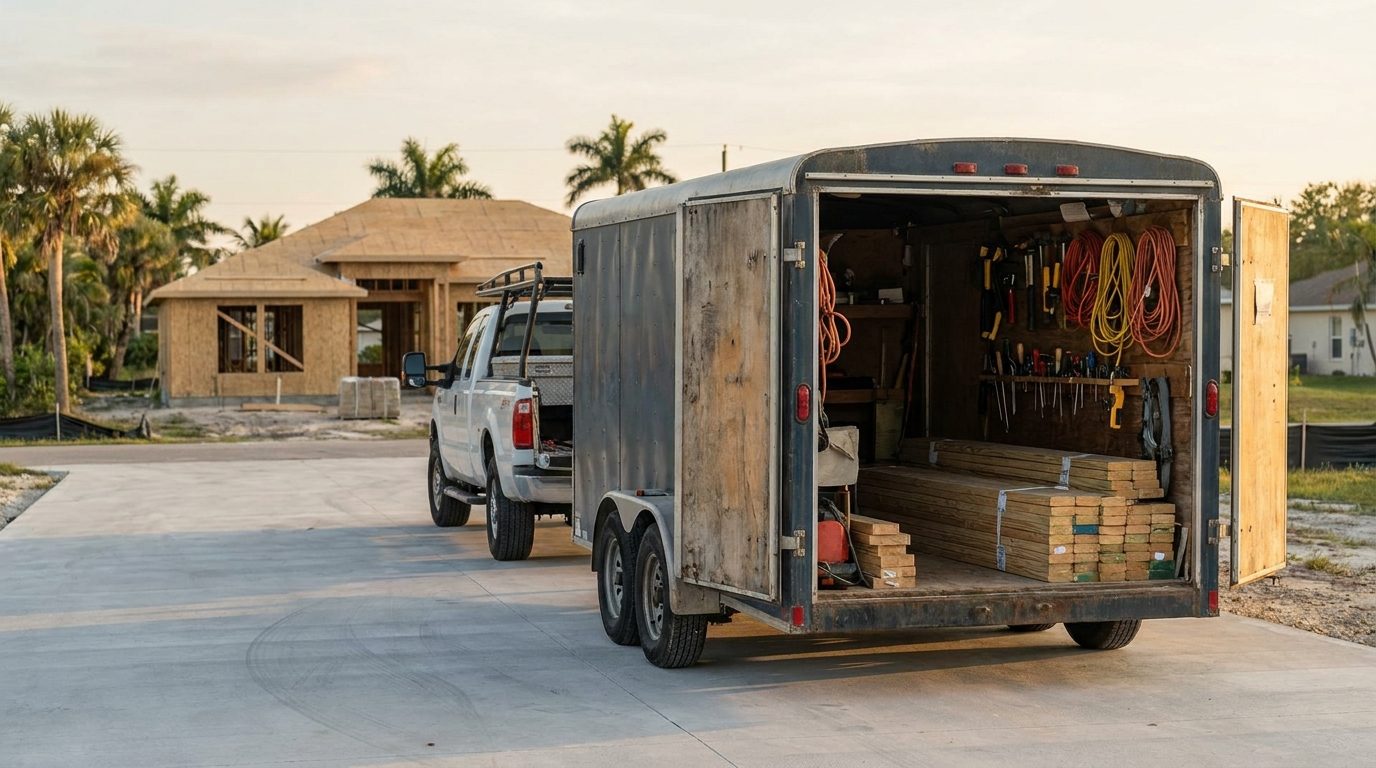
Look at what a decent builder has assembled on the client side by now. Project pages, a testimonial or two, a cost guide that collects emails, a follow-up sequence after the estimate, a stack of reels keeping the phone warm. Twelve touches, all aimed at one homeowner making one decision. Now look at the hiring side of the same company: one job post, written in 2019, reposted whenever somebody quits. The marketing sophistication ends at the property line — and on the other side of it sits the constraint that actually caps the business, whether you have the hands to build what you sold.
The scale of that constraint isn't a mystery. Associated Builders and Contractors' 2026 model, reported in February, puts the industry's need at 349,000 net new workers this year and 456,000 in 2027, driven largely by veterans retiring rather than by a building boom. Note what that means: the number came down from prior years, and ABC's chief economist attributed the decline to modest spending forecasts — not to the labor supply healing. Slower growth shrank the gap; nothing closed it.
We've written before about why the labor market watches your video and what belongs in a day-on-site reel. This is the operating system around it — turning a camera you already own into a hiring pipeline that runs whether or not anybody quit this month.
Your hiring funnel has one page in it
The carpenter you want makes his decision the way your clients make theirs. He looks you up, forms a judgment in about thirty seconds from whatever surfaces, and never tells you he considered you. The difference is that when a homeowner does this, twelve pieces of evidence are waiting. When a framer does it, he finds a logo, a phone number, and photos of finished kitchens that tell him nothing about what a Tuesday feels like on your crew.
The fix is the one that worked on the client side: stop describing yourself and start showing evidence, because the person you're trying to reach is the one making the decision, not you. Pay he can compare in a sentence. The site, the tools, the teaching, the boss — those he can only judge from what he can see.
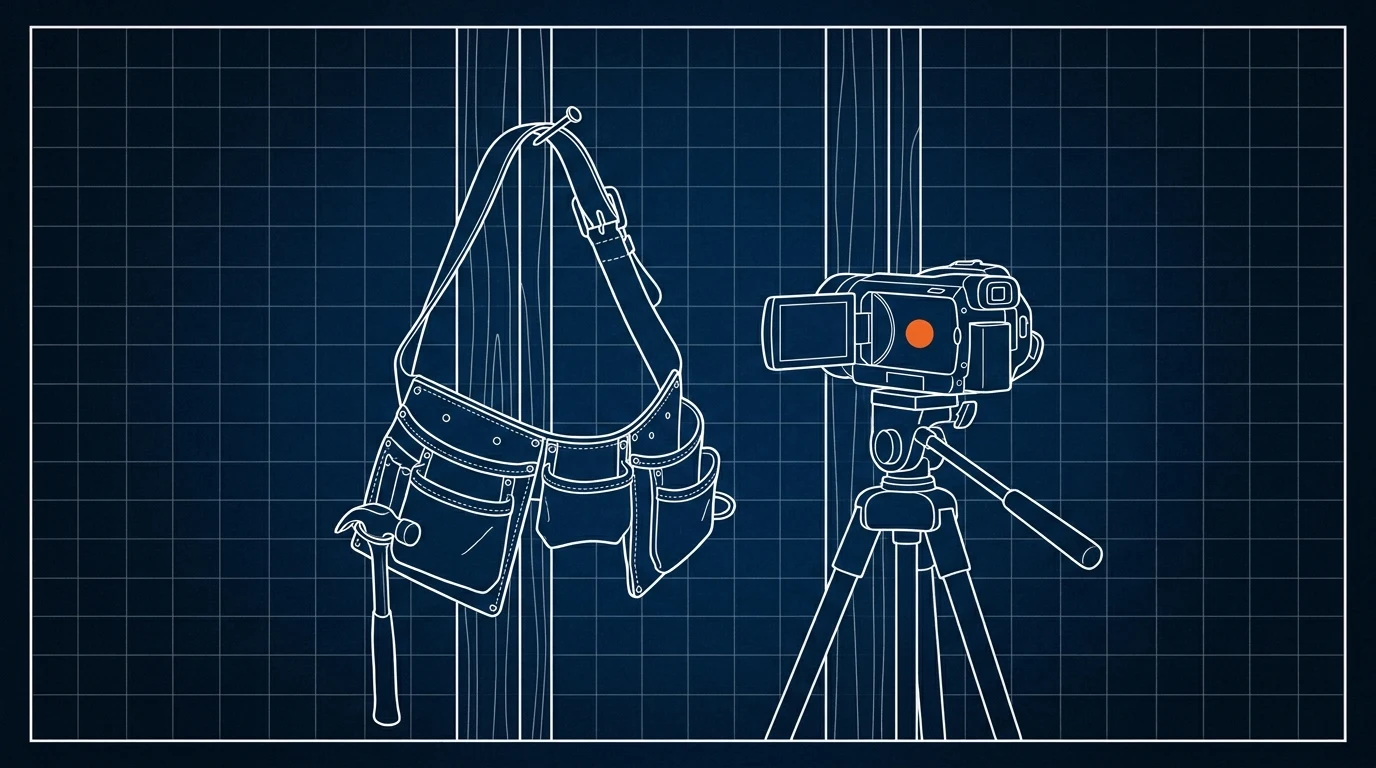
The same camera, pointed at a second audience · Illustration: Florida Construction Media
Four films, not one reel
One reel answers one question. A hiring pipeline needs four, each settling a specific doubt the good candidates carry.
The day film. Ninety seconds of your actual site: hands working before any faces, a lead correcting a younger hand, the inside of the trailer, a swept slab, the end of a good week. We specced this one out in detail in the market piece, and it's the one that gets shared.
The year-one film. The most decisive question a 24-year-old is asking is whether he'll be better in two years or just older. Answer it on camera: what a first-year hand does in his first six months, what he's trusted with by month twelve, who teaches him, what he earns once he's competent. Nobody films this, which is why it lands.
The name film. One crew member, with written consent, talking for two minutes about why they're still here — not how great you are, the specifics. The truck they got, the certification you paid for, the Friday they got sent home early because it mattered. Loyalty described by the owner is a claim. Loyalty described by the guy holding the nail gun is evidence.
The straight-talk film. Sixty seconds of the owner naming what's hard about working here. August heat on a Florida slab. The drive to Lakewood Ranch. The tight punch list that will send somebody back to redo trim. This is the one that feels wrong to publish and does the most work: a candidate who has been oversold at three companies recognizes honesty instantly, and everything you claimed in the other three films gets more credible the moment you volunteer the bad one. It screens, too. The people it scares off were going to leave in five weeks anyway.
Spec box: the four-film recruiting library. Day film — 60–90 seconds, real crew, no stock footage, no narrator calling the company a family. Year-one film — 2–3 minutes, owner or lead, walking the real progression from week one to month twelve. Name film — 2 minutes, one crew member with a signed appearance release, unscripted, filmed where they work. Straight-talk film — 60 seconds, owner, single take, two or three genuinely hard things about the job. Total production: one morning plus one site visit, both of which ride along on a batch film day you're already scheduling. Rule for all four: nothing in the cut that a new hire wouldn't see on day one.
The bench: recruiting the carpenter who isn't looking
Here's the part that turns hiring from an emergency into a system. The best hand in your market is not applying to anything today. He's employed, reasonably content, and about fourteen months from the week his boss loses a big job and gets short with everybody. On that week he will look at two or three companies — the ones he already has an opinion about.
This is the labor-market version of the buyers who aren't buying yet, and it's solved the same way. Not a bigger job post: a list and a rhythm. Everyone who ever asked about work at a supply house, every applicant you liked but couldn't hire that month, every sub's guy who impressed you, every kid from the technical program who toured your site — that's a bench list, and most builders throw all of it away. A spreadsheet with a name, a trade, a number, and one line about where you met is enough.
Then send them something quarterly. Not a pitch — a film, with no ask attached. The year-one piece when you hire an apprentice, the name film when a lead hits five years, a clip of a finished job with one line: thought you'd want to see how this came out. Four touches a year, the same humane follow-up discipline you use after an estimate. When his bad week arrives, you're not a stranger with an opening — you're the company he's been watching for a year.
Where the films actually live
Three placements, and the order matters.
The careers page. For most builders this is a form, and a form collects whoever is desperate this week. Put the four films above it and the page starts doing selection work: anyone who watches the straight-talk film and still applies has chosen you once already. Give it real structure — a headline naming the trade and the region, the films, the pay range in writing, the application last — for the same text-plus-video reasons project pages rank. "Carpenter jobs Sarasota" is a search somebody performs, and almost nobody in your market has built a page that deserves to win it.
The job post. Keep posting where you post, but stop expecting the text to persuade. Its only job is routing a serious candidate to the films, and a candidate who verifies arrives half-decided.
The feed. The person you want already watches trim work at lunch. Post the day film and the name film from the company account, tagged to your town, alongside your client content. There's no separate recruiting channel to build — a homeowner who watches your crew get taught reads it as proof you won't wreck the house. One shoot, two audiences, and believability is the currency in both. Stellar keeps a printable job-site shot list for whoever ends up holding the camera.

The work a carpenter wants on his own résumé · Venice · Photo: Stellar Media Collective
What to watch, since you don't have a hiring metric
Nobody has clean attribution data on trade hiring, and you should distrust anyone quoting you a fill-time improvement from video. What you can watch is cheap and honest. Ask every candidate, in the first minute of the interview, what they saw before they came in, and write it down. Inside a few months you'll hear "I watched the one where you said August is brutal" often enough to know the films are working. Track two other things: interview no-shows, and how many people you're turning down versus begging. A working pipeline produces more rejections and fewer ghosts — both symptoms of people who arrived knowing what they were walking into.
The shelf life of all four is honesty. A day film shot on a site you've since let go sloppy stops working the moment somebody starts on Monday and sees the difference. Refilm the day piece yearly, add a name film whenever somebody earns one, and fix the site before you point a camera at it. The camera can prove a well-run company. It has never once created one.
Questions builders actually ask
I'm not hiring right now. Why would I film this? Because hiring is always urgent by the time it's urgent. The week you lose a lead carpenter is the week you have no time to produce anything, and you'll post the 2019 ad again. Filming the four pieces during a normal month means the pipeline exists before you need it — the same reason you don't start marketing the month the backlog empties.
Won't the straight-talk film cost me candidates? It will, and those are the ones it's for. Somebody who quits in five weeks over the heat, the drive, or your punch-list standards costs you the hire, the training, and the schedule. Naming those things up front is the cheapest screening you'll ever run.
Do I need a release to film my crew? Get a written appearance release from anyone recognizable in anything you publish. It's a one-page form, it takes a minute at the truck, and it protects the crew member as much as you. Anyone who declines simply isn't in the frame — that has to be a real option, or the consent isn't worth much. Have your own attorney review whatever form you adopt; this is a publication, not legal advice.
What if competitors copy the films? Then they'll have to run a company worth filming, which is the part that isn't copyable. The footage isn't the moat — the swept site, the maintained tools, and the lead who teaches are.
This playbook describes a hiring method, not a guarantee of results; time-to-hire depends on your market, your pay, and whether the job matches the footage. Workforce figures are per ABC's 2026 model in the source linked above and will be revised — check the current release before repeating them. Published August 9, 2026. Disclosure: Florida Construction Media is published by Stellar Media Collective of Sarasota, which builds filming systems for premium trades, including custom home builders — the mechanism stands whoever holds the camera.